Southwark Bridge, London Travel Guide
Free Guide: A graceful steel-arched Thames crossing with a rich history, distinctive green-and-yellow detailing, and a key role in London’s illuminated river landscape.


A brief summary of Southwark Bridge
A graceful steel-arched Thames crossing with a rich history, distinctive green-and-yellow detailing, and a key role in London’s illuminated river landscape.
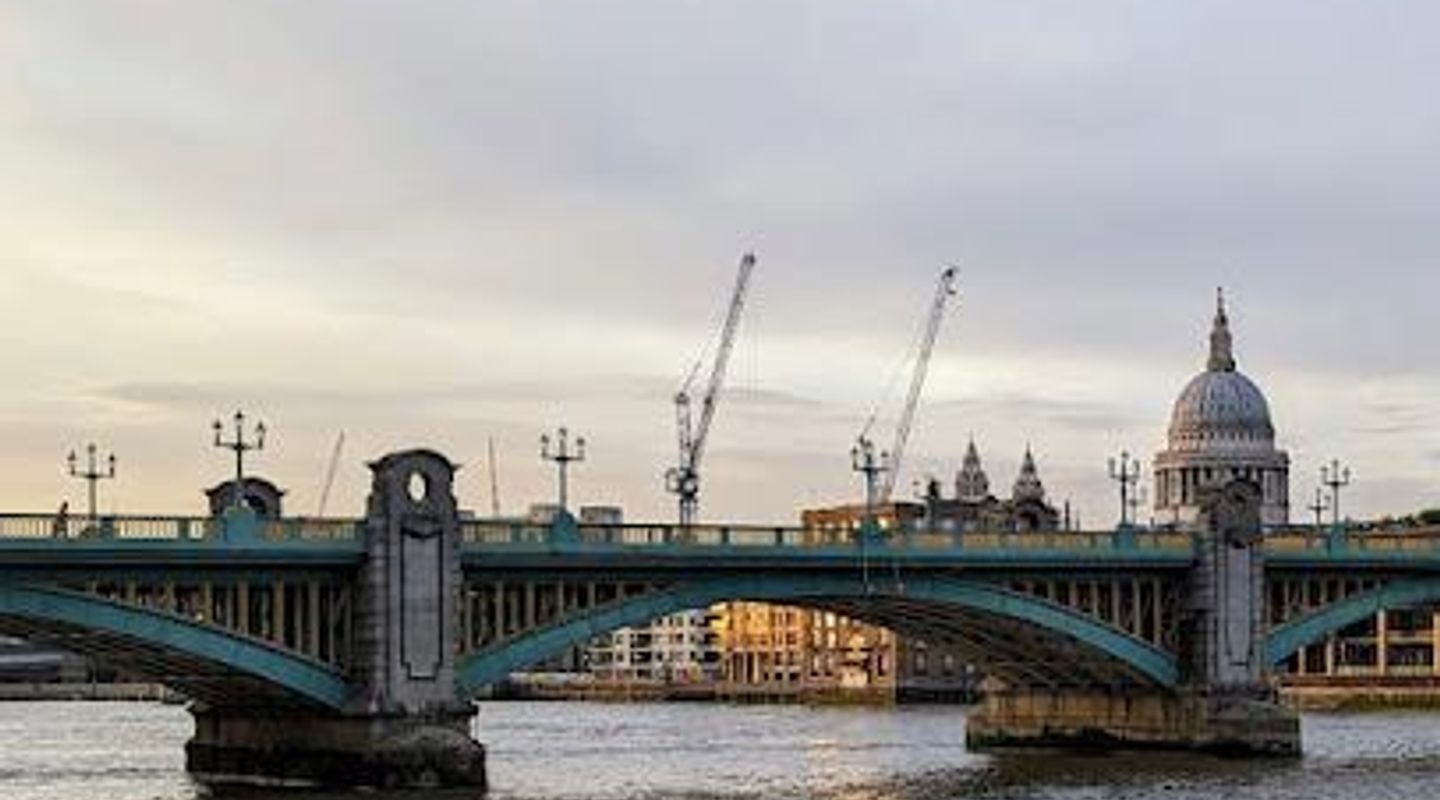
Spanning the Thames between the City and Southwark, Southwark Bridge is a striking steel-arched crossing opened in 1921. Designed by Sir Ernest George and engineer Basil Mott, it replaced an earlier cast-iron structure and now forms part of London’s illuminated river landscape. Its five elegant spans and green-and-yellow detailing make it a distinctive, photogenic link between Bankside and the City, popular with pedestrians and cyclists enjoying views of St Paul’s and the river.
On-site amenities
 Seating areas
 Trash bins
Opening hours
- Every dayOpen 24 hours
Opening hours as listed on the venue’s Google Business Profile. Hours can change for services and special events, so check with the venue before you go.
- Address
- Southwark Bridge Rd, London EC4R 1QS
- Website
Getting there
Walking
Public Transport
Cycling
Discover more about Southwark Bridge
A Bridge Reborn from Iron to Steel
Southwark Bridge as it stands today is actually the second crossing on this site, replacing an earlier cast-iron bridge designed by John Rennie the Elder. That first Southwark Bridge, opened in 1819, was a pioneering three-span iron structure, once the largest of its kind on the Thames and famously known as the "Iron Bridge" in Charles Dickens’ Little Dorrit. Built as a private toll bridge, it struggled with traffic and structural limitations, and by the early 20th century, the City of London decided a wider, stronger replacement was needed. The current bridge, designed by architect Sir Ernest George and engineer Basil Mott, was constructed between 1913 and 1921, its progress delayed by the First World War. When it finally opened, it offered a shallower gradient and greater capacity, solving many of the problems of its predecessor.
Design, Structure and the Thames Flow
The present Southwark Bridge is a steel-arched structure with five spans, its piers and abutments clad in grey granite and its arches painted in distinctive green and yellow. This five-arch layout was chosen not only for strength and traffic flow but also to harmonise with the five arches of neighbouring Blackfriars Bridge, helping to streamline the river’s current and reduce crosscurrents. The bridge’s alignment and engineering reflect careful consideration of the Thames’ hydrodynamics, ensuring that the piers do not unduly disrupt the river’s natural movement. On the south landing, remnants of old steps hint at the bridge’s earlier role in the river’s working life, once used by Thames watermen as a landing dock to moor their boats and pick up passengers.
A Quiet Crossing with a Remarkable Past
Despite its central location, Southwark Bridge has long been one of London’s quieter Thames crossings, a characteristic noted even in Dickens’ time when it was described as a peaceful escape from the roaring streets. This relative calm, combined with its elegant proportions, makes it a favourite for pedestrians and cyclists seeking a more relaxed Thames crossing. The bridge’s history is marked by both innovation and tragedy: its original 1819 opening was celebrated with gas lighting, a novelty at the time, while the 1921 replacement was completed “without burden upon public funds” by the Bridge House Estates. Tragically, the waters near the bridge were the site of the 1989 Marchioness disaster, London’s worst modern river tragedy, a sombre chapter in the bridge’s story.
Art, Light and the Modern Thames
Today, Southwark Bridge is a key part of the Illuminated River project, a contemporary art installation that lights up central London’s bridges. The bridge’s steel arches are illuminated from below with subtly shifting fields of light, drawing inspiration from Impressionist colour palettes and accentuating the latticework and bands of teal and yellow. This lighting transforms the bridge at night, turning it into a dynamic, ever-changing presence on the river. Nearby, a pedestrian tunnel on the north bank features a mural depicting the historic Thames frost fairs, when the river froze and Londoners held festivals on the ice, linking the bridge’s present to the river’s rich, sometimes frozen, past.
Walking the Bridge and Its Surroundings
Crossing Southwark Bridge offers excellent views of St Paul’s Cathedral, the City skyline, and the South Bank’s cultural landmarks. On the north side, the bridge connects to Upper Thames Street and the City, while the south side leads into the vibrant Bankside area, home to Tate Modern, Shakespeare’s Globe, and Borough Market. The bridge is heavily used by cyclists—over a million cross each year—and its wide footpaths make it comfortable for walking at any time of day. Whether you’re commuting, sightseeing, or simply enjoying the river, Southwark Bridge provides a distinctive, historically layered Thames crossing that feels both functional and quietly poetic.
Evendo Review Centre
 Google
Guest reviews
Best time to go
Quietest: Jan, Feb & Mar · at 1am or at 2am or at 3am
Busy times are Evendo estimates for a typical year, to help you plan. Actual crowds vary with events, school holidays and the weather.
Explore Southwark Bridge on the map
A handpicked selection of must-see spots near Southwark Bridge, mapped for you.
Get your free copy of our complete guide to Southwark Bridge, delivered straight to you.
Everything on this page, from opening hours and how to get there to Eve’s tips and the best time to go, in one PDF you can read offline, print or share.
Already have an account? Sign in
Your Southwark Bridge guide is ready.
We'll send it to · Not you? Sign out

Getting your guide ready…
We are putting together a fresh copy of the Southwark Bridge guide. This can take up to a minute.
This can take a few moments. If your browser asks, choose Allow so the download can start. You'll find the guide in your Downloads folder.
Nothing happened? Download it again
Sorry, the guide is taking longer than usual. Please try again in a minute, or get it by email instead.
Unlock the best of Southwark Bridge
Skip-the-line tickets, guided tours with entry, and walking tours of the area, booked in a few clicks.





Other nearby places you may find interesting
The closest places of the same kind, if this one is not quite what you had in mind.
-

-
-
-
-


Swipe for more places
More to explore near Southwark Bridge

 Best experiences near Southwark Bridge
 Best hotels near Southwark Bridge
 Best landmarks near Southwark Bridge
 Best attractions near Southwark Bridge
 Best shops near Southwark Bridge
 Best restaurants near Southwark Bridge
 Best bars near Southwark Bridge
Do you manage this location?
Take control to get all the benefits, like improved information, better appearance, and stronger visibility across AI-powered discovery.
Explore more

Explore more of London
Explore London: A city of iconic landmarks, rich history, vibrant culture, and endless attractions that cater to every taste, making it a must-visit destination.
Explore London
Explore more of United Kingdom
Discover the United Kingdom: A blend of rich history, stunning landscapes, and vibrant cities, offering a unique travel experience for every visitor.
Explore United Kingdom