

Cuween Hill Chambered Cairn Travel Guide
Free Guide: A 5,000-year-old Neolithic tomb where ancient rituals and mysteries still whisper from the darkness.


A brief summary of Cuween Hill Chambered Cairn
A 5,000-year-old Neolithic tomb where ancient rituals and mysteries still whisper from the darkness.
A 5,000-year-old Neolithic burial chamber nestled on the slopes of Cuween Hill in Orkney, Scotland. This miniature version of the famous Maeshowe features a central chamber with four smaller cells and a narrow, atmospheric passage carved into bedrock. Excavations revealed the remains of at least eight humans and 24 dog skulls, offering tantalizing clues about ancient burial practices and beliefs in the afterlife. The site commands sweeping views over the Bay of Firth and sits near the remains of the Stonehall Neolithic settlement, making it an essential destination for those seeking to understand Scotland's earliest agricultural communities.
On-site amenities
 Information boards
 Trash bins
Opening hours
- Every dayOpen 24 hours
Opening hours as listed on the venue’s Google Business Profile. Hours can change for services and special events, so check with the venue before you go.
- Address
- Old Finstown Rd, Orkney KW17 2EJ
- Phone
- Website
Getting there
Car from Kirkwall
Bus from Kirkwall
Guided Tour from Kirkwall
Bicycle from Finstown
Discover more about Cuween Hill Chambered Cairn
An Ancient Burial Place from the Neolithic Dawn
Cuween Hill Chambered Cairn stands as a remarkable testament to the sophistication and spiritual beliefs of Scotland's earliest agricultural communities. Built between 3000 and 2400 BC, this 5,000-year-old structure represents one of Orkney's finest examples of Neolithic architectural design. The cairn was constructed by farming communities who inhabited the valley below, particularly those centered at the nearby Stonehall settlement, which flourished from around the fourth millennium BC. The positioning of the cairn on the hillside was deliberate—when viewed from the Stonehall site, it stands out clearly against the skyline, suggesting a profound connection between the burial monument and the settlement below.The name "Cuween" derives from Old Norse meaning "cattle pasture," reflecting the pastoral landscape that has surrounded this sacred site for millennia. Archaeological evidence suggests the cairn was constructed sometime after the founding of Stonehall, perhaps around 3100–3000 BC, serving as the burial place for high-status individuals from the settlement. The discovery of human remains alongside 24 dog skulls raises intriguing questions about ancient rituals and beliefs—were the dogs guardians of the dead, totem animals, or simply the cherished pets of those interred? These mysteries remain locked within the ancient stones.
Architectural Design and Structural Innovation
Cuween Hill is a Maeshowe-type cairn, featuring a roughly rectangular central chamber with four smaller cells branching off from each side. This design represents a miniature version of the more famous Maeshowe, which forms part of the UNESCO World Heritage Site the Heart of Neolithic Orkney. The entire structure was carved into the bedrock of the hillside, demonstrating the considerable engineering knowledge and labor investment of Neolithic communities. The passage leading into the cairn is narrow, low, and pitch black—a deliberately constructed approach that would have created an intensely atmospheric experience for those performing burial rites within.The original roof of the cairn was likely quite substantial, though it was damaged during the 19th century by Victorian antiquarians who explored the site without proper archaeological care. In 1888, three explorers casually dug into the mound, removing the roofs of three cells to gain access. The modern roof that now caps the structure, standing over two meters tall inside the chamber, is a replacement that allows visitors to stand upright in the main chamber while maintaining the cairn's evocative darkness. The corbelled stones visible in the walls showcase the careful craftsmanship of Neolithic builders.
Excavation and Archaeological Discoveries
Official excavation of Cuween Hill began in 1901 under the direction of Malcolm Charleson, a Stromness solicitor. The excavators discovered that the chamber, cells, and entrance passage had been entirely filled with stony debris, suggesting the cairn had been deliberately sealed at some point—either when the community ceased using it or between periods of use. Within the upper filling lay large quantities of poorly preserved animal bone and dog teeth, while the lower 30 centimeters above the floor contained the remains of at least five humans and 24 canine skulls, some showing evidence of cremation. Additional animal remains, including oxen bones, were found throughout the structure.The radiocarbon dates secured from material within the cairn date to around 2500 BC, a time of significant change marking the advent of the Bronze Age. This suggests either a secondary use of the monument or a later ritual deposit. Among the artifacts discovered was a worked stone axe, found within a cist—a stone burial box—which appears to have been placed as a special offering, possibly indicating its status as a valuable item, symbol of rank, or ritual object. These discoveries collectively attest to a sophisticated belief system centered on the afterlife and complex burial rites among Neolithic Orkney communities.
The Stonehall Settlement and Broader Context
The Stonehall Neolithic settlement, located on low ground to the south of Cuween Hill, provides crucial context for understanding the cairn's significance. Excavations beginning in 1994 revealed an extensive area of occupation founded in the fourth millennium BC and continuing into the third millennium BC. Archaeologists uncovered multiple early Neolithic houses, including rectangular structures with rounded ends divided into two rooms by upright flagstones. One remarkable discovery was a hearth still containing the ashes from its last fires—a poignant reminder of domestic life thousands of years ago. The settlement also yielded Unstan Ware pottery and other artifacts that illuminate daily life during this formative period of Scottish prehistory.The relationship between Stonehall and Cuween Hill suggests that the cairn served as a communal burial monument for the settlement's elite, reinforcing social hierarchy and collective identity. The careful positioning of the cairn to be visible from the settlement indicates that it functioned not merely as a tomb but as a landscape monument that connected the living community with their ancestors and the spiritual realm.
Visiting the Cairn: An Atmospheric Journey
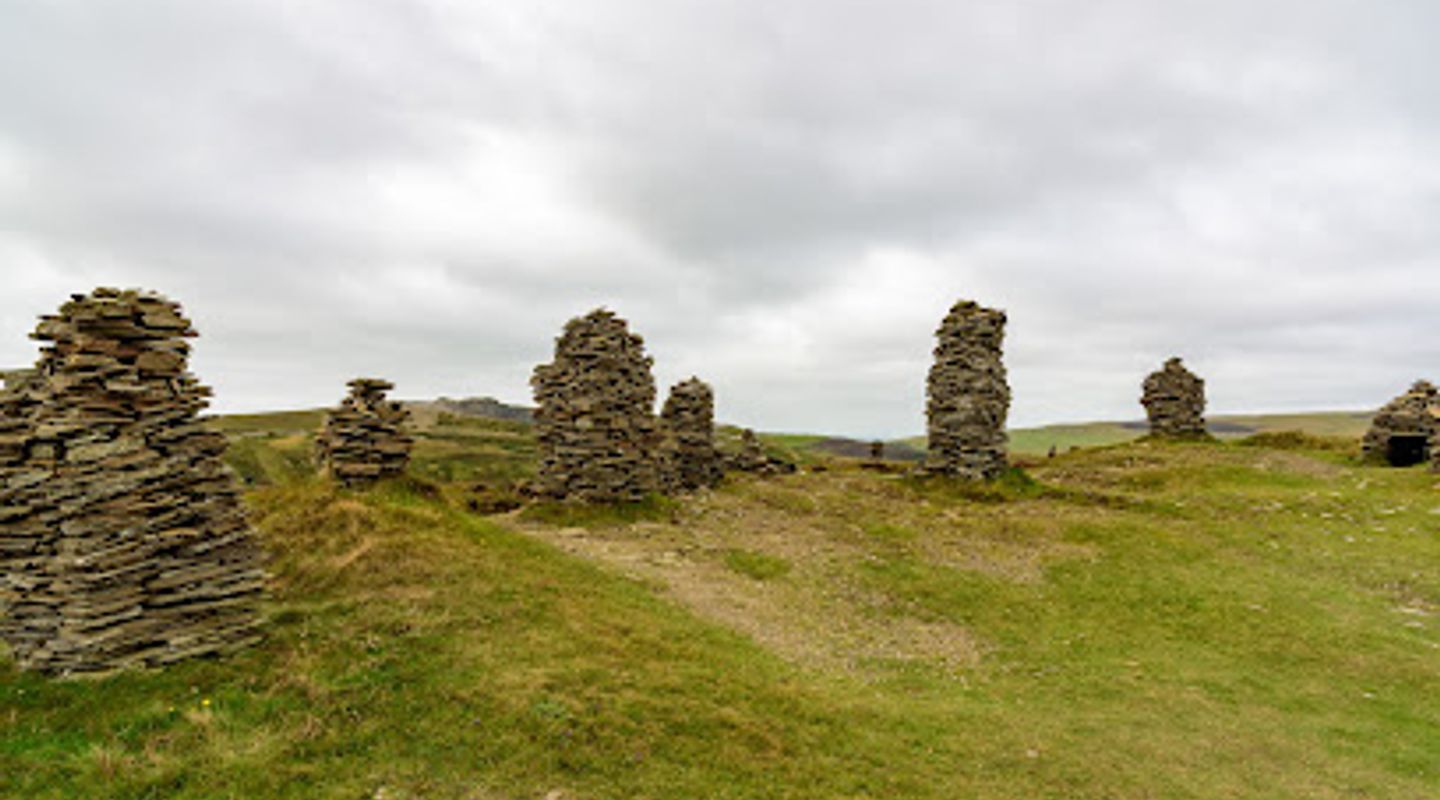
The experience of entering Cuween Hill is deliberately immersive and evocative. Visitors must crawl through a stony, narrow passage approximately five meters long before reaching the main chamber, where they can stand upright. The complete darkness inside the cairn creates an intensely atmospheric environment that encourages contemplation and imagination. The silence and gloom make it easy to envision the burial rites and rituals that took place here five millennia ago, and many visitors report a palpable sense of presence within the ancient stones. The location on the hillside, with its views over the Bay of Firth toward Orkney's northern isles, adds to the sense of place and spiritual significance.Local folklore has long associated such mounds with fairy dwellings and supernatural beings, earning Cuween Hill the alternative name "Fairy Knowe." This tradition reflects the enduring mystery and power that ancient monuments hold in the collective imagination. In recent decades, visitors have added their own small stone cairns near the tomb entrance, creating an informal modern tradition that echoes the ancient practice of monument building.
Evendo Review Centre
 Google
Guest reviews
Best time to go
Quietest: Jan, Feb & Nov · before 7am or from 7pm
Busy times are Evendo estimates for a typical year, to help you plan. Actual crowds vary with events, school holidays and the weather.
Explore Cuween Hill Chambered Cairn on the map
A handpicked selection of must-see spots near Cuween Hill Chambered Cairn, mapped for you.
Get your free copy of our complete guide to Cuween Hill Chambered Cairn, delivered straight to you.
Everything on this page, from opening hours and how to get there to Eve’s tips and the best time to go, in one PDF you can read offline, print or share.
Already have an account? Sign in
Your Cuween Hill Chambered Cairn guide is ready.
We'll send it to · Not you? Sign out

Getting your guide ready…
We are putting together a fresh copy of the Cuween Hill Chambered Cairn guide. This can take up to a minute.
This can take a few moments. If your browser asks, choose Allow so the download can start. You'll find the guide in your Downloads folder.
Nothing happened? Download it again
Sorry, the guide is taking longer than usual. Please try again in a minute, or get it by email instead.
Other nearby places you may find interesting
The closest places of the same kind, if this one is not quite what you had in mind.
-
Grain Earth House Explore Kirkwall’s hidden Iron Age subterranean marvel, Grain Earth House, where ancient stone pillars guard secrets beneath a modern industrial estate.
-
The Cannon Historic cannon from an American privateer, set against the stunning backdrop of Stromness harbour’s maritime heritage.
-
First Nations And Orcadian Totem Pole A striking wooden monument in Orkney symbolizing friendship and shared heritage between First Nations and Orcadian cultures.
-
Rennibister Earth House Explore Rennibister Earth House, a mysterious Iron Age underground passage in Orkney, where ancient human remains reveal a haunting prehistoric story.
-
St Magnus Cathedral Discover Scotland’s only complete medieval cathedral, a stunning red and yellow sandstone masterpiece steeped in Viking history and spiritual heritage.
Swipe for more places
More to explore near Cuween Hill Chambered Cairn
-
 Best experiences near Cuween Hill Chambered Cairn
-
 Best hotels near Cuween Hill Chambered Cairn
-
 Best landmarks near Cuween Hill Chambered Cairn
-
 Best attractions near Cuween Hill Chambered Cairn
-
 Best shops near Cuween Hill Chambered Cairn
-
 Best restaurants near Cuween Hill Chambered Cairn
-
 Best bars near Cuween Hill Chambered Cairn







Do you manage this location?
Take control to get all the benefits, like improved information, better appearance, and stronger visibility across AI-powered discovery.
Explore more

Explore more of Orkney
Discover Orkney: A magical blend of ancient history, stunning landscapes, and vibrant local culture in Scotland's enchanting archipelago.
Explore Orkney
Explore more of United Kingdom
Discover the United Kingdom: A blend of rich history, stunning landscapes, and vibrant cities, offering a unique travel experience for every visitor.
Explore United Kingdom
