

Bincknoll Castle Travel Guide
Free Guide: Explore the tranquil earthworks and layered history of Bincknoll Castle, a medieval motte and bailey nestled on Wiltshire’s scenic chalk escarpment.


A brief summary of Bincknoll Castle
Explore the tranquil earthworks and layered history of Bincknoll Castle, a medieval motte and bailey nestled on Wiltshire’s scenic chalk escarpment.
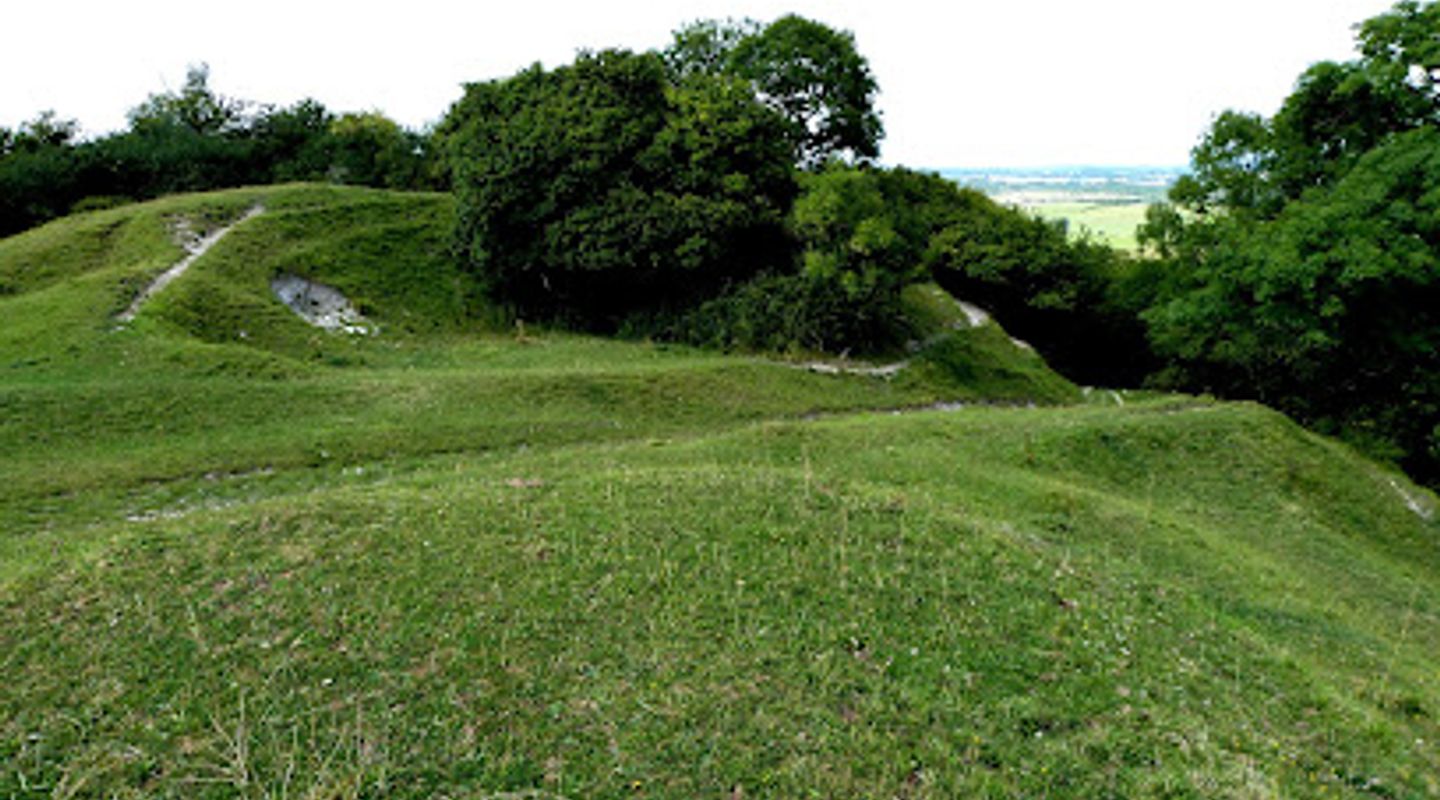
Bincknoll Castle is the site of an early motte and double-bailey castle located on a chalk escarpment near Wroughton, Swindon. Though the motte has been heavily damaged by quarrying, the earthworks reveal its medieval origins and hint at a complex history possibly stretching back to the Iron Age. The surrounding landscape offers scenic views and a tranquil atmosphere, inviting exploration of its archaeological remains and natural beauty.
On-site amenities
 Seating areas
 Information boards
 Trash bins
- Address
- Hay Ln, Wroughton, Swindon SN4 8QT
Getting there
Public Bus
Car
Walking
Discover more about Bincknoll Castle
Historical Layers of Bincknoll Castle
Bincknoll Castle stands as a testament to layered history, primarily recognized as an early medieval motte and double-bailey castle. The motte, or raised earthwork mound, though severely mutilated by quarrying activities, marks the defensive heart of the site. Archaeological findings, including Roman and later pottery, suggest that while the castle itself is medieval, the location may have been significant in earlier periods, possibly even the Iron Age, though this remains unproven. Documentary evidence also hints at the presence of a medieval chapel nearby, adding a spiritual dimension to its historical narrative.
Geographical Setting and Landscape Character
Perched on an isolated spur of the chalk escarpment, Bincknoll Castle commands a strategic vantage point overlooking the surrounding Wiltshire countryside. The promontory location provided natural defenses enhanced by man-made earthworks, typical of motte and bailey castles. Today, the site’s grassy mounds and earthworks blend into the rolling landscape, where butterflies and wildflowers flourish, creating a peaceful retreat amid the traces of past conflict and habitation.
Archaeological Discoveries and Excavations
Excavations conducted north of the castle site have uncovered substantial medieval building remains, enriching understanding of the site's use beyond its military function. These investigations reveal a complex occupation history, with layers of activity spanning from the medieval period and possibly earlier. The presence of Roman-era artifacts further complicates the narrative, suggesting that Bincknoll’s significance may have evolved through successive eras.
Visitor Experience and Natural Ambience
Visitors to Bincknoll Castle encounter a serene environment characterized by open fields, wooded areas, and expansive views across the West of Swindon and beyond. The site’s earthworks invite exploration and reflection on its defensive past, while the surrounding nature provides a tranquil setting for walks and quiet contemplation. The absence of standing structures means the imagination fills in the gaps, making the visit a subtle blend of history and nature.
Conservation and Accessibility
As a scheduled historic monument, Bincknoll Castle is protected for its archaeological and cultural value. While the motte has suffered damage from quarrying, efforts to preserve the remaining earthworks ensure the site’s legacy endures. Access is generally straightforward, though the terrain includes natural slopes and grassy paths typical of rural hillfort sites. Visitors are encouraged to respect the landscape and its wildlife, particularly grazing cattle that share the area.
Local Context and Surrounding Attractions
Situated near Wroughton in the borough of Swindon, Bincknoll Castle forms part of a network of historic sites in North Wiltshire, including nearby hillforts and ancient landmarks. Its proximity to the Ridgeway National Trail enhances its appeal for walkers and history enthusiasts alike. The castle’s quiet location offers a contrast to more frequented tourist spots, providing a unique glimpse into Wiltshire’s layered past and natural beauty.
Evendo Review Centre
 Google
Guest reviews
Best time to go
Quietest: Jan, Feb & Dec · before 6am or at 8pm
Busy times are Evendo estimates for a typical year, to help you plan. Actual crowds vary with events, school holidays and the weather.
Explore Bincknoll Castle on the map
A handpicked selection of must-see spots near Bincknoll Castle, mapped for you.
Get your free copy of our complete guide to Bincknoll Castle, delivered straight to you.
Everything on this page, from opening hours and how to get there to Eve’s tips and the best time to go, in one PDF you can read offline, print or share.
Already have an account? Sign in
Your Bincknoll Castle guide is ready.
We'll send it to · Not you? Sign out

Getting your guide ready…
We are putting together a fresh copy of the Bincknoll Castle guide. This can take up to a minute.
This can take a few moments. If your browser asks, choose Allow so the download can start. You'll find the guide in your Downloads folder.
Nothing happened? Download it again
Sorry, the guide is taking longer than usual. Please try again in a minute, or get it by email instead.
Other nearby places you may find interesting
The closest places of the same kind, if this one is not quite what you had in mind.
-
-
-
-
-


Swipe for more places
More to explore near Bincknoll Castle

 Best experiences near Bincknoll Castle
 Best hotels near Bincknoll Castle
 Best landmarks near Bincknoll Castle
 Best attractions near Bincknoll Castle
 Best shops near Bincknoll Castle
 Best restaurants near Bincknoll Castle
 Best bars near Bincknoll Castle
Do you manage this location?
Take control to get all the benefits, like improved information, better appearance, and stronger visibility across AI-powered discovery.
Explore more

Explore more of Wiltshire
Discover Wiltshire: Home to Stonehenge, stunning landscapes, and charming villages, this county offers a perfect blend of history, nature, and quintessential English charm.
Explore Wiltshire
Explore more of United Kingdom
Discover the United Kingdom: A blend of rich history, stunning landscapes, and vibrant cities, offering a unique travel experience for every visitor.
Explore United Kingdom
