

Free Bear River Valley Travel Guide & Mobile App
Explore Bear River Valley with free travel guides. Discover regional history, expert tips, proposed trips, and audio guides on web or mobile app.


Explore Utah’s Bear River Valley for Logan’s heritage, mountain scenery, productive farmland and internationally important migratory bird wetlands.
Read more about Bear River Valley
Getting to and around Bear River Valley
How to get there
Transportation
Top city travel guides in Bear River Valley
The cities of Bear River Valley, and the easiest places to base yourself.
-

-
-


Swipe for more cities
Destinations in Bear River Valley
Resorts, valleys and scenic spots worth a trip of their own.

Swipe for more destinations
Best attractions in Bear River Valley
Bear River Valley’s attractions range from Logan’s historic and cultural institutions to the open wetlands of the lower river. In Logan, visitors can explore the city’s historic centre, the Logan Utah Temple grounds, the Logan Tabernacle and museums and galleries associated with Utah State University. Logan Canyon, immediately east of the city, provides access to forested scenery, hiking, climbing, fishing and winter recreation, although conditions vary considerably with altitude and season. Around Brigham City, Tremonton and Bear River City, the emphasis shifts to agricultural landscapes, small-town heritage and wildlife. Bear River Migratory Bird Refuge is the region’s signature nature destination, with viewing opportunities shaped by water levels and migration cycles. Scenic drives along the valley margins reveal the contrast between the Wellsville Mountains, cultivated fields and wide marsh country. Families may also find seasonal farm activities and community events, while travellers interested in conservation can learn how irrigation, river management and bird habitat coexist. The region is better suited to self-guided exploration and outdoor observation than to a concentrated cluster of ticketed attractions.
-
National park
Arches National Park
Explore the stunning natural arches and vibrant landscapes of Arches National Park, a must-visit destination for outdoor lovers and photographers.
-
Natural history museum
Natural History Museum of Utah
Explore the Natural History Museum of Utah, where science and history come alive in an engaging and educational experience for all ages.
-
State park
Antelope Island State Park
Experience the breathtaking beauty and diverse wildlife of Antelope Island State Park in Utah's Great Salt Lake, a must-visit for nature enthusiasts and photographers.
-
Ski resort
Snowbasin Resort
Experience the breathtaking Snowbasin Resort in Utah, offering unforgettable skiing, hiking, and dining experiences amidst stunning mountain scenery.



Best landmarks in Bear River Valley
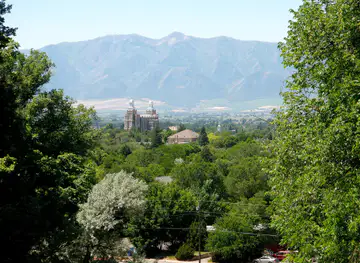
The Logan Utah Temple is Bear River Valley’s most imposing architectural landmark, occupying an elevated position above Logan and reflecting the city’s nineteenth-century Latter-day Saint settlement. In the historic centre, Logan Tabernacle is an important civic and religious building, while preserved residential and commercial architecture records the prosperity and ambitions of the early agricultural community. The Wellsville Mountains provide the valley’s most recognisable natural backdrop, rising sharply along its western side and creating a strong visual divide between cultivated Cache Valley and the lower country. Logan Canyon forms another defining landmark landscape, with steep forested slopes and exposed rock leading into the Bear River Range. Farther west, the broad Bear River wetlands are less monumental in scale but equally significant: the refuge’s marshes, channels and open water express the river’s final approach to the Great Salt Lake. Historic town streets and farm landscapes around Brigham City, Tremonton and neighbouring settlements complete a landmark tradition based on settlement, irrigation, mountains and water rather than on a single castle or monumental city centre.
-
Historical landmark
This Is The Place Heritage Park
Discover Utah's pioneering spirit at This Is The Place Heritage Park, where history comes alive through engaging exhibits and stunning landscapes.
-
Historical place
Golden Spike National Historical Park
Explore the rich history and stunning landscapes at Golden Spike National Historical Park, where the first transcontinental railroad was completed.
-
Historical landmark
Fielding Garr Ranch
Explore the fascinating history and stunning landscapes of Fielding Garr Ranch in Utah's Antelope Island State Park, a must-visit destination for every traveler.
-
Wildlife refuge
Bear River Migratory Bird Refuge
Explore the stunning Bear River Migratory Bird Refuge, a wildlife haven perfect for birdwatching and nature enthusiasts in Utah.

Explore Bear River Valley on the map
Plan your trip on one map. See where the top cities, national parks and sights are, and book hotels and experiences in a few clicks.
Best hotels in Bear River Valley
Best restaurants in Bear River Valley
Dining in Bear River Valley reflects northern Utah’s agricultural setting and the differing scale of its communities. Logan has the broadest selection, including cafés, bakeries, family restaurants, international cooking and more contemporary dining associated with Utah State University. In the smaller towns, diners, cafés, pizzerias, Mexican restaurants and traditional American eateries are more characteristic than destination fine dining. Local food culture is closely tied to dairy farming, beef, grains, fruit and seasonal produce, while roadside stands and farm shops can provide a more direct connection with the valley’s agricultural output. Brigham City and nearby communities are known in the wider region for fruit-growing traditions, particularly peaches and other orchard produce when in season. Farm-fresh eggs, dairy products, baked goods and preserves are useful regional purchases, although availability changes throughout the year. Utah’s broader traditions of burgers, fry sauce, pastries and hearty café cooking are also visible, while beer and wine service may be more regulated than international visitors expect.
-
Diner
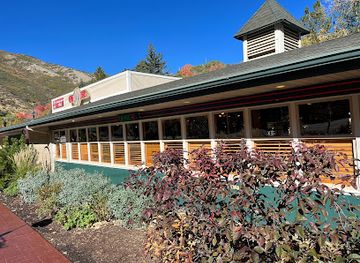
Ruth's Diner
Discover Ruth's Diner in Emigration Canyon - where American comfort food meets stunning mountain views.
-
American
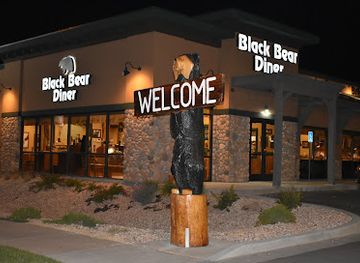
Black Bear Diner Ogden
Experience hearty American cuisine at Black Bear Diner Ogden—where every meal feels like home with family-friendly service.
-
American
Tamarisk Restaurant
Discover Tamarisk Restaurant: Where Creative American Dishes Meet Quality Ingredients in Green River.
-
American
The Copper Onion
Discover the flavors of America at The Copper Onion in downtown Salt Lake City – where local ingredients meet culinary creativity.

Best bars in Bear River Valley
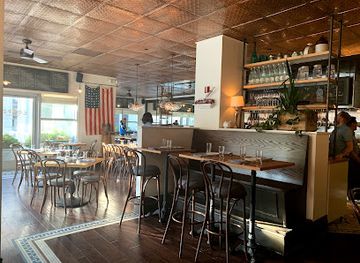
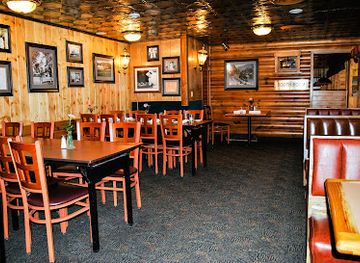
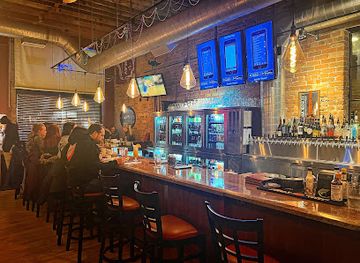
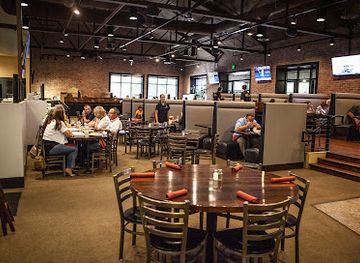
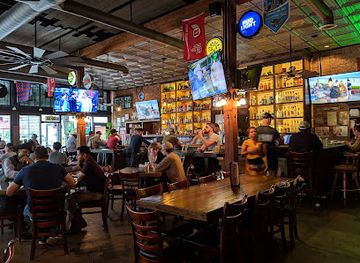
Nightlife is modest and concentrated mainly in Logan, where the student population supports a selection of pubs, casual bars, coffee houses, live-music settings and restaurants with evening service. The city’s historic centre and university area provide more choice than the rural valley, although the atmosphere is generally social and low-key rather than centred on large nightclubs. Brigham City and Tremonton have local bars, restaurants and community-oriented evening venues, while smaller farming settlements tend to close early and offer little conventional nightlife. Utah’s alcohol laws affect licensing, service and opening arrangements, so visitors should check current rules and carry accepted identification. For many travellers, an evening in the valley means dining, a local performance, stargazing or an early start for wildlife viewing rather than a late night. Seasonal concerts, university events and community programmes can add variety, but schedules change and should be verified locally.
-
Steak
Maddox Ranch House Inc
Discover Maddox Ranch House, where every steak tells a story and every meal is a celebration of local flavors in the heart of Utah.
-
American
The Bayou
Experience the vibrant flavors of Cajun cuisine at The Bayou in downtown Salt Lake City, where every dish is a celebration of culinary heritage.
-
Grill
The Beehive Pub & Grill
Discover the vibrant flavors and welcoming atmosphere of The Beehive Pub & Grill in Logan, Utah, a top spot for delicious food and drinks.
-
Bar
The Green Pig Pub
Discover the lively atmosphere, delicious food, and extensive drink selection at The Green Pig Pub in the heart of Salt Lake City.
Best nightclubs in Bear River Valley
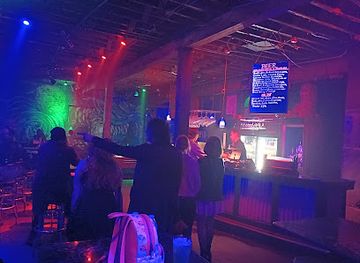
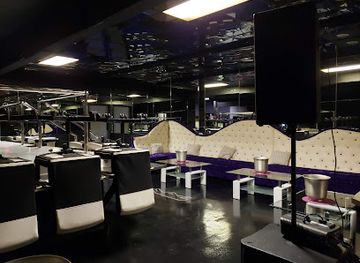
Nightlife is modest and concentrated mainly in Logan, where the student population supports a selection of pubs, casual bars, coffee houses, live-music settings and restaurants with evening service. The city’s historic centre and university area provide more choice than the rural valley, although the atmosphere is generally social and low-key rather than centred on large nightclubs. Brigham City and Tremonton have local bars, restaurants and community-oriented evening venues, while smaller farming settlements tend to close early and offer little conventional nightlife. Utah’s alcohol laws affect licensing, service and opening arrangements, so visitors should check current rules and carry accepted identification. For many travellers, an evening in the valley means dining, a local performance, stargazing or an early start for wildlife viewing rather than a late night. Seasonal concerts, university events and community programmes can add variety, but schedules change and should be verified locally.
-
Club
Club 90
Experience the vibrant nightlife of Sandy, Utah at Club 90, where live music and dancing create unforgettable memories.
-
Night club
Area 51
Dive into Salt Lake City's nightlife at Area 51, where music, dance, and vibrant energy create an unforgettable experience.
-
Night club
Sky SLC
Experience the vibrant nightlife at Sky SLC, Salt Lake City's premier night club featuring music, dance, and lively atmosphere.
-
Night club
Exotic Kitty Gentleman's Club
Discover the thrilling nightlife at Exotic Kitty Gentleman's Club in South Salt Lake, where vibrant entertainment and a lively atmosphere await.


Best shops in Bear River Valley
Shopping in Bear River Valley is centred on Logan’s commercial streets and larger retail areas, with additional everyday services in Brigham City and Tremonton. Logan offers independent cafés, bookshops, galleries, specialist retailers and practical outdoor equipment alongside national chains, while its historic centre provides the most appealing setting for browsing smaller businesses. In the surrounding towns, shopping is more closely connected with local needs, agriculture and seasonal community markets. Fruit, preserves, honey, baked goods, dairy products and other farm-related foods make useful regional purchases when sold through legitimate farm shops or changing farmers’ markets. Art, pottery, photography and locally made crafts may be found through galleries, university-related events and seasonal fairs rather than a single dedicated craft district. Antique and second-hand shopping is available in some communities, but opening arrangements vary. Visitors should distinguish genuinely local produce from generic souvenirs and allow for limited retail hours in smaller settlements, particularly outside the main daytime and weekend periods.
-
Hunting and fishing store
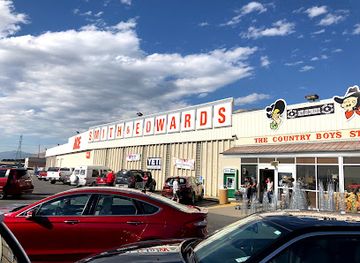
Smith & Edwards
Explore Smith & Edwards for a unique shopping experience in Ogden, Utah, featuring outdoor gear, home improvement, and Western apparel.
-
Souvenir store
Beehive State Souvenirs
Explore unique gifts and local crafts at Beehive State Souvenirs in Salt Lake City, where every item tells a story of Utah's rich heritage.
-
Discount store
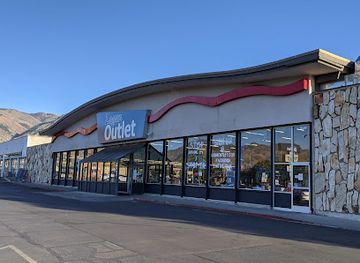
Big Deal Outlet
Explore unbeatable deals at Big Deal Outlet in Logan, UT, your ultimate destination for discount shopping on clothing, furniture, groceries, and more.
-
Clothing store
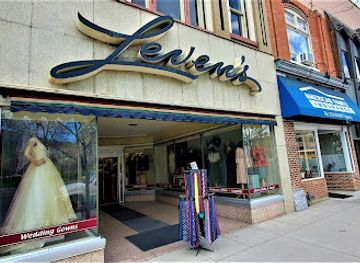
Leven's
Shop at Leven's in Logan, Utah: Where modesty meets style for every occasion in a charming community setting.

Get your free copy of our complete guide to Bear River Valley, delivered straight to you.
Everything on this page, from attractions and restaurants to essentials and local phrases, in one PDF you can read offline, print or share.
Already have an account? Sign in
Your Bear River Valley guide is ready.
We'll send it to · Not you? Sign out

Getting your guide ready…
We are putting together a fresh copy of the Bear River Valley guide. This can take up to a minute.
This can take a few moments. If your browser asks, choose Allow so the download can start. You'll find the guide in your Downloads folder.
Nothing happened? Download it again
Sorry, the guide is taking longer than usual. Please try again in a minute, or get it by email instead.
Bear River Valley essentials
Currency and Payment
Safety
Emergency Situations
Do's and Don'ts
Local Tips
From Eve
Local phrases worth knowing
You don't need to get them perfect. A few words go a long way, and locals appreciate the effort.
Basics
| English | Local | Say it |
|---|---|---|
| Hello | Howdy | [Ha-dee] |
| Goodbye | See ya | [See yah] |
| Yes | Yup | [Yup] |
| No | Nah | [Nah] |
| Please/You're welcome | Please/No problem | [Pleez/No prob] |
| Thank you | Thanks | [Thangs] |
| Excuse me/Sorry | Pardon me/Sorry | [Par-don mee/Sor-ree] |
| How are you? | How's it goin'? | [How's it goin'?] |
| Fine. And you? | Good. And you? | [Good. An' you?] |
| Do you speak English? | Can ya speak English? | [Can ya speak English?] |
| I don't understand | I ain't followin' | [I ain't followin'] |
Eating & Drinking
| English | Local | Say it |
|---|---|---|
| I'd like to see the menu, please | Can I see the menu, please? | [Can I see the menu, pleez?] |
| I don't eat meat | I ain't eatin' meat | [I ain't eatin' meat] |
| Cheers! | Cheers! | [Cheers!] |
| I would like to pay, please | Can I pay, please? | [Can I pay, pleez?] |
Emergencies
| English | Local | Say it |
|---|---|---|
| Help! | Help! | [Help!] |
| Go away! | Get lost! | [Get lost!] |
| Call the Police! | Call the cops! | [Call the cops!] |
| Call a doctor! | Get a doctor! | [Get a doctor!] |
| I'm lost | I’m lost | [I’m lost] |
| I'm ill | I ain't feelin' good | [I ain't feelin' good] |
Shopping
| English | Local | Say it |
|---|---|---|
| I'd like to buy... | I wanna buy... | [I wanna buy...] |
| I'm just looking | Just lookin' | [Just lookin'] |
| How much is it? | What’s the price? | [What’s the price?] |
| That's too expensive | That’s too pricey | [That’s too pricey] |
| Can you lower the price? | Can ya drop the price? | [Can ya drop the price?] |
Time & Numbers
| English | Local | Say it |
|---|---|---|
| What time is it? | What time ya got? | [What time ya got?] |
| It's one o'clock | It's one o'clock | [It's one o'clock] |
| Half past (10) | Half past ten | [Half past ten] |
| Morning | Morning | [Morning] |
| Afternoon | Afternoon | [Afternoon] |
| Evening | Evenin' | [Evenin'] |
| Yesterday | Yesterday | [Yesterday] |
| Today | Today | [Today] |
| Tomorrow | Tomorrow | [Tomorrow] |
| 1 | One | [One] |
| 2 | Two | [Two] |
| 3 | Three | [Three] |
| 4 | Four | [Four] |
| 5 | Five | [Five] |
| 6 | Six | [Six] |
| 7 | Seven | [Seven] |
| 8 | Eight | [Eight] |
| 9 | Nine | [Nine] |
| 10 | Ten | [Ten] |
Transport & Directions
| English | Local | Say it |
|---|---|---|
| Where's a/the...? | Where's the...? | [Where's the...?] |
| What's the address? | What’s the address? | [What’s the address?] |
| Can you show me (on the map)? | Can ya show me (on the map)? | [Can ya show me (on the map)?] |
| When's the next (bus)? | When’s the next bus? | [When’s the next bus?] |
| A ticket (to ....) | One ticket (to ....) | [One ticket (to ....)] |
History of Bear River Valley
Indigenous Landscapes and the Bear River
The Bear River corridor has long been part of the homelands and travel networks of Indigenous peoples, including Northwestern Shoshone communities. The river, wetlands, grasslands and nearby mountains supported hunting, fishing, gathering and seasonal movement. Archaeological evidence across northern Utah records deep human occupation, although many individual sites are protected and are not public attractions. Understanding this earlier history is important because the later agricultural and urban landscape occupies country that already had established cultural and ecological significance.
Euro-American Exploration and the Fur Trade
In the early nineteenth century, trappers, traders and exploring parties travelled through the Bear River drainage as European-American knowledge of the Intermountain West expanded. The river connected mountain valleys, high deserts and the Great Salt Lake basin, although travel was difficult and routes changed with seasons and water levels. These journeys helped place northern Utah on maps used by later emigrants and settlers, while also accelerating competition over land, resources and access to established Indigenous territories.
Latter-day Saint Settlement in Cache Valley
Organised Euro-American settlement expanded in Cache Valley during the 1850s, led largely by Latter-day Saint colonists. Farms, irrigation ditches, mills and town sites developed around the valley’s rivers and streams, with Logan becoming the principal settlement. Agriculture shaped the area’s economy and appearance for generations, while religious institutions influenced civic life and architecture. Many historic buildings and street patterns in Logan and surrounding communities reflect this period of planned settlement and communal development.
Irrigation, Agriculture and the Lower Valley
Control of water transformed the Bear River country from a naturally variable floodplain into one of northern Utah’s productive agricultural regions. Canals, reservoirs and diversion works supported hay, grain, livestock and later specialised crops, while wetlands remained vital for wildlife. The lower valley’s towns grew alongside farms, rail connections and agricultural businesses. This history remains visible in broad fields, shelterbelts, canal networks, farm buildings and the continuing economic importance of agriculture around Brigham City, Tremonton and smaller settlements.
Railways and Northern Utah Connections
Railways altered the geography of northern Utah by linking farming communities with regional and national markets. Lines through the Bear River area supported the movement of people, livestock, grain and manufactured goods, while nearby rail corridors also served the wider Great Salt Lake region. The settlement pattern became more closely tied to transport connections, and towns such as Brigham City and Tremonton gained importance as service and distribution centres. Some historic railway infrastructure survives, though the most famous transcontinental railroad sites lie outside the valley proper.
Logan’s Civic, Religious and Educational Growth
During the late nineteenth and early twentieth centuries, Logan developed beyond an agricultural settlement into a regional centre with substantial civic, religious and educational institutions. The Logan Utah Temple, completed in 1884, and the Logan Tabernacle are prominent expressions of the city’s Latter-day Saint heritage. Utah State University, founded in 1888 as an agricultural college, strengthened the region’s connections with education, research and rural development. Its presence continues to influence Logan’s cultural life and economy.
Wildlife Conservation in the Bear River Wetlands
As irrigation, settlement and water diversion changed the lower river, the importance of remaining marshes and shallow-water habitats became increasingly clear. Bear River Migratory Bird Refuge was established in 1928 to protect habitat for migratory birds using the Great Salt Lake basin. The refuge is now a major conservation landscape as well as a visitor destination, illustrating the region’s modern transition from an exclusively agricultural viewpoint towards a more balanced recognition of wetlands, water management and biodiversity.
Bear River Valley in Photos
Browse through our photo collection highlighting the charm and character of the destination.
Neighbouring regions of Bear River Valley
The closest regions to Bear River Valley, if you have time for more than one.
-

-

-
-

-


Swipe for more regions
Explore more

Explore more of Utah
Explore Utah's stunning national parks, rich cultural heritage, and year-round outdoor adventures. Discover why this diverse state is a top destination for travelers.
Explore Utah