

Chilanzar (Tashkent) Travel Guide - Free
Explore Chilanzar in Tashkent with Evendo's free guide. Find the best shops, historic streets, restaurants, and gems on web or mobile.


Chilanzar, Tashkent: explore Soviet-era avenues, metro architecture, local bazaars, courtyards and everyday Uzbek city life beyond the historic centre.
A Planned Southwest Tashkent District
Chilanzar occupies a broad area in southwest Tashkent, west of the historic centre and shaped largely by the city’s Soviet-era expansion. Rather than a compact old quarter, it is a substantial residential district of tree-lined avenues, apartment blocks, courtyards, schools, local services and busy transport corridors. Its streets reveal how Tashkent grew into a modern capital after the middle of the twentieth century, while pockets of older low-rise settlement and abundant greenery preserve traces of an earlier landscape.Read more about Chilanzar
Everyday City Life
Parks, Metro Art and Local Character
Best attractions in Chilanzar
Chilanzar’s attractions are woven into its everyday urban landscape rather than concentrated in a historic core. The Gafur Ghulam Park area provides open space, family recreation and a change from the district’s apartment-lined avenues, while Chilanzar Bazaar and the Qatartal market area reveal the practical energy of local shopping and food trading. The Chilonzor metro line is another notable experience: its stations contain decorative interiors and public art associated with Tashkent’s underground railway, whose architecture is more distinctive than the surrounding transport infrastructure might suggest. Bunyodkor Avenue and the broad residential streets nearby are worth exploring for their planned scale, mature trees and mixture of apartment blocks, courtyards and small businesses. Visitors interested in contemporary city life will find the district more revealing through a combination of metro travel, market browsing and an unhurried walk than through a short list of formal monuments.
-
Tourist attraction
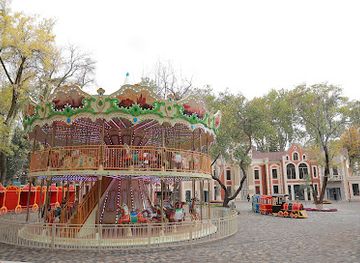
Gafur Gulyam Recreation Park
Explore Gafur Gulyam Recreation Park in Tashkent, a vibrant park offering amusement rides, lush gardens, and serene picnic spots for unforgettable outdoor adventures.
5 min drive · 1.6 km from neighbourhood centre
-
Tourist attraction
Alisher Navoi Monument
Explore the Alisher Navoi Monument in Tashkent, a stunning tribute to Uzbekistan's literary heritage surrounded by serene gardens and rich culture.
14 min drive · 4.8 km from neighbourhood centre
-
Tourist attraction
Magic park
Explore the enchanting Magic Park in Tashkent, a family-friendly attraction filled with rides, entertainment, and local culture.
15 min drive · 5.0 km from neighbourhood centre
-
Tourist attraction
Fanikl
Explore Fanikl in Tashkent, a family-friendly attraction with vibrant activities and cultural experiences for a memorable visit to Uzbekistan.
15 min drive · 5.1 km from neighbourhood centre


Best landmarks in Chilanzar
Chilanzar’s principal landmarks are products of modern urban planning rather than monumental antiquity. The district’s broad avenues, repeated apartment blocks, landscaped courtyards and civic service buildings form a recognisable example of Tashkent’s post-war residential expansion. The Chilonzor metro line is especially significant: opened in 1977 as part of Tashkent’s underground railway, it brought a major transport connection to the district and its stations introduced decorative architectural treatment into daily commuting. Bunyodkor Avenue is an important urban axis, linking residential areas with wider city routes, while Chilanzar Bazaar and the Qatartal market area stand as landmarks of local commerce rather than formal heritage monuments. Gafur Ghulam Park contributes a green public reference point and reflects the city’s longstanding effort to balance dense housing with recreational space. Together, these places explain Chilanzar’s identity as a planned, connected and largely lived-in part of the capital.
-
Historical landmark
Yuri Gagarin Monument
Explore the Yuri Gagarin Monument in Tashkent, a striking tribute to human space exploration and a landmark of historical significance.
7 min drive · 2.2 km from neighbourhood centre
-
Tourist attraction
Alisher Navoi Monument
Discover the Alisher Navoi Monument in Tashkent, a beautiful tribute to Uzbekistan's literary giant surrounded by serene gardens.
14 min drive · 4.8 km from neighbourhood centre
-
Tourist attraction
Fanikl
Explore the serene landscapes and rich heritage of Fanikl, Tashkent's enchanting tourist attraction, perfect for a cultural getaway.
15 min drive · 5.1 km from neighbourhood centre
-
Tourist attraction
Erkin Vohidov Monument
Explore the Erkin Vohidov Monument in Tashkent, a serene tribute to Uzbekistan's poetic heritage amidst vibrant city life.
14 min drive · 4.5 km from neighbourhood centre



Explore Chilanzar on the map
A handpicked selection of must-see spots in Chilanzar, mapped for you.
Best hotels in Chilanzar
Best restaurants in Chilanzar
Chilanzar’s dining scene is practical and locally oriented, reflecting a large residential population rather than a concentrated restaurant quarter. Around metro stations, bazaars and the main avenues, visitors can find cafés and casual eateries serving familiar Uzbek dishes such as plov, somsa, shashlik, lagman and assorted breads, alongside tea and inexpensive snacks. Chilanzar Bazaar and Qatartal are useful places to observe the ingredients behind the city’s home cooking, including seasonal fruit, vegetables, dried goods and spices, although market food arrangements can change. Many establishments are modest, with menus more likely to be understood through photographs or Russian and Uzbek terms than through English descriptions. Independent cafés and family-run dining rooms are generally more characteristic here than destination restaurants, and the strongest culinary impression comes from combining a market visit with a meal in the surrounding neighbourhood rather than searching for a formal dining strip.
-
Meat
Qanotchi
Discover Qanotchi in Tashkent: A delightful meat-centric restaurant offering scrumptious chicken wings and steaks amidst a warm and inviting atmosphere.
11 min drive · 3.7 km from neighbourhood centre
-
European
MONA Restaurant & Lounge
Experience the fusion of European and Asian cuisines at MONA Restaurant & Lounge in Tashkent – where culinary excellence meets cultural richness.
16 min drive · 5.3 km from neighbourhood centre
-
Restaurant
Zarhal
Experience the rich flavors of Uzbekistan at Zarhal, Tashkent's premier restaurant for authentic local cuisine.
10 min drive · 3.4 km from neighbourhood centre
-
Restaurant
Prestizh
Discover the essence of Uzbek cuisine at Prestizh in Tashkent - a perfect blend of tradition and modernity awaits you.
6 min walk · 0.5 km from neighbourhood centre


Best bars in Chilanzar
Chilanzar is primarily a residential district, so its evening life centres on cafés, tea drinking, casual restaurants, shopping areas and family gatherings rather than a dense club scene. The main avenues and metro approaches remain active after work, while quieter courtyards and side streets become more subdued. Visitors seeking alcohol-focused nightlife or large music venues will find a broader choice in central Tashkent and should treat those locations as outside Chilanzar rather than part of the neighbourhood. Within the district, evening entertainment is more likely to involve eating, meeting friends, browsing late-running shops or spending time in public recreation areas. Respectful dress and moderate behaviour are advisable, particularly near homes and family-oriented spaces, and transport should be planned before leaving busy commercial areas for less familiar residential streets.
-
Pub
Guten Pub
Discover the vibrant atmosphere of Guten Pub in Tashkent, where traditional Uzbek hospitality meets modern nightlife.
9 min drive · 3.1 km from neighbourhood centre
-
Live music bar
John Dillinger Bar
Discover the vibrant John Dillinger Bar in Tashkent, a live music haven for tourists seeking a taste of local entertainment and nightlife.
14 min drive · 4.8 km from neighbourhood centre
-
Karaoke bar
Panda Karaoke
Experience the vibrant nightlife of Tashkent at Panda Karaoke, where singing, hookah, and arcade fun await your arrival.
6 min drive · 2.2 km from neighbourhood centre
-
Bar
Castle Bar
Discover the charm of Castle Bar in Tashkent, where cozy ambiance meets a delightful selection of drinks and local culture for an unforgettable experience.
8 min drive · 2.5 km from neighbourhood centre


Best nightclubs in Chilanzar
Chilanzar is primarily a residential district, so its evening life centres on cafés, tea drinking, casual restaurants, shopping areas and family gatherings rather than a dense club scene. The main avenues and metro approaches remain active after work, while quieter courtyards and side streets become more subdued. Visitors seeking alcohol-focused nightlife or large music venues will find a broader choice in central Tashkent and should treat those locations as outside Chilanzar rather than part of the neighbourhood. Within the district, evening entertainment is more likely to involve eating, meeting friends, browsing late-running shops or spending time in public recreation areas. Respectful dress and moderate behaviour are advisable, particularly near homes and family-oriented spaces, and transport should be planned before leaving busy commercial areas for less familiar residential streets.
-
Night club
Zara Resto Bar
Experience the vibrant nightlife at Zara Resto Bar in Tashkent, offering a mix of local cuisine and energetic entertainment until dawn.
8 min drive · 2.5 km from neighbourhood centre
-
Night club
Paris night club
Discover the electrifying nightlife of Tashkent at this vibrant night club, where music, dancing, and fun await you!
14 min walk · 1.1 km from neighbourhood centre
-
 Night club
Miami Night Club
Unleash your nightlife adventure at Miami Night Club in Tashkent, where music, dance, and fun come together for an unforgettable experience.
9 min drive · 3.0 km from neighbourhood centre
-
Karaoke bar
Friends Club
Discover the lively atmosphere of Friends Club, Tashkent's premier karaoke bar, where music and fun come together for an unforgettable night.
8 min drive · 2.5 km from neighbourhood centre


Best shops in Chilanzar
Shopping in Chilanzar is centred on practical neighbourhood commerce, with Chilanzar Bazaar and the Qatartal market area providing the clearest expression of its retail culture. Stalls and small shops typically focus on fresh produce, bread, dairy goods, dried fruit, spices, clothing, household supplies and other everyday necessities, while the surrounding streets contain pharmacies, bakeries, cafés and independent services. The experience differs from Tashkent’s more polished central retail areas because shopping is closely tied to local routines and household provisioning. Visitors should compare prices politely, check quantities and keep belongings secure in crowded sections; cash in Uzbek soʻm remains useful for smaller purchases. Apartment-district shopping streets and small ground-floor businesses are also part of Chilanzar’s character, although individual tenants and stock change frequently. The best souvenirs are often edible or domestic rather than heavily branded, but purchases should be packed with transport and customs requirements in mind.
-
Shopping mall
Chilanzar Shopping Center
Discover shopping bliss and family fun at Chilanzar Shopping Center in Tashkent, a premier destination for retail and entertainment.
6 min drive · 2.1 km from neighbourhood centre
-
Produce market
Chilanzar Bazaar
Discover the vibrant Chilanzar Bazaar in Tashkent, where the essence of Uzbek culture and culinary delights come alive amidst bustling market stalls.
7 min walk · 0.6 km from neighbourhood centre
-
Women's clothing store
Paris Bijuteriya
Explore the vibrant fashion scene at Paris Bijuteriya, Tashkent's premier women's clothing store offering unique styles and quality apparel.
1 min walk · 0.1 km from neighbourhood centre
-
Women's clothing store
Malika Shop
Explore the vibrant world of women's fashion at Malika Shop in Tashkent, where local style meets contemporary trends.
9 min walk · 0.8 km from neighbourhood centre


Chilanzar essentials
Getting There
Getting Around
Safety
Emergency Situations
Do's and Don'ts
Local Tips

From Eve
Local phrases worth knowing
You don't need to get them perfect. A few words go a long way, and locals appreciate the effort.
Basics
| English | Local | Say it |
|---|---|---|
| Hello | Salom | [sah-lom] |
| Goodbye | Xayr | [khayr] |
| Yes | Ha | [ha] |
| No | Yo'q | [yoq] |
| Please/You're welcome | Marhamat | [mar-ha-mat] |
| Thank you | Rahmat | [rah-mat] |
| Excuse me/Sorry | Kechirasiz | [ke-chee-ra-sees] |
| How are you? | Qalaysiz? | [ka-la-yseez] |
| Fine. And you? | Yaxshi. Siz-chi? | [yakh-shee. siz-chee] |
| Do you speak English? | Siz inglizcha gapirasizmi? | [siz ing-leez-cha ga-pee-ra-seez-mee] |
| I don't understand | Tushunmayapman | [too-shoon-ma-yap-man] |
Eating & Drinking
| English | Local | Say it |
|---|---|---|
| I'd like to see the menu, please | Men menyuni ko'rishni xohlayman, iltimos | [men me-nyu-nee ko-reesh-nee khokh-lay-man, il-tee-mos] |
| I don't eat meat | Men go'sht yemayman | [men gosh-yet ye-may-man] |
| Cheers! | Salomat bo'lsin! | [sah-lo-mat bol-sin] |
| I would like to pay, please | Men to'lovni qilmoqchiman, iltimos | [men to-lov-nee keel-moq-chee-man, il-tee-mos] |
Emergencies
| English | Local | Say it |
|---|---|---|
| Help! | Yordam! | [yor-dam] |
| Go away! | Uzoqqa bor! | [oo-zok-ka bor] |
| Call the Police! | Politsiyani chaqiring! | [po-lee-tsee-ya-nee cha-keer-ing] |
| Call a doctor! | Tabibni chaqiring! | [ta-beeb-nee cha-keer-ing] |
| I'm lost | Men yo'qoldim | [men yo-kol-dim] |
| I'm ill | Men kasalman | [men ka-sal-man] |
Shopping
| English | Local | Say it |
|---|---|---|
| I'd like to buy... | Men ... sotib olmoqchiman | [men ... so-tee-bol-moq-chee-man] |
| I'm just looking | Men faqat ko'z qarashi qilayapman | [men fa-kat koz ka-ra-shee keela-yaap-man] |
| How much is it? | Bu qancha? | [boo kan-cha] |
| That's too expensive | Bu juda qimmat | [boo joo-da keem-mat] |
| Can you lower the price? | Narxni pastga tushirsangiz bo'ladimi? | [nar-knee past-ga too-sheer-san-giz bo-la-dee-mee] |
Time & Numbers
| English | Local | Say it |
|---|---|---|
| What time is it? | Sana nechchi? | [sa-na nech-chee] |
| It's one o'clock | Bir soat | [beer so-at] |
| Half past (10) | O'nu yarim | [o-nu ya-rim] |
| Morning | Ertalab | [er-ta-lab] |
| Afternoon | Tushluk | [toosh-look] |
| Evening | Kechasi | [ke-cha-see] |
| Yesterday | Kecha | [ke-cha] |
| Today | Bugun | [boo-goon] |
| Tomorrow | Ertaga | [er-ta-ga] |
| 1 | Bir | [beer] |
| 2 | Ikki | [ik-kee] |
| 3 | Uch | [ooch] |
| 4 | To'rt | [to-rt] |
| 5 | Besh | [besh] |
| 6 | Olti | [ol-tee] |
| 7 | Yetti | [yet-tee] |
| 8 | Sakkiz | [sak-keez] |
| 9 | To'qqiz | [to-kkeez] |
| 10 | O'n | [on] |
Transport & Directions
| English | Local | Say it |
|---|---|---|
| Where's a/the...? | ... qayerda? | [... kai-er-da] |
| What's the address? | Manzili qayerda? | [man-zee-lee kai-er-da] |
| Can you show me (on the map)? | Men ... ko'rsatishingiz mumkinmi? | [men ... kor-sa-teesheeng-iz moom-kin-mee] |
| When's the next (bus)? | Keyingi ... qachon? | [key-ing-ee ... ka-chohn] |
| A ticket (to ....) | Bilet (... ga) | [bee-let ... ga] |
History of Chilanzar
From Orchards to Urban Expansion
Before its large-scale redevelopment, the area now associated with Chilanzar formed part of the cultivated and semi-rural landscape around Tashkent, with gardens, irrigation and low-rise settlement characteristic of the city’s outskirts. The name Chilonzor is commonly linked to chilon, the jujube tree, although explanations of local place names are not always uniform. Its transformation reflected Tashkent’s outward growth as population and administrative importance increased during the Soviet period, replacing much of the former peripheral landscape with planned streets, utilities and housing.
The Mass-Housing District Emerges
Chilanzar became one of Tashkent’s major planned residential developments from the 1960s onwards. Repeated apartment blocks, schools, clinics, shops and landscaped courtyards were arranged around broad roads and public transport connections, creating a self-contained urban district rather than a traditional mahalla, the Uzbek term for a local community neighbourhood. The design combined standardised Soviet housing with Tashkent’s preference for shade and open space, producing the district’s characteristic mixture of multistorey blocks, mature trees and low-rise service buildings.
Rebuilding After the 1966 Earthquake
The 1966 Tashkent earthquake accelerated the city’s reconstruction and reinforced the development of modern residential districts such as Chilanzar. Although the worst destruction was concentrated in central areas, the rebuilding programme reshaped the capital’s wider urban structure, bringing new housing, roads and public facilities to expanding districts. In Chilanzar, this period helped establish the planned apartment-building environment that remains visible today, while new residents and institutions connected the area more closely to Tashkent’s growing industrial, administrative and educational life.
Metro Connections and Continuing Change
The opening of Tashkent’s first metro line in 1977 connected Chilanzar with central parts of the capital and gave the district a stronger role in everyday urban movement. The Chilonzor line’s stations also introduced carefully designed interiors and decorative details into an otherwise practical transport network. Since Uzbekistan’s independence, local commerce, private services, renovated façades and changing housing patterns have altered the district without erasing its Soviet planning framework. Today Chilanzar remains primarily residential, but its bazaars, metro corridors and busy avenues make it an important part of contemporary Tashkent.
Chilanzar in Photos
Browse through our photo collection highlighting the charm and character of the destination.
Neighbourhoods near Chilanzar
The closest neighbourhoods to Chilanzar, if you have time for more than one stop.
-

-

-


Swipe for more neighbourhoods
Explore more

Explore more of Tashkent
Tashkent blends Silk Road history, colourful markets, Soviet modernism and Uzbek cuisine, with grand squares, ornate metro stations and mountain escapes.
Explore Tashkent