

Vatican Library, Vatican City Travel Guide
Explore the Vatican Library, an ancient repository of human knowledge and art, nestled in the heart of Vatican City, offering a timeless journey through history and culture.
The Vatican Library, located in Vatican City, is one of the oldest and most significant libraries in the world. Established in the mid-15th century by Pope Nicholas V, it houses an extensive collection of manuscripts, books, and historical documents that span centuries. This monumental trove of knowledge provides an unparalleled glimpse into the history, culture, and intellectual heritage of humanity. Visiting the Vatican Library is a unique experience that allows tourists to delve into the rich tapestry of human achievement. The library's vast collection includes over 1.6 million printed books, 75,000 codices, and countless rare works that date back to ancient times. Among its treasures are ancient Greek and Roman texts, medieval manuscripts, and the original works of renowned scholars and artists. The architecture of the library itself is a sight to behold. With its grand halls, ornate ceilings, and exquisitely decorated rooms, the Vatican Library is a masterpiece of Renaissance art and design. The Sistine Hall, in particular, is famed for its stunning frescoes and intricate detailing. As you walk through the library, you will feel as though you are stepping back in time, surrounded by the wisdom and beauty of ages past.

Know before you go
Hi, I'm Eve. Here are a few practical things to know before exploring Vatican Library.
- Book your visit in advance as access to the library is limited and often requires special permission.
- Wear comfortable shoes, as you will spend a lot of time walking through the expansive halls and rooms.
- Consider hiring a guide to provide in-depth insights and historical context during your visit.
- Photography is often restricted; check the rules before you go to avoid disappointment.
- Visit during the early morning or late afternoon to avoid the peak crowds.
Top City Travel Guides in Vatican Library
The cities of Vatican Library, and the easiest places to base yourself.


Explore Vatican Library: Things to Do, Places to Eat, Hotels & More
Handpicked recommendations for top attractions, local dining, accommodations, and more

Top Attractions & Sightseeing in Vatican Library
Top-rated picks
Best Attractions

IKONO Roma
Experience the fusion of art and technology at IKONO Roma, where immersive installations elevate your visit to the heart of Rome.

Piazza Vittorio Emanuele II
Experience the vibrant atmosphere of Piazza Vittorio Emanuele II in Rome, a cultural hub surrounded by stunning architecture and lively local life.

Capannelle Racecourse
Discover the excitement of horse racing at Capannelle Racecourse, a vibrant sports complex in Rome offering thrilling events and a taste of Italian culture.

Porta Maggiore
Explore Porta Maggiore, Rome's historic gateway, where ancient architecture meets vibrant city life in the heart of Italy's capital.

Best landmarks in Vatican Library
Top-rated picks
Best Landmarks

St. Peter's Basilica
Explore St. Peter's Basilica, a breathtaking symbol of faith and artistry in Vatican City, featuring Michelangelo's dome and exquisite Renaissance treasures.

Vatican Museums
Explore the Vatican Museums: A World of Art, History, and Spirituality in the Heart of Vatican City.
Sistine Chapel
Explore the Sistine Chapel, a UNESCO World Heritage site, and marvel at Michelangelo's stunning frescoes and rich history in Vatican City.

Gardens of Vatican City
Experience the tranquil beauty and historical richness of the Gardens of Vatican City, a serene escape in the heart of one of the world's most iconic religious sites.

Best restaurants in Vatican Library
Top-rated picks
Best Restaurants

Bonci Pizzarium
Discover the innovative flavors of Roman pizza at Bonci Pizzarium near Vatican City—where every slice tells a story.

Ristorante dei Musei
Discover authentic Italian flavors at Ristorante dei Musei near Vatican City – a must-visit for pizza lovers.

La Soffitta Renovatio
Discover authentic Italian cuisine at La Soffitta Renovatio near Vatican City—delicious pizzas and traditional dishes await!

L'Isola della Pizza
Experience authentic Italian cuisine at L'Isola della Pizza - where every bite tells a story of tradition and flavor.

Best bars in Vatican Library
Top-rated picks
Best Bars

La Zanzara
Savor modern Italian cuisine and innovative cocktails at La Zanzara, a must-visit bistro in the heart of Rome.

Il Sorpasso
Experience the rich flavors of Italy at Il Sorpasso, a charming restaurant in Rome offering delicious dishes and an extensive wine selection.

Forno Feliziani
Forno Feliziani: Experience authentic Roman pizza in a cozy atmosphere, beloved by locals and tourists in the heart of Rome.

Terrazza Les Étoiles Roma
Experience Rome from the skies at Terrazza Les Étoiles, where breathtaking views and exquisite cuisine meet in perfect harmony.

Best nightclubs in Vatican Library
Top-rated picks
Best Nightclubs
Vatican Museums
Discover the artistic brilliance and historical significance of the Vatican Museums, home to masterpieces that define cultural heritage and human creativity.
Sistine Chapel
Explore the Sistine Chapel, a UNESCO World Heritage site, and witness Michelangelo's breathtaking artistry in Vatican City.

La Zanzara
Discover La Zanzara, where modern Italian cuisine meets a chic cocktail bar ambiance near Vatican City.

Gardens of Vatican City
Explore the Gardens of Vatican City, a tranquil haven of beauty and history amidst the spiritual heart of Rome.

Best shops in Vatican Library
Top-rated picks
Best Shops

Vatican Emporium - Religious Articles & Gifts
Discover authentic religious articles and unique souvenirs at Vatican Emporium, your gateway to the spiritual heritage of Rome.

St. Peter's Gallery
Discover unique Vatican souvenirs, savor delightful coffee, and enjoy a cozy atmosphere at St. Peter's Gallery, the perfect stop for tourists.
Beside the Vatican
Experience the warmth and charm of Rome at Beside the Vatican, your cozy retreat near iconic landmarks.

Tourist Information Office
Discover the Tourist Information Office in Vatican City - your gateway to unique souvenirs and essential information on your journey through history.

Explore Vatican Library on the Map
A handpicked selection of must-see spots in Vatican Library, mapped for you.
Vatican Library Essentials
-
The Vatican Library is located within Vatican City, an independent city-state enclaved within Rome, Italy. The nearest major airport is Rome's Leonardo da Vinci-Fiumicino Airport (FCO), approximately 30 kilometers away. From the airport, you can take a taxi, shuttle bus, or train to Rome's city center. From there, you can reach Vatican City by taking the Metro Line A to Ottaviano-San Pietro or Cipro station. It's a short walk from these stations to the Vatican Library.
-
Vatican City is a small area and best explored on foot. Public transportation options in Rome, such as buses, trams, and the metro, are efficient and convenient for getting to Vatican City. Taxis and ride-sharing services like Uber are also available. Bicycles and electric scooters can be rented for a more leisurely exploration of Rome and its surrounding areas.
-
The official currency of Vatican City is the Euro (EUR). Credit cards are widely accepted in Rome and Vatican City, including at most restaurants, shops, and ticket offices. ATMs are available in the vicinity of Vatican City, but it is advisable to carry some cash for small purchases and in case of emergencies.
-
Vatican City and its surroundings are generally safe for tourists. However, be cautious of pickpockets, especially in crowded areas like St. Peter's Square and public transportation. Avoid walking alone late at night in unfamiliar areas. Keep your belongings secure and be aware of your surroundings. There are no high-crime neighborhoods specifically targeting tourists in Vatican City, but it's always best to stay vigilant.
-
In case of emergency, dial 112 for immediate assistance. The Vatican Gendarmerie and the Swiss Guard are responsible for security within Vatican City. For medical emergencies, the Santo Spirito Hospital in Rome is the nearest major hospital. It is recommended to have travel insurance that covers medical emergencies. Pharmacies are available in the vicinity of Vatican City for minor health issues and over-the-counter medications.
-
Fashion: Do dress modestly, especially when visiting religious sites. Shoulders and knees should be covered. Avoid wearing revealing clothing. Religion: Do respect the sanctity of the Vatican Library and other religious sites. Maintain silence and refrain from using flash photography. Public Transport: Do be respectful and give up your seat to elderly passengers. Don't eat or drink on public transport. Greetings: Do greet people with a polite 'Buongiorno' (Good morning) or 'Buonasera' (Good evening). A nod of the head is also a sign of respect. Eating & Drinking: Do try local delicacies and accept food offerings graciously. Don't refuse hospitality, as it is considered impolite.
-
To experience Vatican Library like a local, consider joining a guided tour that offers in-depth insights into its rare manuscripts and historical artifacts. Visit early in the morning or late in the afternoon to avoid the peak tourist crowds. Engage with the librarians and staff, who are often knowledgeable and willing to share fascinating stories about the library's collection. Don't miss the chance to explore nearby attractions such as the Vatican Museums and St. Peter's Basilica.
When is the best time to visit Vatican Library?
Useful Local Phrases for Vatican Library
You don't need to speak the language perfectly. Even learning a few simple words can make conversations warmer—and locals usually appreciate the effort.
— Eve

Here are the phrases I use most often in Vatican Library. Try a few—you'll be surprised how far they go! 😊
❤️
-
- HelloSalve
[sahl-veh] - GoodbyeVale
[vah-leh] - YesIta
[ee-tah] - NoNon
[nohn] - Please/You're welcomePer favore
[pehr fah-voh-reh] - Thank youGrazie
[grah-tsee-eh] - Excuse me/SorryScusi
[skoo-zee] - How are you?Come stai?
[koh-meh stah-ee] - Fine. And you?Bene. E tu?
[beh-neh. eh too?] - Do you speak English?Parli inglese?
[par-lee een-gleh-seh] - I don't understandNon capisco
[nohn kah-pees-koh]
- HelloSalve
-
- I'd like to see the menu, pleaseVorrei vedere il menu, per favore
[voh-rree veh-deh-reh eel meh-noo, pehr fah-voh-reh] - I don't eat meatNon mangio carne
[nohn mahn-joh kar-neh] - Cheers!Salute!
[sah-loo-teh] - I would like to pay, pleaseVorrei pagare, per favore
[voh-rree pah-gah-reh, pehr fah-voh-reh]
- I'd like to see the menu, pleaseVorrei vedere il menu, per favore
-
- Help!Aiuto!
[ah-yoo-toh] - Go away!Vai via!
[vigh vee-ah] - Call the Police!Chiama la polizia!
[kee-ah-mah lah poh-lee-tsee-ah] - Call a doctor!Chiama un dottore!
[kee-ah-mah oon doht-toh-reh] - I'm lostMi sono perso
[mee soh-noh pehr-soh] - I'm illSono malato
[soh-noh mah-lah-toh]
- Help!Aiuto!
-
- I'd like to buy...Vorrei comprare...
[voh-rree kohm-prah-reh...] - I'm just lookingSto solo guardando
[stoh soh-loh gwahr-dahn-doh] - How much is it?Quanto costa?
[kwahn-toh koh-stah] - That's too expensiveÈ troppo costoso
[eh troh-poh koh-stoh-soh] - Can you lower the price?Può abbassare il prezzo?
[pwoh ah-bah-sah-reh eel preht-tsoh]
- I'd like to buy...Vorrei comprare...
-
- What time is it?Che ore sono?
[keh oh-reh soh-noh] - It's one o'clockÈ l'una
[eh loo-nah] - Half past (10)Dieci e mezzo
[dyeh-chee eh meh-tsoh] - MorningMattina
[maht-tee-nah] - AfternoonPomeriggio
[poh-meh-ree-joh] - EveningSera
[seh-rah] - YesterdayIeri
[yeh-ree] - TodayOggi
[oh-gee] - TomorrowDomani
[doh-mah-nee] - 1Uno
[oo-noh] - 2Due
[doo-eh] - 3Tre
[treh] - 4Quattro
[kwah-troh] - 5Cinque
[cheen-kweh] - 6Sei
[seh-ee] - 7Sette
[seht-teh] - 8Otto
[oht-toh] - 9Nove
[noh-veh] - 10Dieci
[dyeh-chee]
- What time is it?Che ore sono?
-
- Where's a/the...?Dove si trova un/il...?
[doh-veh see troh-vah oon/eel...?] - What's the address?Qual è l'indirizzo?
[kwahl eh leen-deh-reet-soh] - Can you show me (on the map)?Puoi mostrarmi (sulla mappa)?
[pwoh-ee mohs-trar-mee (sool-lah mahp-pah)?] - When's the next (bus)?Quando passa il prossimo (autobus)?
[kwahn-doh pahs-sah eel proh-see-mo (ow-toh-boos)?] - A ticket (to ....)Un biglietto (per ....)
[oon bee-lyet-toh (pehr ....)]
- Where's a/the...?Dove si trova un/il...?
History of Vatican Library
-
The Vatican Library, officially known as the Biblioteca Apostolica Vaticana, was established in 1475 by Pope Sixtus IV. The library's foundation aimed to collect and preserve manuscripts, books, and other scholarly materials for the benefit of the Holy See and the broader scholarly community. The collection initially comprised texts from the Roman and Byzantine empires, reflecting the Church's deep historical roots.
-
During the Renaissance, the Vatican Library expanded significantly under the guidance of Popes like Nicholas V and Sixtus IV. The humanist movement inspired an increased focus on classical texts, and the library became a hub for scholars seeking ancient manuscripts. This period also saw the construction of the library's iconic halls and the acquisition of important works from across Europe and the Middle East.
-
One of the Vatican Library's most significant contributions to the world of scholarship is its vast collection of manuscripts. These include rare and ancient texts such as the 'Codex Vaticanus,' one of the oldest extant manuscripts of the Greek Bible, and the 'Vergilius Vaticanus,' an early illustrated manuscript of Virgil's works. These priceless documents have been meticulously preserved and studied over centuries.
-
The Vatican Library has been overseen by a succession of distinguished librarians, including notable scholars like Angelo Rocca and Cardinal Angelo Mai. These individuals played crucial roles in the acquisition, cataloging, and preservation of the library's vast collections. Their efforts ensured that the library remained a vital research institution throughout the centuries.
-
In recent decades, the Vatican Library has undergone significant modernization, including efforts to digitize its vast collections. These initiatives aim to make the library's resources more accessible to scholars worldwide, preserving fragile manuscripts while allowing for broader study and research. The library's digitization project, launched in 2010, has already made thousands of documents available online.
-
The Vatican Library is not only a repository of knowledge but also an architectural marvel. The library's halls, such as the Sistine Hall and the Sala Paolina, are adorned with stunning frescoes and intricate decorations. These artistic treasures reflect the library's dual role as a center of learning and a showcase of the Church's cultural heritage.
-
Adjacent to the Vatican Library are the Vatican Secret Archives, a separate but equally fascinating collection. Founded in 1612 by Pope Paul V, the archives contain centuries of papal correspondence, state papers, and other historical documents. Though not typically open to the public, the archives have occasionally been made available to scholars for research purposes, providing invaluable insights into the history of the Catholic Church.
Neighbouring Regions of Vatican Library
The closest regions to Vatican Library, if you have time for more than one.


Your all‑in‑one travel companion app
Explore expert travel guides, compare and book tours, experiences, hotels, and more—all from the palm of your hand. Download now for seamless trip planning wherever your wanderlust takes you.


Explore More of Vatican City
Looking beyond Vatican Library? Discover Vatican City for broader travel guides, local hot-spots, and regional highlights.
Explore Vatican CityVatican Library in Photos
Browse through our photo collection highlighting the charm and character of the destination.


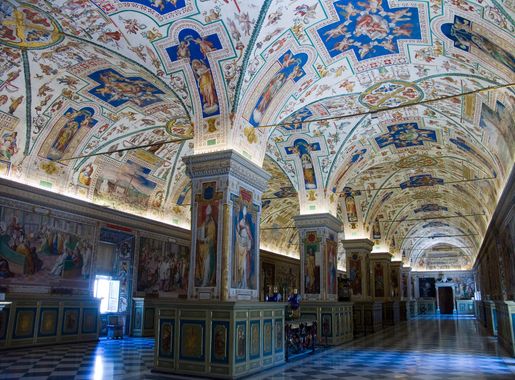


The Timeless Vault: Vatican Library
The Vatican Library, located in Vatican City, is one of the oldest and most significant libraries in the world. Established in the mid-15th century by Pope Nicholas V, it houses an extensive collection of manuscripts, books, and historical documents that span centuries. This monumental trove of knowledge provides an unparalleled glimpse into the history, culture, and intellectual heritage of humanity. Visiting the Vatican Library is a unique experience that allows tourists to delve into the rich tapestry of human achievement. The library's vast collection includes over 1.6 million printed books, 75,000 codices, and countless rare works that date back to ancient times. Among its treasures are ancient Greek and Roman texts, medieval manuscripts, and the original works of renowned scholars and artists. The architecture of the library itself is a sight to behold. With its grand halls, ornate ceilings, and exquisitely decorated rooms, the Vatican Library is a masterpiece of Renaissance art and design. The Sistine Hall, in particular, is famed for its stunning frescoes and intricate detailing. As you walk through the library, you will feel as though you are stepping back in time, surrounded by the wisdom and beauty of ages past.