

Free Montepulciano Travel Guide & Mobile App
Plan your Montepulciano trip with Evendo. Get free guides to top attractions, restaurants, hotels, and bars. Web access or download the mobile app.


Montepulciano, Tuscany’s hilltop town, combines Renaissance architecture, Etruscan roots, Vino Nobile cellars and sweeping Val d’Orcia views.
A Hilltop Town of Stone and Light
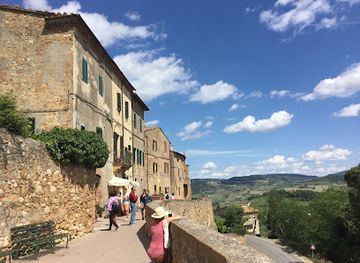
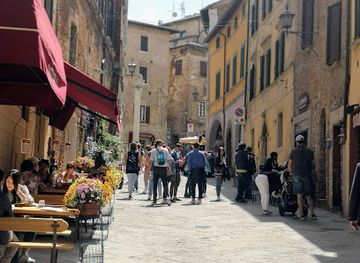
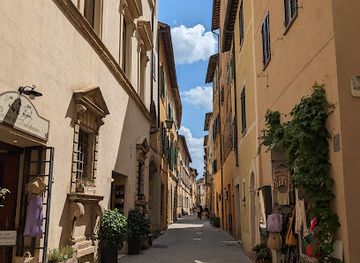
Montepulciano rises along a narrow limestone ridge in southern Tuscany, its historic centre unfolding between steep lanes, arched passages and elegant palazzi. The town’s elevated position brings broad views across the Val di Chiana, while the surrounding hills lead towards the Val d’Orcia, one of central Italy’s most evocative landscapes. Within the medieval walls, the main route climbs from Porta al Prato towards Piazza Grande, passing wine cellars, small shops and buildings shaped by centuries of civic and religious ambition.Read more about Montepulciano
Renaissance Streets and Civic Splendour
Life Between Vineyards and Tradition
When is the best time to visit Montepulciano?
Best: April–May, October · 24–28°C| Month | High (°C) | Rainfall (mm) |
|---|---|---|
| January | 14 | 63 |
| February | 15 | 59 |
| March | 19 | 61 |
| April (best) | 24 | 81 |
| May (best) | 28 | 76 |
| June | 34 | 66 |
| July | 37 | 50 |
| August | 37 | 56 |
| September | 31 | 73 |
| October (best) | 24 | 89 |
| November | 18 | 92 |
| December | 13 | 71 |
Getting to and around Montepulciano
How to get there
Transportation
Best attractions in Montepulciano
Montepulciano’s principal sightseeing route climbs from Porta al Prato through Corso di San Donato to Piazza Grande, the high point of the historic centre. Here, visitors can enter the Cathedral, explore the civic collections in the Palazzo Comunale and examine the refined façades of the surrounding palazzi. The Fortezza offers a different perspective on the town’s defensive past and may host cultural events, while historic wine cellars provide an atmospheric introduction to Vino Nobile production beneath the streets. Outside the walls, the Church of San Biagio stands in an open landscape, its balanced Renaissance design contrasting with the dense medieval town. The Museo Civico in Palazzo Neri Orselli adds archaeological and artistic context, and the ridge roads provide views across the Val di Chiana towards distant ranges. Seasonal performances and the Bravio delle Botti bring local history into the public spaces rather than confining it to museums.
-
 Thermal baths
Terme San Filippo
Discover the beauty and therapeutic benefits of Tuscany's hidden thermal springs at Terme San Filippo. A natural spa experience.
40 min drive · 20 km from city centre
-
Chapel
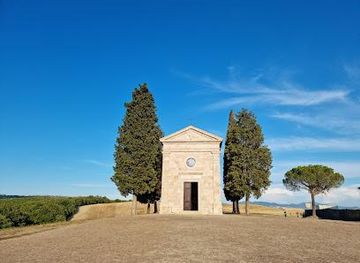
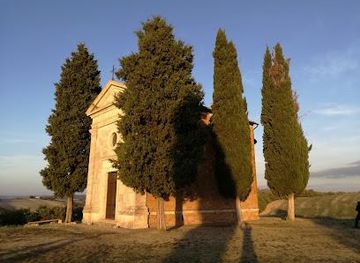
Chapel Vitaleta
Discover the iconic Chapel Vitaleta in Val d'Orcia: a picturesque symbol of Tuscany's beauty, history, and serene countryside.
32 min drive · 12 km from city centre
-
Tourist attraction
Cipressi di San Quirico d'Orcia
Capture the timeless beauty of Tuscany at the iconic Cipressi di San Quirico d'Orcia, a must-see landmark in the heart of the Val d'Orcia.
39 min drive · 19 km from city centre
-
Catholic church
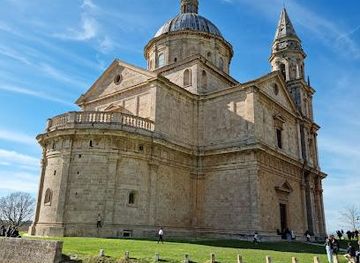
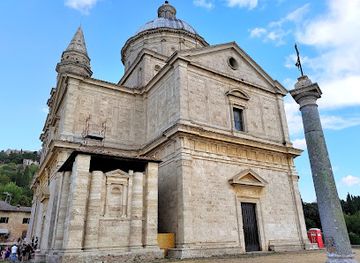
Sanctuary of the Madonna di San Biagio
Discover the architectural brilliance and spiritual serenity of this Renaissance masterpiece nestled in the heart of Tuscany.
15 min walk · 1.2 km from city centre
Best landmarks in Montepulciano
Piazza Grande is Montepulciano’s defining civic space, enclosed by buildings that show how Renaissance ambition was layered onto a medieval hilltop plan. The Palazzo Comunale, with its crenellated upper profile and elegant loggia, is traditionally associated with Michelozzo’s influence and deliberately recalls Florentine civic architecture. Opposite it, the Cathedral occupies the site of the former parish church and contains works of art within an exterior that was left unfinished. The nearby Palazzo Contucci and Palazzo Nobili-Tarugi add noble Renaissance façades to the square. At the foot of the town, San Biagio is Antonio da San Gallo the Elder’s celebrated sixteenth-century church, distinguished by its centralised plan and pale travertine appearance. The Fortezza and remaining gates, including Porta al Prato, preserve the memory of Montepulciano as a fortified settlement at the meeting point of rival Tuscan territories.
-
Restaurant
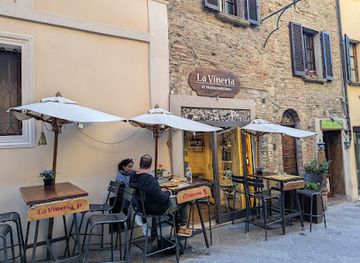
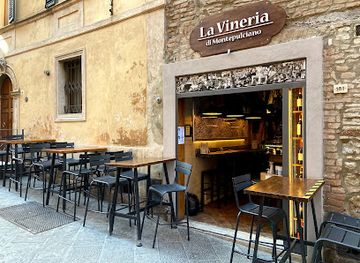
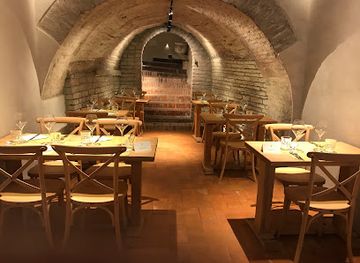
La Vineria di Montepulciano
Discover the authentic taste of Tuscany at La Vineria di Montepulciano, where exquisite small plates and local wines create an unforgettable dining experience.
5 min walk · 0.4 km from city centre
-
Catholic church
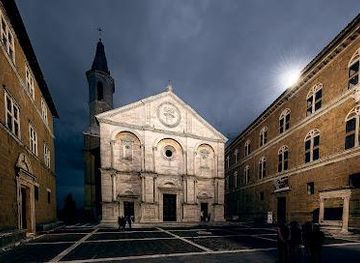
Piazza Pio II
Explore the stunning Piazza Pio II, a UNESCO World Heritage site in Pienza, known for its Renaissance architecture and vibrant local culture.
27 min drive · 8.8 km from city centre
-
Catholic church
Sanctuary of the Madonna di San Biagio
Explore the Sanctuary of the Madonna di San Biagio, a breathtaking Catholic church in Tuscany, offering spirituality and stunning views amidst serene landscapes.
15 min walk · 1.2 km from city centre
-
Wine store
Cantina Ercolani - Città Sotterranea & museo - Cantine storiche a Montepulciano - Azienda agricola
Discover the rich heritage of Montepulciano at Cantina Ercolani, a historical winery offering exceptional wines, guided tours, and local delicacies.
6 min walk · 0.5 km from city centre
Explore Montepulciano on the map
Plan your Montepulciano trip on one map. See where the top attractions, landmarks, restaurants, bars and hotels are, find what's near where you're staying, and book hotels and experiences in a few clicks.
Best hotels in Montepulciano
Best restaurants in Montepulciano
Montepulciano’s food reflects the agricultural traditions of southern Tuscany, with hearty dishes designed for the region’s cool winters and working countryside. Pici, thick hand-rolled pasta associated with the Sienese area, is commonly served with meat, garlic or tomato-based sauces, while local menus may include Tuscan soups, crostini, grilled meats, wild boar and pecorino from the surrounding hills. Chianina beef, produced in the wider Val di Chiana, is an important regional reference, though menus vary by season and supplier. Wine bars and enoteche pair Vino Nobile or Rosso di Montepulciano with cured meats and cheeses, while traditional trattorie occupy lanes around the historic centre. Bakeries and cafés provide simpler stops during the day, and market produce gives the cuisine its strong connection to olive oil, legumes, seasonal vegetables and locally raised meat.
-
Restaurant
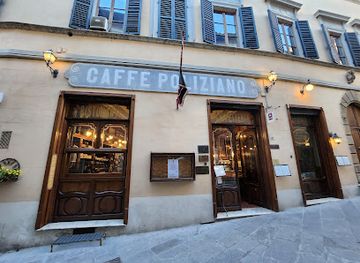
Caffè Poliziano
Discover the flavors of Italy at Caffè Poliziano in Montepulciano – where tradition meets taste in every delightful bite.
8 min walk · 0.6 km from city centre
-
Tuscan
L'OSTERIA ACQUACHETA pranzo e cena tutti i giorni esluso il martedì e mercoledì L'OSTESSA E L'OSTE AUGURANO BUONA VITA
Experience authentic Tuscan cuisine at L'Osteria Acquacheta in Montepulciano - where tradition meets flavor.
12 min walk · 1.0 km from city centre
-
Italian
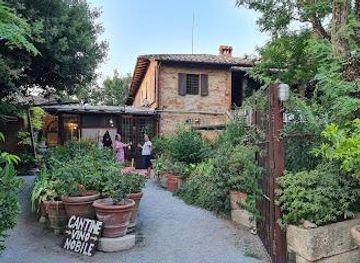
Fattoria Pulcino Ristorante
Rustic Tuscan farmhouse haven serving farm-fresh feasts with panoramic Val d'Orcia views—pollo al mattone, robust wines, and heartfelt hospitality await.
8 min drive · 2.6 km from city centre
-
Restaurant
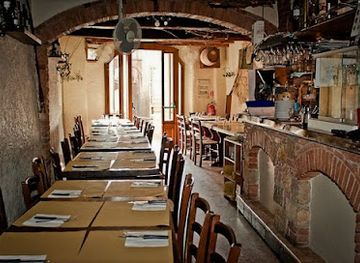
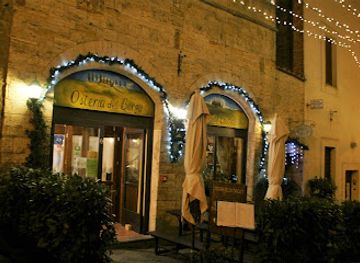
Osteria del Borgo
Experience authentic Tuscan cuisine at Osteria del Borgo in Montepulciano - a culinary journey through Italy's finest flavors.
10 min walk · 0.8 km from city centre
Best bars in Montepulciano
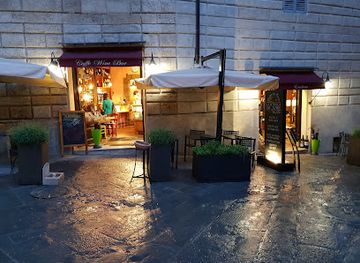
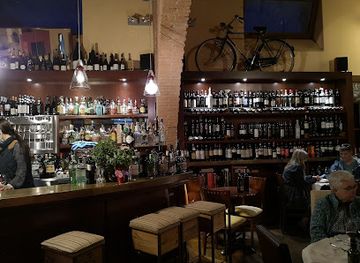
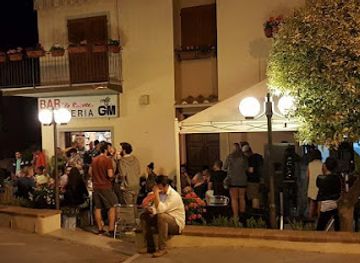
Evenings in Montepulciano are generally sociable and atmospheric rather than centred on large nightclubs. Wine bars and enoteche around the historic centre provide places to taste Vino Nobile, Rosso di Montepulciano and regional wines in historic interiors, while cafés and restaurants keep the principal streets active after sunset. Piazza Grande becomes especially important during cultural events, including the summer Bruscello musical-theatre performances and the festivities associated with the Bravio delle Botti. During the warmer months, outdoor tables and small cultural programmes create a relaxed evening rhythm, but opening patterns vary by season. Visitors seeking a large club scene should look to bigger Tuscan cities; Montepulciano’s nightlife is more closely tied to wine, conversation, local performance and the changing programme of the town’s historic venues.
-
Bar
Caffè Poliziano
Experience authentic Italian flavors in the charming ambiance of Caffè Poliziano, a must-visit café in the heart of Montepulciano.
8 min walk · 0.6 km from city centre
-
Restaurant
La Vineria di Montepulciano
Discover the authentic taste of Tuscany at La Vineria di Montepulciano, where exquisite small plates and exceptional wines await you.
5 min walk · 0.4 km from city centre
-
Restaurant
Porta di Bacco | Ristorante Montepulciano | Osteria
Discover the authentic taste of Tuscany at Porta di Bacco, a charming Italian restaurant and wine bar in Montepulciano, where every meal is a celebration of flavor.
5 min walk · 0.4 km from city centre
-
Wine bar
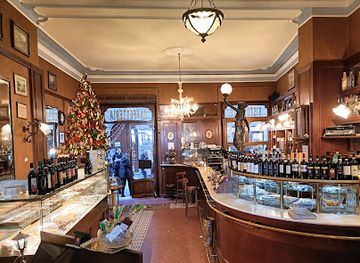
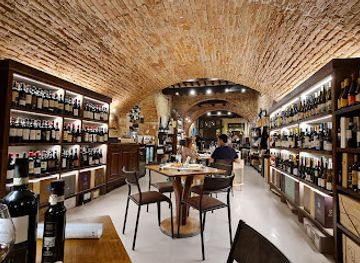
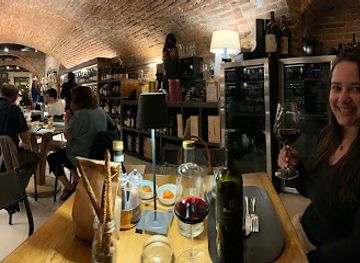
Enoteca La Dolce Vita - Montepulciano
Discover the enchanting flavors of Tuscany at Enoteca La Dolce Vita, Montepulciano's premier wine bar offering local wines and authentic regional cuisine.
10 min walk · 0.8 km from city centre
Best nightclubs in Montepulciano
Evenings in Montepulciano are generally sociable and atmospheric rather than centred on large nightclubs. Wine bars and enoteche around the historic centre provide places to taste Vino Nobile, Rosso di Montepulciano and regional wines in historic interiors, while cafés and restaurants keep the principal streets active after sunset. Piazza Grande becomes especially important during cultural events, including the summer Bruscello musical-theatre performances and the festivities associated with the Bravio delle Botti. During the warmer months, outdoor tables and small cultural programmes create a relaxed evening rhythm, but opening patterns vary by season. Visitors seeking a large club scene should look to bigger Tuscan cities; Montepulciano’s nightlife is more closely tied to wine, conversation, local performance and the changing programme of the town’s historic venues.
-
Wine bar
Enoteca La Dolce Vita - Montepulciano
Explore Tuscany's finest wines at Enoteca La Dolce Vita in Montepulciano, a must-visit wine bar for every traveler.
10 min walk · 0.8 km from city centre
-
Restaurant
La Bottega del Nobile
Discover the essence of Tuscany at La Bottega del Nobile, where authentic cuisine meets exquisite local wines in Montepulciano.
6 min walk · 0.4 km from city centre
-
Wine bar
E Lucevan le Stelle - Wine Bar Bistro
Discover the perfect blend of exquisite wines, gourmet bistro cuisine, and live jazz at E Lucevan le Stelle in Montepulciano.
8 min walk · 0.6 km from city centre
-
Pizza
Menchetti Montepulciano
Discover the authentic flavors of Italy at Menchetti Montepulciano, a pizza restaurant that captivates both locals and tourists with its delicious offerings.
5 min walk · 0.4 km from city centre
Best shops in Montepulciano
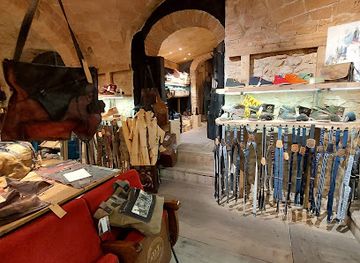
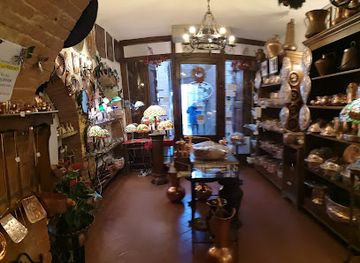
Shopping in Montepulciano is concentrated along the uphill streets between Porta al Prato, Via di Gracciano nel Corso and Piazza Grande. Wine shops and enoteche are central to the visitor economy, offering Vino Nobile di Montepulciano and Rosso di Montepulciano from producers across the appellation, often alongside olive oil, pecorino and other Tuscan foods. Small food shops sell cured meats, pasta and preserves, while craft and gift shops may feature ceramics, leather goods, textiles and locally themed prints. The town does not function as a major fashion-shopping centre; its retail character is more closely tied to agriculture, wine and artisan presentation. Seasonal markets and festival stalls add temporary variety, and browsing the side streets can reveal independent workshops that are easy to miss on the main ascent. Buyers should check labelling and provenance when seeking genuinely local products.
-
Leather goods store
Maledetti Toscani Montepulciano
Explore exquisite craftsmanship and unique leather goods at Maledetti Toscani in the heart of Montepulciano, Tuscany.
8 min walk · 0.6 km from city centre
-
Gift shop
Bottega del Rame
Explore Bottega del Rame in Montepulciano for unique antiques and handcrafted treasures that embody Italian artistry and charm.
12 min walk · 0.9 km from city centre
-
Leather goods store
39 Yellow
Explore the exquisite world of handcrafted leather at 39 Yellow, Montepulciano's premier destination for authentic Italian goods.
7 min walk · 0.5 km from city centre
-
Fashion accessories store
Pane E Tulipani
Explore the artistic charm of Pane E Tulipani, a fashion accessories store in Montepulciano, where Italian craftsmanship meets contemporary elegance.
11 min walk · 0.8 km from city centre
Get your free copy of our complete guide to Montepulciano, delivered straight to you.
Everything on this page, from attractions and restaurants to essentials and local phrases, in one PDF you can read offline, print or share.
Already have an account? Sign in
Your Montepulciano guide is ready.
We'll send it to · Not you? Sign out

Getting your guide ready…
We are putting together a fresh copy of the Montepulciano guide. This can take up to a minute.
This can take a few moments. If your browser asks, choose Allow so the download can start. You'll find the guide in your Downloads folder.
Nothing happened? Download it again
Sorry, the guide is taking longer than usual. Please try again in a minute, or get it by email instead.
Montepulciano essentials
Currency and Payment
Safety
Emergency Situations
Do's and Don'ts
Local Tips
From Eve
Local phrases worth knowing
You don't need to get them perfect. A few words go a long way, and locals appreciate the effort.
Basics
| English | Local | Say it |
|---|---|---|
| Hello | Ciao | [chow] |
| Goodbye | Arrivederci | [ah-ree-veh-dehr-chee] |
| Yes | Sì | [see] |
| No | No | [noh] |
| Please/You're welcome | Per favore/Prego | [pehr fah-voh-reh/preh-goh] |
| Thank you | Grazie | [grah-tsyeh] |
| Excuse me/Sorry | Mi scusi/Scusa | [mee skoo-zee/skoo-sah] |
| How are you? | Come stai? | [koh-meh stai] |
| Fine. And you? | Bene. E tu? | [beh-neh. eh too] |
| Do you speak English? | Parli inglese? | [pahr-lee een-gleh-zeh] |
| I don't understand | Non capisco | [nohn kah-pee-skoh] |
Eating & Drinking
| English | Local | Say it |
|---|---|---|
| I'd like to see the menu, please | Vorrei vedere il menu, per favore | [vohr-reh-ee veh-deh-reh eel meh-noo, pehr fah-voh-reh] |
| I don't eat meat | Non mangio carne | [nohn mahn-joh kahr-neh] |
| Cheers! | Salute! | [sah-loo-teh] |
| I would like to pay, please | Vorrei pagare, per favore | [vohr-reh-ee pah-gah-reh, pehr fah-voh-reh] |
Emergencies
| English | Local | Say it |
|---|---|---|
| Help! | Aiuto! | [ah-yoo-toh] |
| Go away! | Vai via! | [vah-ee vee-ah] |
| Call the Police! | Chiami la polizia! | [kyah-mee lah poh-lee-tsyah] |
| Call a doctor! | Chiami un dottore! | [kyah-mee oon doh-toh-reh] |
| I'm lost | Mi sono perso | [mee soh-noh pehr-soh] |
| I'm ill | Sto male | [stoh mah-leh] |
Shopping
| English | Local | Say it |
|---|---|---|
| I'd like to buy... | Vorrei comprare... | [vohr-reh-ee kohm-prah-reh] |
| I'm just looking | Sto solo guardando | [stoh soh-loh gwar-dahn-doh] |
| How much is it? | Quanto costa? | [kwahn-toh koh-stah] |
| That's too expensive | È troppo caro | [eh troh-poh kah-roh] |
| Can you lower the price? | Può abbassare il prezzo? | [pwoh ahb-bahs-sah-reh eel preh-tsoh] |
Time & Numbers
| English | Local | Say it |
|---|---|---|
| What time is it? | Che ora è? | [keh oh-rah eh] |
| It's one o'clock | È l'una | [eh loo-nah] |
| Half past (10) | Dieci e mezza | [dee-eh-chee eh meh-tsa] |
| Morning | Mattina | [maht-tee-nah] |
| Afternoon | Pomeriggio | [poh-meh-ree-joh] |
| Evening | Sera | [seh-rah] |
| Yesterday | Ieri | [yeh-ree] |
| Today | Oggi | [oh-djee] |
| Tomorrow | Domani | [doh-mah-nee] |
| 1 | Uno | [oo-noh] |
| 2 | Due | [doo-eh] |
| 3 | Tre | [treh] |
| 4 | Quattro | [kwah-troh] |
| 5 | Cinque | [cheen-kweh] |
| 6 | Sei | [seh-ee] |
| 7 | Sette | [seh-tteh] |
| 8 | Otto | [oh-ttoh] |
| 9 | Nove | [noh-veh] |
| 10 | Dieci | [dee-eh-chee] |
Transport & Directions
| English | Local | Say it |
|---|---|---|
| Where's a/the...? | Dov'è un/il...? | [doh-veh oon/eel] |
| What's the address? | Qual è l'indirizzo? | [kwahl eh leen-dee-reet-soh] |
| Can you show me (on the map)? | Puoi mostrarmi (sulla mappa)? | [pwah-ee mohs-trahr-mee (sool-lah mahp-pah)] |
| When's the next (bus)? | Quando è il prossimo (autobus)? | [kwahn-doh eh eel prohss-see-moh (ow-toh-boos)] |
| A ticket (to ....) | Un biglietto (per ....) | [oon beel-lyeh-toh (pehr)] |
History of Montepulciano
Ancient Settlements and Etruscan Influence
The hill on which Montepulciano stands was occupied before the medieval town took shape, and archaeological evidence links the surrounding territory to Etruscan settlement and culture. Nearby Etruscan centres, including Chiusi, demonstrate the importance of southern Tuscany within the ancient inland networks of central Italy. Roman occupation followed, leaving traces across the wider landscape rather than a single monumental urban centre at modern Montepulciano. The ridge’s defensible position and command of routes between the Val di Chiana and Val d’Orcia later encouraged the growth of a fortified medieval settlement. Winegrowing also has deep roots in the territory, although the modern identity of Vino Nobile emerged through later agricultural, commercial and regulatory developments.
The Medieval Castle Between Siena and Florence
Medieval Montepulciano developed as a fortified hilltop community whose position made it strategically valuable to rival powers. For much of the Middle Ages, the town lay within the contested sphere of Siena and Florence, and its walls, gates and elevated streets reflected the political tensions of the period. The settlement was governed through local institutions while remaining connected to the wider feudal and ecclesiastical structures of Tuscany. Its urban form still preserves this defensive ancestry: the historic route climbs towards the summit, where civic and religious buildings later replaced or absorbed earlier fortified structures. Competition between neighbouring states helped make Montepulciano a town of unusual political importance for its size.
Florentine Rule and Renaissance Transformation
Montepulciano came decisively under Florentine control in the early sixteenth century, beginning a period in which Medici power reshaped the town’s public image. Renaissance architects and patrons introduced more ordered classical forms to the medieval setting, particularly around the upper town. Antonio da San Gallo the Elder designed the Church of San Biagio outside the walls from 1518, while the Piazza Grande acquired the palaces and civic buildings that give it much of its present character. The transformation did not erase the medieval street plan; instead, Renaissance architecture was inserted into it, creating the striking contrast between narrow uphill lanes and spacious, formally composed façades.
An Episcopal City and Cultural Centre
In 1561, Pope Pius IV established the Diocese of Montepulciano, confirming the town’s religious and civic status within Tuscany. The Cathedral, built on Piazza Grande over the course of the late sixteenth and early seventeenth centuries, became the principal expression of this change, although its exterior remained unfinished. Ecclesiastical institutions, noble families and municipal authorities contributed to the town’s cultural development, while palaces and churches accumulated works of art associated with the Sienese and Florentine worlds. The period also strengthened Montepulciano’s role as a centre for the surrounding farming and wine-producing territory, linking its ceremonial architecture to the economic life of the hills.
From the Grand Duchy to Modern Italy
Montepulciano remained part of the Grand Duchy of Tuscany until the political unification of Italy in the nineteenth century. The new national state brought administrative change while the town retained its agricultural and commercial character. During the modern period, improvements in transport and wine production connected local producers with broader markets, gradually giving Vino Nobile a stronger international profile. At the same time, the historic centre preserved its medieval and Renaissance fabric rather than undergoing extensive industrial rebuilding. Today, the town’s identity rests on the relationship between its built heritage and the countryside that supports viticulture, olive growing, livestock farming and regional food traditions.
Travel experiences inspired by this city
-
 9 Day Trip
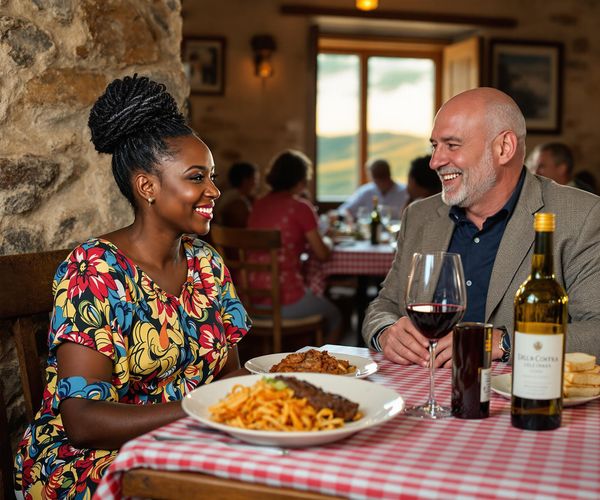
Romantic Escape to Montepulciano: A Journey Through History and Wine
Experience the charm of Montepulciano with its stunning landscapes, rich history, and exquisite wines, perfect for a romantic getaway.
9 Day Trip
Romantic Escape to Montepulciano: A Journey Through History and Wine
Experience the charm of Montepulciano with its stunning landscapes, rich history, and exquisite wines, perfect for a romantic getaway.
 5 Jul 2025
By Loide Johannes -
 10 Day Trip
A Solo Cultural Expedition to Orvieto
Explore the historical charm and cultural richness of Orvieto, Italy, on a solo journey of discovery and indulgence in the heart of Umbria.
10 Day Trip
A Solo Cultural Expedition to Orvieto
Explore the historical charm and cultural richness of Orvieto, Italy, on a solo journey of discovery and indulgence in the heart of Umbria.
 1 Jul 2025
By Eleni Papadopoulou-Schmidt -
 7 Day Trip
Exploring the Enchanting Streets of Perugia
Discover the medieval charm of Perugia with its rich history, vibrant culture, and delicious cuisine. A perfect romantic getaway in the heart of Italy.
7 Day Trip
Exploring the Enchanting Streets of Perugia
Discover the medieval charm of Perugia with its rich history, vibrant culture, and delicious cuisine. A perfect romantic getaway in the heart of Italy.
 10 Jun 2025
By Georgios Sideropoulos -
 8 Day Trip
Family Adventure in Montepulciano: Wine, History, and Culture
Join us on a family journey to Montepulciano, Italy, for a blend of wine, history, and culture in the heart of Tuscany.
8 Day Trip
Family Adventure in Montepulciano: Wine, History, and Culture
Join us on a family journey to Montepulciano, Italy, for a blend of wine, history, and culture in the heart of Tuscany.
 10 Jun 2025
By Sofia Romano -
 8 Day Trip
Family Adventure in the Heart of Tuscany: Montepulciano
Discover Montepulciano's Renaissance charm and scenic vineyards on a family adventure in Tuscany's heart. Experience culture, cuisine, and stunning landscapes.
8 Day Trip
Family Adventure in the Heart of Tuscany: Montepulciano
Discover Montepulciano's Renaissance charm and scenic vineyards on a family adventure in Tuscany's heart. Experience culture, cuisine, and stunning landscapes.
 10 Jun 2025
By Yael Cohen-Levi -
 10 Day Trip
Exploring the Charms of Montepulciano: A Tuscan Adventure
Join Michelle and Klaus on a delightful 10-day journey to Montepulciano, Tuscany, where history, wine, and culture create an unforgettable experience.
10 Day Trip
Exploring the Charms of Montepulciano: A Tuscan Adventure
Join Michelle and Klaus on a delightful 10-day journey to Montepulciano, Tuscany, where history, wine, and culture create an unforgettable experience.
 5 Jun 2025
By Michelle Taylor
Swipe for more travel diaries
Montepulciano in Photos
Browse through our photo collection highlighting the charm and character of the destination.
Cities near Montepulciano
The closest cities to Montepulciano, if you have time for more than one stop.
-

-

-

-
-


Swipe for more cities
Explore more

Explore more of Italy
Discover Italy: A land of ancient history, artistic marvels, and culinary delights; where every corner reveals a new story and every meal is a celebration.
Explore Italy