

Free Malësia Travel Guide & Mobile App
Explore Malësia with free travel guides. Discover regional history, expert tips, proposed trips, and audio guides on web or mobile app.


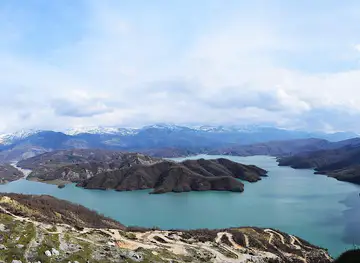
Explore Malësia’s limestone valleys, alpine villages, mountain roads and northern Albanian traditions from Koplik to Vermosh.
Read more about Malësia
When is the best time to visit Malësia?
Best: June–July, September · 24–29°C| Month | High (°C) | Rainfall (mm) |
|---|---|---|
| January | 7 | 75 |
| February | 8 | 66 |
| March | 12 | 65 |
| April | 16 | 60 |
| May | 21 | 55 |
| June (best) | 25 | 50 |
| July (best) | 29 | 45 |
| August | 29 | 50 |
| September (best) | 24 | 55 |
| October | 19 | 60 |
| November | 13 | 65 |
| December | 8 | 70 |
Getting to and around Malësia
How to get there
Transportation
Destinations in Malësia
Resorts, valleys and scenic spots worth a trip of their own.
-

-

-
-


Swipe for more destinations
Best attractions in Malësia
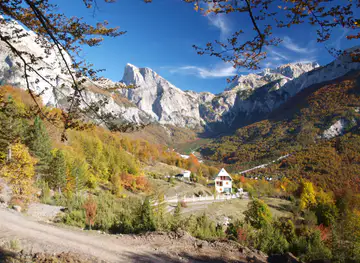
Malësia’s attractions are primarily landscapes and village environments rather than large, purpose-built visitor sites. The SH20 provides access to the Cemi valleys and a sequence of mountain viewpoints as it climbs from the lowlands towards Kelmend. Tamarë is a practical starting point for exploring the valley, while roads and walking routes lead towards Selcë, Lepushë and Vermosh, where beech woodland, open pasture and high mountain scenery dominate. Lepushë is associated with walking and seasonal rural tourism; Vermosh, near the northern frontier, has a more remote valley character and is a useful base for exploring the surrounding landscape. Around Kelmend, historic churches, stone houses, small cemeteries and agricultural settlements reveal the area’s religious and social history. Outdoor visitors can walk, cycle, photograph landscapes and observe traditional pastoral settings, but should expect variable trail marking and limited services. The appeal is the combination of dramatic geology, long road journeys, village hospitality and a living highland culture, rather than a concentrated circuit of ticketed attractions.
-
Tourist attraction
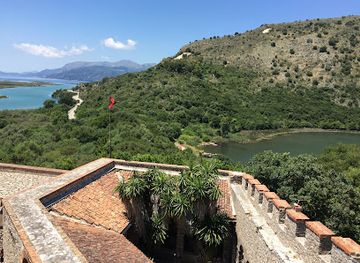
Butrint National Archaeological Park
Explore ancient civilizations amidst stunning natural beauty at Butrint National Park, a UNESCO World Heritage Site on the Albanian Riviera.
-
Tourist attraction
The Blue Eye
Experience the stunning beauty of The Blue Eye, a natural spring with vibrant turquoise waters and a serene atmosphere in Albania's breathtaking landscape.
-
Tourist attraction
Skanderbeg Square
Discover Albania's heart in Skanderbeg Square, Tirana: a vibrant hub of history, culture, and modern life, surrounded by iconic landmarks.
-
Tourist attraction
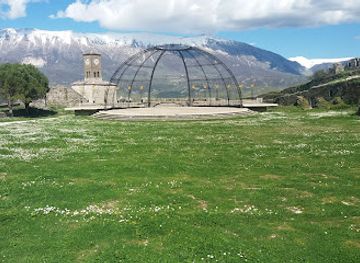
Castle of Gjirokastra
Explore a massive Balkan fortress in Gjirokastra, Albania, with centuries of history, stunning views & unique Cold War relics.


Best landmarks in Malësia
The SH20 is Malësia’s defining modern landmark: a major mountain route whose engineered curves connect the northern lowlands with Tamarë, Kelmend and Vermosh while opening views into steep limestone valleys. The Cemi valley around Tamarë provides the region’s most recognisable geographical setting, with the river confined between rugged slopes and villages strung along the road. Further into Kelmend, the settlements of Selcë and Lepushë are notable for their highland architecture, pasture landscapes and relationship with surrounding woodland. Vermosh, at the northern end of the Albanian road corridor, is a significant frontier landscape as well as a mountain settlement. Smaller landmarks include village churches, stone houses, family towers and historic burial grounds, whose forms reflect the religious diversity and defensive traditions of northern Albanian communities. Their importance is often local rather than monumental, and the landscape around them is part of their meaning. Visitors should seek permission before entering religious buildings or photographing private homes, particularly where a site remains part of everyday village life.
-
National park
Butrint National Archaeological Park
Discover Butrint National Park: Where ancient ruins meet stunning nature in Albania's UNESCO World Heritage Site, offering a journey through Mediterranean history.
-
Nature preserve
The Blue Eye
Discover the mesmerizing beauty of the Blue Eye, a natural spring with vibrant blue waters and lush surroundings, near Sarandë, Albania.
-
Tourist attraction
Skanderbeg Square
Discover Skanderbeg Square in Tirana: a vibrant hub of history, culture, and modern Albanian life, surrounded by iconic landmarks and attractions.
-
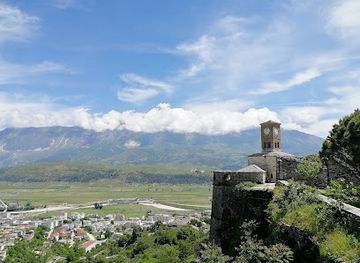
Castle
Castle of Gjirokastra
Explore Gjirokastra Castle, a Balkan fortress with centuries of history, panoramic views, and unique Cold War relics.


Explore Malësia on the map
Plan your trip on one map. See where the top cities, national parks and sights are, and book hotels and experiences in a few clicks.
Best hotels in Malësia
Best restaurants in Malësia
Dining in Malësia is closely tied to family guesthouses, village kitchens and the produce of the surrounding mountains. Menus commonly draw on cornmeal, potatoes, beans, seasonal vegetables, mountain herbs, dairy products and locally raised meat, with simple breads and fresh cheeses often forming part of a substantial meal. In Kelmend, dishes may reflect both valley farming and summer pastoral traditions, while trout and other freshwater offerings can appear where locally available, though visitors should ask about provenance. Tamarë and Koplik provide the broadest choice of cafés and casual eating places, whereas meals in Lepushë, Selcë and Vermosh are often arranged through accommodation providers. Advance notice is sensible, particularly outside the main summer season. Albania’s familiar coffee culture is present in the larger settlements, but the most distinctive food experience is usually a home-cooked meal served with local conversation and a slower rhythm rather than a formal restaurant service.
-
Restaurant
Restorant Tymi
Discover authentic Greek and Mediterranean cuisine at Restorant Tymi in Tirana - A culinary experience that delights every palate.
-
Restaurant
Fisi Restaurant - Traditional Food
Experience authentic Albanian cuisine at Fisi Restaurant in Shkodër - where tradition meets flavor.
-
Restaurant
Restorant DeviselD
Experience authentic Albanian cuisine at Restorant DeviselD in Elbasan - where tradition meets flavor.
-
Steak
Smoke House Bar & Grill
Experience the best of Tirana's culinary scene at Smoke House Bar & Grill, where exceptional steaks meet traditional Albanian flavors.


Best bars in Malësia
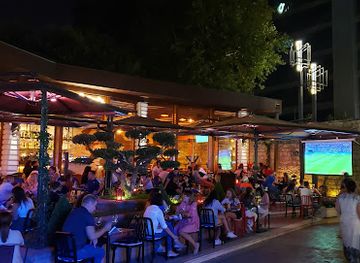
Malësia does not have a substantial nightclub scene. Evening life is centred on cafés, modest bars, village guesthouses and restaurants, with Koplik and Tamarë offering more opportunities for a drink or coffee than the upper valleys. In rural areas, the evening usually means a shared meal, conversation and views over the mountains rather than late-night entertainment. Some accommodation providers may serve beer, raki or wine, but availability and licensing vary, so visitors should not expect a bar to operate like one in Tirana or a coastal resort. Seasonal activity increases in summer when walkers and Albanian visitors return to villages such as Lepushë and Vermosh. Traditional hospitality can include locally made spirits, but drinking is not necessary to participate in social life, and drivers should take particular care on winding roads after dark.
-
Cocktail bar
Jericho Cocktail Bar
Experience the vibrant nightlife of Saranda at Jericho Cocktail Bar, offering stunning sea views and expertly crafted cocktails.
-
Bar
Oping's Cocktails & Beer
Immerse yourself in Tirana's vibrant nightlife at Oping's Cocktails & Beer, where cocktails and local brews come alive in a lively setting.
-
Cocktail bar
Radio bar Tirana
Discover the lively ambiance and innovative cocktails at Radio Bar Tirana, a premier cocktail destination in Albania's vibrant capital.
-
Cocktail bar
Mojo Cocktails Bar
Experience the vibrant nightlife of Himarë at Mojo Cocktails Bar, where expertly crafted cocktails meet stunning coastal views.



Best nightclubs in Malësia
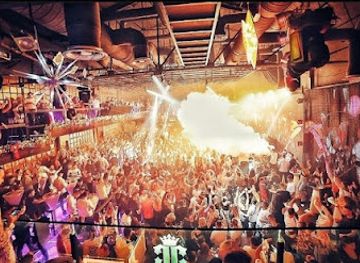
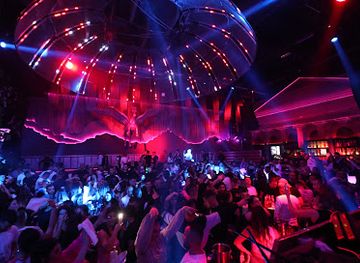
Malësia does not have a substantial nightclub scene. Evening life is centred on cafés, modest bars, village guesthouses and restaurants, with Koplik and Tamarë offering more opportunities for a drink or coffee than the upper valleys. In rural areas, the evening usually means a shared meal, conversation and views over the mountains rather than late-night entertainment. Some accommodation providers may serve beer, raki or wine, but availability and licensing vary, so visitors should not expect a bar to operate like one in Tirana or a coastal resort. Seasonal activity increases in summer when walkers and Albanian visitors return to villages such as Lepushë and Vermosh. Traditional hospitality can include locally made spirits, but drinking is not necessary to participate in social life, and drivers should take particular care on winding roads after dark.
-
Night club
Living Room Antik
Discover Tirana's nightlife at Living Room Antik, a vibrant night club and beer hall offering great music, eclectic decor, and a welcoming atmosphere.
-
Night club
Cinco Cavalli Premium Club
Experience the vibrant nightlife at Cinco Cavalli Premium Club in Sauk, Albania, where electrifying music and a stylish ambiance create unforgettable memories.
-
Night club
Sky Club
Discover Tirana's vibrant nightlife at Sky Club, where exceptional music and stunning views create unforgettable nights.
-
Club
Magic Club
Explore the vibrant nightlife at Magic Club in Tirana, where electrifying music and a lively atmosphere await every night.

Best shops in Malësia
Shopping in Malësia is modest and practical, with Koplik and Tamarë providing the most useful places for food, drinks, outdoor supplies and everyday provisions. In the mountain villages, family guesthouses and small local shops may sell or serve products such as mountain honey, cheeses, jams, herbs, preserves and raki, although availability changes with the season and household production. These goods are usually bought directly from producers or hosts rather than from a specialised retail district. Craft traditions, woven items and carved domestic objects may occasionally be encountered, but visitors should distinguish genuinely local work from generic souvenirs. Larger and more varied shopping is available outside the region in Shkodër, while Malësia itself is better suited to buying edible regional produce and supporting small family businesses. Carry cash in lek for rural purchases, ask about prices before buying homemade goods and avoid removing plants, stones or archaeological-looking objects from the landscape.
-
Shopping mall
Toptani
Explore Toptani in Tirana: a vibrant shopping mall with diverse shops, delicious dining, and rich cultural experiences in the heart of Albania.
-
Shopping mall
Kristal Center
Explore Kristal Center, the ultimate shopping and dining destination in Tirana, Albania, featuring a variety of stores, boutiques, and culinary delights.
-
Shopping mall
Arena Center
Discover the ultimate shopping experience at Arena Center in Tirana, Albania, where local culture meets modern retail and entertainment.
-
Gift shop
Memories Shop at Tirana Airport
Explore the Memories Shop at Tirana Airport for unique Albanian souvenirs, local crafts, and traditional gifts to cherish your travel experience.


Get your free copy of our complete guide to Malësia, delivered straight to you.
Everything on this page, from attractions and restaurants to essentials and local phrases, in one PDF you can read offline, print or share.
Already have an account? Sign in
Your Malësia guide is ready.
We'll send it to · Not you? Sign out

Getting your guide ready…
We are putting together a fresh copy of the Malësia guide. This can take up to a minute.
This can take a few moments. If your browser asks, choose Allow so the download can start. You'll find the guide in your Downloads folder.
Nothing happened? Download it again
Sorry, the guide is taking longer than usual. Please try again in a minute, or get it by email instead.
Malësia essentials
Currency and Payment
Safety
Emergency Situations
Do's and Don'ts
Local Tips
From Eve
Local phrases worth knowing
You don't need to get them perfect. A few words go a long way, and locals appreciate the effort.
Basics
| English | Local | Say it |
|---|---|---|
| Hello | Përshëndetje | [Per-shen-deh-tee] |
| Goodbye | Mirupafshim | [Mee-roo-pahf-sheem] |
| Yes | Po | [Poh] |
| No | Jo | [Yoh] |
| Please/You're welcome | Të lutem/Faleminderit | [Teh loo-tem/Fah-leh-min-deh-reet] |
| Thank you | Faleminderit | [Fah-leh-min-deh-reet] |
| Excuse me/Sorry | Më falni | [Meh fal-nee] |
| How are you? | Si jeni? | [See yeh-nee] |
| Fine. And you? | Mirë. Edhe ti? | [Meer. Ed-heh tee] |
| Do you speak English? | A flisni anglisht? | [Ah flee-snee an-gleesh?] |
| I don't understand | Nuk kuptoj | [Nook koop-toy] |
Eating & Drinking
| English | Local | Say it |
|---|---|---|
| I'd like to see the menu, please | Do doja të shoh menunë, të lutem | [Doh doh-yah teh shoh meh-noon-eh, teh loo-tem] |
| I don't eat meat | Nuk ha mish | [Nook hah meesh] |
| Cheers! | Gëzuar! | [Guh-zoo-ar!] |
| I would like to pay, please | Do doja të paguaj, të lutem | [Doh doh-yah teh pah-goo-eye, teh loo-tem] |
Emergencies
| English | Local | Say it |
|---|---|---|
| Help! | Ndihmë! | [Ndee-muh!] |
| Go away! | Shko larg! | [Sh-koh larg!] |
| Call the Police! | Thirrni policinë! | [Theer-nee poh-lee-chee-neh!] |
| Call a doctor! | Thirrni një doktor! | [Theer-nee nyuh dok-tor!] |
| I'm lost | Jam humbur | [Yahm hoom-bur] |
| I'm ill | Jam i sëmurë | [Yahm ee suh-moor-eh] |
Shopping
| English | Local | Say it |
|---|---|---|
| I'd like to buy... | Do doja të blej... | [Doh doh-yah teh bleh...] |
| I'm just looking | Po shikoj vetëm | [Poh shee-koy vet-em] |
| How much is it? | Sa kushton? | [Sah koosh-ton?] |
| That's too expensive | Kjo është shumë e shtrenjtë | [Kyo esh-tuh shoom eh shtren-tay] |
| Can you lower the price? | A mund të ulni çmimin? | [Ah moond teh ool-nee chmee-meen?] |
Time & Numbers
| English | Local | Say it |
|---|---|---|
| What time is it? | Sa është ora? | [Sah esh-tuh or-ah?] |
| It's one o'clock | Është një orë | [Esh-tuh nyuh or-eh] |
| Half past (10) | Pjesë pas (10) | [Pye-seh pahs (dye-të)] |
| Morning | Mëngjes | [Men-gjes] |
| Afternoon | Pasdite | [Pahz-dee-teh] |
| Evening | Mbrëmje | [Mbruhm-yeh] |
| Yesterday | Djes | [Dye-es] |
| Today | Sot | [Sot] |
| Tomorrow | Nesër | [Neh-sair] |
| 1 | 1 | [1] |
| 2 | 2 | [2] |
| 3 | 3 | [3] |
| 4 | 4 | [4] |
| 5 | 5 | [5] |
| 6 | 6 | [6] |
| 7 | 7 | [7] |
| 8 | 8 | [8] |
| 9 | 9 | [9] |
| 10 | 10 | [10] |
Transport & Directions
| English | Local | Say it |
|---|---|---|
| Where's a/the...? | Ku është një...? | [Koo esh-tuh nyuh...?] |
| What's the address? | Cila është adresa? | [Tsee-lah esh-tuh ah-dre-sah?] |
| Can you show me (on the map)? | A mund të më tregoni (në hartë)? | [Ah moond teh meh treh-goh-nee (neh har-tay)?] |
| When's the next (bus)? | Kur është autobuzi tjetër? | [Koorr esh-tuh ahu-boo-zee tyeh-ter?] |
| A ticket (to ....) | Një biletë (për ....) | [Nyuh bee-leh-tuh (puhr ....)] |
History of Malësia
Illyrian and Roman-era mountain communities
The northern Albanian mountains formed part of the wider cultural zone inhabited in antiquity by Illyrian-speaking communities. Rather than a heavily urbanised landscape, Malësia was characterised by defensible valleys, upland routes and settlements adapted to difficult terrain. Roman authority reached the wider Shkodër area and connected the region to roads and administrative centres around ancient Scodra, but the mountains retained considerable local autonomy. Archaeological evidence in the broader northern Albanian highlands is more dispersed than in the principal lowland cities, and the region’s historical importance lies partly in the continuity of mountain settlement and pastoral movement.
Medieval highland communities
During the medieval period, the valleys north of Shkodër were occupied by communities organised through kinship, village authority and customary obligations. Churches and local settlements developed within a politically changing frontier influenced by Albanian noble families, Venetian interests and neighbouring Slavic powers. The communities later associated with Kelmend, Hot and Shkrel became increasingly recognisable as distinct highland groups. Their location between the Adriatic lowlands and the interior mountains encouraged both trade and conflict, while the terrain allowed villages to preserve strong local institutions.
Ottoman frontier and the rise of Kelmend’s identity
Ottoman influence expanded across northern Albania from the late medieval period, but effective control in the highlands was often negotiated rather than absolute. Kelmend and neighbouring communities maintained a reputation for resisting outside authority, while Catholic institutions remained important in parts of the region. The mountains’ position near the Ottoman-Montenegrin frontier gave them strategic significance and exposed residents to shifting borders, taxation pressures and military campaigns. Family alliances, customary law and seasonal pastoralism helped organise daily life where state administration was relatively limited.
The modern border and Albanian independence
The late nineteenth and early twentieth centuries brought major political change. The Congress of Berlin and subsequent boundary decisions placed northern Albanian communities on different sides of the new frontier with Montenegro, separating some traditional social and economic connections. During the Albanian national movement, figures and communities from the northern highlands contributed to debates about autonomy, language and statehood. After Albania declared independence in 1912, the Malësia area became part of a modern national administration centred increasingly on Shkodër and the northern lowlands.
Communist rule and mountain isolation
After the Second World War, Albania’s communist government reorganised land, agriculture and local authority, while religious life was eventually suppressed across the country. Remote mountain communities experienced limited infrastructure, restricted movement and substantial economic hardship. Roads and state services reached more valleys, but Malësia remained comparatively isolated from international travel and cross-border family networks. The end of communism after 1990 brought freedom of movement but also emigration, depopulation in some villages and the gradual growth of guesthouses and nature-based tourism.
Road building and contemporary mountain tourism
The improvement of the SH20 corridor has changed access to Malësia more than any single recent development. The route links the lowlands near Hani i Hotit and Koplik with Tamarë, Kelmend and the border towards Montenegro, making villages that were once difficult to reach more accessible to visitors. Tourism remains small-scale and strongly seasonal, with family guesthouses, walking, cycling and scenic driving forming its main foundations. The region continues to face challenges including outward migration, limited services and the need to balance tourism income with landscape protection and local control.
Malësia in Photos
Browse through our photo collection highlighting the charm and character of the destination.
Neighbouring regions of Malësia
The closest regions to Malësia, if you have time for more than one.
-

-

-

-
-


Swipe for more regions
Explore more

Explore more of Albania
Discover Albania: A land of untamed beauty, rich history, and warm hospitality, offering stunning beaches, rugged mountains, and vibrant cities.
Explore Albania