
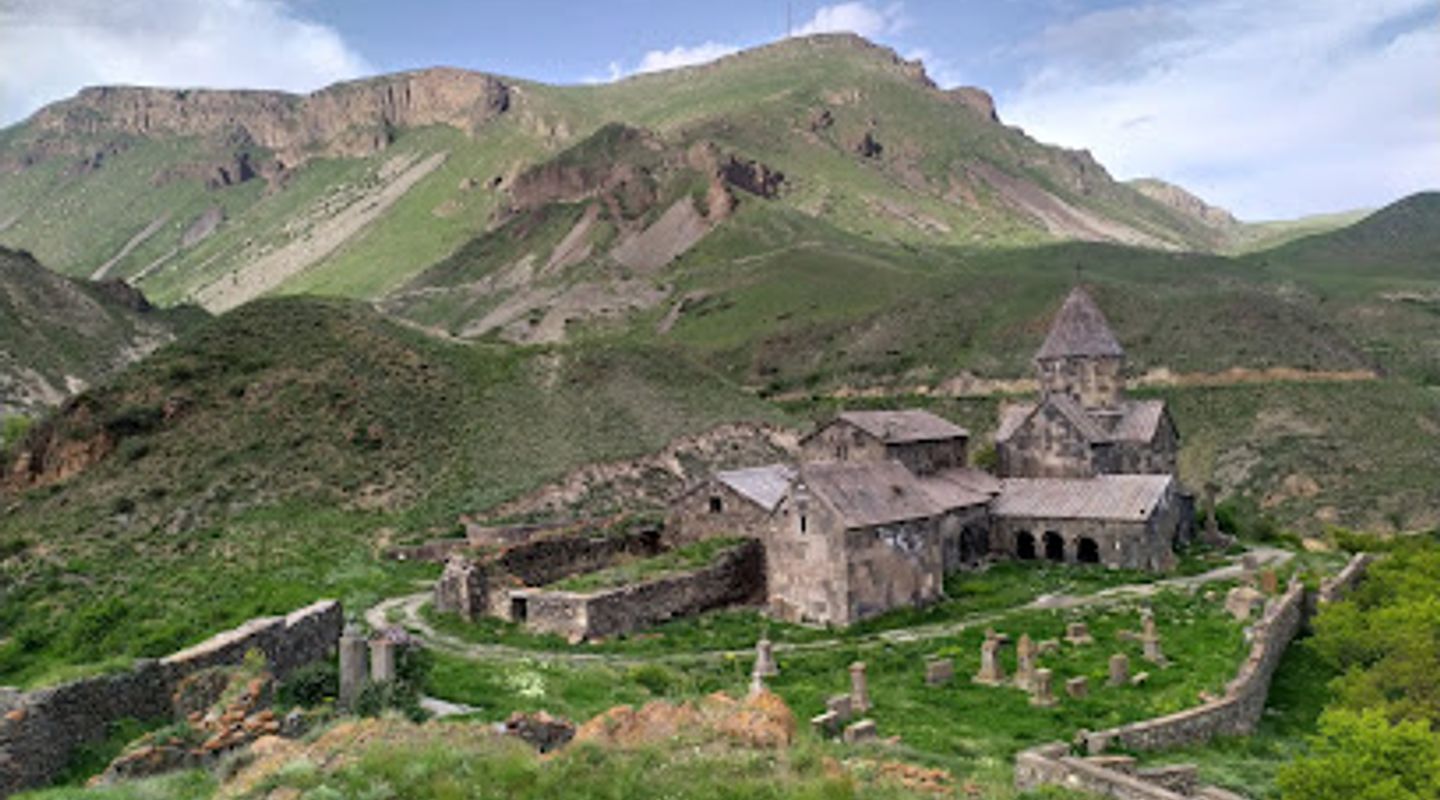
Vorotnavank church, Syunik Travel Guide
Explore the tranquil beauty of Vorotnavank Church, a hidden gem in Armenia's Vorotan Valley, rich in history and spiritual significance.
Nestled in the picturesque Vorotan Valley, Vorotnavank Church is a stunning medieval monastery that offers travelers a glimpse into Armenia’s rich spiritual heritage. Surrounded by breathtaking landscapes, this historical site is perfect for those seeking tranquility and a connection to ancient traditions.
A brief summary to Vorotnavank church
- Vorotan, AM

Know before you go
Hi, I'm Eve. Here are a few practical things to know before exploring Vorotnavank church.
- Visit early in the morning or late afternoon for the best light for photography.
- Take a moment to explore the surrounding area for stunning views of the Vorotan Valley.
- Dress modestly out of respect for the site's spiritual significance.
- Bring a picnic to enjoy the peaceful atmosphere and stunning scenery.
Do you manage this location?
Take control to get all the benefits, like improved information, better appearance, and stronger visibility across AI-powered discovery. Learn more about listing your business on Evendo
Activate your presenceOther nearby places you may find interesting
The closest places of the same kind, if this one is not quite what you had in mind.


Explore Vorotnavank church on the Map
A handpicked selection of must-see spots near Vorotnavank church, mapped for you.
Getting There
-
Car
If you are traveling by car, start from the city of Goris. Head southeast on the M2 highway towards Vorotan. After approximately 16 kilometers, take the exit towards Vorotan. Follow the signs for Vorotnavank church, which is about 5 kilometers from the highway. The church is located at Vorotan 3518, and you will see it on your right as you approach.
-
Public Transportation
To reach Vorotnavank church using public transportation, take a minibus (marshrutka) from Goris towards Vorotan. The marshrutka will drop you off at the nearest point, which is about 1 kilometer from the church. From there, you can either walk or hire a local taxi to cover the remaining distance. The marshrutka ride will typically cost around 500 AMD.
-
Walking
If you prefer to walk from the drop-off point after taking a marshrutka, head northeast on the road leading towards Vorotan village. Continue walking for about 1 kilometer until you see signs for Vorotnavank church. The path is scenic, and you will enjoy views of the surrounding landscape.
-
Taxi
For a more direct route, you can hire a taxi from Goris to Vorotnavank church. This option is more expensive, typically costing around 3,000-4,000 AMD, but it offers convenience and saves time. Make sure to negotiate the fare before starting your journey.
Discover more about Vorotnavank church













Your all‑in‑one travel companion app
Explore expert travel guides, compare and book tours, experiences, hotels, and more—all from the palm of your hand. Download now for seamless trip planning wherever your wanderlust takes you.


Explore More of Syunik
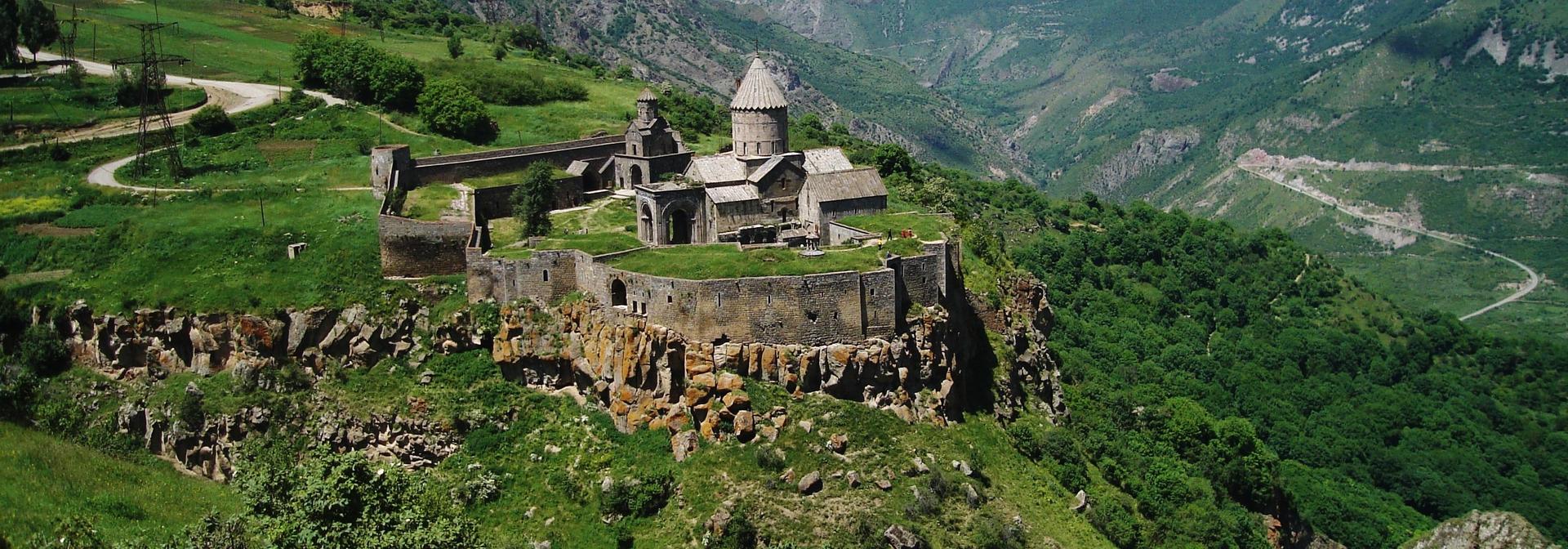
Looking beyond Vorotnavank church? Discover Syunik for broader travel guides, local hot-spots, and regional highlights.
Explore Syunik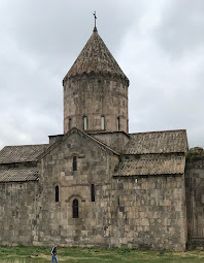
Discover Gavazan, the ancient swinging column at Tatev Monastery, a testament to Armenia's medieval ingenuity and earthquake detection system.
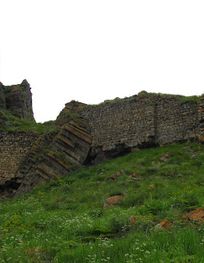
Discover the breathtaking Vorotnaberd Fortress, a historic gem in Armenia offering stunning views and a glimpse into the medieval past.
