

Free Top End Travel Guide & Mobile App
Explore Top End with free travel guides. Discover regional history, expert tips, proposed trips, and audio guides on web or mobile app.


Explore Australia's Top End for Darwin's tropical culture, Kakadu wetlands, Litchfield waterfalls, Aboriginal heritage and vast northern landscapes.
Read more about Top End
When is the best time to visit Top End?
Best: June–August · 28–29°C| Month | High (°C) | Rainfall (mm) |
|---|---|---|
| January | 33 | 320 |
| February | 33 | 290 |
| March | 33 | 230 |
| April | 32 | 120 |
| May | 30 | 30 |
| June (best) | 28 | 5 |
| July (best) | 28 | 5 |
| August (best) | 29 | 5 |
| September | 31 | 15 |
| October | 33 | 70 |
| November | 33 | 140 |
| December | 33 | 230 |
Getting to and around Top End
How to get there
Transportation
Top city travel guides in Top End
The cities of Top End, and the easiest places to base yourself.

Swipe for more cities
Destinations in Top End
Resorts, valleys and scenic spots worth a trip of their own.
-

-


Swipe for more destinations
Best attractions in Top End
The Top End's attractions are defined by scale, climate and the close relationship between natural environments and living Aboriginal cultures. Darwin offers the Museum and Art Gallery of the Northern Territory, the Darwin Waterfront, Mindil Beach's seasonal market tradition and wartime interpretation, while nearby reserves provide accessible encounters with mangroves, wetlands and tropical birdlife. Kakadu National Park is the region's major landscape destination, combining floodplains, escarpments, waterfalls, billabongs and Aboriginal rock art at places such as Ubirr and Burrungkuy. Litchfield National Park provides a more compact circuit of monsoon forest, magnetic termite mounds and seasonal waterfalls, though swimming access must always be checked. The Tiwi Islands offer Aboriginal art, island landscapes and cultural experiences through approved arrangements. Further south, Nitmiluk National Park near Katherine is known for its gorge system and walking, boating and wildlife experiences. Remote Arnhem Land has exceptional cultural and environmental significance, but access generally requires permission or an organised tour. The region's attractions are seasonal: wet-season landscapes can be difficult to reach, while dry-season roads and tours are more dependable.
-
Tourist attraction
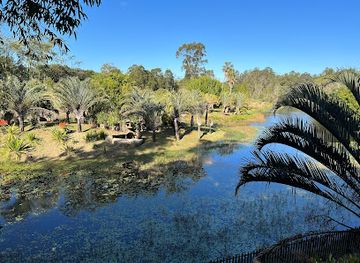
Australia Zoo
Explore Australia Zoo, a wildlife sanctuary dedicated to conservation, featuring diverse species, interactive experiences, and thrilling animal shows in the heart of Queensland.
-
Tourist attraction
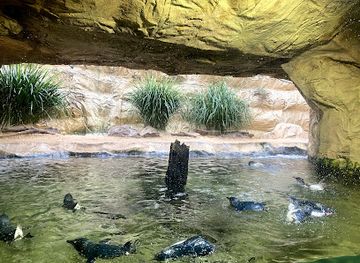
SEA LIFE Sydney Aquarium
Explore the mesmerizing underwater world at SEA LIFE Sydney Aquarium, where adventure and education meet in stunning aquatic displays.
-
Tourist attraction
Sovereign Hill
Explore Australia's rich gold rush history at Sovereign Hill, a captivating living museum offering immersive experiences and historical reenactments.
-
Tourist attraction
National Museum of Australia
Explore the National Museum of Australia for an unforgettable journey through the nation's rich cultural heritage and history.

Best landmarks in Top End
Ubirr's sandstone shelters and rock-art galleries in Kakadu are among the Top End's most recognisable cultural landmarks, with views across the Nadab floodplain and evidence of Aboriginal artistic traditions extending deep into the past. Burrungkuy, also in Kakadu, contains another important concentration of rock art and associated cultural places. Darwin's surviving wartime structures and the East Point military area recall the city's role in the Pacific conflict, while the Darwin Cenotaph and waterfront form part of its civic landscape. The Museum and Art Gallery of the Northern Territory is closely associated with Cyclone Tracy and preserves the city's memory of the 1974 disaster. Litchfield's large magnetic termite mounds are distinctive natural structures, carefully aligned in ways that help regulate temperature. Further south, Nitmiluk Gorge is a defining geological landmark of the Katherine area, with layered sandstone cliffs shaped by the Katherine River. The Top End's landmarks are therefore not solely monuments: floodplains, rock shelters, termite mounds and waterways carry cultural, environmental and historical meaning.
-
Tourist attraction
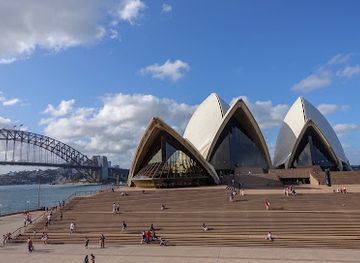
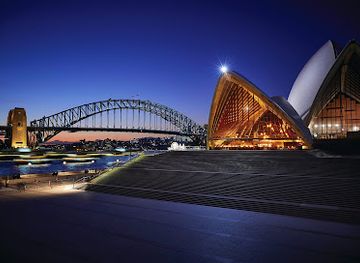
Sydney Opera House
Experience the artistic and architectural brilliance of Sydney Opera House, a UNESCO World Heritage Site that captivates with performances and stunning views.
-
Bridge
Sydney Harbour Bridge
Explore Sydney Harbour Bridge, a stunning architectural masterpiece offering breathtaking views of Sydney's skyline and a glimpse into Australia’s rich heritage.
-
 Tourist attraction
Hyde Park
Experience the serenity of Hyde Park, Sydney's lush urban park filled with historical monuments, vibrant flora, and tranquil walking paths.
-
Tourist attraction
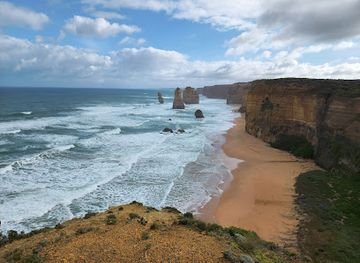
Twelve Apostles
Explore the breathtaking Twelve Apostles, a natural wonder along Victoria's Great Ocean Road, showcasing stunning limestone stacks and picturesque coastal views.
Explore Top End on the map
Plan your trip on one map. See where the top cities, national parks and sights are, and book hotels and experiences in a few clicks.
Best hotels in Top End
Best restaurants in Top End
Top End dining reflects Darwin's links with Southeast Asia, South Asia, China, Greece and other migrant communities as well as northern Australian produce. Darwin's markets and restaurants are good places to encounter laksa, curries, grilled seafood and tropical fruit alongside Australian café and pub food. Barramundi, mud crab and prawns are prominent local choices, although availability and provenance vary, while crocodile appears on some menus as a novelty rather than a defining everyday food. Regional produce can include mangoes, bush foods and other tropical ingredients, with Indigenous foods best approached through knowledgeable, culturally respectful providers. Outside Darwin, dining is more dependent on roadhouses, hotel restaurants, station-style meals and accommodation kitchens, so visitors to Kakadu, Litchfield, Arnhem Land or the Tiwi Islands should plan supplies carefully. Farmers' markets and food stalls provide a more informal way to sample the region's multicultural character, but market dates and seasonal offerings change.
-
Australian
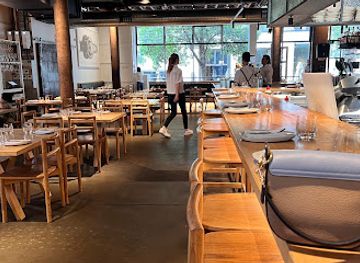
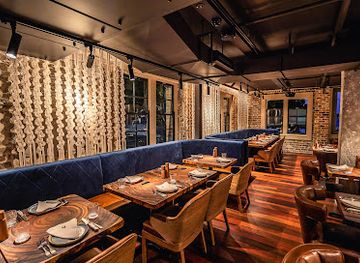
NOMAD Sydney
Discover the essence of modern Australian cuisine at NOMAD Sydney—where seasonal flavors meet an exquisite wine selection.
-
Fine Dining
6HEAD Sydney
Experience fine dining at 6HEAD Sydney, where exceptional seafood meets stunning harbour views in The Rocks.
-
Fine Dining
Quay Restaurant
Experience unparalleled fine dining at Quay Restaurant with breathtaking views of Sydney Harbour, where culinary artistry meets exceptional service.
-
Restaurant
Tim's Surf & Turf
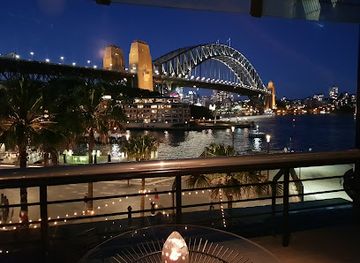
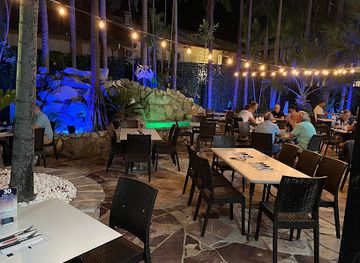
Experience Darwin's culinary delight with fresh seafood and succulent steaks at Tim's Surf & Turf – where flavors meet coastal charm.
Best bars in Top End
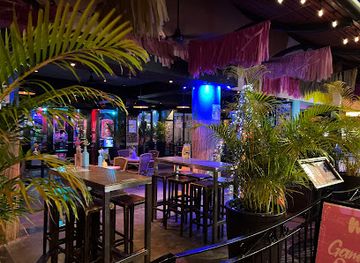
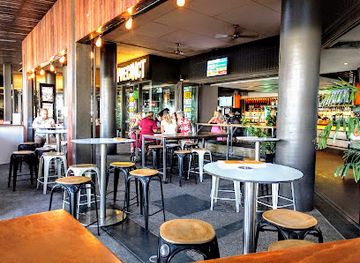
Darwin has the Top End's broadest evening scene, centred on restaurants, pubs, bars, live music and waterfront venues rather than a single concentrated nightlife district. Mitchell Street and the city centre contain many of the capital's established hospitality venues, while the Darwin Waterfront offers evening dining and drinks in a more open setting. Markets, festivals and live performances can add seasonal energy, but programmes and venue arrangements change. In regional centres such as Katherine and Jabiru, evening life is quieter and generally revolves around hotel bars, pubs, restaurants and accommodation venues. Outside the towns, nights are shaped by the outdoors, camp kitchens, station-style hospitality and clear tropical skies rather than clubs. Visitors should arrange transport before drinking, as distances are long and public transport is limited beyond Darwin.
-
Pub
Daly Waters Pub
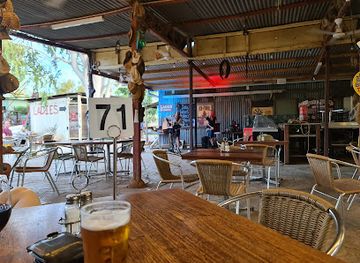
Experience the vibrant spirit of Australia at Daly Waters Pub, a historic landmark combining culture, rich history, and unforgettable hospitality.
-
Irish pub
Shenannigans
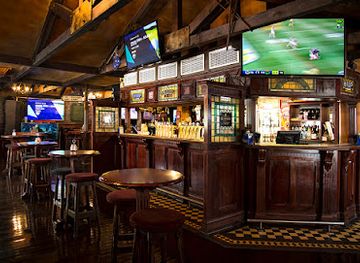
Discover the lively Shenannigans Irish pub in Darwin, where traditional fare meets local culture in a vibrant atmosphere.
-
Bar
Monsoons Darwin
Discover the lively nightlife and delicious dining at Monsoons Darwin, where locals and tourists enjoy a vibrant atmosphere and live entertainment.
-
Pub
The Precinct
Experience the vibrant atmosphere, delicious cuisine, and friendly service at The Precinct, Darwin's go-to pub and restaurant for locals and travelers alike.
Best nightclubs in Top End
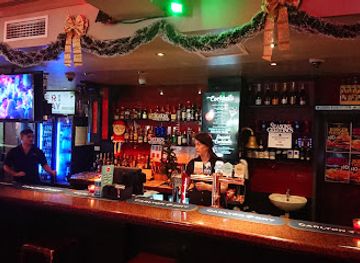
Darwin has the Top End's broadest evening scene, centred on restaurants, pubs, bars, live music and waterfront venues rather than a single concentrated nightlife district. Mitchell Street and the city centre contain many of the capital's established hospitality venues, while the Darwin Waterfront offers evening dining and drinks in a more open setting. Markets, festivals and live performances can add seasonal energy, but programmes and venue arrangements change. In regional centres such as Katherine and Jabiru, evening life is quieter and generally revolves around hotel bars, pubs, restaurants and accommodation venues. Outside the towns, nights are shaped by the outdoors, camp kitchens, station-style hospitality and clear tropical skies rather than clubs. Visitors should arrange transport before drinking, as distances are long and public transport is limited beyond Darwin.
-
Night club
Cocktails Nightclub
Experience the vibrant nightlife at Cocktails Nightclub in Surfers Paradise, where music, cocktails, and unforgettable moments await.
-
Night club
Monsoons Darwin
Discover the heartbeat of Darwin's nightlife at Monsoons Darwin - a dynamic venue for dining, live music, and unforgettable experiences.
-
Disco club
The Toff
Discover The Toff, Melbourne's premier disco club and cocktail bar, offering a vibrant nightlife experience with live music and unique ambiance.
-
Disco club
New Guernica
Experience electrifying nights at New Guernica, Collingwood's iconic disco club with vibrant art, diverse music, and an unforgettable atmosphere.



Best shops in Top End
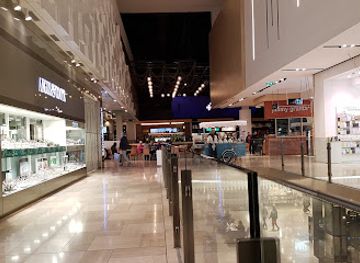
Darwin is the Top End's main shopping centre, with city arcades, suburban centres, independent retailers, galleries and markets. Mindil Beach Sunset Market, when operating seasonally, is known for food stalls, crafts, clothing and an outdoor atmosphere, while Parap Village Markets and Rapid Creek markets are associated with local produce, prepared food and multicultural flavours; schedules should be checked before visiting. Aboriginal art is one of the region's most important purchases, but buyers should use reputable galleries and ask about the artist, community, provenance and resale conditions rather than treating artworks as generic souvenirs. Tiwi art has its own distinctive cultural context and is best purchased through established island or authorised outlets. Other practical regional purchases include tropical preserves, local produce, textiles, books, bush-food products and well-made outdoor equipment. Outside Darwin, shopping is limited and functional, with roadhouses and small town centres serving immediate needs rather than offering extensive retail choice.
-
Shopping mall
Emporium Melbourne
Explore Emporium Melbourne: A Luxurious Shopping Experience with Culinary Delights in the Heart of the City.
-
Outlet mall
DFO Homebush
Experience exceptional shopping at DFO Homebush, where top brands meet unbeatable prices in a vibrant outlet mall!
-
Shopping mall
Casuarina Square
Discover a vibrant shopping and dining experience at Casuarina Square, the heart of retail in Northern Territory.
-
Gift shop
The Big Merino
Discover The Big Merino, a giant sheep statue in Goulburn, NSW, blending quirky charm with local gifts and insights into Australian wool heritage.
Get your free copy of our complete guide to Top End, delivered straight to you.
Everything on this page, from attractions and restaurants to essentials and local phrases, in one PDF you can read offline, print or share.
Already have an account? Sign in
Your Top End guide is ready.
We'll send it to · Not you? Sign out

Getting your guide ready…
We are putting together a fresh copy of the Top End guide. This can take up to a minute.
This can take a few moments. If your browser asks, choose Allow so the download can start. You'll find the guide in your Downloads folder.
Nothing happened? Download it again
Sorry, the guide is taking longer than usual. Please try again in a minute, or get it by email instead.
Top End essentials
Currency and Payment
Safety
Emergency Situations
Do's and Don'ts
Local Tips
From Eve
Local phrases worth knowing
You don't need to get them perfect. A few words go a long way, and locals appreciate the effort.
Basics
| English | Local | Say it |
|---|---|---|
| Hello | G'day | [guh-day] |
| Goodbye | See ya | [see yah] |
| Yes | Yeah | [yeh] |
| No | Nah | [nah] |
| Please/You're welcome | No worries | [no wah-rees] |
| Thank you | Thanks mate | [thanks mate] |
| Excuse me/Sorry | Sorry | [sorry] |
| How are you? | How ya going? | [how yah going] |
| Fine. And you? | Good, and you? | [good, and you] |
| Do you speak English? | Do ya speak English? | [do yah speak English] |
| I don't understand | I don't get it | [I don't get it] |
Eating & Drinking
| English | Local | Say it |
|---|---|---|
| I'd like to see the menu, please | Can I see the menu, please? | [can I see the menu, please] |
| I don't eat meat | I don't eat meat | [I don't eat meat] |
| Cheers! | Cheers! | [cheers] |
| I would like to pay, please | Can I get the bill, please? | [can I get the bill, please] |
Emergencies
| English | Local | Say it |
|---|---|---|
| Help! | Help! | [help] |
| Go away! | Bugger off! | [bugger off] |
| Call the Police! | Call the cops! | [call the cops] |
| Call a doctor! | Get a doctor! | [get a doctor] |
| I'm lost | I'm lost | [I'm lost] |
| I'm ill | I'm crook | [I'm crook] |
Shopping
| English | Local | Say it |
|---|---|---|
| I'd like to buy... | I wanna buy... | [I wanna buy] |
| I'm just looking | I'm just browsing | [I'm just browsing] |
| How much is it? | How much is that? | [how much is that] |
| That's too expensive | That's a bit pricey | [that's a bit pricey] |
| Can you lower the price? | Can you bring the price down? | [can you bring the price down] |
Time & Numbers
| English | Local | Say it |
|---|---|---|
| What time is it? | What time is it? | [what time is it] |
| It's one o'clock | It's one o'clock | [it's one o'clock] |
| Half past (10) | Half past ten | [half past ten] |
| Morning | Morning | [morning] |
| Afternoon | Arvo | [arvo] |
| Evening | Evening | [evening] |
| Yesterday | Yesterday | [yesterday] |
| Today | Today | [today] |
| Tomorrow | Tomorrow | [tomorrow] |
| 1 | One | [one] |
| 2 | Two | [two] |
| 3 | Three | [three] |
| 4 | Four | [four] |
| 5 | Five | [five] |
| 6 | Six | [six] |
| 7 | Seven | [seven] |
| 8 | Eight | [eight] |
| 9 | Nine | [nine] |
| 10 | Ten | [ten] |
Transport & Directions
| English | Local | Say it |
|---|---|---|
| Where's a/the...? | Where's the...? | [where's the] |
| What's the address? | What's the address? | [what's the address] |
| Can you show me (on the map)? | Can you show me on the map? | [can you show me on the map] |
| When's the next (bus)? | When's the next bus? | [when's the next bus] |
| A ticket (to ....) | A ticket to... | [a ticket to] |
History of Top End
Deep Aboriginal history and Country
Aboriginal peoples have lived across the Top End for tens of thousands of years, maintaining detailed cultural, spiritual and practical relationships with Country. Rock paintings at sites including Ubirr and Burrungkuy in Kakadu record changing artistic traditions and encounters with animals, tools and later visitors. Yolngu, Bininj, Mungguy, Tiwi and many other peoples have distinct languages, histories and cultural practices across the region. This is not only an archaeological legacy: Aboriginal communities continue to manage Country, produce art, interpret cultural places and shape decisions about parks and tourism.
Macassan contact and maritime exchange
For centuries before European settlement, trepangers from Makassar in present-day Indonesia travelled seasonally to northern Australian waters, including areas around Arnhem Land, to collect sea cucumber. Their visits created sustained exchange with Aboriginal communities, influencing material culture, language and stories. Macassan contact is remembered in regional traditions and archaeological evidence, and it provides an important reminder that the Top End was connected to wider maritime networks long before it became part of the modern Australian state.
European exploration and the founding of Palmerston
Several early European expeditions attempted to establish a foothold in northern Australia, but lasting settlement proved difficult because of climate, distance and supply problems. Darwin was founded as Palmerston in 1869, after the Northern Territory had become associated with South Australia. The port and settlement developed as a strategic link to Southeast Asia and as an administrative centre, although growth remained uneven. The city's later name reflects the way colonial institutions gradually replaced the earlier official identity.
Telegraph, rail and the northern frontier
The completion of the Overland Telegraph Line in 1872 connected Darwin with Adelaide and established a vital communication route between Australia and the wider world. Palmerston became an important northern terminus, while the narrow-gauge railway helped move people and goods inland. Pastoralism, mining, buffalo shooting and pearling developed in different parts of the wider Top End, often relying on Aboriginal labour and affecting Aboriginal land and communities. These industries left a complex frontier history rather than a simple story of economic progress.
War in the Top End
During the Second World War, Darwin became Australia's principal northern military base and a staging point for operations in the Pacific. Japanese aircraft attacked Darwin and nearby installations on 19 February 1942, causing deaths and extensive damage; further raids followed. Military roads, airfields, bunkers and other remnants remain across the region, while the Darwin Military Museum interprets the conflict. The wartime period transformed the city's strategic importance and left a lasting mark on its civic memory and landscape.
Cyclone Tracy and the rebuilding of Darwin
Cyclone Tracy struck Darwin on Christmas Day in 1974, destroying or severely damaging much of the city and causing widespread loss of life and displacement. Reconstruction reshaped Darwin's building standards, infrastructure and urban form, with stronger structures designed for tropical cyclone conditions. The Museum and Art Gallery of the Northern Territory preserves recordings and objects associated with the disaster. Contemporary Darwin's low-rise, tropical character and emphasis on cyclone resilience are inseparable from this decisive event.
National parks, land rights and contemporary cultural recognition
Late twentieth-century developments changed how the Top End's land and heritage were administered. Kakadu was declared a national park in stages from 1979, with Aboriginal landowners retaining important rights through joint-management arrangements under the Aboriginal Land Rights (Northern Territory) Act 1976. Similar partnerships and Indigenous ranger programmes have become central to conservation and visitor interpretation. The region's parks therefore represent both environmental protection and continuing debates about land, authority, mining, cultural heritage and Aboriginal self-determination.
Top End in Photos
Browse through our photo collection highlighting the charm and character of the destination.
Neighbouring regions of Top End
The closest regions to Top End, if you have time for more than one.
-

-

-

-

-


Swipe for more regions
Explore more

Explore more of Australia
Discover the diverse landscapes, vibrant cities, and unique wildlife of Australia, a captivating destination offering endless adventures and unforgettable experiences.
Explore Australia