

Free Arlberg Travel Guide & Mobile App
Explore Arlberg with free travel guides. Discover regional history, expert tips, proposed trips, and audio guides on web or mobile app.


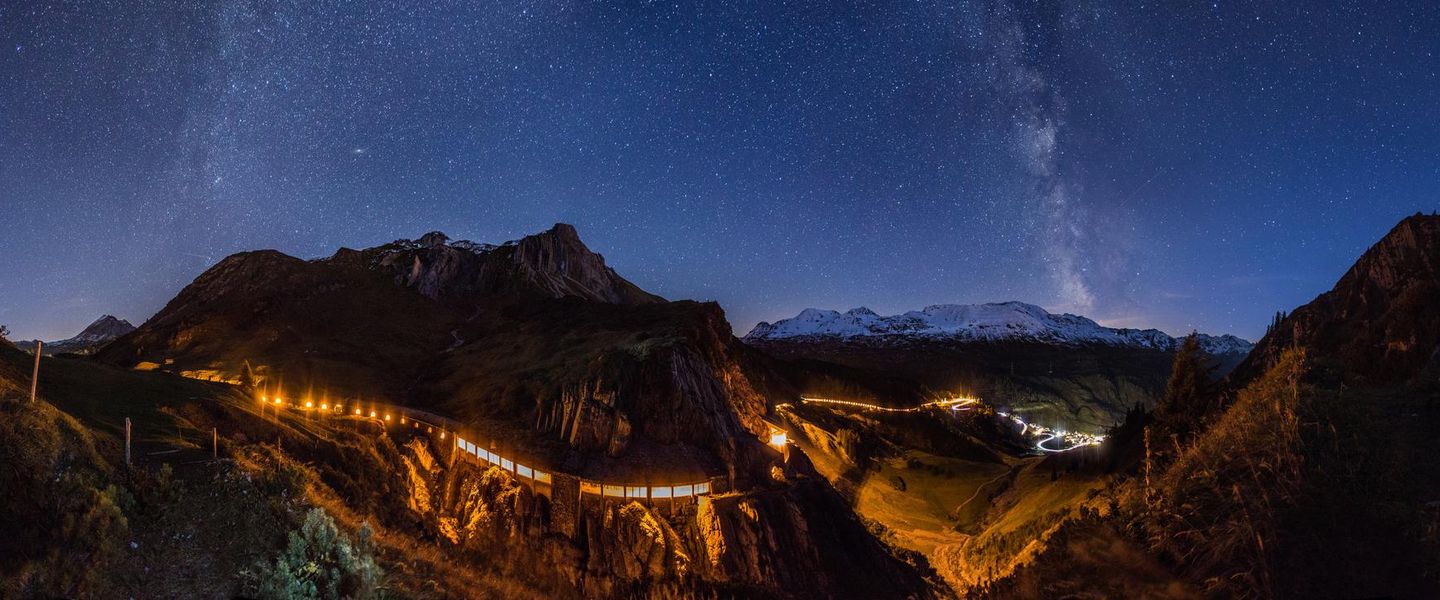


Explore Arlberg in Austria for renowned skiing, alpine villages, hiking, mountain scenery and the historic pass between Tyrol and Vorarlberg.
Read more about Arlberg
When is the best time to visit Arlberg?
Best: June–August · 20–22°C| Month | High (°C) | Rainfall (mm) |
|---|---|---|
| January | 0 | 45 |
| February | 1 | 40 |
| March | 5 | 45 |
| April | 10 | 50 |
| May | 15 | 55 |
| June (best) | 20 | 65 |
| July (best) | 22 | 70 |
| August (best) | 22 | 70 |
| September | 18 | 60 |
| October | 13 | 55 |
| November | 8 | 50 |
| December | 3 | 45 |
Getting to and around Arlberg
How to get there
Transportation
Top city travel guides in Arlberg
The cities of Arlberg, and the easiest places to base yourself.
-

-

-

-


Swipe for more cities
Destinations in Arlberg
Resorts, valleys and scenic spots worth a trip of their own.
-

-

-

-
-

-


Swipe for more destinations
Best attractions in Arlberg
Arlberg's attractions are inseparable from its mountain setting and the changing seasons. In winter, the linked ski area provides extensive pistes between St Anton, St Christoph, Stuben, Zürs, Lech, Warth and Schröcken, with terrain ranging from broad, accessible slopes to demanding high-alpine routes. Visitors who do not ski can use marked winter walking paths, enjoy snowshoe excursions with a guide or explore village cafés, museums and historic churches. St Anton's Museum, housed in a former villa associated with the resort's development, offers useful context on local skiing and tourism. In summer, lifts and mountain roads open access to hiking, climbing, mountain biking and panoramic viewpoints, although operating dates vary. The valleys around Lech, Warth and Schröcken are particularly suited to walking among meadows, streams and traditional farms, while the pass settlements offer a direct connection with historic travel routes. The region's appeal lies less in a concentration of conventional sightseeing attractions than in the combination of alpine recreation, village architecture, ski history, local food and changing mountain conditions.
-
Botanical garden
Island Mainau
Discover the enchanting Island Mainau, a floral paradise in Lake Constance, perfect for nature lovers and families alike.
-
Animal park
Affenberg Salem
Explore Affenberg Salem, a wildlife park where Barbary macaques roam freely amidst beautiful landscapes, offering fun and education for the whole family.
-
Open air museum
Pile Dwelling Museum
Explore the Pile Dwelling Museum, a UNESCO World Heritage Site showcasing ancient stilt houses and the rich history of prehistoric lake dwellers.
-
Castle
Meersburg Castle
Experience the rich history and stunning views at Meersburg Castle, a captivating tourist attraction on the shores of Lake Constance.


Best landmarks in Arlberg
The Arlberg Pass itself is the region's defining geographical landmark, a high route whose importance is reflected in the settlements, roads and railway that cross or pass beneath it. St Christoph am Arlberg stands beside the historic pass route and is closely associated with the hospice founded to shelter travellers. The Arlberg Railway Tunnel, opened in 1884, remains a major engineering landmark connecting the Tyrolean and Vorarlberg sides, with St Anton and Langen am Arlberg serving as important rail points. In Stuben, the birthplace of ski pioneer Hannes Schneider is a notable marker of the region's contribution to international ski history. The compact villages of Lech, Zürs, Warth and Schröcken retain striking combinations of timber-clad farmhouses, modern alpine buildings and mountain backdrops, while St Anton's church and historic centre anchor a much larger resort. Natural landmarks include the exposed pass landscapes, the peaks and ridgelines above the Flexen route, and the broad alpine basins around Lech and Warth. Their significance is both visual and historical: these are the landscapes through which travel, settlement and skiing developed.
-
Fortress
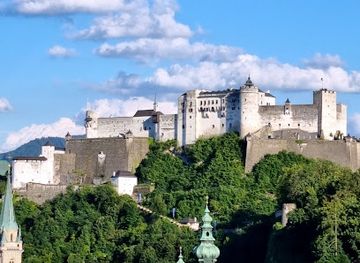
Fortress Hohensalzburg
Discover the grandeur of Fortress Hohensalzburg, a historical landmark in Salzburg offering stunning views and rich cultural insights into Austria's royal history.
-
Historical landmark
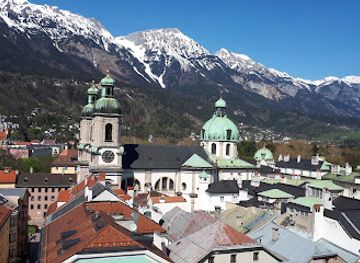
Golden Roof
Discover the Golden Roof in Innsbruck, a stunning historical landmark adorned with gilded tiles that reflects Tyrolean history and culture.
-
Historical landmark
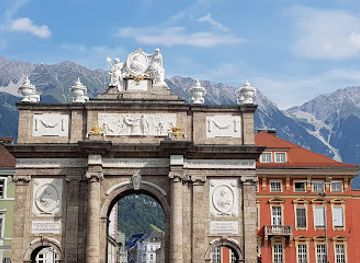
Triumphpforte
Explore the grandeur of Triumphpforte, a historical landmark in Innsbruck, Austria, celebrating an imperial past and vibrant culture.
-
Historical landmark
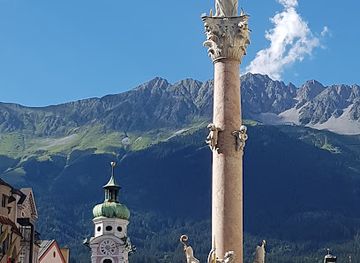
Annasäule
Explore Innsbruck's historic Annasäule, a captivating landmark that embodies the city's rich heritage and stunning baroque architecture.
Explore Arlberg on the map
Plan your trip on one map. See where the top cities, national parks and sights are, and book hotels and experiences in a few clicks.
Best hotels in Arlberg
Best restaurants in Arlberg
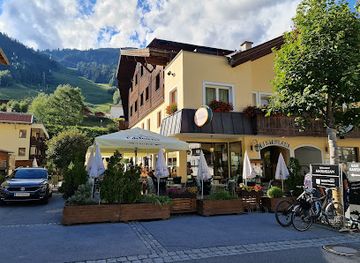
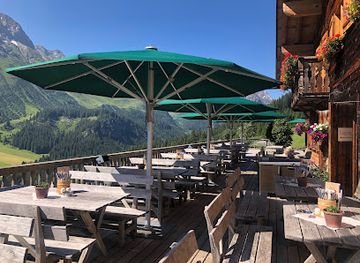
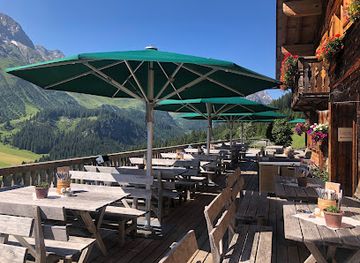
Dining in Arlberg ranges from traditional mountain inns and piste huts to sophisticated hotel restaurants and contemporary kitchens in the larger resorts. Menus commonly draw on Austrian and Tyrolean traditions, including käsespätzle, hearty dumplings, soups, schnitzel, goulash and apple strudel, while Vorarlberg influences are apparent in regional cheese dishes and farmhouse cooking. Mountain huts generally focus on filling midday food suited to active visitors, whereas St Anton, Lech and Zürs offer a broader choice of international and fine dining. Warth and Schröcken have a more village-based selection, often centred on hotels, inns and local produce. Breakfasts and afternoon cake are important parts of the resort rhythm, and many establishments emphasise seasonal ingredients, dairy products and alpine herbs. Reservations are sensible in peak winter periods, particularly for evening meals, and visitors should not assume that every mountain restaurant remains open late or can be reached independently after lifts close.
-
German
Konzil
Historic harbor restaurant serving Baden classics with panoramic Lake Constance and Alpine views from a 14th-century papal election site.
-
Restaurant
Sennhütte - SENNsationell
Discover Sennhütte - where alpine charm meets culinary delight in St. Anton am Arlberg.
-
Austrian
Restaurant Maximilian
Experience the best of Austrian cuisine with modern European influences at Restaurant Maximilian in St. Anton am Arlberg.
-
Restaurant
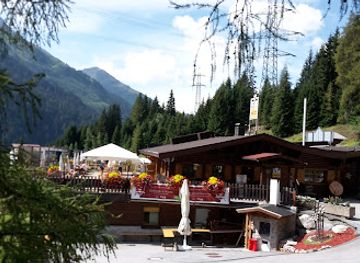
Rud-Alpe Gastronomie
Experience exquisite alpine dining at Rud-Alpe Gastronomie with stunning mountain views and a menu full of local flavors.
Best bars in Arlberg
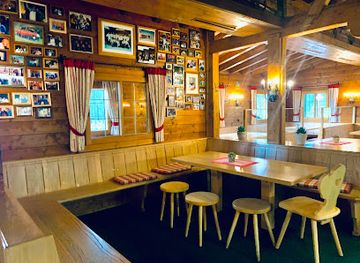
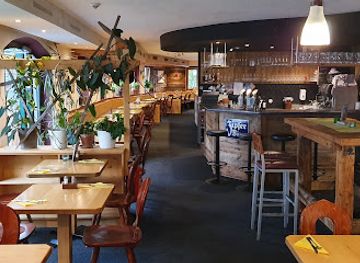
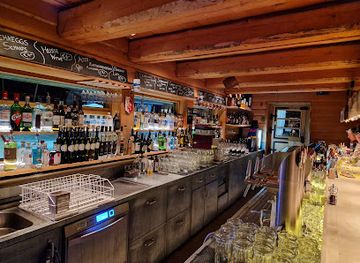
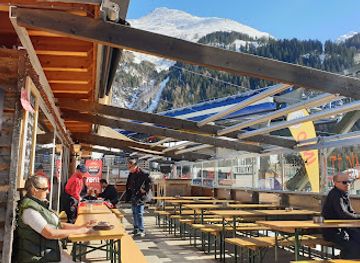
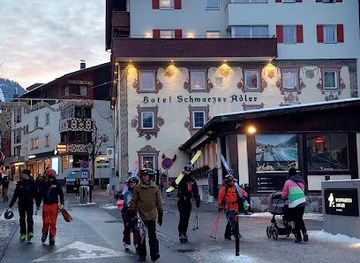
Evening life varies considerably across Arlberg. St Anton has the region's most established après-ski and late-night scene, with bars, hotel lounges, live music and venues around the village and the ski-return routes. Lech and Zürs offer a more polished evening atmosphere, ranging from hotel bars and wine lounges to après-ski venues, while Stuben and St Christoph are quieter and more focused on inns and hotel hospitality. Warth and Schröcken generally suit visitors seeking relaxed dinners, traditional pubs and early starts rather than a major club circuit. Some mountain venues are designed for afternoon après-ski and may close well before midnight. In summer, nightlife becomes more subdued, with evening meals, outdoor terraces, cultural events and occasional live music taking precedence. Drinking is not essential to enjoying the region, and mountain conditions make a responsible journey back to accommodation particularly important.
-
Restaurant
Sennhütte - SENNsationell
Experience exquisite Alpine dining at Sennhütte, nestled in the stunning St. Anton am Arlberg, a perfect stop for hikers and ski enthusiasts.
-
Austrian
Restaurant Maximilian
Discover the essence of Austrian and modern European cuisine at Restaurant Maximilian, nestled in the stunning alpine setting of St. Anton am Arlberg.
-
Restaurant
Rud-Alpe Gastronomie
Discover the exquisite culinary offerings at Rud-Alpe Gastronomie, set against the breathtaking backdrop of the Austrian Alps in Lech.
-
Restaurant
Skihütte Schneggarei
Discover the alpine charm of Skihütte Schneggarei, a perfect blend of delicious cuisine and stunning mountain views in the heart of Lech.
Best nightclubs in Arlberg
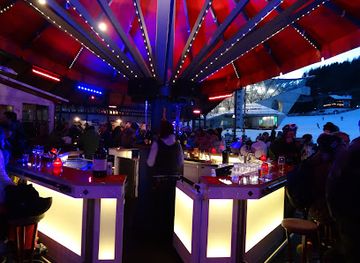
Evening life varies considerably across Arlberg. St Anton has the region's most established après-ski and late-night scene, with bars, hotel lounges, live music and venues around the village and the ski-return routes. Lech and Zürs offer a more polished evening atmosphere, ranging from hotel bars and wine lounges to après-ski venues, while Stuben and St Christoph are quieter and more focused on inns and hotel hospitality. Warth and Schröcken generally suit visitors seeking relaxed dinners, traditional pubs and early starts rather than a major club circuit. Some mountain venues are designed for afternoon après-ski and may close well before midnight. In summer, nightlife becomes more subdued, with evening meals, outdoor terraces, cultural events and occasional live music taking precedence. Drinking is not essential to enjoying the region, and mountain conditions make a responsible journey back to accommodation particularly important.
-
Bar
Das Basecamp
Experience the vibrant atmosphere of Das Basecamp in St. Anton am Arlberg, where great drinks and stunning alpine views meet.
-
Bar
Murrmel Bar
Discover the cozy Murrmel Bar in St. Anton am Arlberg, where delicious food, live music, and a friendly atmosphere await every visitor.
-
Bar
Fang House
Discover the vibrant atmosphere of Fang House, a lively bar and café in St. Anton am Arlberg, perfect for relaxation and socializing.
-
Bar
Bar Cuba
Discover the vibrant nightlife of St. Anton am Arlberg at Bar Cuba, where great drinks and a lively atmosphere await every visitor.
Best shops in Arlberg
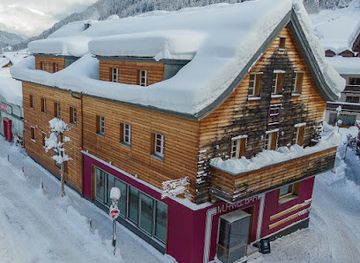
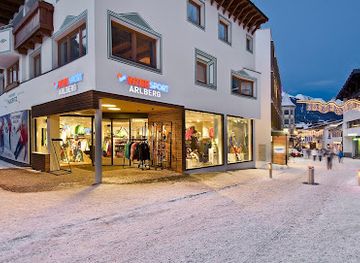
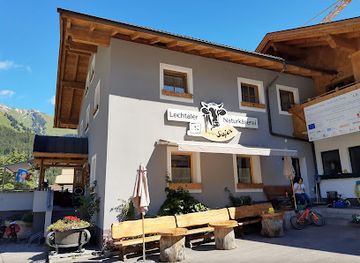
Shopping in Arlberg is concentrated in the main resort villages rather than in large urban retail districts. St Anton has the broadest selection of ski, outdoor and sports shops, alongside boutiques, bakeries, delicatessens and stores selling practical equipment for mountain activities. Lech and Zürs offer a more upmarket mix of clothing, jewellery, interiors and alpine-inspired design, while Stuben, Warth and Schröcken have smaller ranges shaped by local needs and seasonal tourism. Useful regional purchases include Austrian foods, mountain herbs, preserves, cheese, spirits, woollen goods and locally made craft items, although provenance varies and labels should be checked. Bakeries and village food shops are often better places for edible gifts than generic souvenir outlets. Art galleries and craft shops appear particularly in the larger resorts, but opening arrangements can change outside the winter and summer seasons. Visitors should also remember that sports equipment may be available for hire as well as purchase, reducing the need to transport bulky items.
-
Supermarket
SPAR
Explore SPAR in St. Anton am Arlberg for fresh produce, local delicacies, and unique souvenirs, ensuring a delightful shopping experience.
-
Sporting goods store
INTERSPORT Arlberg
Explore the best of St. Anton am Arlberg with INTERSPORT Arlberg, your trusted partner for outdoor gear and sporting equipment.
-
Cheese shop
Lechtaler Naturkäserei Sojer
Discover the authentic taste of the Austrian Alps at Lechtaler Naturkäserei Sojer, your go-to cheese shop and ice cream haven in Steeg.
-
Mountain cable car
Trittkopfbahn, Talstation
Discover the breathtaking views and thrilling adventures at Trittkopfbahn, Lech's iconic mountain cable car, perfect for outdoor enthusiasts.

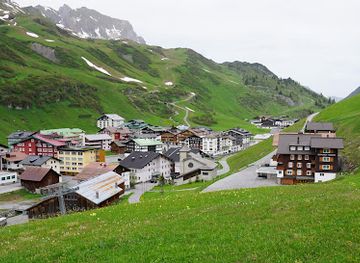
Get your free copy of our complete guide to Arlberg, delivered straight to you.
Everything on this page, from attractions and restaurants to essentials and local phrases, in one PDF you can read offline, print or share.
Already have an account? Sign in
Your Arlberg guide is ready.
We'll send it to · Not you? Sign out

Getting your guide ready…
We are putting together a fresh copy of the Arlberg guide. This can take up to a minute.
This can take a few moments. If your browser asks, choose Allow so the download can start. You'll find the guide in your Downloads folder.
Nothing happened? Download it again
Sorry, the guide is taking longer than usual. Please try again in a minute, or get it by email instead.
Arlberg essentials
Currency and Payment
Safety
Emergency Situations
Do's and Don'ts
Local Tips
From Eve
Local phrases worth knowing
You don't need to get them perfect. A few words go a long way, and locals appreciate the effort.
Basics
| English | Local | Say it |
|---|---|---|
| Hello | Hallo | [HAH-lo] |
| Goodbye | Auf Wiedersehen | [OWF VEE-der-zay-en] |
| Yes | Ja | [YAH] |
| No | Nein | [NINE] |
| Please/You're welcome | Bitte | [BIT-te] |
| Thank you | Danke | [DANK-eh] |
| Excuse me/Sorry | Entschuldigung | [ENT-shool-dee-goong] |
| How are you? | Wie geht's? | [VEE gates?] |
| Fine. And you? | Gut. Und dir? | [GOOT. OONT deer?] |
| Do you speak English? | Sprechen Sie Englisch? | [SPREH-ken zee ENG-lish?] |
| I don't understand | Ich verstehe nicht | [IKH fer-SHTAY-eh nikht] |
Eating & Drinking
| English | Local | Say it |
|---|---|---|
| I'd like to see the menu, please | Ich hätte gerne die Speisekarte, bitte | [IKH HET-te GER-neh dee SHPY-ze-KAR-te, BIT-te] |
| I don't eat meat | Ich esse kein Fleisch | [IKH ESS-eh kine FLYSH] |
| Cheers! | Prost! | [PROHST!] |
| I would like to pay, please | Ich möchte zahlen, bitte | [IKH MERK-te TZA-len, BIT-te] |
Emergencies
| English | Local | Say it |
|---|---|---|
| Help! | Hilfe! | [HIL-fe!] |
| Go away! | Geh weg! | [GAY vehk!] |
| Call the Police! | Rufen Sie die Polizei! | [ROO-fen zee dee POL-i-ZYE!] |
| Call a doctor! | Rufen Sie einen Arzt! | [ROO-fen zee EYE-nen ARTZ!] |
| I'm lost | Ich habe mich verlaufen | [IKH HAH-be mikh fer-LAU-fen] |
| I'm ill | Ich bin krank | [IKH bin KRAHNK] |
Shopping
| English | Local | Say it |
|---|---|---|
| I'd like to buy... | Ich möchte kaufen... | [IKH MERK-te KAU-fen...] |
| I'm just looking | Ich schaue nur | [IKH SHAU-eh noor] |
| How much is it? | Wie viel kostet es? | [VEE FEEL KOS-tet es?] |
| That's too expensive | Das ist zu teuer | [DAS ist tsoo TOY-er] |
| Can you lower the price? | Könnten Sie den Preis senken? | [KERN-ten zee den PRICE SEN-ken?] |
Time & Numbers
| English | Local | Say it |
|---|---|---|
| What time is it? | Wie spät ist es? | [VEE shpate ist es?] |
| It's one o'clock | Es ist ein Uhr | [ES ist EYN OOR] |
| Half past (10) | Halb (10) | [HALB (10)] |
| Morning | Morgen | [MOR-gen] |
| Afternoon | Nachmittag | [NAHCH-mit-tahg] |
| Evening | Abend | [AH-bent] |
| Yesterday | Gestern | [GES-turn] |
| Today | Heute | [HOY-te] |
| Tomorrow | Morgen | [MOR-gen] |
| 1 | Eins | [EINS] |
| 2 | Zwei | [TSVY] |
| 3 | Drei | [DRY] |
| 4 | Vier | [FEER] |
| 5 | Fünf | [FUENF] |
| 6 | Sechs | [ZEX] |
| 7 | Sieben | [ZEE-ben] |
| 8 | Acht | [AHKT] |
| 9 | Neun | [NOYN] |
| 10 | Zehn | [TSAYN] |
Transport & Directions
| English | Local | Say it |
|---|---|---|
| Where's a/the...? | Wo ist ein/das...? | [VO ist EYN/DAS...?] |
| What's the address? | Wie ist die Adresse? | [VEE ist dee AH-dres-se?] |
| Can you show me (on the map)? | Können Sie mir (auf der Karte) zeigen? | [KERN-nen zee meer (OWF der KAR-te) TSY-gen?] |
| When's the next (bus)? | Wann kommt der nächste (Bus)? | [VAN kommt der NAY-shte (BOOS)?] |
| A ticket (to ....) | Ein Ticket (nach ....) | [EYN TICK-et (NAHCH ....)] |
History of Arlberg
The Arlberg Pass in the Medieval Period
The Arlberg Pass formed a demanding route between the Inn valley and the Rhine valley, linking communities that are now in Tyrol and Vorarlberg. Its importance was practical rather than easy: travellers faced exposed terrain, heavy snow and difficult gradients. The hospice at St Christoph, traditionally associated with protection and shelter for pass travellers, became a lasting symbol of the route's religious and charitable infrastructure. The surrounding settlements developed within a mountain economy based on livestock, seasonal movement, agriculture and trade across the pass.
Walser Settlement in the Western Valleys
From the late Middle Ages, German-speaking Walser settlers established communities in high valleys across the Alpine region, including areas associated with present-day Vorarlberg. Their settlement patterns, building traditions and forms of mountain agriculture influenced places such as Warth and Schröcken. Walser cultural traces remain visible in local dialects, farmsteads and the organisation of upland communities. The history is shared across modern borders, illustrating how alpine societies were shaped by valleys, passes and seasonal work more than by today's provincial boundaries.
The Arlberg Railway and Tunnel, 1884
The opening of the Arlberg Railway in 1884 was a decisive transformation for the region. Its tunnel and associated railway works connected western Austria with the Tyrol and made the crossing substantially more reliable than the old pass route. St Anton became easier to reach from larger Austrian and European cities, while the railway supported trade, local employment and the first growth of organised tourism. The railway remains a fundamental part of the region's identity, with St Anton am Arlberg serving as one of Austria's best-known rail-accessible mountain resorts.
The Rise of Alpine Skiing
Organised winter tourism began to develop in the early twentieth century as visitors discovered the Arlberg's terrain and dependable mountain conditions. Hannes Schneider, born in Stuben, became one of the period's most influential ski instructors. His systematic teaching approach, commonly known as the Arlberg technique, helped make alpine skiing more accessible and was disseminated internationally through instruction and demonstration. St Anton and the surrounding resorts consequently became associated not only with winter holidays but also with the development of modern ski education.
Post-war Resort Development
After the Second World War, improved prosperity, transport and ski-lift technology brought a major expansion of winter tourism. St Anton, Lech, Zürs, St Christoph and Stuben developed into internationally known resorts, while Warth and Schröcken gained growing access to the wider ski area. Hotels, cable cars and roads reshaped the built environment, although many villages retained traditional timber architecture and compact settlement patterns. Tourism became the dominant economic force, supplementing older farming, forestry and transport livelihoods.
The Arlberg as a Connected Ski Area
The late twentieth and early twenty-first centuries saw increasingly coordinated lift infrastructure across the mountain passes and valleys. Links between the Tyrolean and Vorarlberg sides strengthened the Arlberg's identity as a connected ski destination rather than a collection of separate resorts. The opening of the Flexenbahn in 2016 created a direct lift connection between Zürs and Stuben, broadening the practical relationship between communities on either side of the pass. This development also increased the importance of careful planning, as weather, lift operations and village access still vary across the region.
Arlberg in Photos
Browse through our photo collection highlighting the charm and character of the destination.
Neighbouring regions of Arlberg
The closest regions to Arlberg, if you have time for more than one.
-

-

-

-

-


Swipe for more regions
Explore more
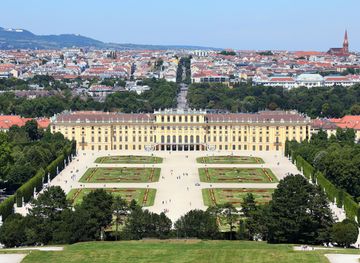
Explore more of Austria
Discover Austria's blend of alpine landscapes, rich cultural heritage, and culinary delights, from Vienna's historic charm to Tyrol's dramatic beauty.
Explore Austria