

Sölden Travel Guide - Free Web & App
Your ultimate guide to Sölden. Discover top landmarks, proposed trips, and local tips. Free on the web or via the Evendo companion app.


Sölden, Austria combines Ötztal Alps skiing, glacier viewpoints, hiking, mountain biking and Tyrolean hospitality in a high-altitude valley resort.
Mountain Landscape and Alpine Setting
Sölden lies in the upper Ötztal Valley of Tyrol, surrounded by the high peaks, glaciers and broad side valleys of the Ötztal Alps. The municipality stretches from the valley settlement along the Venter Ache towards lofty mountain terrain, with hamlets and alpine pastures scattered across steep slopes. Its elevated position and extensive lift network have made it one of Austria’s best-known winter resorts, while the surrounding landscape remains equally compelling in summer, when hiking paths, mountain-bike routes and quiet high-alpine viewpoints replace the ski runs.Read more about Sölden
Glaciers, Villages and Outdoor Life
Resort Character and Local Culture
When is the best time to visit Sölden?
Best: June–August · 16–18°C| Month | High (°C) | Rainfall (mm) |
|---|---|---|
| January | -1 | 47 |
| February | -1 | 43 |
| March | 3 | 47 |
| April | 7 | 49 |
| May | 13 | 71 |
| June (best) | 16 | 83 |
| July (best) | 18 | 87 |
| August (best) | 18 | 85 |
| September | 14 | 69 |
| October | 9 | 57 |
| November | 3 | 56 |
| December | 0 | 50 |
Getting to and around Sölden
How to get there
Transportation
Best attractions in Sölden
Sölden’s principal attractions are its high mountain landscapes and the infrastructure that opens them to visitors. The Gaislachkogl rises directly above the resort and provides access to panoramic terrain, while the Rettenbach and Tiefenbach glacier areas offer a striking view of the Ötztal Alps and a winter sports setting at high altitude. The scenic road towards the Timmelsjoch crosses increasingly rugged country before reaching the pass, when seasonally open. In summer, marked paths lead towards alpine pastures, side valleys and viewpoints around Sölden, with routes varying from accessible mountain walks to demanding high-alpine excursions. Nearby Zwieselstein has a quieter, traditional village character, and Vent is a base for mountain routes in the upper valley, including approaches towards the Wildspitze region. Visitors interested in the area’s twentieth-century tourism history can also explore the resort’s ski and mountain culture, while the surrounding glaciers and pastures provide the strongest sense of the landscape’s natural scale.
-
Tourist attraction
AREA 47 - Tirol
Discover the thrill of AREA 47 in Tirol: the ultimate amusement park experience with breathtaking scenery and exhilarating activities for everyone.
-
Tourist attraction
Giggijochbahn Sölden
Experience the breathtaking beauty and thrilling adventures at Giggijochbahn in Sölden, a premier destination for skiing and hiking in the Ötztal Alps.
-
Tourist attraction
Stuibenfall
Experience the breathtaking beauty of Stuibenfall, Austria's largest waterfall, surrounded by stunning hiking trails and lush alpine scenery.
-
Mountain cable car
Bergbahnen Sölden
Experience the thrill of skiing, snowboarding, and hiking at Bergbahnen Sölden, a premier destination in the heart of the Tyrolean Alps.


Best landmarks in Sölden
The defining landmarks of Sölden are natural as much as architectural. The Gaislachkogl forms the resort’s most recognisable mountain backdrop, while the Rettenbach and Tiefenbach glaciers mark the high southern end of the local skiing and mountain-access area. The Timmelsjoch is a historic Alpine crossing and a major scenic landmark when the high road is open, linking the Ötztal region with South Tyrol. In the upper valley, the mountain settlement of Vent is associated with routes towards the Wildspitze and the high Ötztal Alps. Zwieselstein provides a contrasting cultural landmark through its compact traditional village setting and older Tyrolean character. Alpine pastures, barns and mountain huts are also significant features, showing how farming and seasonal livestock use have shaped the landscape alongside modern tourism.
-
Mountain cable car
Giggijochbahn Sölden
Experience the Ötztal Alps with the Giggijochbahn: a modern gateway to skiing, hiking, and breathtaking panoramic views in Sölden, Austria.
-
Mountain cable car
Bergbahnen Sölden
Experience the heart of the Alps with Bergbahnen Sölden: skiing, panoramic views, and thrilling adventures in the breathtaking Ötztal Valley.
-
Mountain cable car
Gaislachkogel middle station
Your launchpad for high-altitude adventures in the Austrian Alps, offering hiking, dining, and stunning panoramic views.
-
Fine Dining
Restaurant ice Q
Experience gourmet dining at 3,048 meters with panoramic views of the Ötztal Alps, made famous by James Bond's 'Spectre'.


Explore Sölden on the map
Plan your trip on one map. See where the top attractions, landmarks, restaurants and hotels are, and book hotels and experiences in a few clicks.
Best hotels in Sölden
Best restaurants in Sölden
Dining in Sölden reflects both Tyrolean mountain traditions and the needs of an international resort. Menus commonly draw on regional staples such as dumplings, soups, pasta-like spätzle, potatoes, cheese, cured meats and seasonal game, alongside Austrian pastries and cakes. Restaurants, cafés and mountain venues are concentrated in Sölden and the surrounding hamlets, while alpine huts provide food and drink during their operating seasons rather than functioning as year-round dining rooms. Zwieselstein and Vent offer quieter alternatives, with traditional inns and small hospitality businesses serving as useful bases for exploring different parts of the valley. Visitors should expect the greatest choice in the resort itself; remote trails and glacier areas have limited facilities, and opening arrangements in the mountains can depend on weather, season and access conditions.
-
Fine Dining
Restaurant ice Q
Experience unparalleled fine dining at Restaurant ice Q with breathtaking mountain views and exquisite cuisine in Sölden's alpine paradise.
-
Restaurant
Restaurant GUSTO
Discover authentic Italian flavors at Restaurant GUSTO in Sölden – where alpine charm meets culinary excellence.
-
Restaurant
Rotkogelhütte
Experience authentic Austrian dining at Rotkogelhütte in the heart of Ötztal Alps with breathtaking views and delicious local dishes.
-
Restaurant
Wirtshaus am Giggijoch
Discover authentic Austrian flavors at Wirtshaus am Giggijoch, nestled high in the stunning Alps with breathtaking views.


Best bars in Sölden
Sölden has a livelier evening scene than many Alpine villages because it is a large international ski resort, with hotel bars, traditional pubs and après-ski venues concentrated around the centre and lower lift areas. The atmosphere is generally strongest after skiing in winter, while summer evenings are quieter and more closely linked to restaurant terraces, alpine hospitality and events associated with the resort calendar. Zwieselstein and Vent offer a more restrained choice of village inns and hotel bars rather than a substantial nightlife district. Visitors seeking late-night entertainment should check current seasonal arrangements locally, as venues and events can change; the wider destination is primarily oriented towards mountain activities rather than club culture.
-
Fine Dining
Restaurant ice Q
Experience fine dining with breathtaking views at Restaurant ice Q, a culinary gem in the Austrian Alps.
-
Restaurant
Rotkogelhütte
Discover the flavors of the Alps at Rotkogelhütte, a charming restaurant offering traditional Austrian cuisine with breathtaking mountain views.
-
Restaurant
Wirtshaus am Giggijoch
Experience authentic Austrian cuisine with breathtaking mountain views at Wirtshaus am Giggijoch in Sölden.
-
Restaurant
Almwirtschaft Gampe Thaya
Discover the authentic flavors of Austria at Almwirtschaft Gampe Thaya, a scenic restaurant perfect for hikers and skiers in the heart of the Alps.


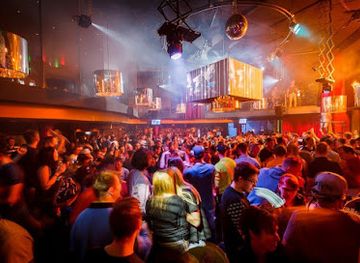
Best nightclubs in Sölden
Sölden has a livelier evening scene than many Alpine villages because it is a large international ski resort, with hotel bars, traditional pubs and après-ski venues concentrated around the centre and lower lift areas. The atmosphere is generally strongest after skiing in winter, while summer evenings are quieter and more closely linked to restaurant terraces, alpine hospitality and events associated with the resort calendar. Zwieselstein and Vent offer a more restrained choice of village inns and hotel bars rather than a substantial nightlife district. Visitors seeking late-night entertainment should check current seasonal arrangements locally, as venues and events can change; the wider destination is primarily oriented towards mountain activities rather than club culture.
-
Bar
Fire & Ice Sölden
Dive into the exhilarating nightlife at Fire & Ice Sölden, the ultimate destination for après-ski fun and vibrant entertainment.
-
Night club
Katapult Sölden
Discover Katapult Sölden, the ultimate night club for an electrifying nightlife experience in the heart of the Austrian Alps.
-
Bar
Black Orange Bar Sölden
Discover the vibrant nightlife of Sölden at Black Orange Bar, where eclectic decor and a lively atmosphere await every visitor.
-
Bar
LIVE-Bar
Discover the nightlife at LIVE-Bar in Sölden, where great drinks, live music, and a vibrant atmosphere await you in the heart of the Alps.



Best shops in Sölden
Shopping in Sölden is centred on practical mountain equipment, winter sports clothing, outdoor accessories and souvenirs, with the broadest selection in the resort centre. Visitors can also find Austrian food products, Tyrolean specialities, spirits, textiles and locally themed gifts through shops connected with the resort’s hospitality trade. The smaller settlements of Zwieselstein and Vent have more limited retail provision, so everyday supplies and specialist equipment are best obtained in Sölden or larger towns lower in the Ötztal Valley. Farm products and alpine food items may be available through local hospitality businesses or producers, although selection and opening arrangements vary by season. The area is not a major craft-shopping destination, but its retail character reflects the practical demands of skiing, hiking and life in a high mountain environment.
-
Ski rental service
Sporthütte Fiegl - Sölden
Explore the Alps like never before with top-notch ski and bike rentals at Sporthütte Fiegl in Sölden, your adventure starts here.
-
Supermarket
MPREIS
Discover the charm of MPREIS in Sölden, where shopping meets breathtaking alpine scenery and local flavors.
-
Souvenir store
Sölden Store - Glanzpunkte
Discover unique souvenirs, local crafts, and a cozy coffee shop at Sölden Store - Glanzpunkte in the heart of the Alpine paradise.
-
Outdoor clothing and equipment shop
INTERSPORT Glanzer Sölden Zentrum
Explore the best of the outdoors in Sölden with INTERSPORT Glanzer, your ultimate destination for skiing, cycling, and adventure gear.


Get your free copy of our complete guide to Sölden, delivered straight to you.
Everything on this page, from attractions and restaurants to essentials and local phrases, in one PDF you can read offline, print or share.
Already have an account? Sign in
Your Sölden guide is ready.
We'll send it to · Not you? Sign out

Getting your guide ready…
We are putting together a fresh copy of the Sölden guide. This can take up to a minute.
This can take a few moments. If your browser asks, choose Allow so the download can start. You'll find the guide in your Downloads folder.
Nothing happened? Download it again
Sorry, the guide is taking longer than usual. Please try again in a minute, or get it by email instead.
Sölden essentials
Currency and Payment
Safety
Emergency Situations
Do's and Don'ts
Local Tips
From Eve
Local phrases worth knowing
You don't need to get them perfect. A few words go a long way, and locals appreciate the effort.
Basics
| English | Local | Say it |
|---|---|---|
| Hello | Servus | [Zer-voos] |
| Goodbye | Auf Wiedersehen | [Owf Vee-der-say-en] |
| Yes | Ja | [Yah] |
| No | Nein | [Nine] |
| Please/You're welcome | Bitte | [Bit-te] |
| Thank you | Danke | [Dahn-keh] |
| Excuse me/Sorry | Entschuldigung | [Ent-shool-dee-goong] |
| How are you? | Wie geht es dir? | [Vee gate es deer?] |
| Fine. And you? | Gut. Und dir? | [Goot. Oont deer?] |
| Do you speak English? | Sprechen Sie Englisch? | [Shprek-en Zee Eng-leesh?] |
| I don't understand | Ich verstehe nicht | [Ikh fer-shtay-he nikht] |
Eating & Drinking
| English | Local | Say it |
|---|---|---|
| I'd like to see the menu, please | Ich hätte gerne die Speisekarte, bitte | [Ikh hate gehr-neh dee Shpy-zuh-kar-te, bit-te] |
| I don't eat meat | Ich esse kein Fleisch | [Ikh ess-eh kine Flysh] |
| Cheers! | Prost! | [Prohst!] |
| I would like to pay, please | Ich möchte bitte zahlen | [Ikh merkh-tuh bit-te tsah-len] |
Emergencies
| English | Local | Say it |
|---|---|---|
| Help! | Hilfe! | [Hil-fuh!] |
| Go away! | Geh weg! | [Geh vegg!] |
| Call the Police! | Rufen Sie die Polizei! | [Roof-en Zee dee Po-lee-tsy] |
| Call a doctor! | Rufen Sie einen Arzt! | [Roof-en Zee i-nen Artsht] |
| I'm lost | Ich bin verloren | [Ikh been fer-loh-ren] |
| I'm ill | Ich bin krank | [Ikh been krank] |
Shopping
| English | Local | Say it |
|---|---|---|
| I'd like to buy... | Ich möchte... kaufen | [Ikh merkh-tuh... kow-fen] |
| I'm just looking | Ich schaue nur | [Ikh shou-eh noor] |
| How much is it? | Wie viel kostet das? | [Vee feel koss-tet duss] |
| That's too expensive | Das ist zu teuer | [Dass ist tsoo toy-er] |
| Can you lower the price? | Können Sie den Preis senken? | [Kern-en Zee den Price zeng-ken] |
Time & Numbers
| English | Local | Say it |
|---|---|---|
| What time is it? | Wie spät ist es? | [Vee shpet ist es] |
| It's one o'clock | Es ist ein Uhr | [Es ist iyn oor] |
| Half past (10) | Halb zehn | [Halb tsayn] |
| Morning | Morgen | [Mor-gen] |
| Afternoon | Nachmittag | [Nah-mit-tahg] |
| Evening | Abend | [Ah-bent] |
| Yesterday | Gestern | [Ges-tern] |
| Today | Heute | [Hoy-teh] |
| Tomorrow | Morgen | [Mor-gen] |
| 1 | Eins | [I-ns] |
| 2 | Zwei | [Tzv-eye] |
| 3 | Drei | [Drey] |
| 4 | Vier | [Feer] |
| 5 | Fünf | [Foonf] |
| 6 | Sechs | [Zex] |
| 7 | Sieben | [Zee-ben] |
| 8 | Acht | [Acht] |
| 9 | Neun | [Noy-n] |
| 10 | Zehn | [Tsayn] |
Transport & Directions
| English | Local | Say it |
|---|---|---|
| Where's a/the...? | Wo ist ein/der...? | [Vo ist iyn/dehr] |
| What's the address? | Was ist die Adresse? | [Vahs ist dee Ah-dress-eh] |
| Can you show me (on the map)? | Können Sie mir das zeigen (auf der Karte)? | [Kern-en Zee meer duss tsigh-en (ouf dehr Kar-teh)] |
| When's the next (bus)? | Wann kommt der nächste (Bus)? | [Vann kohmt dehr nek-steh (Boos)] |
| A ticket (to ....) | Eine Fahrkarte (nach ....) | [I-nuh Fahr-kar-teh (nahkh)] |
History of Sölden
An Alpine Valley Shaped by Ice
The landscape around Sölden was formed by the long action of Alpine uplift, erosion and glaciation. Ice carved the Ötztal Valley and its side valleys, leaving broad troughs, steep mountain walls, hanging valleys and high passes. The present glaciers, including those above Rettenbach and Tiefenbach, are remnants of a much larger glacial system. Their extent has changed over time in response to climatic conditions, and their retreat is now a visible part of the region’s environmental history.
Early Settlement and Mountain Pastures
Human settlement developed along the Ötztal Valley and its higher side valleys where farming, livestock keeping and seasonal pasture use were possible. Sölden’s traditional economy depended on alpine agriculture, with people moving animals to summer pastures and maintaining routes across difficult terrain. The neighbouring settlement of Vent also grew within this high-mountain environment. Many present-day tracks, meadows, barns and alpine huts reflect this long relationship between communities and the seasonal use of mountain land.
Passes, Trade and Transhumance
The high passes linking the Ötztal region with South Tyrol provided routes for movement, trade and seasonal pastoral activity long before modern roads. The Timmelsjoch, known in Italian as Passo del Rombo, was one of the important crossings through the central Alps, while routes over the mountains connected communities on both sides of the watershed. The rugged terrain limited large-scale settlement but encouraged practical networks of paths, shelters and pasturelands that remain part of the cultural landscape.
From Mountain Farming to Tourism
Sölden’s modern development accelerated during the twentieth century as roads, accommodation and lift infrastructure opened the upper valley to a wider travelling public. Winter sports gradually became the area’s principal economic force, and glacier skiing extended the season into higher terrain. The village changed from a farming community into an international resort, while nearby hamlets retained a more traditional scale. Tourism also encouraged investment in mountain access, hospitality and services, creating the built character visible in Sölden today.
High-Alpine Recreation and Environmental Change
Contemporary Sölden combines intensive winter recreation with summer hiking, cycling and alpine tourism. Roads and lifts make formerly remote terrain accessible, but the glaciers and high mountain ecosystems remain sensitive to warming temperatures, changing snowfall and pressure from visitors. Environmental management therefore forms an important part of the destination’s present identity. The continued use of alpine pastures, protection of mountain habitats and careful behaviour on trails all connect modern tourism with the older landscape traditions of the Ötztal Alps.
Sölden in Photos
Browse through our photo collection highlighting the charm and character of the destination.
Neighbouring destination travel guides
The closest destinations to Sölden, if you have time for more than one.
-

-

-
-

-


Swipe for more destinations
Explore more

Explore more of Ötztal
Discover the breathtaking beauty and endless adventures of Ötztal, a stunning valley in the heart of the Austrian Alps, perfect for nature enthusiasts and thrill-seekers.
Explore Ötztal
Explore more of Austria
Discover Austria's blend of alpine landscapes, rich cultural heritage, and culinary delights, from Vienna's historic charm to Tyrol's dramatic beauty.
Explore Austria