

Free Luxembourg Travel Guide & Mobile App
Explore Luxembourg with free travel guides. Discover regional history, expert tips, proposed trips, and audio guides on web or mobile app.


Explore Luxembourg Province in Belgium for Ardennes forests, medieval castles, wartime history, riverside villages and distinctive Walloon food.
Read more about Luxembourg
When is the best time to visit Luxembourg?
Best: June–August · 20–21°C| Month | High (°C) | Rainfall (mm) |
|---|---|---|
| January | 4 | 73 |
| February | 4 | 63 |
| March | 8 | 64 |
| April | 12 | 58 |
| May | 17 | 72 |
| June (best) | 20 | 79 |
| July (best) | 21 | 79 |
| August (best) | 21 | 76 |
| September | 18 | 69 |
| October | 14 | 72 |
| November | 8 | 78 |
| December | 4 | 82 |
Getting to and around Luxembourg
How to get there
Transportation
Top city travel guides in Luxembourg
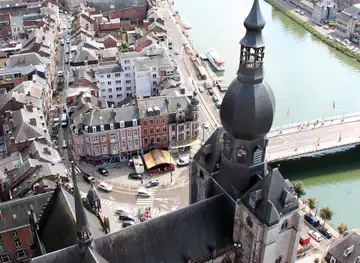
The cities of Luxembourg, and the easiest places to base yourself.
-
-

-

-

-

-


Swipe for more cities
Destinations in Luxembourg
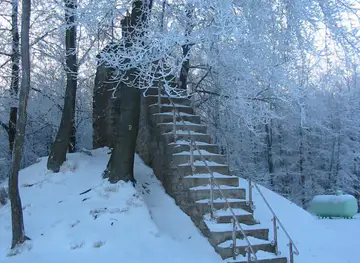
Resorts, valleys and scenic spots worth a trip of their own.
-

-

-


Swipe for more destinations
Best attractions in Luxembourg
Luxembourg Province offers a varied collection of attractions spread across a large, predominantly rural territory. Medieval fortifications are central to the visitor experience: Bouillon Castle rises above the Semois, while La Roche-en-Ardenne and Durbuy provide different interpretations of fortified town heritage. Bastogne’s museums, memorials and walking routes explore the Battle of the Bulge, with a focus on both military events and civilian experience. In the south, the ruins and museum of Orval Abbey combine religious history, architecture and a continuing brewing tradition. The province also includes the caves at Hotton, the Euro Space Center at Transinne and the open-air heritage complex at Fourneau Saint-Michel. Forests, valleys and rivers offer marked walks, mountain-bike routes, climbing opportunities and seasonal canoeing, while Saint-Hubert is associated with the wooded Ardennes and outdoor traditions. Smaller museums, churches, rural estates and village festivals add local detail, although many attractions have seasonal schedules and rural public transport can be limited.
-
Castle
Vianden Castle
Explore Vianden Castle, a majestic medieval fortress in Luxembourg, offering a captivating journey through centuries of history and architectural splendor.
-
War museum
Bastogne War Museum
Explore the pivotal Battle of the Bulge through immersive exhibits and personal stories at the Bastogne War Museum.
-
Historical landmark
Casemates du Bock
Explore Luxembourg's underground fortress: a UNESCO World Heritage site with centuries of military history and stunning city views.
-
Historical landmark
Bock Casemates
Discover the Bock Casemates, a UNESCO World Heritage Site in Luxembourg City, showcasing stunning views and rich historical significance.


Best landmarks in Luxembourg
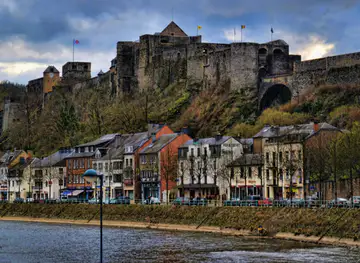
Bouillon Castle is the province’s most imposing medieval landmark, occupying a narrow rocky ridge above the Semois and presenting a complex of towers, walls and passageways shaped by centuries of military development. In Bastogne, the Mardasson Memorial, with its distinctive star-shaped design, commemorates the American soldiers who fought in the Battle of the Bulge and anchors a wider commemorative landscape. Orval Abbey near Villers-devant-Orval is important for both its ruined medieval monastery and its later monastic buildings, while its wooded setting reinforces the sense of a long-lived religious site. Arlon’s Roman remains and archaeological collections point to the ancient settlement of Orolaunum. Other defining landmarks include the castle ruins above La Roche-en-Ardenne, the compact historic centre of Durbuy and the landscape-setting churches, farms and villages of Gaume. Together these places reveal the province’s border history, strategic valleys, religious institutions and rural architecture.
-
Plaza
Grand Place
Explore the Grand Place, Brussels' stunning plaza with breathtaking architecture and rich history, a UNESCO World Heritage site captivating every traveler.
-
Tourist attraction
Atomium
Discover the Atomium, Brussels' iconic landmark showcasing stunning architecture and panoramic city views, blending culture and history in every visit.
-
Castle
Gravensteen
Immerse yourself in the history of Gravensteen Castle in Ghent, a captivating medieval fortress that tells tales of the past.
-
Castle
Vianden Castle
Discover the enchanting Vianden Castle, a medieval fortress offering rich history and breathtaking views in the heart of Luxembourg.


Explore Luxembourg on the map
Plan your trip on one map. See where the top cities, national parks and sights are, and book hotels and experiences in a few clicks.
Best hotels in Luxembourg
Best restaurants in Luxembourg
The province’s food reflects Ardennes farming, woodland and borderland traditions rather than a single uniform cuisine. Ardennes ham, smoked meats, pâtés, trout, game and hearty potato-based dishes appear widely, while pâté gaumais is particularly associated with Gaume. Local cheeses include Orval, made in connection with the abbey tradition, and menus often draw on regional dairy and farm produce. Forest and river landscapes have influenced the use of mushrooms, berries and freshwater fish, although availability is seasonal. Traditional cafés, village inns and brasseries sit alongside contemporary restaurants in Durbuy, Bastogne, Arlon, Bouillon and other larger centres. Look for local beers, including those brewed in the wider province, and for menus that identify producers rather than relying solely on generic Belgian specialities. Markets and farm shops are useful for bread, charcuterie, cheese, preserves and pâtisserie to take on a self-catering trip.
-
Restaurant
Brasserie du Cercle
Discover Brasserie du Cercle: A top-notch dining experience in Luxembourg City offering local flavors in an elegant setting.
-
Lebanese
Bazaar Bar and Restaurant
Savor the vibrant flavors of Lebanese cuisine at Bazaar Bar & Restaurant in Luxembourg's lively Ville Haute district.
-
Brasserie
The beer factory
Experience the essence of Belgian culture at The Beer Factory, where tradition meets flavor in every glass.
-
Greek
Ambrosia Restaurant
Experience authentic Greek flavors at Ambrosia Restaurant in Luxembourg – where tradition meets taste in every dish.


Best bars in Luxembourg
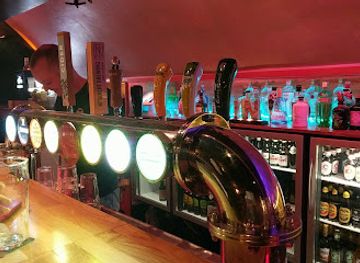
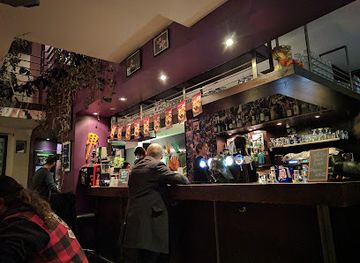
Evening life in Luxembourg Province is generally social and low-key, centred on pubs, cafés, brasseries and restaurants rather than a large nightclub circuit. Durbuy, Arlon, Bastogne, Marche-en-Famenne and Bouillon offer the broadest choice of places to eat and drink, while smaller Ardennes communities tend to rely on village cafés, traditional inns and occasional live music. Belgian beers are widely available, alongside local and regional brews, but travellers should not assume that every rural centre remains open late. Student and younger nightlife is more apparent in larger towns and nearby urban areas than in forest villages. In summer, riverside terraces and outdoor events can extend the evening atmosphere, whereas winter visits are more suited to convivial meals, hotel bars and historic pubs. Check transport before going out, particularly where accommodation lies outside the town centre.
-
Restaurant
Le Quai Son
Experience authentic Belgian cuisine and a wide selection of local beers at Le Quai Son, the perfect culinary destination in La Roche-en-Ardenne.
-
Bar
Tube
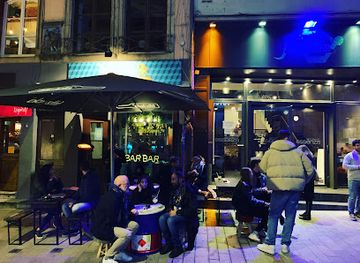
Discover vibrant nightlife at The Tube, a cozy bar in Ville Haute, Luxembourg, known for its diverse drinks and lively atmosphere.
-
Cafe
Rock Solid
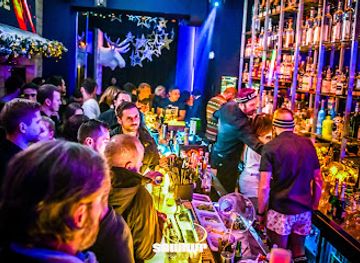
Discover the vibrant nightlife of Luxembourg at Rock Solid, a rock-themed cafe and bar offering a diverse drink menu and lively atmosphere.
-
Bar
Tortuga
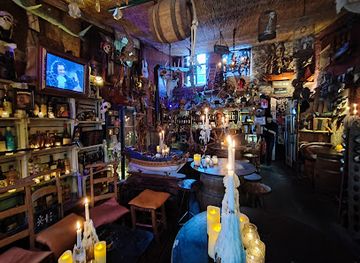
Discover the vibrant atmosphere at Tortuga, Durbuy's beloved bar offering a delightful selection of drinks and a welcoming community spirit.

Best nightclubs in Luxembourg
Evening life in Luxembourg Province is generally social and low-key, centred on pubs, cafés, brasseries and restaurants rather than a large nightclub circuit. Durbuy, Arlon, Bastogne, Marche-en-Famenne and Bouillon offer the broadest choice of places to eat and drink, while smaller Ardennes communities tend to rely on village cafés, traditional inns and occasional live music. Belgian beers are widely available, alongside local and regional brews, but travellers should not assume that every rural centre remains open late. Student and younger nightlife is more apparent in larger towns and nearby urban areas than in forest villages. In summer, riverside terraces and outdoor events can extend the evening atmosphere, whereas winter visits are more suited to convivial meals, hotel bars and historic pubs. Check transport before going out, particularly where accommodation lies outside the town centre.
-
Disco club
Apoteca
Experience the vibrant nightlife of Apoteca, a disco club and Italian restaurant in the heart of Luxembourg's Ville Haute.
-
Disco club
Forum d'Ortho
Discover the heart of La Roche-en-Ardenne's nightlife at Forum d'Ortho, where the music never stops and memories are made.
-
Restaurant
Saumur Crystal Club
Discover the ultimate nightlife experience at Saumur Crystal Club in Luxembourg, where dining meets vibrant entertainment.
-
Disco club
Lenox Club
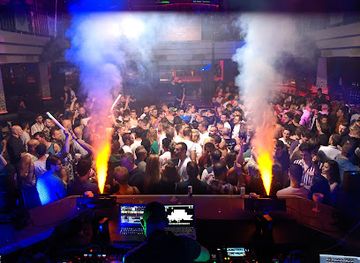
Discover the electrifying atmosphere of Lenox Club – Luxembourg's premier destination for nightlife and dancing.

Best shops in Luxembourg
Shopping in Luxembourg Province is focused on market towns, local food and independent businesses rather than large-scale retail. Arlon and Marche-en-Famenne have the broadest everyday high-street offer, while Bastogne, Durbuy, Bouillon and La Roche-en-Ardenne combine practical shops with galleries, craft outlets, bookshops and tourism-oriented retailers. Look for Ardennes ham and pâtés, regional cheeses, biscuits, honey, preserves and locally brewed beer, taking account of any transport or food-storage requirements. Gaume is particularly suitable for buying local produce associated with its distinctive culinary tradition, and shops near Orval may stock products connected with the abbey. Village markets and seasonal fairs vary by calendar, so confirm dates locally rather than assuming a weekly event. Crafts, woodwork, pottery, textiles and illustrated material about the Ardennes or wartime history make more meaningful souvenirs than generic branded goods.
-
Shopping mall
Belle Etoile Shopping Center
Experience the charm of shopping at Belle Etoile Shopping Center in Luxembourg, featuring diverse shops, delightful dining, and a vibrant atmosphere.
-
Shopping mall
Knauf Shopping Center Pommerloch
Explore Knauf Shopping Center Pommerloch – a vibrant shopping paradise in Luxembourg with diverse stores, dining options, and family-friendly activities.
-
Supermarket
Auchan Kirchberg
Experience the ultimate shopping destination at Auchan Kirchberg, where local flavors meet international variety in Luxembourg.
-
Shopping mall
Knauf Shopping Schmiede
Explore Knauf Shopping Schmiede, Luxembourg's vibrant shopping mall offering diverse stores, delightful dining, and a welcoming atmosphere for all.


Get your free copy of our complete guide to Luxembourg, delivered straight to you.
Everything on this page, from attractions and restaurants to essentials and local phrases, in one PDF you can read offline, print or share.
Already have an account? Sign in
Your Luxembourg guide is ready.
We'll send it to · Not you? Sign out

Getting your guide ready…
We are putting together a fresh copy of the Luxembourg guide. This can take up to a minute.
This can take a few moments. If your browser asks, choose Allow so the download can start. You'll find the guide in your Downloads folder.
Nothing happened? Download it again
Sorry, the guide is taking longer than usual. Please try again in a minute, or get it by email instead.
Luxembourg essentials
Currency and Payment
Safety
Emergency Situations
Do's and Don'ts
Local Tips
From Eve
Local phrases worth knowing
You don't need to get them perfect. A few words go a long way, and locals appreciate the effort.
Basics
| English | Local | Say it |
|---|---|---|
| Hello | Moïen | [moy-en] |
| Goodbye | Äddi | [eh-dee] |
| Yes | Jo | [yo] |
| No | Neen | [neen] |
| Please/You're welcome | Bitte | [bit-te] |
| Thank you | Merci | [mer-see] |
| Excuse me/Sorry | Entschëllegt | [ent-shel-lekt] |
| How are you? | Wéi geet et Iech? | [vay gate et ee-ich] |
| Fine. And you? | Gutt. A dir? | [goot. A deer] |
| Do you speak English? | Sprécht Dir Englesch? | [spraycht deer eng-leesh] |
| I don't understand | Ech verstinn net | [esh fer-stin net] |
Eating & Drinking
| English | Local | Say it |
|---|---|---|
| I'd like to see the menu, please | Ech géif gär de Menü gesin, bitte | [esh geef gar de meh-nu gay-sin, bit-te] |
| I don't eat meat | Ech iessen keen Fleesch | [esh ee-sen keen flesh] |
| Cheers! | Prost! | [prohst] |
| I would like to pay, please | Ech géif gär bezuelen, bitte | [esh geef gar be-zue-len, bit-te] |
Emergencies
| English | Local | Say it |
|---|---|---|
| Help! | Hëllef! | [hel-lef] |
| Go away! | Géi fort! | [gay fort] |
| Call the Police! | Rufft d'Police! | [roo-ft deh po-lees] |
| Call a doctor! | Rufft e Dokter! | [roo-ft eh dok-ter] |
| I'm lost | Ech sinn verluer | [esh sin fer-lu-er] |
| I'm ill | Ech sinn krank | [esh sin krank] |
Shopping
| English | Local | Say it |
|---|---|---|
| I'd like to buy... | Ech géif gär kafen... | [esh geef gar ka-fen] |
| I'm just looking | Ech kucken just | [esh koo-ken yoost] |
| How much is it? | Wéi vill kascht et? | [vay feel kasht et] |
| That's too expensive | Dat ass ze deier | [dat ass ze die-er] |
| Can you lower the price? | Kënnt Dir de Präis erofsetzen? | [kent deer de preys er-rof-set-sen] |
Time & Numbers
| English | Local | Say it |
|---|---|---|
| What time is it? | Wéi spät ass et? | [vay shpaht ass et] |
| It's one o'clock | Et ass een Auer | [et ass een ow-er] |
| Half past (10) | Halsf vir (10) | [halsf veer] |
| Morning | Moien | [moy-en] |
| Afternoon | Nomëden | [no-me-den] |
| Evening | Owend | [ow-end] |
| Yesterday | Gëschter | [gesh-ter] |
| Today | Haut | [howt] |
| Tomorrow | Mëden | [muh-den] |
| 1 | Een | [een] |
| 2 | Zwei | [zwei] |
| 3 | Dräi | [drai] |
| 4 | Véier | [vee-er] |
| 5 | Fënnef | [fuhn-ef] |
| 6 | Sech | [zehk] |
| 7 | Siewen | [see-ven] |
| 8 | Acht | [aht] |
| 9 | Néng | [neng] |
| 10 | Zehn | [zehn] |
Transport & Directions
| English | Local | Say it |
|---|---|---|
| Where's a/the...? | Wou ass e/eng...? | [voo ass eh/eng] |
| What's the address? | Wat ass d'Adress? | [waht ass deh ad-res] |
| Can you show me (on the map)? | Kënnt Dir mir weisen (op der Kaart)? | [kent deer meer vie-zen (op der kart)] |
| When's the next (bus)? | Wanne kënnt de nächste (Bus)? | [van-e kent de next-eh] |
| A ticket (to ....) | E Ticket (an ...) | [eh ti-ket (an ...)] |
History of Luxembourg
Prehistory and Gallo-Roman Roads
The territory of modern Luxembourg Province has been occupied since prehistoric times, with archaeological evidence found in caves, settlements and burial sites across the Ardennes and southern districts. Under Roman rule, the area lay between important routes linking the Rhine, the Moselle basin and northern Gaul. Arlon, known in antiquity as Orolaunum, became a significant vicus, and surviving sculptural fragments and museum collections testify to its role. Roman roads encouraged trade and movement, while later settlements often reused routes and locations established in this period.
The Medieval County and Duchy of Luxembourg
During the Middle Ages, the region was shaped by the County and later Duchy of Luxembourg, although medieval political boundaries did not correspond precisely to the modern Belgian province. Fortifications controlled valleys, crossings and trade routes, and castles developed at places including Bouillon, La Roche and Durbuy. Religious foundations also acquired land and influence, most notably at Orval. The resulting pattern of hilltop strongholds, abbeys and compact settlements remains one of the province’s defining historical landscapes.
Bouillon and the First Crusade
Bouillon is closely associated with Godfrey of Bouillon, the eleventh-century nobleman who became one of the principal leaders of the First Crusade and the first ruler of the Kingdom of Jerusalem, according to the traditional account. The town’s fortress occupies a strategic rocky bend above the Semois and was repeatedly modified over the centuries. The connection between the castle and Godfrey’s legacy helped give Bouillon an importance that extends beyond its local history, although the surviving buildings reflect many periods rather than a single medieval moment.
From the Southern Netherlands to Belgian Luxembourg
The province’s political identity changed repeatedly under Burgundian, Habsburg, French and Dutch rule. After the defeat of Napoleon, the Congress of Vienna placed Luxembourg within the United Kingdom of the Netherlands, while the Belgian Revolution of 1830 brought much of the territory into the new Belgian state. The Treaty of London in 1839 divided Luxembourg: the western, French-speaking portion became Belgium’s Province of Luxembourg, while the remaining territory formed the Grand Duchy. This explains the enduring border relationship and the distinction between the two Luxembourgs.
Forestry, Ironworking and Rural Industry
For centuries, the Ardennes economy combined farming, woodland management, charcoal production, metalworking and small-scale craft. Iron extraction and processing developed in several parts of the region, using local ore, timber and water power. Sites such as the Fourneau Saint-Michel preserve the memory of this industrial and rural system, while forestry continues to influence both the landscape and local employment. The arrival and expansion of railways in the nineteenth century connected remote communities to markets, encouraged tourism and helped reshape towns such as Libramont and Marloie.
The Battle of the Bulge, 1944–45
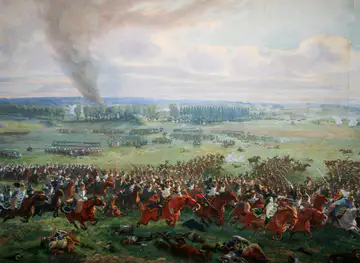
In the winter of 1944–45, Luxembourg Province became a major theatre of the German Ardennes Offensive, known in English as the Battle of the Bulge. Bastogne was surrounded during the fighting and became a central symbol of the Allied defence, while towns and villages across the northern Ardennes suffered destruction, displacement and civilian casualties. Museums, memorials, military cemeteries and preserved markers now form a substantial historical network. The subject is treated not only as military history but also as a story of occupied communities and the human cost of the campaign.
Post-war Tourism and Regional Identity
After the Second World War, forestry, agriculture and manufacturing remained important, but tourism became increasingly significant. The Ardennes’ rivers, forests, castles and walking routes attracted visitors from Belgium and neighbouring countries, while Bastogne developed a major international profile through its museums and commemorative sites. Cross-border links with France and the Grand Duchy of Luxembourg have also shaped commerce and daily life, particularly in the south. Today the province balances rural industries, heritage conservation, outdoor recreation and the needs of dispersed communities.
Luxembourg in Photos
Browse through our photo collection highlighting the charm and character of the destination.
Neighbouring regions of Luxembourg
The closest regions to Luxembourg, if you have time for more than one.
-
-

-

-
-


Swipe for more regions
Explore more

Explore more of Belgium
Discover Belgium: A blend of medieval charm, culinary delights, and stunning landscapes. Explore historic cities, savor exquisite chocolates, and enjoy a perfect getaway.
Explore Belgium