

Free Savannah Region Travel Guide & Mobile App
Explore Savannah Region with free travel guides. Discover regional history, expert tips, proposed trips, and audio guides on web or mobile app.


Explore Cameroon’s Savannah Region for Garoua, Benue River landscapes, lamidat heritage and wildlife-rich national parks.
Read more about Savannah Region
When is the best time to visit Savannah Region?
Best: December–February · 29–32°C| Month | High (°C) | Rainfall (mm) |
|---|---|---|
| January (best) | 31 | 25 |
| February (best) | 32 | 20 |
| March | 34 | 40 |
| April | 35 | 80 |
| May | 34 | 120 |
| June | 32 | 150 |
| July | 31 | 160 |
| August | 30 | 140 |
| September | 31 | 120 |
| October | 31 | 90 |
| November | 30 | 50 |
| December (best) | 29 | 30 |
Getting to and around Savannah Region
How to get there
Transportation
Top city travel guides in Savannah Region
The cities of Savannah Region, and the easiest places to base yourself.
-
-
-

-

-

-


Swipe for more cities
Destinations in Savannah Region
Resorts, valleys and scenic spots worth a trip of their own.
-

-
-

-


Swipe for more destinations
Best attractions in Savannah Region
The Savannah Region’s attractions are spread across a large area and combine wildlife, landscape and living cultural heritage. Garoua offers the most accessible introduction, with markets, riverside scenery and the urban life of northern Cameroon. The Benue River and the surrounding plains are central to the region’s geography, particularly for visitors interested in fishing, birdlife and the relationship between water, farming and settlement. Benoue National Park provides a major protected savannah landscape with riverine habitats and opportunities for guided wildlife viewing. Bouba-Ndjida National Park is a more remote conservation destination noted for its extensive habitat and elephant populations, while Faro National Park offers wild scenery, hills and a less developed visitor environment in the west. Outside the parks, journeys through the region pass livestock areas, seasonal wetlands, farming settlements and traditional centres associated with lamidat authority. Rey Bouba is important for visitors interested in northern Cameroon’s political and architectural history. Activities are shaped by logistics: wildlife trips, birdwatching and landscape photography are best arranged with local expertise, and independent access to remote areas is unsuitable. The region’s appeal lies less in a dense concentration of attractions than in the scale and contrast of its savannah environment.
-
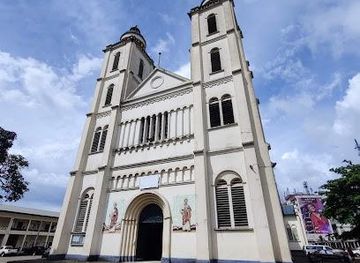
Catholic church
Cathedral of St Peter and Paul Bonadibong
Discover the architectural beauty and spiritual significance of the Cathedral of St Peter and Paul Bonadibong in the heart of Douala.
-
Museum
Maritime Museum Of Douala
Explore the rich maritime heritage of Cameroon at the Maritime Museum of Douala, a captivating destination for history lovers and tourists alike.
-
Museum
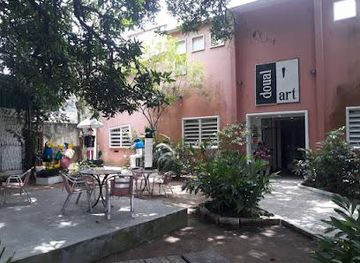
Doual'art
Experience the pulse of contemporary art at Doual'art, a cultural gem in Douala, Cameroon, where creativity and community converge.

Best landmarks in Savannah Region
The Benue River is the Savannah Region’s defining natural landmark, giving Garoua its setting and linking the city to the wider geography of northern Cameroon. Its seasonal water levels, floodplain vegetation and bridges or river approaches provide a visual counterpoint to the drier grasslands beyond. In Garoua, mosques and civic buildings reflect the city’s role as a major northern administrative and commercial centre, although visitors should treat religious buildings as active places of worship and seek permission before entering or photographing. The lamidat and palace tradition of Rey Bouba is the region’s most distinctive cultural landmark, representing the continuing historical importance of traditional authority in the northern savannah. Benoue National Park, Bouba-Ndjida National Park and Faro National Park are geographical landmarks as much as wildlife destinations: each expresses a different combination of open grassland, wooded savannah, river systems and more elevated terrain. Their significance lies in the landscapes they protect and the conservation challenges they embody. Access arrangements and security conditions should be confirmed locally before travelling to any remote site.
-
Museum
National Museum
Discover Cameroon's rich cultural heritage at the National Museum in Yaoundé, showcasing art, history, and traditions from across the country.
-
Restaurant
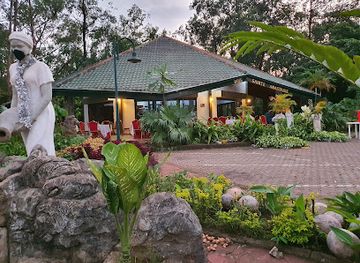
Bois Sainte Anastasie
Escape the city bustle at Bois Sainte Anastasie, Yaoundé's serene park with lush gardens, art, and local dining, a true urban oasis.
-
Cultural landmark
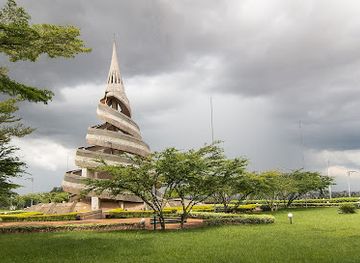
Cameroon Reunification Monument
A landmark in Yaoundé symbolizing Cameroon's unification, rich history, and cultural heritage, offering a reflective experience for all visitors.
-
Apartment complex
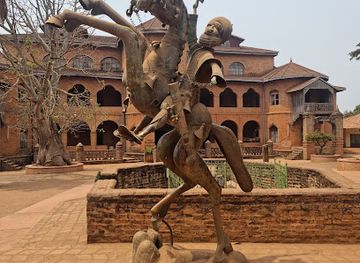
Ayos Centre
Discover Cameroonian traditions at Ayos Centre in Foumban, a vibrant hub for art, culture, and community engagement. Explore local heritage today!
Explore Savannah Region on the map
Plan your trip on one map. See where the top cities, national parks and sights are, and book hotels and experiences in a few clicks.
Best hotels in Savannah Region
Best restaurants in Savannah Region
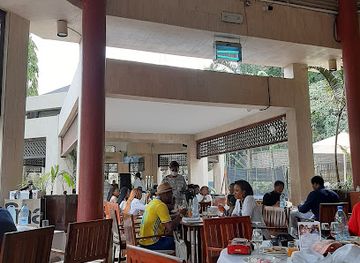
Dining in the Savannah Region reflects the food systems of northern Cameroon, where millet, sorghum, maize, rice, beans and groundnuts accompany beef, mutton, chicken and river fish. In Garoua, informal eateries, market stalls and modest restaurants provide the broadest choice, often serving filling grain-based dishes with sauces, grilled meat or fish. Kilichi, a seasoned dried-meat snack associated with northern Cameroon, is commonly encountered in markets, although visitors should choose products from clean, established sellers. Fresh produce varies with the season, and local meals may be more readily available than international menus outside the main city. Tea and simple breakfast foods are part of everyday urban life, while traditional drinks made from grains may appear in social settings; visitors should ask about preparation and alcohol content. Dining beyond Garoua is usually basic and should be planned alongside transport and accommodation. Markets are useful for discovering regional ingredients, but wash fruit carefully and take normal precautions with water and uncooked food.
-
Restaurant
Le Safoutier Restaurant
Discover the rich flavors of Cameroon at Le Safoutier Restaurant in Hilton Yaoundé - where exquisite cuisine meets elegant ambiance.
-
Restaurant
Saga Africa Restaurant - Akwa, Douala
Discover the vibrant flavors of African and European cuisine at Saga Africa Restaurant in Akwa, Douala - a true culinary delight.
-
Restaurant
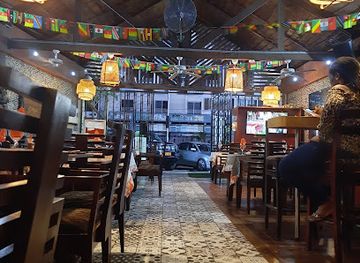
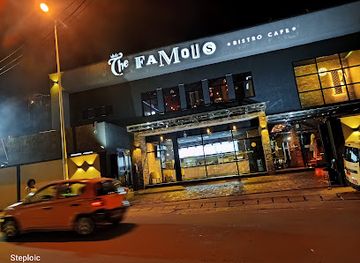
The Famous
Discover exquisite dining at The Famous in Yaoundé, where local flavors meet international cuisine in an elegant setting.
-
Restaurant
Restaurant Kajazoma
Discover the authentic flavors of Cameroon at Restaurant Kajazoma, where tradition meets innovation in every dish.
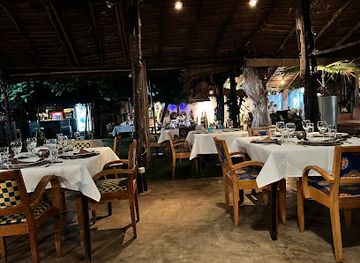
Best bars in Savannah Region
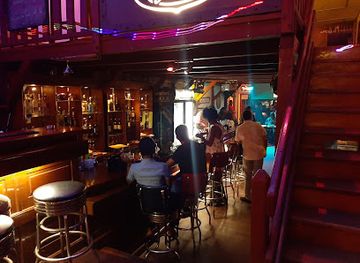
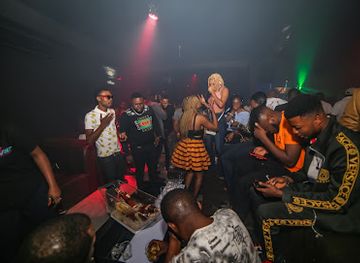
Nightlife in the Savannah Region is concentrated in Garoua and is generally social rather than built around a large club circuit. Bars, small restaurants and hotel venues provide places for conversation, football, music and evening meals, while local cafés and tea stalls are often more characteristic of daily urban life than late-night entertainment. In smaller towns, evenings tend to centre on neighbourhood drinking spots, food sellers and family or community gatherings, with activity reducing earlier than in major international cities. Music may include Cameroonian popular styles alongside regional northern traditions, but venues and opening arrangements can change. Visitors should travel with a trusted local contact after dark, use known transport and respect the atmosphere of religious or residential areas. Alcohol is available in some settings, but it is not necessary to experience the region’s evening culture; shared meals, market visits and riverside urban activity can be equally informative.
-
Lounge
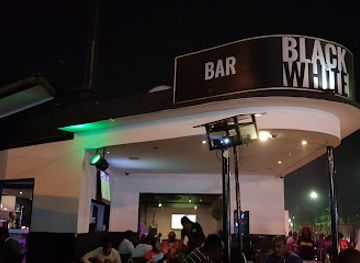
Black & White Sensation (Bastos)
Discover the chic ambiance and vibrant nightlife at Black & White Sensation, the premier lounge in Bastos, Yaoundé.
-
Disco club
Le Penalty Lounge
Discover the heart of Yaoundé's nightlife at Le Penalty Lounge, a lively disco club and lounge perfect for dancing, live music, and great company.
-
Restaurant
Bambou Lounge
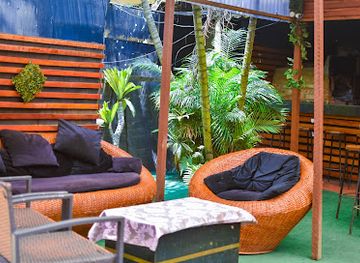
Discover the vibrant culinary scene at Bambou Lounge, where delicious food meets an exciting nightlife experience in Yaoundé.
-
Bar
MACADAM BIKERS
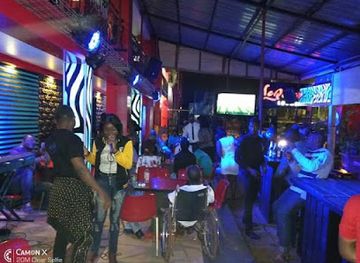
Discover the lively nightlife at Macadam Bikers, a cozy bar in Yaoundé offering local drinks, music, and a taste of Cameroonian culture.
Best nightclubs in Savannah Region
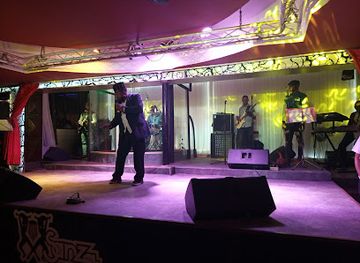
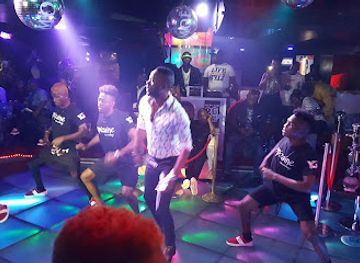
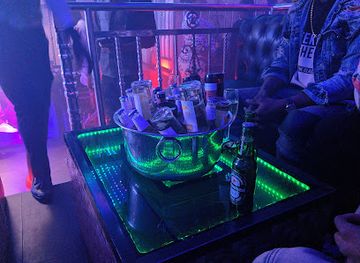
Nightlife in the Savannah Region is concentrated in Garoua and is generally social rather than built around a large club circuit. Bars, small restaurants and hotel venues provide places for conversation, football, music and evening meals, while local cafés and tea stalls are often more characteristic of daily urban life than late-night entertainment. In smaller towns, evenings tend to centre on neighbourhood drinking spots, food sellers and family or community gatherings, with activity reducing earlier than in major international cities. Music may include Cameroonian popular styles alongside regional northern traditions, but venues and opening arrangements can change. Visitors should travel with a trusted local contact after dark, use known transport and respect the atmosphere of religious or residential areas. Alcohol is available in some settings, but it is not necessary to experience the region’s evening culture; shared meals, market visits and riverside urban activity can be equally informative.
-
Night club
Sanza Night Club, Yaoundé
Discover the vibrant nightlife of Yaoundé at Sanza Night Club – dance, mingle, and experience local culture in a lively atmosphere.
-
Disco club
XO NIGHT CLUB
Discover the electrifying nightlife of Yaoundé at XO Night Club, where vibrant music and energy create unforgettable moments.
-
Bar
Apple Night Club
Dive into the lively nightlife of Limbe at Apple Night Club, where good music and great vibes await every night.
-
Night club
Twist Night Club
Immerse yourself in the vibrant atmosphere of Twist Night Club, a premier nightlife destination in Yaoundé offering an unforgettable experience.
Best shops in Savannah Region
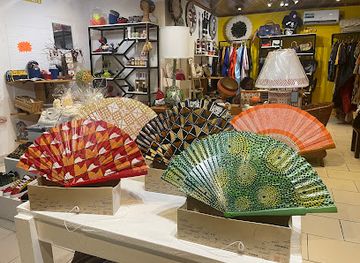
Shopping is most interesting in Garoua’s markets and commercial streets, where visitors can find foodstuffs, household goods, clothing and practical products serving the region’s urban and rural communities. Regional purchases may include dried meat, grains, spices, woven mats, leather articles, baskets and textiles, though quality and provenance vary. Small-scale craft production is more visible in market settings and towns than in formal souvenir shops, so bargaining should be polite and based on the item’s workmanship rather than treating every transaction as an obligation to negotiate aggressively. Cotton is economically important in northern Cameroon, and locally made cloth or garments may provide a more meaningful purchase than imported fabrics. Outside Garoua, shopping opportunities are limited and focused on daily necessities rather than tourism retail. Carry cash in smaller denominations, inspect food products carefully and avoid buying anything made from protected wildlife, archaeological material or other items whose export may be restricted.
-
Clothing store
Boutique Sol's a Douala - Cameroon
Discover the heart of Cameroonian fashion at Boutique Sol's, where vibrant styles and local craftsmanship come together in Douala.
-
Gift shop
African Soul Market
Explore handcrafted treasures and gourmet delights at African Soul Market, a vibrant celebration of African culture in Douala.
-
Duty free store
Boutique Karzaï
Discover the best duty-free shopping experience at Boutique Karzaï, offering luxury goods at competitive prices for every traveler.
-
Market
Artisanal Market
Explore Douala's Artisanal Market, a vibrant cultural hub showcasing local crafts, delicious cuisine, and authentic Cameroonian experiences.


Get your free copy of our complete guide to Savannah Region, delivered straight to you.
Everything on this page, from attractions and restaurants to essentials and local phrases, in one PDF you can read offline, print or share.
Already have an account? Sign in
Your Savannah Region guide is ready.
We'll send it to · Not you? Sign out

Getting your guide ready…
We are putting together a fresh copy of the Savannah Region guide. This can take up to a minute.
This can take a few moments. If your browser asks, choose Allow so the download can start. You'll find the guide in your Downloads folder.
Nothing happened? Download it again
Sorry, the guide is taking longer than usual. Please try again in a minute, or get it by email instead.
Savannah Region essentials
Currency and Payment
Safety
Emergency Situations
Do's and Don'ts
Local Tips
From Eve
Local phrases worth knowing
You don't need to get them perfect. A few words go a long way, and locals appreciate the effort.
Basics
| English | Local | Say it |
|---|---|---|
| Hello | Hello | [Heh-loh] |
| Goodbye | Goodbye | [Good-bye] |
| Yes | Yes | [Yes] |
| No | No | [No] |
| Please/You're welcome | Please/You're welcome | [Pleez/You're wel-kum] |
| Thank you | Thank you | [Thangk yoo] |
| Excuse me/Sorry | Excuse me/Sorry | [Ex-kyoos mee/Sor-ree] |
| How are you? | How are you? | [How ar yoo?] |
| Fine. And you? | Fine. And you? | [Fine. And yoo?] |
| Do you speak English? | Do you speak English? | [Doo yoo speek Ing-lish?] |
| I don't understand | I don't understand | [I dont un-der-stand] |
Eating & Drinking
| English | Local | Say it |
|---|---|---|
| I'd like to see the menu, please | I'd like to see the menu, please | [I'd laik to see the men-yoo, pleez] |
| I don't eat meat | I don't eat meat | [I dont eet meet] |
| Cheers! | Cheers! | [Cheerz!] |
| I would like to pay, please | I would like to pay, please | [I wood laik to pay, pleez] |
Emergencies
| English | Local | Say it |
|---|---|---|
| Help! | Help! | [Help!] |
| Go away! | Go away! | [Go aw-ay!] |
| Call the Police! | Call the Police! | [Call the Po-leez!] |
| Call a doctor! | Call a doctor! | [Call a dok-tor!] |
| I'm lost | I'm lost | [I'm lost] |
| I'm ill | I'm ill | [I'm il] |
Shopping
| English | Local | Say it |
|---|---|---|
| I'd like to buy... | I'd like to buy... | [I'd laik to buy...] |
| I'm just looking | I'm just looking | [I'm just luk-ing] |
| How much is it? | How much is it? | [How much iz it?] |
| That's too expensive | That's too expensive | [That's too eks-pen-siv] |
| Can you lower the price? | Can you lower the price? | [Can yoo loh-er the prys?] |
Time & Numbers
| English | Local | Say it |
|---|---|---|
| What time is it? | What time is it? | [What tym iz it?] |
| It's one o'clock | It's one o'clock | [It's wun o-clock] |
| Half past (10) | Half past (10) | [Haf past (ten)] |
| Morning | Morning | [Mor-ning] |
| Afternoon | Afternoon | [Af-ter-noon] |
| Evening | Evening | [Eve-ning] |
| Yesterday | Yesterday | [Yes-ter-day] |
| Today | Today | [To-day] |
| Tomorrow | Tomorrow | [To-mor-row] |
| 1 | 1 | [One] |
| 2 | 2 | [Two] |
| 3 | 3 | [Three] |
| 4 | 4 | [Four] |
| 5 | 5 | [Five] |
| 6 | 6 | [Six] |
| 7 | 7 | [Seven] |
| 8 | 8 | [Eight] |
| 9 | 9 | [Nine] |
| 10 | 10 | [Ten] |
Transport & Directions
| English | Local | Say it |
|---|---|---|
| Where's a/the...? | Where's a/the...? | [Where's a/the...?] |
| What's the address? | What's the address? | [What's the ad-dress?] |
| Can you show me (on the map)? | Can you show me (on the map)? | [Can yoo sho mee (on the map)?] |
| When's the next (bus)? | When's the next (bus)? | [When's the nekst (bus)?] |
| A ticket (to ....) | A ticket (to ....) | [A tik-et (to ....)] |
History of Savannah Region
Early Sahelian and Sudanic Settlement
The northern plains of Cameroon have long connected the Lake Chad basin, the Benue valley and the wider Sudanic world. Communities developed around seasonal watercourses, farming, fishing and livestock, while regional trade moved salt, livestock, grain and manufactured goods across long-distance routes. Archaeological knowledge is uneven, but the landscape preserves the legacy of successive settlements and political networks rather than a single ancient kingdom. The Benue valley’s position between northern and central Cameroon helped make the area a zone of cultural and commercial exchange.
Fulani Expansion and the Lamidats
From the late eighteenth and especially the nineteenth century, Fulani-led Islamic states expanded their influence across much of northern Cameroon. Political authority was organised through lamidats, chiefly institutions that combined administration, taxation, justice and religious prestige. The lamidats of the northern savannah were connected to the wider Adamawa emirate and shaped settlement patterns, trade routes and relations between pastoral and farming communities. Their influence remains visible in traditional leadership, palace compounds, ceremonial life and the social geography of towns such as Garoua and Rey Bouba.
European Conquest and Colonial Rule
German forces established colonial control in Cameroon in the late nineteenth century, including the northern territories, but their rule was disrupted by the First World War. The region subsequently came under French administration as part of French Cameroun. Colonial authorities reorganised local administration, taxation, transport and commercial agriculture while relying in varying ways on existing traditional structures. Roads and administrative centres expanded, but colonial rule also brought coercive labour systems and economic priorities designed chiefly to serve external interests.
Garoua and the Benue Transport Corridor
Garoua grew in importance because of its position beside the Benue River and its role as a regional trading centre. River navigation was seasonally limited, yet the waterway linked the area to wider commercial networks and reinforced Garoua’s importance as a northern market. Roads, administrative investment and later modern transport connections strengthened its role after independence. The city’s growth reflects the transition from a historic river and market centre to the principal urban and logistical hub of Cameroon’s North Region.
Independence and the Cotton Economy
Cameroon became independent in 1960, and the northern savannah entered a period of state-led development focused on agriculture, transport and rural administration. Cotton became particularly important in the economy of northern Cameroon, alongside cattle, cereals and food crops. Cotton production brought roads, ginning infrastructure and commercial links, but it also exposed farming communities to fluctuating prices, rainfall variability and changing state policies. The economic landscape today still reflects this mixture of subsistence cultivation, livestock production and cash-crop agriculture.
Conservation and Contemporary Pressures
Protected areas including Benoue, Bouba-Ndjida and Faro were established and expanded within a broader national effort to conserve Cameroon’s northern wildlife and savannah ecosystems. Their importance has grown as habitats face pressure from agriculture, livestock movement, poaching and climate variability. Conservation has also created difficult questions about land access, security and the relationship between park authorities and neighbouring communities. Contemporary travel to the region therefore involves not only wildlife observation but an encounter with the practical challenges of managing a large, inhabited savannah landscape.
Savannah Region in Photos
Browse through our photo collection highlighting the charm and character of the destination.
Neighbouring regions of Savannah Region
The closest regions to Savannah Region, if you have time for more than one.
-

-

-

-
-


Swipe for more regions
Explore more

Explore more of Cameroon
Discover Cameroon: A Land of Diverse Landscapes, Rich Cultural Heritage, and Unforgettable Adventures in the Heart of Africa.
Explore Cameroon