

Free Central Valley Travel Guide & Mobile App
Explore Central Valley with free travel guides. Discover regional history, expert tips, proposed trips, and audio guides on web or mobile app.


Explore Chile’s Central Valley for historic cities, celebrated vineyards, farm-to-table food and changing landscapes between the Andes and Coastal Range.
Read more about Central Valley
When is the best time to visit Central Valley?
Best: December–February · 25–26°C| Month | High (°C) | Rainfall (mm) |
|---|---|---|
| January (best) | 26 | 1 |
| February (best) | 25 | 3 |
| March | 23 | 7 |
| April | 19 | 10 |
| May | 15 | 14 |
| June | 13 | 18 |
| July | 13 | 16 |
| August | 14 | 14 |
| September | 17 | 12 |
| October | 20 | 8 |
| November | 22 | 5 |
| December (best) | 25 | 3 |
Getting to and around Central Valley
How to get there
Transportation
Top city travel guides in Central Valley
The cities of Central Valley, and the easiest places to base yourself.
-

-

-

-

-

-


Swipe for more cities
Destinations in Central Valley
Resorts, valleys and scenic spots worth a trip of their own.
-

-


Swipe for more destinations
Best attractions in Central Valley
The Central Valley’s attractions follow its geography: a chain of cities, vineyards, agricultural districts and mountain approaches rather than one concentrated resort area. Santiago offers major museums, galleries, historic neighbourhoods and the Plaza de Armas, while nearby Maipo combines established wineries with broad views towards the Andes. South of the capital, Rancagua provides access to O’Higgins heritage and the mountain mining story associated with Sewell, which lies outside the valley floor but within the region’s wider Andean setting. Colchagua, centred on Santa Cruz and surrounding rural communities, is known for cellar-door visits, wine museums and estate landscapes. Curicó and the Maule Valley offer vineyards alongside orchards, farm country and historic town centres, while Talca works as a base for exploring the wider Maule landscape. Outdoor choices include cycling between vineyards, walking in foothill areas and visiting nature reserves where access is permitted. The attraction of the region lies in connecting food, landscape, working agriculture and history rather than ticking off isolated sights.
-
Stadium
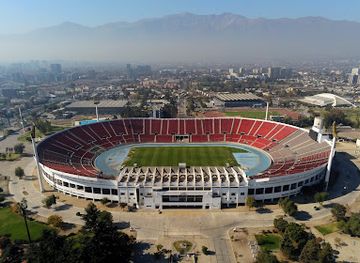
Estadio Nacional Julio Martínez Pradanos
Explore Estadio Nacional Julio Martínez Pradanos, a historic stadium in Santiago, Chile, known for soccer matches, concerts, and vibrant cultural events.
-
Tourist attraction
Chillán Market
Explore the vibrant Chillán Market, a cultural gem in Ñuble, offering fresh produce, local crafts, and authentic Chilean flavors.
-
National park
Parque Nacional Radal Siete Tazas
Explore the breathtaking beauty of Parque Nacional Radal Siete Tazas, a paradise for nature lovers and adventure seekers in Chile's Maule region.
-
Tourist attraction
Cascada Invertida
Discover the enchanting Cascada Invertida, a mesmerizing inverted waterfall in San Clemente, Maule, offering breathtaking views and unforgettable nature experiences.


Best landmarks in Central Valley
The Central Valley’s most recognisable landmarks express the relationship between Chilean history, civic life and the surrounding mountains. Santiago’s Plaza de Armas and neighbouring historic buildings form the symbolic core of the capital, while the city’s skyline is framed by the Andes and the lower hills of the Coastal Range. In Rancagua, Plaza de los Héroes is associated with the Battle of Rancagua and remains an important civic space in a city shaped by both agriculture and copper mining. The rural wine districts are marked by long avenues, estate gates, irrigation channels and traditional adobe or tile-roofed buildings, although earthquake damage and modern rebuilding have altered many historic properties. In the Maule area, town squares and civic buildings in Curicó and Talca reflect the development of nineteenth-century agricultural centres. Above Rancagua, the former mining settlement of Sewell is a particularly significant industrial landmark in the wider Central Valley region: its steep mountain setting, densely arranged buildings and association with El Teniente illustrate the scale of Chile’s copper industry. The Andes themselves provide the region’s most constant geographical landmark, changing from distant horizon to immediate mountain wall along the eastern edge.
-
Shopping mall
Cenco Costanera
Experience the best of Santiago at Cenco Costanera, where shopping, dining, and culture come together in a vibrant urban setting.
-
Tourist attraction
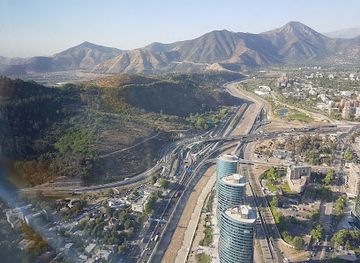
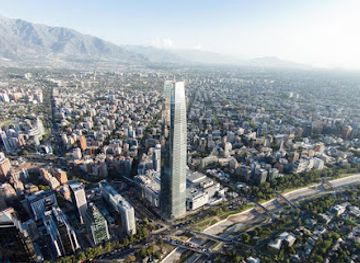
Sky Costanera
Experience Santiago from above at Sky Costanera, the tallest observation deck in Latin America, offering breathtaking 360° views.
-
State park
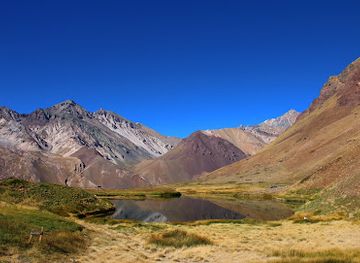
Parque Provincial Aconcagua
Discover the breathtaking beauty of Parque Provincial Aconcagua, a stunning state park in Mendoza, Argentina, home to the highest peak in the Americas.
-
Historical landmark
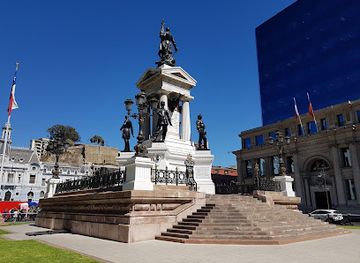
Plaza Sotomayor
Experience the historic Plaza Sotomayor in Valparaíso, a vibrant square showcasing Chile's maritime heritage and architectural beauty.
Explore Central Valley on the map
Plan your trip on one map. See where the top cities, national parks and sights are, and book hotels and experiences in a few clicks.
Best hotels in Central Valley
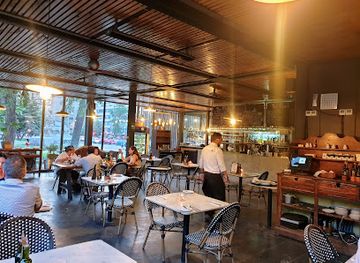
Best restaurants in Central Valley
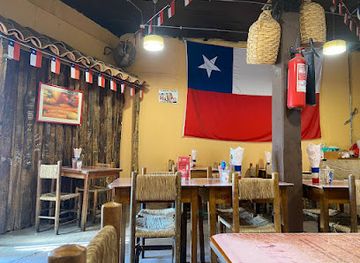
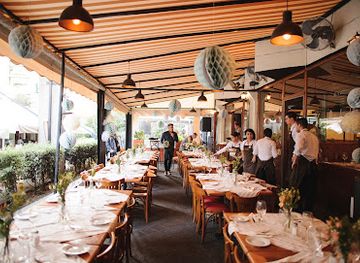
Dining in the Central Valley is rooted in Chilean home cooking and the produce of irrigated farmland. Menus commonly draw on beef, pork, chicken, maize, beans, pumpkin, tomatoes, potatoes and seasonal fruit, with empanadas, cazuelas, pastel de choclo and grilled meats appearing in many forms across the country rather than belonging exclusively to this region. Rural restaurants, wine-estate kitchens and traditional eateries in market towns often give these ingredients a local emphasis, while Santiago provides the widest choice of contemporary and international dining. The vineyard districts pair regional food with wines from Maipo, Colchagua, Curicó and Maule, and many estates offer set meals or tastings that reflect their own produce suppliers. Look for fresh peaches, cherries, grapes, berries, preserves, olive oil and farmhouse-style baking when travelling through agricultural areas. In smaller towns, lunch is often the principal meal, and opening arrangements can be more limited than in Santiago, so advance planning is sensible outside the main urban centres.
-
Chilean
La Piojera
Experience the vibrant flavors of Chile at La Piojera, Santiago's iconic bar and restaurant offering authentic cuisine in a lively setting.
-
French
Le Bistrot de Gaetan
Experience authentic French cuisine at Le Bistrot de Gaetan in Providencia, Santiago - where every meal is a delightful journey through flavors.
-
Tapas Bar
De la Ostia
Discover authentic Spanish flavors at De la Ostia, where every tapas dish tells a story of culinary tradition and modern flair.
-
Restaurant
Castillo Forestal
Experience exquisite Chilean cuisine at Castillo Forestal, where delightful dishes meet enchanting surroundings in Santiago.
Best bars in Central Valley
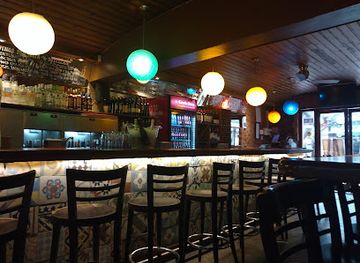
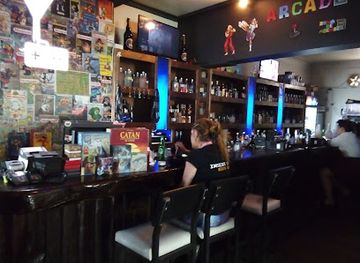
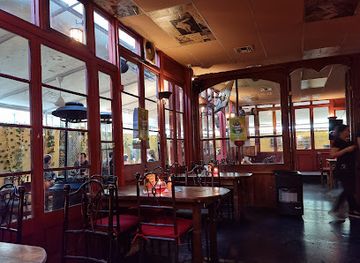
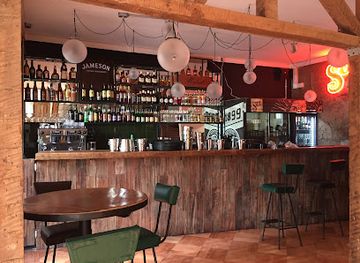
Nightlife varies sharply across the Central Valley. Santiago has the country’s broadest evening scene, including cocktail bars, live music, theatres and clubs, while Rancagua, Curicó and Talca provide more compact selections of pubs, restaurants, bars and late-night venues serving local residents and students. In wine country, the evening is more likely to centre on a restaurant, hotel bar, vineyard tasting or relaxed gathering than a large club, particularly outside the main towns. Traditional Chilean pubs and neighbourhood bars offer beer, wine and simple food, while some urban venues focus on craft beer, cocktails or live music. Rural districts become quiet relatively early, and venues may operate seasonally or on a limited schedule, so check locally rather than assuming that a small village will have a late-night scene. Responsible drinking is especially important when visiting wineries, and a designated driver or pre-arranged transfer is essential for touring.
-
Bar
Insert Coin Bar - Providencia
Experience the perfect blend of gaming and dining at Insert Coin Bar in Providencia, where every visit is a nostalgic adventure.
-
Irish pub
Flannery's Irish Geo Pub
Discover the vibrant atmosphere of Flannery's Irish Geo Pub, where authentic Irish charm meets local culture in the heart of Las Condes.
-
Bar
Bar Valdivia
Experience the lively culture of Providencia at Bar Valdivia, where refreshing cocktails and vibrant ambiance await every visitor.
-
Bar
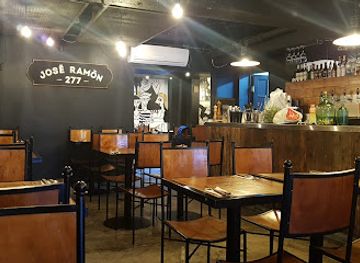
José Ramón 277: Chopería & Sanguchería
Experience the best of Santiago's nightlife at José Ramón 277, where delicious food and craft beer meet vibrant local culture.
Best nightclubs in Central Valley
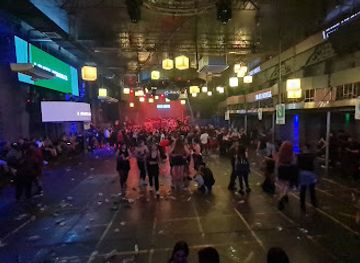
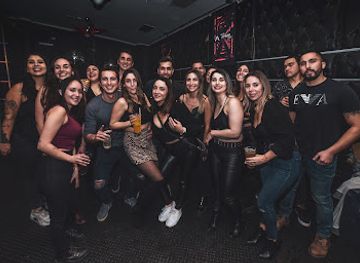
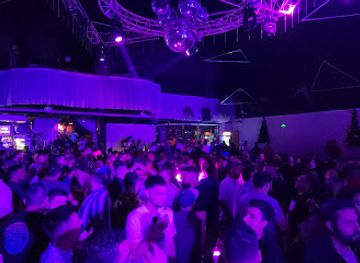
Nightlife varies sharply across the Central Valley. Santiago has the country’s broadest evening scene, including cocktail bars, live music, theatres and clubs, while Rancagua, Curicó and Talca provide more compact selections of pubs, restaurants, bars and late-night venues serving local residents and students. In wine country, the evening is more likely to centre on a restaurant, hotel bar, vineyard tasting or relaxed gathering than a large club, particularly outside the main towns. Traditional Chilean pubs and neighbourhood bars offer beer, wine and simple food, while some urban venues focus on craft beer, cocktails or live music. Rural districts become quiet relatively early, and venues may operate seasonally or on a limited schedule, so check locally rather than assuming that a small village will have a late-night scene. Responsible drinking is especially important when visiting wineries, and a designated driver or pre-arranged transfer is essential for touring.
-
Disco club
Blondie
Experience the electric nightlife of Santiago at Blondie, a vibrant disco club with diverse music and a lively atmosphere.
-
Disco club
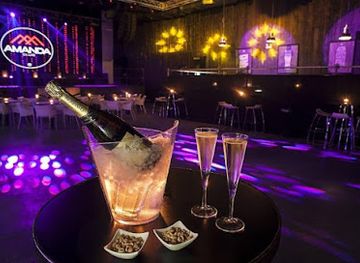
Club Amanda
Discover the nightlife of Santiago at Club Amanda, where electrifying music and creative cocktails come together for an unforgettable night out.
-
Night club
Club Ambar
Discover the heartbeat of Santiago's nightlife at Club Ambar, where music, dancing, and vibrant energy await every night.
-
Disco club
New Zero Discotheque
Discover the electric atmosphere of New Zero Discotheque, Santiago's hotspot for nightlife fun, dancing, and unforgettable memories.
Best shops in Central Valley
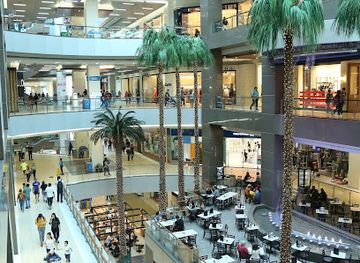
Shopping in the Central Valley is strongest in Santiago’s established retail districts and in the market towns that serve surrounding farming communities. Santiago offers the broadest range of department stores, independent design shops, bookshops, galleries and food halls, while Rancagua, Curicó and Talca combine conventional high streets and shopping centres with municipal markets and smaller specialist businesses. In wine country, cellar doors are the natural place to buy bottles, gift packs and occasionally olive oil or preserves, although travellers should check airline and customs rules for transporting liquids. Rural markets and ferias are useful for seasonal fruit, vegetables, bread, dried goods and household products rather than polished souvenirs. Around Santa Cruz and other visitor centres, look for regional wine accessories, food products, ceramics and craft items, but confirm provenance where an item is described as locally made. Chilean textiles, wooden objects, jewellery and artisanal foods can also be found in urban craft shops, with choice and quality varying between businesses. Avoid expecting extensive luxury retail once outside Santiago, where shopping becomes more practical and closely connected to local agriculture.
-
Shopping mall
Cenco Costanera
Discover Cenco Costanera, Santiago's premier shopping mall offering a blend of local culture, diverse shopping, and delicious dining experiences.
-
Shopping mall
Mall Costanera Center
Discover the ultimate shopping experience at Mall Costanera Center, Santiago's premier destination for fashion, food, and fun.
-
Shopping mall
Parque Arauco
Explore Parque Arauco, Santiago's premier shopping mall with a diverse range of shops, dining, and entertainment options for every traveler.
-
Shopping mall
Mallplaza Oeste
Explore Mallplaza Oeste: A vibrant shopping mall in Santiago, Chile, offering diverse shops, delicious dining, and endless entertainment options.

Get your free copy of our complete guide to Central Valley, delivered straight to you.
Everything on this page, from attractions and restaurants to essentials and local phrases, in one PDF you can read offline, print or share.
Already have an account? Sign in
Your Central Valley guide is ready.
We'll send it to · Not you? Sign out

Getting your guide ready…
We are putting together a fresh copy of the Central Valley guide. This can take up to a minute.
This can take a few moments. If your browser asks, choose Allow so the download can start. You'll find the guide in your Downloads folder.
Nothing happened? Download it again
Sorry, the guide is taking longer than usual. Please try again in a minute, or get it by email instead.
Central Valley essentials
Currency and Payment
Safety
Emergency Situations
Do's and Don'ts
Local Tips
From Eve
Local phrases worth knowing
You don't need to get them perfect. A few words go a long way, and locals appreciate the effort.
Basics
| English | Local | Say it |
|---|---|---|
| Hello | Hola | [OH-lah] |
| Goodbye | Adiós | [ah-DYOS] |
| Yes | Sí | [SEE] |
| No | No | [NO] |
| Please/You're welcome | Por favor/De nada | [por fah-BOR/deh NAH-dah] |
| Thank you | Gracias | [GRAH-syahs] |
| Excuse me/Sorry | Perdón | [pehr-DON] |
| How are you? | ¿Cómo estás? | [KOH-moh ehs-TAHS] |
| Fine. And you? | Bien. ¿Y tú? | [BYEN. ee TOO] |
| Do you speak English? | ¿Hablas inglés? | [AH-blahs een-GLEHS] |
| I don't understand | No entiendo | [NO en-TYEN-doh] |
Eating & Drinking
| English | Local | Say it |
|---|---|---|
| I'd like to see the menu, please | Me gustaría ver el menú, por favor | [meh goos-tah-REE-ah BEHR el meh-NOO, por fah-BOR] |
| I don't eat meat | No como carne | [NO KOH-mo KAR-neh] |
| Cheers! | ¡Salud! | [sah-LOOD] |
| I would like to pay, please | Me gustaría pagar, por favor | [meh goos-tah-REE-ah pah-GAR, por fah-BOR] |
Emergencies
| English | Local | Say it |
|---|---|---|
| Help! | ¡Ayuda! | [ah-YOO-dah] |
| Go away! | ¡Vete! | [BEH-teh] |
| Call the Police! | ¡Llama a la policía! | [YAH-mah ah lah poh-lee-SEE-ah] |
| Call a doctor! | ¡Llama a un doctor! | [YAH-mah ah oon dok-TOR] |
| I'm lost | Estoy perdido | [es-TOY pehr-DEE-doh] |
| I'm ill | Estoy enfermo | [es-TOY en-FER-mo] |
Shopping
| English | Local | Say it |
|---|---|---|
| I'd like to buy... | Me gustaría comprar... | [meh goos-tah-REE-ah kom-PRAR] |
| I'm just looking | Solo estoy mirando | [SO-lo es-TOY mee-RAN-do] |
| How much is it? | ¿Cuánto cuesta? | [KWAN-toh KWES-tah] |
| That's too expensive | Es demasiado caro | [es deh-mah-SYAH-do KAH-roh] |
| Can you lower the price? | ¿Puedes bajar el precio? | [PWEH-des bah-HAR el PREH-sio] |
Time & Numbers
| English | Local | Say it |
|---|---|---|
| What time is it? | ¿Qué hora es? | [keh OH-rah es] |
| It's one o'clock | Es la una | [es lah OO-nah] |
| Half past (10) | Y diez y media | [ee DYAS ee MEH-diah] |
| Morning | Mañana | [mah-NYAH-nah] |
| Afternoon | Tarde | [TAR-deh] |
| Evening | Noche | [NOH-cheh] |
| Yesterday | Ayer | [ah-YER] |
| Today | Hoy | [OY] |
| Tomorrow | Mañana | [mah-NYAH-nah] |
| 1 | Uno | [OO-no] |
| 2 | Dos | [DOS] |
| 3 | Tres | [TRES] |
| 4 | Cuatro | [KWAT-roh] |
| 5 | Cinco | [SEEN-koh] |
| 6 | Seis | [SAYSS] |
| 7 | Siete | [SYEH-teh] |
| 8 | Ocho | [OH-choh] |
| 9 | Nueve | [NWEH-veh] |
| 10 | Diez | [DYEZ] |
Transport & Directions
| English | Local | Say it |
|---|---|---|
| Where's a/the...? | ¿Dónde está un/una...? | [DON-deh es-TAH oon/OO-nah] |
| What's the address? | ¿Cuál es la dirección? | [KWAL es lah dee-rek-SYON] |
| Can you show me (on the map)? | ¿Puedes mostrarme (en el mapa)? | [PWEH-des mos-TRAR-meh (en el MAH-pah)] |
| When's the next (bus)? | ¿Cuándo es el próximo (bus)? | [KWAN-doh es el PROK-see-mo (boos)] |
| A ticket (to ....) | Un boleto (a....) | [oon bo-LEH-toh (ah....)] |
History of Central Valley
Indigenous Settlement and Agricultural Landscapes
Before Spanish colonisation, the Central Valley was inhabited by communities including the Picunche, whose agricultural settlements occupied fertile land between the Andes and Coastal Range. Maize, beans and other crops were cultivated with knowledge of local rivers and seasonal conditions. In the northern part of the valley, Inca influence had also extended southwards before the arrival of the Spanish, although its reach was limited compared with the empire’s core territories. Indigenous place names, agricultural practices and archaeological traces form an important part of the region’s history, even though later colonial development transformed much of the original settlement pattern.
Spanish Conquest and Colonial Settlement
Spanish forces entered the central Chilean valleys in the sixteenth century, establishing settlements, religious institutions and agricultural estates. Santiago was founded in 1541 beside the Mapocho River, while later towns and rural properties developed along routes linking the capital with the south. Colonial landholding concentrated fertile areas into large haciendas, where irrigation, livestock and grain production became central to the economy. Churches, estate buildings and town squares often provided the organising structure of colonial communities, although earthquakes, rebuilding and urban expansion have altered many of the original structures.
Haciendas, Irrigation and Rural Society
From the colonial period into the nineteenth century, the Central Valley’s economy was shaped by large estates, tenant farming and systems of canals that distributed water across the agricultural plain. Wheat, livestock, fruit and wine were produced for internal markets and, at times, overseas trade. The hacienda was not only an economic unit but also a social and political institution, leaving a legacy in rural architecture, property boundaries and local traditions. Later land reforms and modern agricultural businesses changed patterns of ownership, but the valley’s productive identity remains closely tied to irrigation and farming.
Independence and the Battles of the Central Valley
The Central Valley was a principal theatre of Chile’s struggle for independence from Spain. Campaigns moved through the area during the 1810s, and the Battle of Rancagua in 1814 marked a serious defeat for the patriot forces before the decisive phase of the independence movement. The Battle of Maipú, fought west of Santiago in 1818, secured Chilean independence after a major victory for the patriot army. Civic squares, monuments and commemorations in Santiago, Rancagua and other towns preserve the memory of these conflicts, which shaped the country’s republican identity.
Railways, Trade and Nineteenth-Century Expansion
During the nineteenth century, railways and improved roads strengthened connections between Santiago, the agricultural districts and southern Chile. Rail transport enabled wheat, livestock, wine and other produce to reach urban markets and ports, while new commercial towns expanded around stations and junctions. The railway also encouraged migration, administrative centralisation and the circulation of ideas. Although many rail services have changed or disappeared, the broad alignment of the Central Valley’s towns and the continuing importance of north–south transport reflect this period of economic integration.
Mining and the Rise of Rancagua
The development of El Teniente copper mine in the Andes above Rancagua transformed the economy of O’Higgins during the twentieth century. The mining settlement of Sewell, built high in the mountains to house workers, became an important example of industrial urbanism and is now recognised as a UNESCO World Heritage Site. Rancagua itself developed as both a service centre for mining and a major agricultural city. The relationship between the valley floor and the mineral-rich Andes remains one of the region’s distinctive economic and geographical connections.
Modern Wine and Agricultural Transformation
From the late twentieth century, investment in vineyards, irrigation, export infrastructure and improved winemaking renewed the international profile of the Central Valley. Traditional grape varieties such as País continued alongside globally recognised plantings including Cabernet Sauvignon and Carménère. Wine tourism expanded around Maipo, Colchagua, Curicó and Maule, while fruit production and food processing also became important. This modern transformation brought new architecture, hospitality and export links, but it also exists alongside longstanding farming communities and the continuing pressures of drought, water management and climate variability.
Central Valley in Photos
Browse through our photo collection highlighting the charm and character of the destination.
Neighbouring regions of Central Valley
The closest regions to Central Valley, if you have time for more than one.
-

-

-

-

-


Swipe for more regions
Explore more

Explore more of Chile
Discover Chile: From the Atacama Desert to Patagonia's Glaciers, Experience Diverse Landscapes, Rich Culture, and World-Class Wine in This South American Gem.
Explore Chile