

Free West Bohemia Travel Guide & Mobile App
Explore West Bohemia with free travel guides. Discover regional history, expert tips, proposed trips, and audio guides on web or mobile app.


Explore West Bohemia’s spa towns, medieval castles, forested borderlands, historic Plzeň and enduring Czech brewing traditions.
Read more about West Bohemia
When is the best time to visit West Bohemia?
Best: June–August · 22–23°C| Month | High (°C) | Rainfall (mm) |
|---|---|---|
| January | 1 | 30 |
| February | 3 | 30 |
| March | 8 | 40 |
| April | 13 | 50 |
| May | 18 | 60 |
| June (best) | 22 | 70 |
| July (best) | 23 | 80 |
| August (best) | 23 | 80 |
| September | 19 | 60 |
| October | 14 | 50 |
| November | 7 | 40 |
| December | 2 | 30 |
Getting to and around West Bohemia
How to get there
Transportation
Top city travel guides in West Bohemia
The cities of West Bohemia, and the easiest places to base yourself.
-

-

-


Swipe for more cities
Destinations in West Bohemia
Resorts, valleys and scenic spots worth a trip of their own.

Swipe for more destinations
Best attractions in West Bohemia
West Bohemia’s attractions range from internationally recognised spa architecture to river valleys, forests and small borderland settlements. Karlovy Vary, Mariánské Lázně and Františkovy Lázně offer colonnades, mineral springs, parks, museums and concert traditions, while the surrounding hills provide marked walking routes and viewpoints. Plzeň combines the historic Republic Square, museums, galleries and brewing heritage with a substantial cultural programme. Castles and manor houses add a strong historical dimension: Loket occupies a dramatic bend above the Ohře, Bečov nad Teplou preserves important collections, and Kynžvart reflects the world of nineteenth-century aristocratic estates. Cheb’s old town, the pilgrimage complex at Chlum Svaté Maří and the countryside of the Slavkov Forest reward excursions beyond the main resorts. Further west, the Český les offers quieter hiking and cycling through a landscape shaped by its former border position. River activities, geological and mining traces, botanical collections and seasonal cultural events broaden the region’s appeal without requiring a single fixed itinerary.
-
Castle
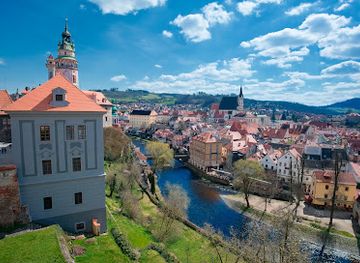
State Castle and Chateau Český Krumlov
Explore the stunning State Castle and Chateau Český Krumlov, a UNESCO World Heritage site with rich history, breathtaking views, and captivating architecture.
-
Zoo
Plzeň Zoo
Explore Plzeň Zoo, a top tourist attraction in the Czech Republic, featuring exotic animals, lush landscapes, and engaging educational experiences for all ages.
-
Fountain
Singing Fountain
Experience the magical melodies and stunning displays of the Singing Fountain, a must-see attraction in Mariánské Lázně.
-
Open air museum
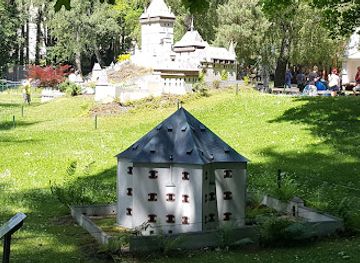
Park Boheminium Mariánské Lázně
Explore Park Boheminium, a unique open-air museum in Mariánské Lázně showcasing miniature Czech landmarks amidst stunning natural beauty.


Best landmarks in West Bohemia
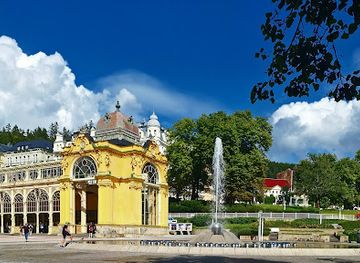
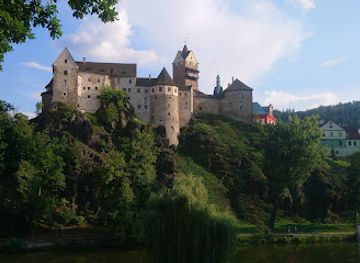
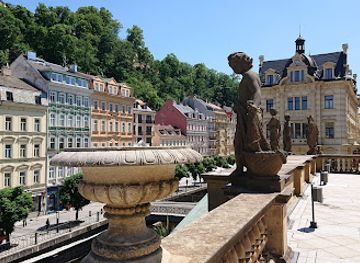
The colonnades of Karlovy Vary are West Bohemia’s most recognisable architectural symbols, especially the long Mill Colonnade and the ornate Market and Park colonnades set within the spa valley. Mariánské Lázně is distinguished by its cast-iron Main Colonnade and carefully planned parkland, while Františkovy Lázně retains a notably coherent nineteenth-century resort character. In Plzeň, the Cathedral of St Bartholomew dominates Republic Square, whose medieval plan remains the civic heart of the city; the nearby Great Synagogue reflects the historic Jewish community and the city’s urban diversity. Loket Castle commands a rocky loop of the Ohře River, and Cheb Castle preserves an unusual Romanesque imperial chapel and defensive walls. Bečov Castle and Chateau is significant for the Reliquary of St Maurus, one of the country’s most important medieval artefacts. The broad forests and volcanic-looking hills around the spa country are landmarks in their own right, particularly where viewpoints reveal the region’s layered borderland geography.
-
Castle
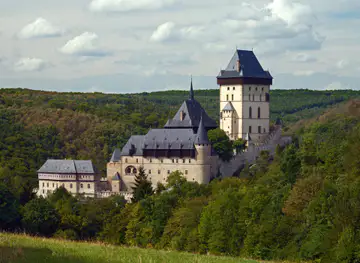
Karlštejn Castle
Explore Karlštejn Castle, a stunning medieval fortress embodying Czech history and architectural beauty, set in the scenic Bohemian countryside.
-
Castle
Loket Castle
Experience the enchanting Loket Castle, a historical gem in the Czech Republic, featuring stunning views, rich history, and vibrant cultural events.
-
Tourist attraction
Mill Colonnade
Experience the elegance of the Mill Colonnade in Karlovy Vary, where history, architecture, and wellness intertwine amidst stunning natural beauty.
-
Open air museum
Park Boheminium Mariánské Lázně
Explore the fascinating world of miniature landmarks at Park Boheminium in Mariánské Lázně, a picturesque open-air museum celebrating Czech heritage.

Explore West Bohemia on the map
Plan your trip on one map. See where the top cities, national parks and sights are, and book hotels and experiences in a few clicks.
Best hotels in West Bohemia
Best restaurants in West Bohemia
Dining in West Bohemia combines familiar Czech cooking with the region’s spa and brewing traditions. Plzeň is the natural centre for beer culture, with pubs and restaurants serving pale lager alongside dishes such as goulash, roast pork, dumplings, soups and fried or grilled specialities. Spa towns provide cafés, confectioners and restaurants aimed at both short visits and longer stays; lázeňské oplatky, thin round spa wafers, are a characteristic edible souvenir. Menus may also feature local game, mushrooms and seasonal produce from the wooded uplands, while farm shops and markets offer cheeses, preserves and baked goods. In Karlovy Vary and Mariánské Lázně, dining ranges from historic hotel rooms to contemporary cafés, whereas rural inns tend to emphasise hearty portions and regional beer. Czech cuisine is not uniformly light, so visitors seeking vegetarian, vegan or allergen-conscious meals should check menus in advance, particularly in smaller towns.
-
Czech
Pilsner Urquell restaurant Anděl
Discover traditional Czech flavors at Pilsner Urquell Restaurant Anděl in Prague's Smíchov district - where great food meets lively entertainment.
-
Restaurant
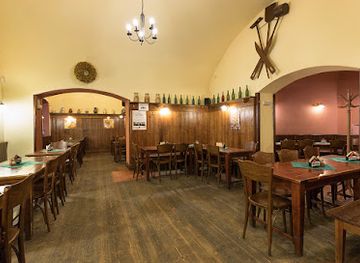
Parkan
Experience authentic Czech cuisine and craft beers at Parkan in Pilsen's charming beer garden.
-
Pub
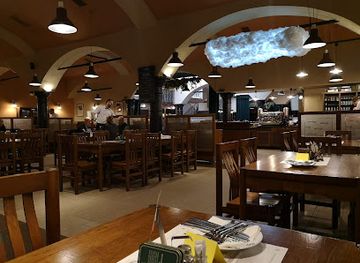
Hospoda Na Spilce - tankové pivo
Discover Hospoda Na Spilce: A quintessential pub in Pilsen known for its fresh tank beer and authentic Czech dishes that celebrate local traditions.
-
Restaurant
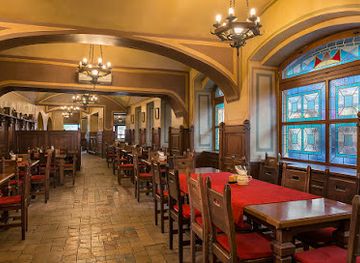
Česká hospůdka
Discover authentic Czech cuisine in Mariánské Lázně at Česká hospůdka - where tradition meets taste.
Best bars in West Bohemia
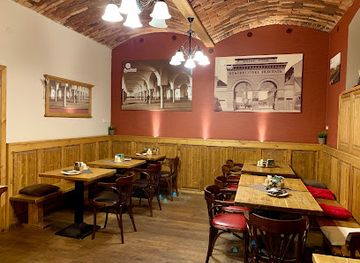
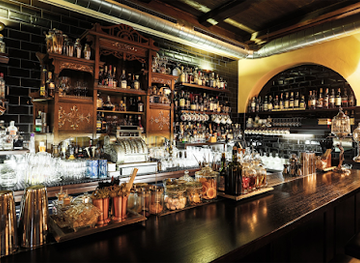
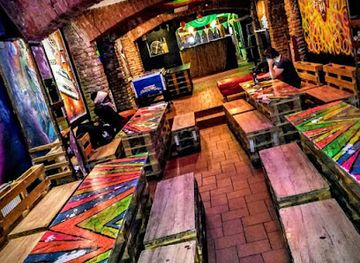
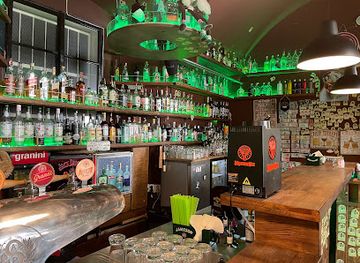
Evening life in West Bohemia is varied but rarely dominated by large-scale clubbing. Plzeň has the region’s broadest choice, including traditional beer halls, independent pubs, cocktail bars, live-music venues and cultural spaces, with activity concentrated around the centre and student population. Karlovy Vary and the other spa towns favour hotel bars, wine bars, cafés and restaurants, with concerts, theatre and festival programmes often more important than nightclubs. Cheb and smaller towns have a modest local pub culture rather than a dense nightlife district. Breweries and taprooms can provide an informative setting for trying regional beer, while rural evenings generally centre on inns and accommodation rather than late venues. Availability and opening arrangements vary seasonally, so check locally and avoid assuming that a lively summer resort operates in the same way during winter.
-
Bar
Hemingway Bar
Experience the charm of Hemingway Bar in Prague's Old Town, where crafted cocktails and cozy atmosphere create an unforgettable night out.
-
Tour operator
Drunken Monkey Pub Crawl & Boat Party
Join the ultimate nightlife adventure in Prague with Drunken Monkey Pub Crawl & Boat Party, featuring bar hopping and a scenic boat cruise.
-
Live music bar
My People Bar
Experience the vibrant nightlife with live music and delicious gastropub cuisine at My People Bar in Old Town.
-
Cocktail bar
Anonymous Bar
Explore the eclectic and innovative cocktails at Anonymous Bar, a must-visit cocktail haven in the heart of Prague's Old Town.
Best nightclubs in West Bohemia
Evening life in West Bohemia is varied but rarely dominated by large-scale clubbing. Plzeň has the region’s broadest choice, including traditional beer halls, independent pubs, cocktail bars, live-music venues and cultural spaces, with activity concentrated around the centre and student population. Karlovy Vary and the other spa towns favour hotel bars, wine bars, cafés and restaurants, with concerts, theatre and festival programmes often more important than nightclubs. Cheb and smaller towns have a modest local pub culture rather than a dense nightlife district. Breweries and taprooms can provide an informative setting for trying regional beer, while rural evenings generally centre on inns and accommodation rather than late venues. Availability and opening arrangements vary seasonally, so check locally and avoid assuming that a lively summer resort operates in the same way during winter.
-
Night club
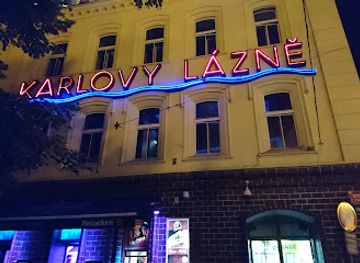
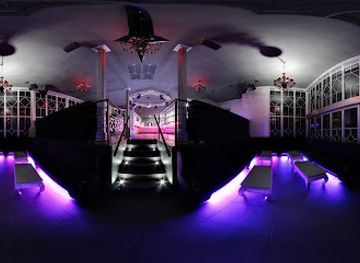
Karlovy Lazne - Nightclub
Discover the pulse of Prague's nightlife at Karlovy Lazne, a historic nightclub offering unforgettable dance experiences and vibrant entertainment.
-
Rock music club
Club 21
Discover the ultimate rock music experience at Club 21 in Pilsen, where vibrant nightlife meets electrifying performances and delicious cocktails.
-
Rock music club
Parlament Club
Immerse yourself in the electrifying nightlife of Plzeň at Parlament Club, the ultimate destination for rock music lovers.
-
Disco club
Pantheon Music Club - Plzeň
Discover the vibrant nightlife at Pilsen's Pantheon Music Club, where disco beats and live comedy create unforgettable moments.
Best shops in West Bohemia
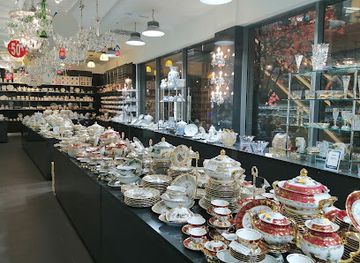
Shopping in West Bohemia is strongest in historic town centres and spa promenades rather than in a single regional retail district. Karlovy Vary and the other spa towns offer traditional wafer shops, glass and porcelain, cosmetics, books, jewellery and galleries, alongside ordinary Czech high-street stores. Visitors should distinguish durable local products from generic souvenirs, particularly when buying glassware or spa-themed goods. Plzeň has the widest selection of independent shops, food retailers, design stores and commercial centres, with local beer and delicatessen products making practical gifts. Market towns such as Cheb provide everyday shopping and occasional produce stalls, while rural areas are better for farm shops, honey, preserves and seasonal goods than for extensive retail. Handmade ceramics, regional food products and brewery merchandise are generally more meaningful purchases than imported souvenirs. At staffed shops, ask whether fragile items can be packaged for travel, and retain receipts for larger purchases.
-
Shopping mall
PALLADIUM
Discover shopping bliss at PALLADIUM, Prague's ultimate shopping mall with over 200 stores and diverse dining options, all in a stunning setting.
-
Shopping mall
Nový Smíchov Shopping Centre
Discover the ultimate shopping experience at Nový Smíchov Shopping Centre in Prague, offering a wide range of stores, dining options, and entertainment.
-
Outlet mall
Fashion Arena Prague Outlet
Shop top brands at unbeatable prices in the vibrant and stylish Fashion Arena Prague Outlet, a must-visit destination for fashion lovers.
-
Shopping mall
Plzeň Plaza
Discover Plzeň Plaza, a vibrant shopping mall in Pilsen offering fashion, dining, and entertainment for an unforgettable experience.



Get your free copy of our complete guide to West Bohemia, delivered straight to you.
Everything on this page, from attractions and restaurants to essentials and local phrases, in one PDF you can read offline, print or share.
Already have an account? Sign in
Your West Bohemia guide is ready.
We'll send it to · Not you? Sign out

Getting your guide ready…
We are putting together a fresh copy of the West Bohemia guide. This can take up to a minute.
This can take a few moments. If your browser asks, choose Allow so the download can start. You'll find the guide in your Downloads folder.
Nothing happened? Download it again
Sorry, the guide is taking longer than usual. Please try again in a minute, or get it by email instead.
West Bohemia essentials
Currency and Payment
Safety
Emergency Situations
Do's and Don'ts
Local Tips
From Eve
Local phrases worth knowing
You don't need to get them perfect. A few words go a long way, and locals appreciate the effort.
Basics
| English | Local | Say it |
|---|---|---|
| Hello | Ahoj | [ahoy] |
| Goodbye | Nashledanou | [nash-leh-dah-noh] |
| Yes | Ano | [ah-noh] |
| No | Ne | [neh] |
| Please/You're welcome | Prosím | [pro-seem] |
| Thank you | Děkuji | [dyeh-koo-yee] |
| Excuse me/Sorry | Omlouvám se | [om-loh-vahm seh] |
| How are you? | Jak se máš? | [yak seh mahsh] |
| Fine. And you? | Dobře. A ty? | [doh-breh. ah tee] |
| Do you speak English? | Mluvíš anglicky? | [mloo-veesh ahn-glitskee] |
| I don't understand | Nerozumím | [neh-roh-zoo-meem] |
Eating & Drinking
| English | Local | Say it |
|---|---|---|
| I'd like to see the menu, please | Chtěl bych vidět menu, prosím | [khtyel bikh vi-dyeht meh-noo, pro-seem] |
| I don't eat meat | Nejím maso | [nay-eem mah-soh] |
| Cheers! | Na zdraví! | [nah zdrah-vee] |
| I would like to pay, please | Chtěl bych zaplatit, prosím | [khtyel bikh zah-pla-teet, pro-seem] |
Emergencies
| English | Local | Say it |
|---|---|---|
| Help! | Pomoc! | [poh-mots] |
| Go away! | Jdi pryč! | [yee preech] |
| Call the Police! | Zavolejte policii! | [zah-vo-lay-teh poh-lee-tsee-ee] |
| Call a doctor! | Zavolejte doktora! | [zah-vo-lay-teh dok-toh-rah] |
| I'm lost | Ztratil jsem se | [ztrah-teel ysem seh] |
| I'm ill | Jsem nemocný | [ysem neh-mots-nee] |
Shopping
| English | Local | Say it |
|---|---|---|
| I'd like to buy... | Chtěl bych koupit... | [khtyel bikh koh-pit] |
| I'm just looking | Jen se dívám | [yen seh dee-vahm] |
| How much is it? | Kolik to stojí? | [koh-leek toh stoh-yee] |
| That's too expensive | To je moc drahé | [toh yeh mots dra-heh] |
| Can you lower the price? | Můžeš snížit cenu? | [moo-zesh sneez-it tseh-noo] |
Time & Numbers
| English | Local | Say it |
|---|---|---|
| What time is it? | Kolik je hodin? | [koh-leek yeh hoh-deen] |
| It's one o'clock | Je jedna hodina | [yeh yed-nah hoh-dee-nah] |
| Half past (10) | Půl (desáté) | [pool (deh-sah-teh)] |
| Morning | Ráno | [rah-noh] |
| Afternoon | Odpoledne | [od-poh-led-neh] |
| Evening | Večer | [veh-cher] |
| Yesterday | Včera | [vcheh-rah] |
| Today | Dnes | [dnes] |
| Tomorrow | Zítra | [zee-trah] |
| 1 | 1 | [1] |
| 2 | 2 | [2] |
| 3 | 3 | [3] |
| 4 | 4 | [4] |
| 5 | 5 | [5] |
| 6 | 6 | [6] |
| 7 | 7 | [7] |
| 8 | 8 | [8] |
| 9 | 9 | [9] |
| 10 | 10 | [10] |
Transport & Directions
| English | Local | Say it |
|---|---|---|
| Where's a/the...? | Kde je...? | [kdeh yeh] |
| What's the address? | Jaká je adresa? | [yah-kah yeh ah-dreh-sah] |
| Can you show me (on the map)? | Můžeš mi to ukázat (na mapě)? | [moo-zesh mee toh oo-kah-zat (nah mah-peh)] |
| When's the next (bus)? | Kdy jede další (autobus)? | [kdee yeh-deh dal-shee (ow-toh-boos)] |
| A ticket (to ....) | Jedna jízdenka (do ....) | [yed-nah yeez-den-kah (doh)] |
History of West Bohemia
Prehistoric and Celtic West Bohemia
West Bohemia has been inhabited since prehistoric times, with archaeological evidence of settlement, metalworking and trade across the western approaches to the Bohemian basin. Celtic communities occupied fortified sites and hill settlements before the region was drawn into the Roman-era trading world. Although many remains are subtle in the landscape, the finds demonstrate that the area was not an isolated frontier: routes crossing the forests connected communities in Bohemia with regions beyond the present Czech-German border.
Medieval Settlement and the Přemyslid Frontier
During the early and high Middle Ages, West Bohemia became a strategically important border zone of the Bohemian state. Castles, monasteries and market settlements controlled routes towards Bavaria and the upper Palatinate. Plzeň was founded in the late thirteenth century and soon became a major royal town, while Cheb and Loket developed as fortified centres with important political and commercial roles. German-speaking settlers contributed to the growth of towns and mining communities, creating the mixed cultural character long associated with the western borderlands.
The Hussite Wars and Late Medieval Power
The religious and political upheavals of the fifteenth century affected western Bohemia deeply. Plzeň served as a significant Catholic stronghold and resisted a Hussite siege in the 1430s, while castles and noble estates across the region became involved in the changing balance between royal authority, aristocratic power and religious factions. The period strengthened the military importance of western routes and left a legacy visible in fortifications, town walls and the historical identity of Plzeň as a loyal royal city.
Mining, Trade and Early Modern Industry
From the late Middle Ages into the early modern period, mining and metalworking shaped parts of West Bohemia. Silver, tin and other resources supported settlements and trade, while forests supplied charcoal and timber. The region’s position between Prague, Saxony and Bavaria encouraged commercial movement, although warfare repeatedly disrupted it. Aristocratic estates expanded their influence, and towns such as Cheb, Plzeň and the mining communities of the Ore Mountain foothills developed distinctive civic and architectural traditions.
The Rise of the Spa Towns
Mineral springs transformed West Bohemia from the eighteenth century onwards. Karlovy Vary, founded around hot springs in the medieval period, became an international resort; Mariánské Lázně and Františkovy Lázně grew rapidly in the nineteenth century under planned layouts of colonnades, parks and villas. Physicians, aristocrats, artists and political figures visited for drinking cures and bathing treatments. The spa towns created a service economy and architectural culture that remain among the region’s most visible historical legacies.
Plzeň and the Industrial Age
Nineteenth-century industrialisation changed Plzeň from a regional market town into one of Bohemia’s major manufacturing centres. The Škoda works became especially important in heavy engineering, while railway connections strengthened the city’s role as a transport and industrial hub. Brewing also expanded on an industrial scale: the Bürgerliches Bräuhaus in Plzeň produced the pale lager now known internationally as Pilsner-style beer. Factories, workers’ districts and railway infrastructure reshaped the urban landscape.
War, Border Change and Post-war Transformation
The twentieth century brought profound disruption. West Bohemia became part of Czechoslovakia after 1918, was affected by the Munich settlement and German occupation, and saw fighting and liberation at the end of the Second World War. The post-war expulsion of most ethnic Germans transformed the demographic character of towns and villages, particularly near the border. Under state socialism, industrial production expanded while many historic spa and rural buildings suffered neglect. After 1989, restoration, cross-border cooperation and tourism encouraged renewed attention to the region’s layered heritage.
West Bohemia in Photos
Browse through our photo collection highlighting the charm and character of the destination.
Neighbouring regions of West Bohemia
The closest regions to West Bohemia, if you have time for more than one.
-

-

-
-

-


Swipe for more regions
Explore more

Explore more of Czechia
Discover Czechia: A European gem with historic towns, stunning landscapes, and cultural delights. Perfect for travelers seeking charm, history, and adventure.
Explore Czechia