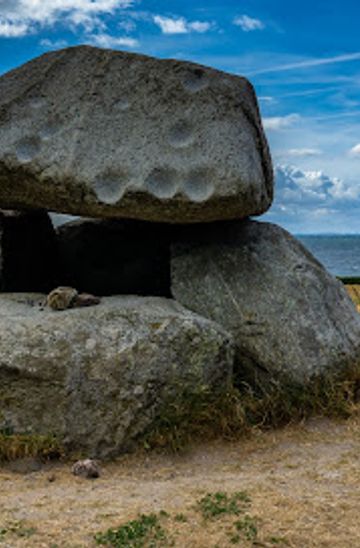
The Bell Stone (Klokkestenen), Lyø
Prehistoric dolmen on a hilltop grove, where a resonant capstone, sweeping sea views and island folklore turn an ancient burial site into a quietly magical stop.
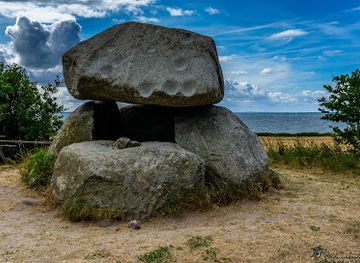
Set on a low hill on the west side of the small island of Lyø near Faaborg, the Bell Stone is a remarkably well‑preserved Neolithic dolmen chamber dating back to around 3500–3100 BC. Surrounded by fields and a later-planted grove, this ancient burial site combines sweeping views over the South Funen Archipelago with myth and folklore: tap the capstone in just the right place and it is said to ring like a bell and grant a wish.
A brief summary to The bell stone
- Vestensvej 19, Faaborg, 5601, DK
- Duration: 0.5 to 1.5 hours
- Free
-
 Outdoor
- Mobile reception: 3 out of 5

Know before you go
Hi, I'm Eve. Here are a few practical things to know before exploring The bell stone.
- Wear sturdy shoes; access involves walking on uneven grassy slopes around the mound and can be slippery after rain.
- Bring water and snacks, as there are no facilities at the dolmen itself and services on the island are limited and seasonal.
- Visit on a clear day or around golden hour to enjoy the views over the Little Belt and the Lyø Trille spit system below.
- Tap gently on different parts of the capstone with your knuckles rather than hard objects to hear the bell-like tone without damaging the stone.
- Pack a light windproof layer; the exposed hilltop can feel noticeably cooler and breezier than the village streets.
Do you manage this location?
Take control to get all the benefits, like improved information, better appearance, and stronger visibility across AI-powered discovery. Learn more
Activate your presenceOther nearby places you may find interesting
Getting There
-
Ferry from Faaborg and walk
From Faaborg, take the regular passenger-and-car ferry to Lyø, a crossing that typically takes around 35–45 minutes and runs several times daily in most seasons. A standard adult ticket usually costs in the range of 70–110 DKK one way, with discounts for children. Once on Lyø, expect a pleasant walk of 2–4 km on minor roads and paths to reach the Bell Stone, with gently rolling terrain that may be uneven in places but manageable for most reasonably fit visitors.
-
Bicycle on Lyø
Bring a bicycle on the Faaborg–Lyø ferry for an additional fee, often around 20–40 DKK each way, or rent a simple bike on the island in peak season. The ride from the harbour to the Bell Stone typically takes 15–30 minutes along quiet rural lanes with light traffic and a few mild hills. Surfaces are mostly paved or compacted gravel, but in wet weather some sections can be soft, so basic cycling confidence is recommended.
-
Guided excursion from Faaborg region
In summer, local operators and accommodation providers in the Faaborg area occasionally offer half- or full-day excursions to Lyø that include ferry tickets, guiding and a walk to the Bell Stone and other island highlights. These packages often last 5–7 hours door to door and typically range from about 400–800 DKK per adult depending on inclusions. Departure times and availability can be seasonal, and group sizes and walking distances vary, so check details when booking.
For the on-the-go comforts that matter to you
-
 Trash Bins
-
 Information Boards
Discover more about The bell stone
Ancient Stone Chamber Above the Sea
Perched on a modest 20 m hill on Lyø’s western side, the Bell Stone is the island’s largest and best-preserved prehistoric dolmen chamber, built between roughly 3500 and 3100 BC. Once part of a dense ritual landscape with dozens of barrows and dolmens, it now stands as one of only a handful of surviving megalithic monuments on the island, a solitary guardian of deep time overlooking the Little Belt and the low coastline of Horneland.The dolmen consists of hefty upright stones forming a small burial chamber, capped by a broad cover stone weathered by thousands of winters. Grass and wildflowers frame the mound, softening the monument’s imposing geometry and reminding you that this was both a sacred place and part of everyday farmland for countless generations.Burial Place for Lyø’s Prehistoric Elite
Archaeologists interpret dolmen chambers like the Bell Stone as tombs for leading figures and their families in early farming communities. The effort involved in hauling and raising such massive stones on a small island speaks to the prestige and ritual power invested in this site.The chamber would originally have been partly buried under an earthen mound and may have been used repeatedly over generations, with bones and grave goods placed carefully inside. Even without excavated finds on display here, standing beside the stones makes it easy to imagine processions climbing the hill, ceremonies marking harvests, deaths and seasonal turning points, and stories being passed on by firelight.A Name Born from Sound and Legend
The dolmen’s Danish name, Klokkestenen – the Bell Stone – comes from its most curious feature. When you strike specific spots on the capstone, it produces a bell-like tone. The ringing is caused by the stone’s internal structure and the way it is supported, but local folklore adds a more magical explanation.According to tradition, if you find the "right" place to tap and hear the clear tone, you are granted a wish. This simple act of testing the stone’s resonance connects modern visitors with centuries of tales and small private rituals, turning a static monument into an interactive encounter with myth.Island Meeting Place in a Shaded Grove
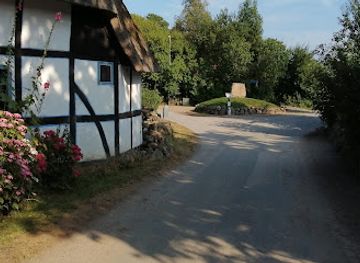
Around 1920 a grove was planted around the Bell Stone, turning the hill into a natural gathering place. For many years, islanders met here for Constitution Day events and community assemblies, adding a modern civic layer to a prehistoric sacred landscape.Today the grove gives welcome shade on hot days and frames views between the tree trunks towards the sea and the Lyø Trille spit system below. The mix of trees, open grass and ancient stones creates a quietly dramatic setting that feels both intimate and expansive.Views Across the South Funen Archipelago
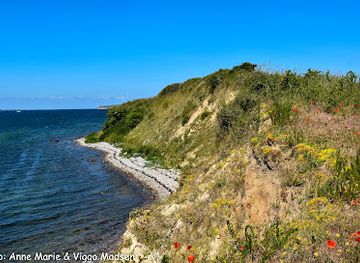
From the mound you can look out over fields, hedgerows and the broken coastline of Lyø, with changing glimpses of the Little Belt and nearby islands on the horizon. Cloud shadows race across the water, seabirds trace low arcs and, on clear days, the layered silhouettes of Funen and Horneland emerge in the distance.These broad views help explain why the hill has mattered for millennia: it is a natural vantage point, a place where people have watched the weather, the sea and one another’s comings and goings since long before written history.Quiet Moments on a Living Island
Visiting the Bell Stone is as much about atmosphere as about archaeology. The sounds are gentle – wind in leaves, distant farm activity, the rustle of insects in the grass. There are no displays or exhibits, just the stones themselves, the grove and the landscape.It is an inviting spot to sit for a while, trace the lichens on the megaliths, test the capstone’s bell note and let the island’s slower rhythm sink in. Here, the distance between Neolithic farmers and modern travellers feels surprisingly small.Explore the best of what The bell stone has to offer













More about Funen
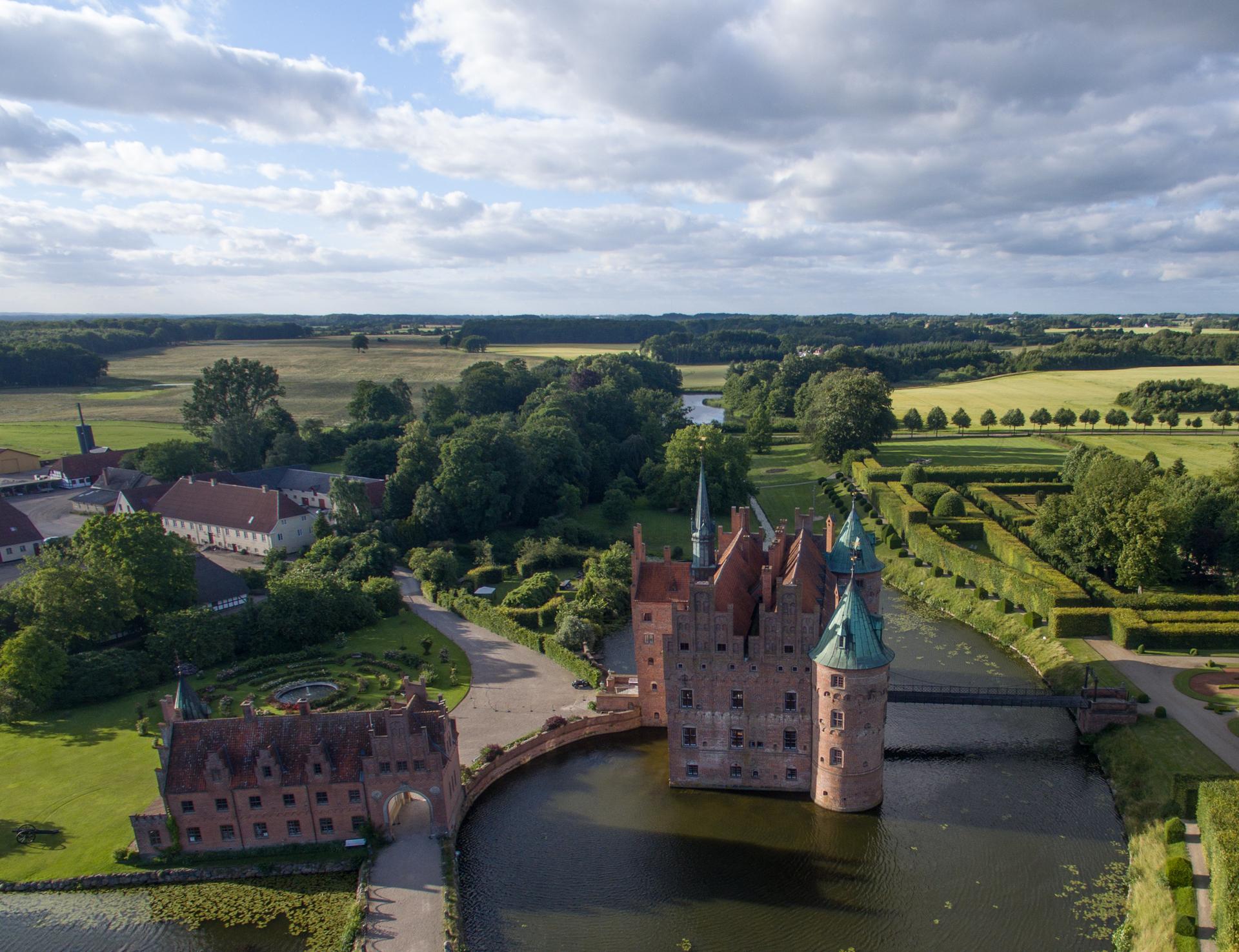
Discover Funen, Denmark's lush island treasure, where fairy tales come to life amidst scenic landscapes, historic castles, and vibrant cultural heritage.
Tell me more about Funen
A humble fisherman figure on a quiet Sydals lane, Hans, der Fischer captures the spirit of Als’ coastal heritage in a single, characterful roadside stop.
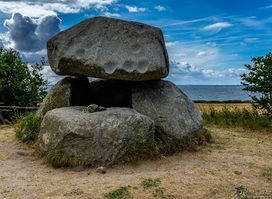
A Neolithic dolmen on a hilltop above Lyø’s fields and sea, where ancient burial stone, island legend and sweeping South Funen views quietly meet.