Faaborg Clock Tower Travel Guide
Free Guide: Freestanding medieval bell tower and symbol of Faaborg, offering narrow-stair climbs, chiming bells and wide views over the town and South Funen coast.


A brief summary of Faaborg Clock Tower
Freestanding medieval bell tower and symbol of Faaborg, offering narrow-stair climbs, chiming bells and wide views over the town and South Funen coast.
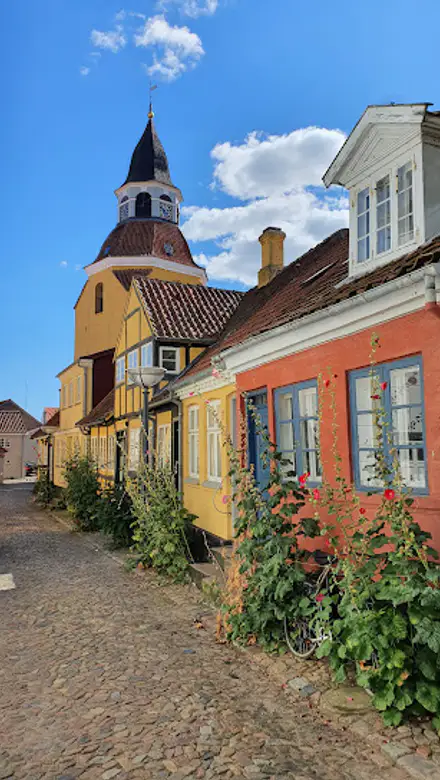
Rising above the red-tiled rooftops of Faaborg’s medieval core, the freestanding Faaborg Clock Tower is the town’s unmistakable landmark and last remnant of the old Skt. Nikolaj Church. Dating back to the Middle Ages, the tower once formed part of a larger church complex and later served as a town gate, its bells marking time for sailors and townsfolk alike. Today you can climb its narrow interior to enjoy sweeping views over cobbled streets, the harbour and the South Funen Archipelago, while the melodic chimes still drift across the old town.
On-site amenities
 Restrooms
 Drink options
 Food options
 Seating areas
 Trash bins
 Information boards
- Address
- Tårnstræde, 5600 Faaborg
- Phone
- Website
Getting there
Regional train and short walk from Odense
Bus from Svendborg or other South Funen towns
Car trip across Funen
Cycling along South Funen routes
Discover more about Faaborg Clock Tower
A medieval tower at the heart of Faaborg
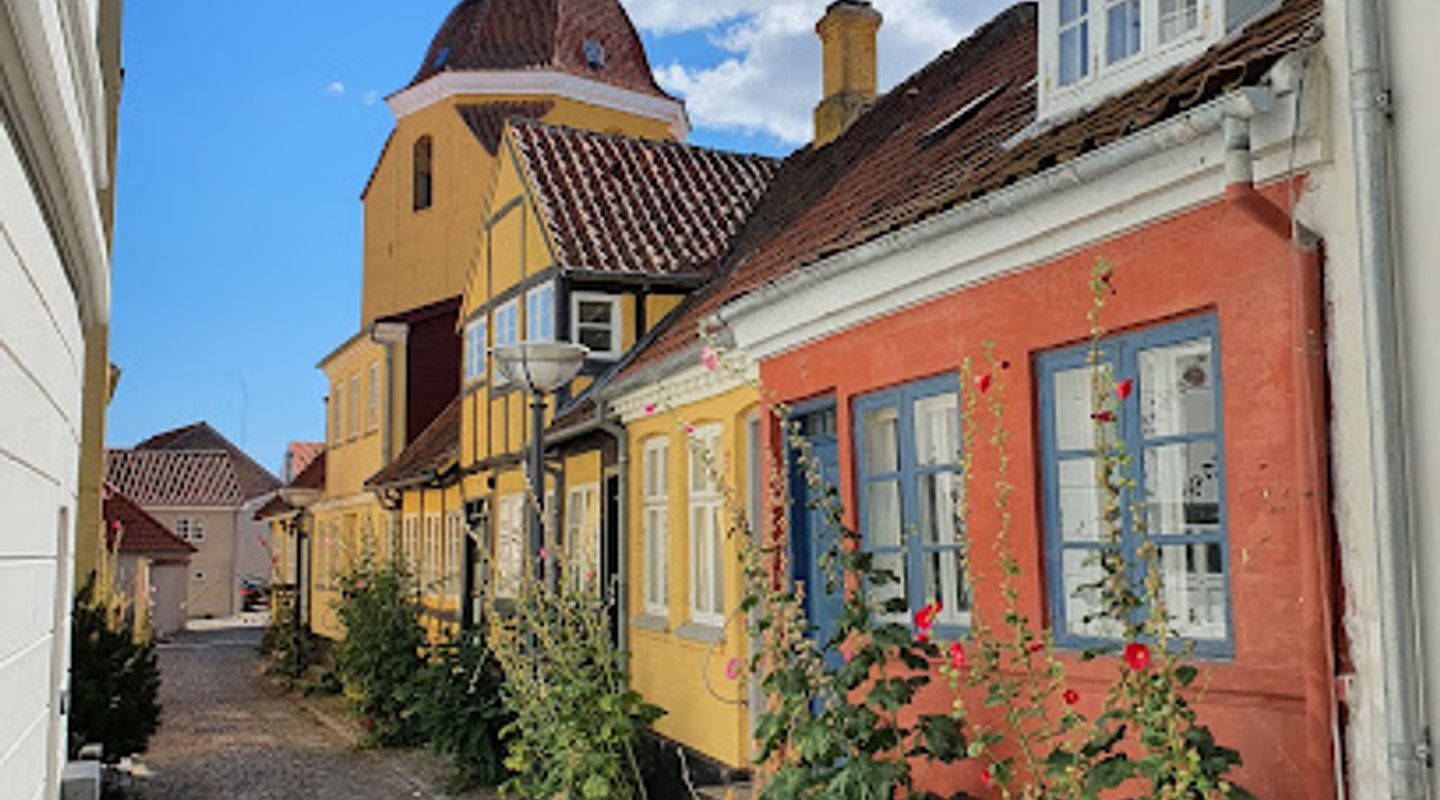
The Faaborg Clock Tower stands at the very centre of this small South Funen town, a vertical accent in a skyline of red roofs and half-timbered houses. It is the surviving bell tower of Skt. Nikolaj Church, a parish church built around the mid‑13th century when Faaborg grew as a trading town on the archipelago. When the main church was demolished in the 16th century, the tower was spared, gradually becoming the town’s defining symbol.Seen from Tårnstræde, its whitewashed upper section, dark timber detailing and copper-topped spire form a compact but characterful silhouette. The tower’s simple brick base hints at its medieval origins, while later restorations added bolder colours, larger openings and the distinctive belfry that houses its bells.
Stories in stone: from churchyard to city gate
Over the centuries the Clock Tower has quietly adapted to Faaborg’s changing needs. For a time it functioned as part of a city gate system: heavy doors once closed in the evenings, and locals had to pay a fee to enter after dark. The gate proved unpopular, but the tower itself avoided demolition in the 18th century partly because neighbouring buildings were structurally linked to it, and because the solid structure reduced the wind funnelling through the narrow streets.The church that once surrounded the tower is long gone, yet its memory lingers in the way the building stands slightly apart from surrounding houses, like a guardian of the old town. Restorations in the 18th and early 20th centuries preserved the overall outline while refreshing its surfaces, keeping the medieval core intact beneath more recent layers.
Climbing the interior and reaching the lookout
Inside, a narrow sequence of stairs and ladders winds upwards through thick masonry walls. The climb is relatively short but can feel steep and enclosed, especially near the top where the passage narrows. Along the way, wooden beams and exposed brickwork reveal the tower’s age, with small windows providing teasing glimpses of tiled roofs and the harbour as you ascend.At the upper level, a viewing platform opens out to a generous panorama. From here you can trace Faaborg’s medieval street pattern, spot the nearby harbour cranes and ferry piers, and look across the blue straits to the low outlines of the South Funen islands. On clear days the views extend well beyond the town, connecting the tower visually to the wider seascape that once sustained it.
The soundscape of bells and night watchmen
The Clock Tower is as much an acoustic landmark as a visual one. Its bells mark the passing of hours with a melodic chime that can be heard across much of the town centre, threading through everyday sounds from the harbour and cafés. The mechanism blends older traditions of bell-ringing with more modern clockwork technology, keeping precise time while still feeling distinctly historic.During summer evenings the tower often plays a quiet supporting role in night watchman walks through the old streets. Lanterns, stories of bygone citizens and the distant echo of the bell combine to evoke centuries when the tower kept order and time in a much darker, quieter town. Even without joining a walk, simply pausing beneath the tower as dusk falls can be atmospheric.
Experiencing Faaborg’s old town around the tower
The streets fanning out from the Clock Tower form one of Denmark’s more intact small-town historic centres. Cobbled lanes, low merchants’ houses and small courtyards cluster in a tight pattern, with the tower acting as a constant point of orientation. Its presence makes it easy to navigate: the glimpse of the spire between gables often guides you back to the middle.Because the tower is relatively compact, a visit fits well into a broader exploration of Faaborg’s museums, harbourfront and nearby viewpoints. The short but rewarding climb, combined with the strong sense of continuity from the Middle Ages to the present, makes the Faaborg Clock Tower a concise introduction to the town’s character and maritime history.
Practical visiting notes inside an old structure
The Clock Tower is typically open for a few hours around midday, with extended hours in the main summer season and occasional evening openings. A modest entrance fee helps cover maintenance of the historic structure. Access involves narrow wooden stairs and ladders, so it is not suitable for wheelchairs and may challenge anyone uncomfortable with confined spaces or heights.Despite these constraints, the visit is straightforward: the route up and down is clearly defined, and the limited interior space naturally keeps numbers modest at any one time. Simple information panels or leaflets may outline the tower’s history. Combined with the views from the top and the evocative sound of the bells, these small details enrich the experience of this compact but significant landmark.
Evendo Review Centre
 Google
Guest reviews
Best time to go
Quietest: Jan, Feb & Mar · before 8am or from 10pm
Busy times are Evendo estimates for a typical year, to help you plan. Actual crowds vary with events, school holidays and the weather.
Explore Faaborg Clock Tower on the map
A handpicked selection of must-see spots near Faaborg Clock Tower, mapped for you.
Get your free copy of our complete guide to Faaborg Clock Tower, delivered straight to you.
Everything on this page, from opening hours and how to get there to Eve’s tips and the best time to go, in one PDF you can read offline, print or share.
Already have an account? Sign in
Your Faaborg Clock Tower guide is ready.
We'll send it to · Not you? Sign out

Getting your guide ready…
We are putting together a fresh copy of the Faaborg Clock Tower guide. This can take up to a minute.
This can take a few moments. If your browser asks, choose Allow so the download can start. You'll find the guide in your Downloads folder.
Nothing happened? Download it again
Sorry, the guide is taking longer than usual. Please try again in a minute, or get it by email instead.
Other nearby places you may find interesting
The closest places of the same kind, if this one is not quite what you had in mind.
-
The Funen Village Step into a full‑scale Funen village of thatched farms, mills and animals, where 18th‑ and 19th‑century rural Denmark is carefully brought back to life.
-
Parsonage Experience authentic 18th-century Danish village life through restored buildings, costumed interpreters, and hands-on traditional crafts.
-
The Sea Horse A powerful bronze sea horse with a mermaid rider bursts from the Odense River, bringing Hans Christian Andersen’s underwater world to life at Munke Mose’s edge.
-
Brickworks Authentic 19th-century brick-making workshop preserving Denmark's industrial heritage within a living open-air village museum.
-
King's Garden Odense’s historic royal garden: a baroque-era green gateway where castle views, sculptures and summer concerts meet everyday city life.
Swipe for more places
More to explore near Faaborg Clock Tower

 Best experiences near Faaborg Clock Tower
 Best hotels near Faaborg Clock Tower
 Best landmarks near Faaborg Clock Tower
 Best attractions near Faaborg Clock Tower
 Best shops near Faaborg Clock Tower
 Best restaurants near Faaborg Clock Tower
 Best bars near Faaborg Clock Tower
Do you manage this location?
Take control to get all the benefits, like improved information, better appearance, and stronger visibility across AI-powered discovery.
Explore more
Explore more of Funen
Discover Funen, Denmark's lush island treasure, where fairy tales come to life amidst scenic landscapes, historic castles, and vibrant cultural heritage.
Explore Funen
Explore more of Denmark
Discover Denmark: A perfect blend of history, modern design, and the cozy concept of hygge. Explore vibrant cities, serene landscapes, and world-class cuisine.
Explore Denmark