Lyø Travel Guide
Free Guide: Small, green and gently shaped by sea and history, Lyø is a tranquil South Funen island where half-timbered villages, soft hills and bird‑rich coasts invite slow exploration.


A brief summary of Lyø
Small, green and gently shaped by sea and history, Lyø is a tranquil South Funen island where half-timbered villages, soft hills and bird‑rich coasts invite slow exploration.
Lyø is a small, green island in the South Funen Archipelago, about 7 km southwest of Faaborg. Covering just 6 km², it packs in half-timbered farmsteads clustered around the pretty village of Lyø By, a rare round churchyard, gentle hills, and bird-rich coastal meadows. Car‑light lanes weave between fields, beaches, and viewpoints, making the island ideal for slow cycling, quiet walks, and unhurried seaside picnics. It is a tranquil escape into traditional Danish island life and soft, maritime landscapes.
On-site amenities
 Restrooms
 Drink options
 Drinking water
 Food options
 Seating areas
 Sheltered areas
 Picnic areas
 Trash bins
 Information boards
 Visitor centre
- Address
- 5601 Faaborg
- Website
Getting there
Ferry from Faaborg
Private boat or yacht
Organised excursion from South Funen
Discover more about Lyø
An intimate island in the South Funen Archipelago
Lyø sits like a green comma in the South Funen Archipelago, just southwest of Faaborg. With an area of around 6 km², it is small enough to feel manageable in a day yet large enough to reward a longer stay. Low fields, hedgerows, and grazing pastures roll gently down towards a varied coastline of sandy coves, stony stretches, and low cliffs.The sea is never far away here. From much of the island you catch glimpses of other tiny isles and the hazy outline of Funen. The pace is unhurried, shaped by ferry schedules, agriculture, and seasonal visitors who come for quiet paths and big skies rather than bustle.
Village charm and half-timbered farmsteads
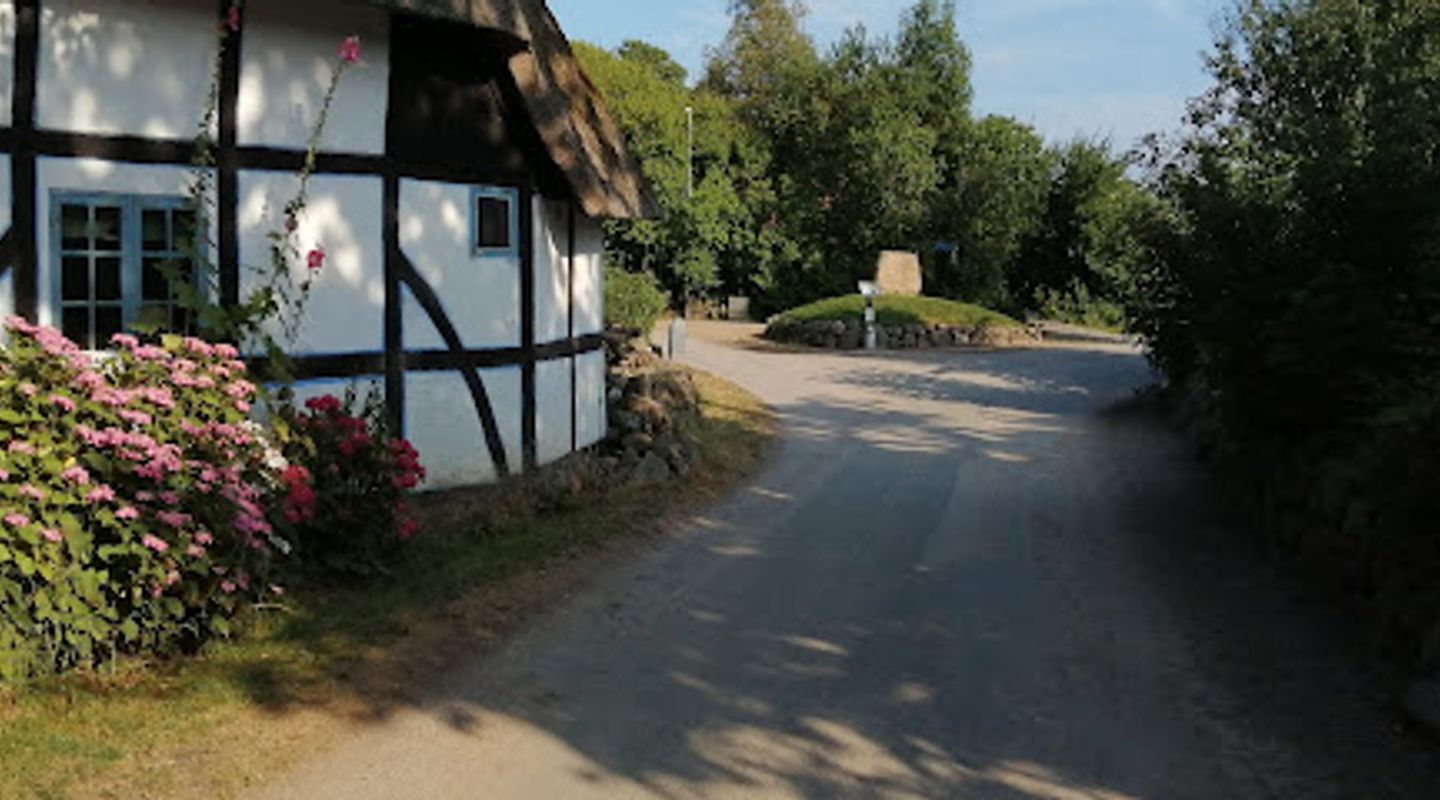
At Lyø’s centre lies Lyø By, a compact village that feels almost frozen in time. Because the island escaped the major land reforms that reshaped rural Denmark in the 18th century, many farms still stand in their original positions around the village pond, linked by narrow lanes and grassy verges.Traditional half-timbered houses lean slightly into winding streets, their thatched roofs, small-paned windows, and flowering hollyhocks adding a storybook quality. The round cemetery near the church is a distinctive feature, encircled by sheltering trees and old gravestones that tell of generations rooted on this small patch of land.
Shaped by ice and sea
Lyø’s landscape reflects both ancient glaciers and restless coastal forces. The southwestern part of the island rises into a single, rounded hill crowned by Lyø Mølle, the island mill perched at about 25 metres above sea level. From here, gentle slopes fan out towards the shores, giving broad views across the so‑called “Danish South Sea”.The southeastern side is quite different, marked by two parallel valleys divided by a narrow ridge with low summits such as Bjerget and Askovs Banke. These landforms are unusual in the archipelago and appeal to anyone with an eye for geology or simply an appreciation of varied terrain on a compact island.
Dynamic coasts and birdlife at Revet
Along Lyø’s southern and southwestern fringe, low cliffs meet open water, facing a long sweep of sea towards the island of Als. Waves erode these edges, and currents carry sand and stones around to the calmer northern shore. Here they build up shallow marine forelands, creating new land in the form of beach ridges, lagoons, and salt meadows.The most striking of these areas is Revet, in the island’s northwestern corner. This cuspate foreland is a mosaic of salt marsh, beach lakes such as Vestersjo, and the Lyø Trille spit system. It is an important breeding ground for birds, and access is restricted in spring and early summer to protect nesting species, underscoring the island’s quiet role as a haven for coastal wildlife.
Layers of history on a small canvas
Human history on Lyø stretches back thousands of years, from early settlements to the medieval village pattern that still shapes its core. Epidemics and raids once left the island deserted in the 16th century, only for it to be resettled by a group of farming families who rebuilt homes, fields, and community life.Today, traces of that past live on in place names, field divisions, and the compact settlement structure. Walking or cycling the lanes, you sense how geography, agriculture, and isolation have combined to create a distinct identity, closely tied to the rhythms of sea and soil.
Everyday island life and visitor experience
Despite its modest size and permanent population of around a hundred residents, Lyø offers a small harbour, a sheltered marina atmosphere, and seasonal services such as a café in the former village school. Beach spots provide easy access to swimming in clear, brackish water, while simple benches and grassy banks serve as informal viewpoints.Most visitors explore by bicycle or on foot, looping the island in a few hours with plenty of pauses for photos, birdwatching, or a quiet break by the shore. It is a place where the experience is less about specific attractions and more about the sum of gentle scenery, soft light, and the reassuring sense of being on a small island edged entirely by sea.
Evendo Review Centre
 Google
Guest reviews
Best time to go
Quietest: Jan, Feb & Mar · before 6am or from 10pm
Busy times are Evendo estimates for a typical year, to help you plan. Actual crowds vary with events, school holidays and the weather.
Explore Lyø on the map
A handpicked selection of must-see spots near Lyø, mapped for you.
Get your free copy of our complete guide to Lyø, delivered straight to you.
Everything on this page, from opening hours and how to get there to Eve’s tips and the best time to go, in one PDF you can read offline, print or share.
Already have an account? Sign in
Your Lyø guide is ready.
We'll send it to · Not you? Sign out

Getting your guide ready…
We are putting together a fresh copy of the Lyø guide. This can take up to a minute.
This can take a few moments. If your browser asks, choose Allow so the download can start. You'll find the guide in your Downloads folder.
Nothing happened? Download it again
Sorry, the guide is taking longer than usual. Please try again in a minute, or get it by email instead.
Other nearby places you may find interesting
The closest places of the same kind, if this one is not quite what you had in mind.
-
-
-
-
-


Swipe for more places
More to explore near Lyø

 Best experiences near Lyø

 Best hotels near Lyø

 Best landmarks near Lyø

 Best attractions near Lyø

 Best shops near Lyø

 Best restaurants near Lyø

 Best bars near Lyø
Do you manage this location?
Take control to get all the benefits, like improved information, better appearance, and stronger visibility across AI-powered discovery.
Explore more

Explore more of The North Sea Islands
Discover the North Sea Islands of Denmark: idyllic sandy beaches, vibrant local culture, and unique natural landscapes await you on Fanø, Rømø, and Mandø.
Explore The North Sea Islands
Explore more of Denmark
Discover Denmark: A perfect blend of history, modern design, and the cozy concept of hygge. Explore vibrant cities, serene landscapes, and world-class cuisine.
Explore Denmark