Vandkunsten Fountain
Medieval watermill heritage meets 1910 artistry in Copenhagen's charming Old Town square.
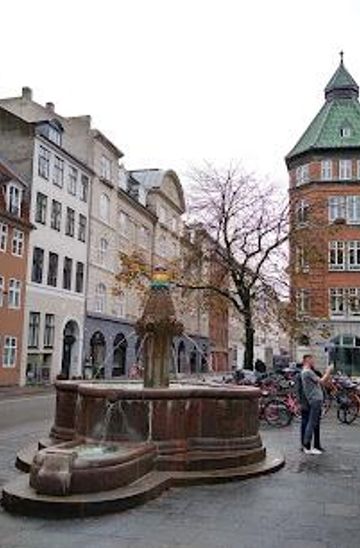
Vandkunsten is a historic fountain and small square in Copenhagen's Old Town, dating back to the 14th century. The elegant 1910 fountain features granite and bronze details, including four fish heads that commemorate the square's former use as a fish market. Surrounded by protected heritage buildings, this charming urban space blends Copenhagen's medieval past with early 20th-century design.
A brief summary to Vandkunsten Springvand
- Vandkunsten 8, Copenhagen, Indre By, 1467, DK
- Duration: 0.5 to 2 hours
- Free
-
 Outdoor
- Mobile reception: 5 out of 5
- Monday 12 am-12 am
- Tuesday 12 am-12 am
- Wednesday 12 am-12 am
- Thursday 12 am-12 am
- Friday 12 am-12 am
- Saturday 12 am-12 am
- Sunday 12 am-12 am

Know before you go
Hi, I'm Eve. Here are a few practical things to know before exploring Vandkunsten Springvand.
- Visit early morning or late afternoon to avoid crowds and capture the best light for photography, especially when the sun reflects off the fountain's polished granite.
- Take time to examine the fish-head details and fish-scale decorations on the fountain—they tell the story of the square's 300-year history as a fish market.
- Look for the embedded historic street sign on the 1910 building at Frederiksholms Kanal corner, one of Copenhagen's oldest directional markers.
- Explore the surrounding narrow streets and heritage buildings; the square is best appreciated as part of a walking tour through Copenhagen's medieval Old Town.
- Sit on nearby benches with a coffee from one of the surrounding cafes to experience how locals use this historic space as a quiet urban refuge.
Do you manage this location?
Take control to get all the benefits, like improved information, better appearance, and stronger visibility across AI-powered discovery. Learn more
Activate your presenceOther nearby places you may find interesting


Getting There
-
Metro and Walking
Take the Copenhagen Metro Line M1 or M2 toward Nørreport Station. Exit at Nørreport and follow signs toward the Old Town (Indre By). Walk south through the narrow streets for approximately 8–10 minutes until you reach Vandkunsten square at the intersection of Rådhusstræde and Løngangsstræde. Journey time from Central Station is approximately 12–15 minutes including walking. No fare required if you have a valid Copenhagen Card; otherwise, a single journey ticket costs approximately 24 DKK.
-
Bus
Take bus route 1A, 6A, or 14 from Copenhagen Central Station toward the Old Town. Alight at the stop near Rådhuspladsen or Strøget. From there, walk east into the narrow streets of Indre By for approximately 5–7 minutes to reach Vandkunsten. Total journey time is approximately 15–20 minutes. A single ticket costs approximately 24 DKK.
-
Walking from Central Station
From Copenhagen Central Station, head northeast on Vesterbrogade toward Tivoli Gardens. Continue straight for approximately 600 meters, then turn right onto Strøget (Copenhagen's main pedestrian shopping street). Walk for approximately 400 meters, then turn left onto Rådhusstræde. Continue for approximately 150 meters until you reach Vandkunsten square on your right. Total walking time is approximately 15–18 minutes on flat, well-paved streets.
-
Bicycle
Rent a bicycle from one of Copenhagen's many bike-sharing stations (Bycyklen or similar services cost approximately 80 DKK for a day pass). From Central Station, cycle northeast through the city center toward Strøget, then navigate the narrow streets of Indre By to reach Vandkunsten. Journey time is approximately 8–12 minutes depending on route. Bike parking is available near the square.
For the on-the-go comforts that matter to you
-
 Restrooms
-
 Drink Options
-
 Food Options
-
 Seating Areas
-
 Information Boards
Discover more about Vandkunsten Springvand
A Square Rooted in Medieval Water Management
Vandkunsten takes its name from a watermill established in the 14th century that supplied Copenhagen Castle with water through a system of wooden pipes—a remarkable feat of medieval engineering. The site originally featured a mill pond, which was later replaced by a pumping station built in 1539. However, water pollution from adaptations to the nearby castle forced the station to close. For centuries afterward, the location fell into disrepair and served as a waste dump until Christian V ordered it to be cobbled over around 1684.From Market Square to Urban Landmark
Beginning in 1684, Vandkunsten transformed into a bustling fish market, a role it maintained for generations. The square's commercial character left an indelible mark on its identity and would later inspire the design of its most iconic feature. Remarkably, Vandkunsten escaped both the Copenhagen Fire of 1728 and the devastating Fire of 1795, allowing its medieval street layout and historic buildings to survive when much of the city burned. Over time, the square also hosted a flea market, further cementing its place as a gathering point for Copenhagen's residents.The 1910 Fountain: Art Honoring History
The fountain that gives the square its modern character was commissioned by the Copenhagen Art Foundation from architect Johannes Magdahl Nielsen in 1907 and inaugurated on September 15, 1910. This elegant water feature stands as a masterwork of early 20th-century design, with a central stele crafted from granite and adorned with decorative details in bronze and gilded metal. The cylindrical lower section is decorated with fish scales, and water flows from four fish heads—a poetic reference to the square's centuries-long history as a fish market. The fountain's upper portion features a polished red granite hemisphere, creating a striking visual composition that draws the eye upward.Protected Heritage and Notable Architecture
Four buildings surrounding Vandkunsten are listed in Denmark's registry of protected buildings and places, each telling its own story. Two structures, numbered 8 and 10, were originally constructed as breweries. Building No. 8, dating from 1750, was converted into a residence for a brewer and his family in the 1810s, when the brewing operations relocated. The conversion introduced four Ionic order pilasters on the façade, details that remain visible today. At the square's end stands Kronborg, a large property at the corner of Løngangsstræde, named for its Historicist design that echoes the famous Kronborg Castle in Helsingør. Built in 1895, this building once served as headquarters for the Danish Teachers' Association. The corner building at Frederiksholms Kanal, constructed in 1910 and designed by architect Aage Langeland-Mathiesen, exemplifies early 20th-century urban design and houses one of Copenhagen's oldest street signs embedded in its façade.A Living Urban Space
Today, Vandkunsten remains a vital part of Copenhagen's Old Town character, where narrow medieval streets intersect with early modern architecture. The square's intimate scale and historic buildings create a sense of stepping back in time, while the fountain provides a focal point for both locals and visitors. The surrounding area is alive with cafes and shops, making it a natural stopping point for those exploring the winding streets of Indre By. Whether visited in daylight when sun glints off the water or in evening hours when the fountain takes on a quieter presence, Vandkunsten offers a window into Copenhagen's layered past and its enduring commitment to preserving urban heritage.Explore the best of what Vandkunsten Springvand has to offer















More about North Zealand
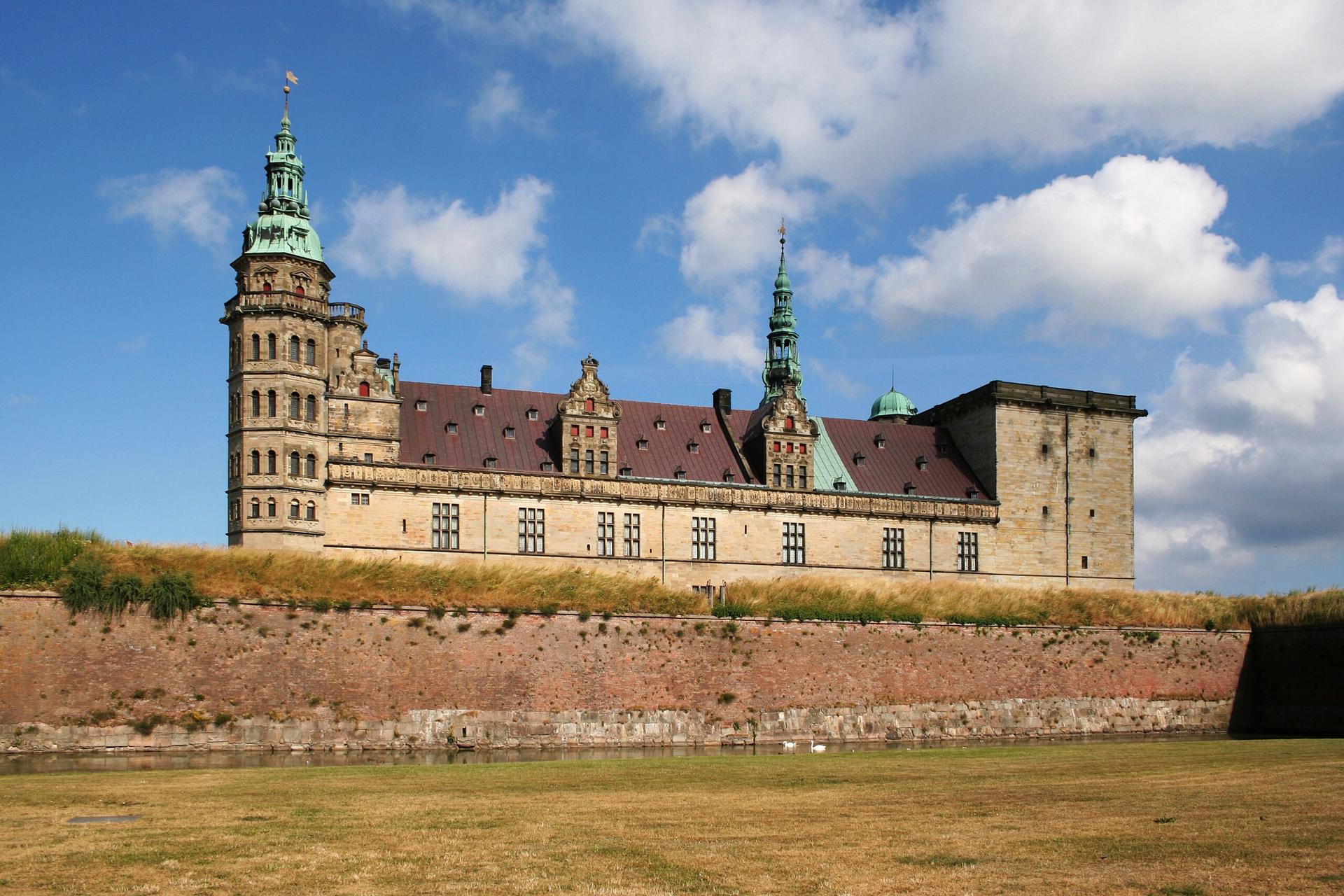
Explore North Zealand, Denmark's enchanting region of castles, beaches, and royal estates, perfect for history buffs, nature enthusiasts, and seaside lovers.
Tell me more about North Zealand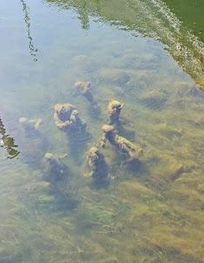
A haunting underwater bronze sculpture mourning a love lost to land, hidden beneath Copenhagen's historic bridge.
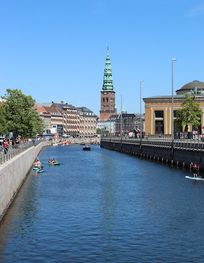
Step into centuries of history on Magstræde, one of Copenhagen's oldest cobbled streets, nestled in Indre By and famed for its pastel façades and timeless charm.