Kronborg Castle
UNESCO‑listed Kronborg Castle blends Renaissance splendour, sea‑battered fortifications and Hamlet’s enduring legend at the narrow gateway between Denmark and Sweden.
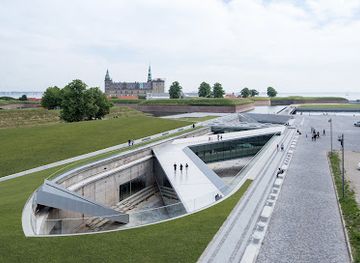
Commanding the narrowest point of the Øresund Strait, Kronborg Castle in Helsingør is one of Northern Europe’s finest Renaissance fortresses and a UNESCO World Heritage Site. Once the toll gate to the Baltic and a potent symbol of Danish royal power, it’s now famed worldwide as Shakespeare’s “Hamlet’s Castle”. Visitors wander grand ballrooms, sandstone courtyards and shadowy casemates, meeting legends like Holger Danske against a backdrop of sea views and cannon-lined ramparts.
A brief summary to Kronborg Castle
- Kronborg, Helsingør, 3000, DK
- Click to display
- Click to display
- Duration: 2 to 4 hours
- Mid ranged
-
 Mixed
Mixed
- Mobile reception: 4 out of 5
- Tuesday 11 am-4 pm
- Wednesday 11 am-4 pm
- Thursday 11 am-4 pm
- Friday 11 am-4 pm
- Saturday 11 am-4 pm
- Sunday 11 am-4 pm

Know before you go
Hi, I'm Eve. Here are a few practical things to know before exploring Kronborg Castle.
- Allow time for both the interiors and the casemates; the underground passages are extensive, cool and dimly lit, so bring a light jacket and mind low ceilings.
- Climb to the ramparts or tower viewpoints on a clear day for sweeping views across the Øresund Strait to Sweden and along the North Zealand coastline.
- Check in advance for Hamlet performances, guided tours or seasonal events, which add extra context and atmosphere to the castle’s halls and courtyard.
- The courtyard and many rooms have uneven cobbles or worn stone steps; wear sturdy footwear and allow extra time if you have limited mobility.
- In peak summer, arrive near opening time or later in the afternoon to enjoy quieter moments in the chapel, Great Hall and on the sea‑facing ramparts.
Do you manage this location?
Take control to get all the benefits, like improved information, better appearance, and stronger visibility across AI-powered discovery. Learn more
Activate your presence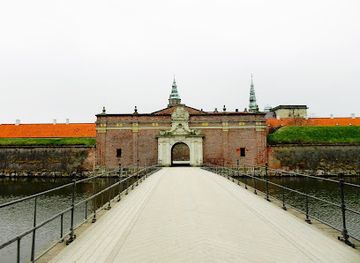
Getting There
-
Regional train from Copenhagen
From Copenhagen Central Station, take a regional train towards Helsingør; services run several times per hour and the journey usually takes 45–50 minutes. Standard adult tickets typically cost around 80–110 DKK one way in standard class. From Helsingør Station it is about a 15–20 minute mostly level walk through the town and along the waterfront to the castle, suitable for most visitors with basic mobility.
-
Car from central Copenhagen
Driving from central Copenhagen to Kronborg Castle typically takes 45–60 minutes, depending on traffic, via main roads across North Zealand. Fuel and road costs vary; budget roughly 80–150 DKK in fuel each way for a standard car. Public parking is available around the castle area and harbour, but spaces can be limited on sunny weekends and peak summer days, so allow extra time to find a spot.
-
Local travel within Helsingør
If you are already in Helsingør town centre, reaching Kronborg Castle on foot normally takes 10–20 minutes at a relaxed pace. The route follows pavements and harbour promenades and is generally flat, though cobblestones appear near the castle itself. This option is free, offers sea views on the way and is manageable for most visitors, but those using wheelchairs or strollers should be prepared for uneven surfaces close to the fortress.
For the on-the-go comforts that matter to you
-
 Restrooms
-
 Drink Options
-
 Drinking Water
-
 Food Options
-
 Seating Areas
-
 Sheltered Areas
-
 Trash Bins
-
 Information Boards
-
 Visitor Center
Discover more about Kronborg Castle
A royal stronghold at the gateway to the Baltic
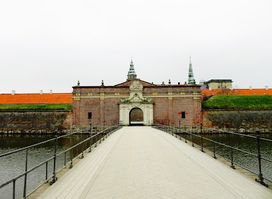
Kronborg Castle stands on a windswept headland at the narrowest point of the Øresund Strait, where Denmark long controlled access to the Baltic Sea. From 1429 to 1857, every ship sailing through this four‑kilometre‑wide bottleneck paid Sound Dues here, turning Kronborg into a powerful symbol of royal authority and maritime dominance. Deep outer ramparts, cannons facing Sweden and a commanding position over the water all speak of a fortress designed as much to impress as to intimidate.The story begins with King Eric of Pomerania’s fortress Krogen in the early 15th century, built to enforce the tolls and secure alliances through control of the shipping lane. Later monarchs expanded and reshaped these fortifications, but the idea remained constant: whoever held Kronborg held the key to northern Europe’s vital sea route.Renaissance splendour in white stone and copper
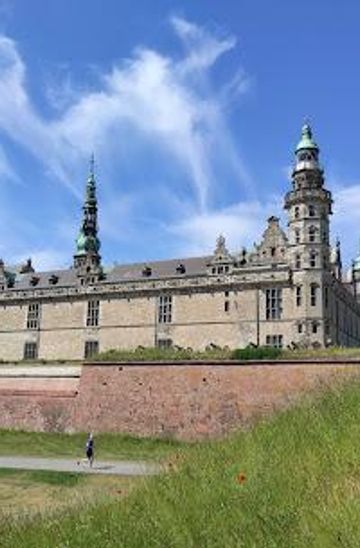
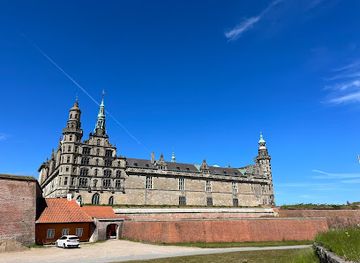
Between 1574 and 1585, King Frederik II transformed the medieval stronghold into the gleaming Renaissance castle that rises above the water today. Sandstone facades clad the walls, copper roofs flash green in the sea light and tall towers punctuate the skyline. The four wings enclose a grand cobbled courtyard, where arcades, gables and sculpted details create an almost theatrical stage set.Inside, the highlight is the Great Hall, one of the largest banqueting rooms in Northern Europe. Its long timber ceiling, stone fireplaces and rows of windows hint at the lavish feasts and diplomatic gatherings once held here. Elsewhere, richly decorated chambers, royal apartments and elaborate tapestries evoke a court that used wealth from the Sound Dues to project culture and prestige across Europe.Fire, conquest and a new life as a fortress
Kronborg’s elegant outline hides a turbulent past. In 1629, a devastating fire gutted much of the castle, leaving only the chapel intact. King Christian IV rebuilt it, adding Baroque embellishments while keeping the Renaissance plan. Just decades later, Swedish forces besieged and captured the castle in 1658, stripping many of its finest artworks as war booty.After these blows, Kronborg evolved from royal residence into garrison. New outer works such as the Crownwork ramparts in the late 17th century turned it into one of Europe’s strongest fortresses. For generations soldiers drilled in the yards and slept in barracks where courtiers once danced, until the military finally left in the early 20th century and a major restoration returned the castle’s former splendour.Hamlet’s shadow and the legend of Holger Danske
Beyond political history, Kronborg lives strongly in the imagination. Shakespeare chose it as the setting for Hamlet, calling the town Elsinore and filling the castle with intrigue, ghosts and moral doubt. Whether the playwright ever saw Kronborg himself remains uncertain, but the association has become inseparable: courtyards, galleries and battlements are often used as stages for performances of the tragedy.Deep in the casemates, the vaulted underground passages that once sheltered troops, another story waits in the semi‑darkness. Here sits Holger Danske, the slumbering hero of Danish legend. Carved in stone, he rests with sword in hand, said to awaken only if Denmark is in mortal danger. The cool, damp air, low ceilings and echoing footsteps as you explore these tunnels lend the legend a surprisingly tangible presence.Exploring ramparts, sea views and quiet corners
A visit today combines architecture, legend and landscape. From the ramparts and outer batteries you look straight across the strait to Sweden, watching ferries trace the busy shipping lane that once funded the castle. The coastal wind, cries of seabirds and rhythmic boom of waves against the rocks form a vivid contrast to the refined interiors.Within the walls, exhibitions reveal Kronborg’s role in Denmark’s rise as a maritime power, as well as its long service as a fortress and prison. Inscriptions scratched into stone, worn thresholds and uneven staircases all hint at centuries of daily life behind the formal façades. Whether you come for Hamlet, military history or simply the drama of sea and stone, the castle offers layers of experience that reward lingering, from sunlit courtyards to shadowy underground chambers.Explore the best of what Kronborg Castle has to offer













More about Copenhagen Region
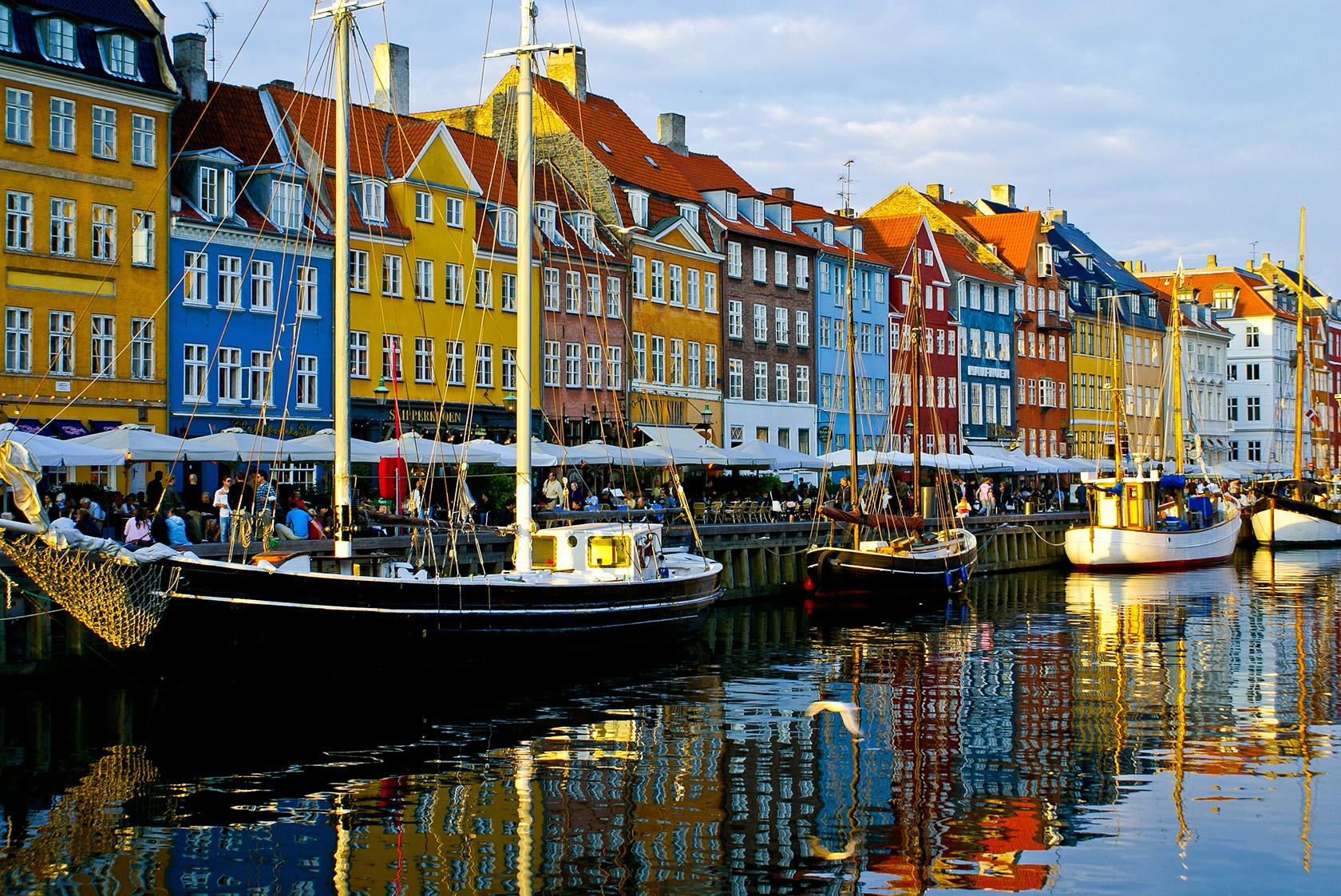
Discover the Copenhagen Region: A perfect mix of historic charm and modern vibrancy, offering scenic beauty, cultural landmarks, and a high quality of life.
Tell me more about Copenhagen Region