The Round Tower, Copenhagen Travel Guide
Copenhagen’s 17th‑century spiral tower where astronomy, history, exhibitions and city‑wide views converge above the cobbled streets of the old Latin Quarter.
Rising above the old Latin Quarter, Copenhagen’s Round Tower is a 17th‑century observatory turned cultural hub, famous for its wide spiral ramp and sweeping city views. Built in 1642 for astronomy and learning, it now combines historic architecture with contemporary exhibitions, concerts and an active observatory. The gentle, 200‑metre helical walk replaces stairs for most of the ascent, passing the former university library hall before reaching the open viewing platform and copper‑domed observatory at the top.
A brief summary to The Round Tower
- Købmagergade 52A, Copenhagen, Indre By, 1150, DK
- Click to display
- Click to display
- Duration: 1 to 2 hours
- Budget
-
 Mixed
Mixed
- Mobile reception: 5 out of 5
- Monday 10 am-8 pm
- Tuesday 10 am-8 pm
- Wednesday 10 am-8 pm
- Thursday 10 am-8 pm
- Friday 10 am-8 pm
- Saturday 10 am-8 pm
- Sunday 10 am-8 pm

Know before you go
Hi, I'm Eve. Here are a few practical things to know before exploring The Round Tower.
- Plan 1–2 hours so you have time for the spiral walk, Library Hall exhibitions and a relaxed break on the viewing platform rather than rushing straight to the top.
- Visit on a clear day or towards late afternoon for atmospheric light over the rooftops; winter evenings often include observatory opening hours for stargazing.
- Wear comfortable shoes: the 200‑metre cobbled ramp and final staircases are not difficult but can feel surprisingly long if you are in stiff footwear.
- Bring a light layer, as the open viewing platform can be windy even when the streets below feel calm; in colder months it is noticeably chillier at the top.
- If you use a stroller, you can manage most of the spiral ramp, but the last staircases to the platform require carrying or leaving it below; wheelchairs reach only the lower levels.
Do you manage this location?
Take control to get all the benefits, like improved information, better appearance, and stronger visibility across AI-powered discovery. Learn more about listing your business on Evendo
Activate your presenceOther nearby places you may find interesting
The closest places of the same kind, if this one is not quite what you had in mind.

Explore The Round Tower on the Map
A handpicked selection of must-see spots near The Round Tower, mapped for you.
Unlock the Best of The Round Tower
Buy tickets
-
No tickets available
Book tours with entry


Getting There
-
Metro from central Copenhagen hubs
From major central stations such as Nørreport or Kongens Nytorv, take the M1, M2, M3 or M4 metro lines to Nørreport if you are not already there, then walk about 5–10 minutes through the pedestrian streets to the Round Tower. Metro trains run every few minutes throughout the day, and a single zone ticket within the city typically costs around 20–25 DKK. Stations and trains are step‑free, but note that the tower itself is not fully accessible to wheelchairs beyond the lower levels.
-
City bus within Copenhagen
Several inner‑city bus routes stop near Nørreport and along streets adjacent to Købmagergade, from where it is roughly a 5–10 minute walk to the tower. Travel time from most central districts is 10–20 minutes depending on traffic and route. Standard bus tickets within the city are usually in the 20–25 DKK range per journey and can be bought via ticket machines or transport apps. Buses are low‑floor for easy boarding, but remember that the final approach is through pedestrian areas where vehicles are not permitted.
-
Bicycle within the city centre
Copenhagen’s extensive cycle lanes make it straightforward to reach the area around the Round Tower by bike from most central neighbourhoods in 10–20 minutes. Use public bike parking on nearby streets before entering the pedestrian zone, as bicycles are not allowed inside the tower. If you use a public bike‑share system, expect to pay roughly 10–20 DKK for a short central ride, with longer usage charged per additional time block. Cycling is suitable in most seasons, though strong winds and icy conditions in winter can make the ride less comfortable.
-
Walking from central Copenhagen
If you are already staying in the inner city, allow 10–20 minutes on foot from many popular areas such as City Hall Square, Nyhavn or Rosenborg Castle. Routes lead through largely flat, paved streets and pedestrian shopping areas, making the walk easy for most visitors. Surfaces are generally smooth, but cobblestones in some sections can be less comfortable for strollers or people with limited mobility. Walking is free, and moving at a relaxed pace also lets you explore nearby churches, shops and side streets on the way.
For the on-the-go comforts that matter to you
-
 Restrooms
-
 Drink Options
-
 Drinking Water
-
 Food Options
-
 Seating Areas
-
 Sheltered Areas
-
 Trash Bins
-
 Information Boards
Discover more about The Round Tower
A royal tower for science and the stars
Completed in 1642 for King Christian IV, the Round Tower was conceived as the astronomical heart of Copenhagen, part of the larger Trinitatis complex that united church, library and observatory in one ambitious project. From the outset it was a working scientific facility, giving scholars a stable, elevated platform from which to chart the night sky above the city’s rooftops.That scientific role lives on today. The observatory near the summit is one of the oldest functioning observatories in Europe, traditionally opening on selected evenings in the cooler months. Inside its distinctive copper dome, astronomers guide visitors through the planets and star fields, continuing a tradition of curiosity that has spanned nearly four centuries.The famous spiral ramp and ascent
Instead of a staircase, most of the climb is via a broad, cobbled spiral ramp that coils 7½ times around the tower’s hollow core. Originally designed wide enough for horses and carriages to reach the top with heavy instruments and books, it now offers a gradual, almost theatrical approach as you circle higher above the streets of the old town.Along the way, small alcoves and lookouts break the ascent, offering glimpses through narrow windows to tiled roofs and spires. Near the top, the ramp gives way to a broad wooden staircase and then a tighter stone stair, a final reminder that the last stretch of the journey still demands a short, steeper climb before you emerge into daylight on the upper platform.Library Hall: from university stacks to cultural stage
Roughly halfway up, the Library Hall occupies a generous floor above the adjoining church. Once home to the university’s book collection, it stored thousands of volumes in the days when this was Copenhagen’s main academic library. The high, white‑washed vaults and timber floor were built to carry both weight and quiet concentration.Today the hall has a very different life. It hosts changing exhibitions, from contemporary art to historical displays, as well as concerts, talks and special events. A small shop and café counter make it a natural pause in the climb, with space to sit beneath the arches and appreciate how the tower still balances learning, culture and everyday city life.A panorama of spires and rooftops
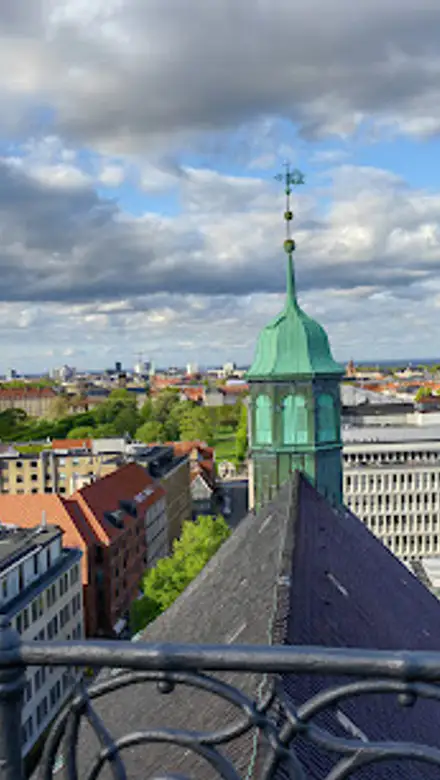
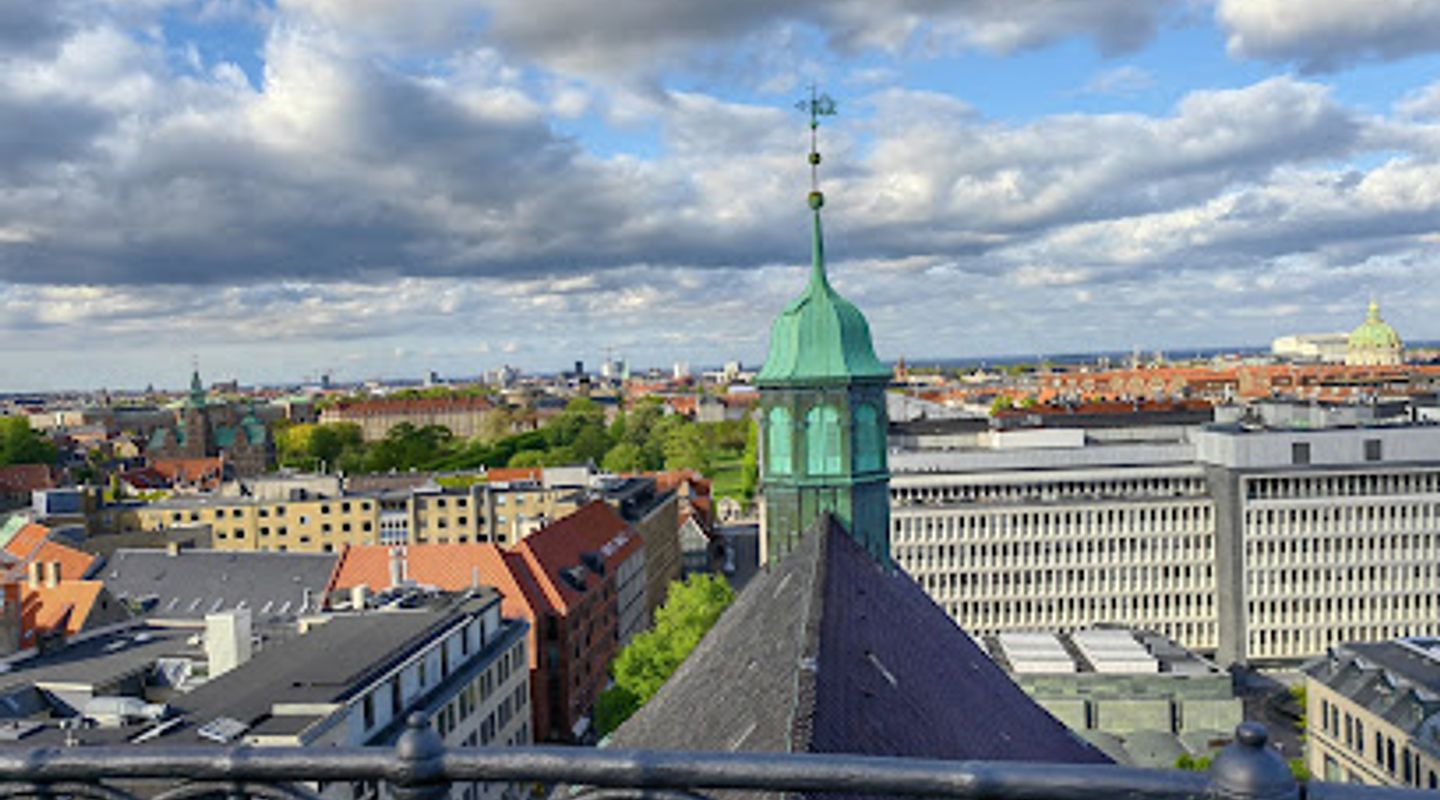
At the summit, an open‑air viewing platform circles the tower, ringed by a simple iron balustrade. From here, Copenhagen reveals itself in all directions: the copper and brick spires of churches, the outline of Rosenborg Castle in the distance, and on clear days the shimmer of the Øresund and the coast of Sweden.The height is modest by modern standards, but the central location makes the view feel intimate rather than remote. You look out across the city’s historic core at almost eye level with nearby towers, tracing medieval streets and modern boulevards from a single, compact vantage point.Living landmark in the heart of the city
Despite its age, the Round Tower functions less as a static monument and more as a living part of Copenhagen’s cultural calendar. Exhibitions rotate through the Library Hall, seasonal astronomy evenings bring the observatory to life, and occasional thematic programmes focus on topics like light, time and the universe.Ongoing restoration work on the copper dome and observatory underscores its status as protected heritage. Rather than closing it off from everyday use, conservation aims to keep Christian IV’s "star castle" active for future generations, preserving both the brickwork beneath your feet and the view of the sky above your head.Practical experience and accessibility
A visit to the Round Tower is compact but layered: most guests spend one to two hours exploring the ramp, Library Hall, viewing platform and, when open, the observatory. The ramp’s 200‑metre incline is gentle but continuous, and the final staircases mean full access to the top is not suitable for wheelchairs or those who struggle with steps.Information panels explain the tower’s history, scientific role and architecture, while the central location on Købmagergade makes it easy to combine with nearby museums, churches and shopping streets. Inside, the rule is simple: look up, slow down and let the spiral pull you through centuries of Copenhagen history in a single, graceful ascent.












Your all‑in‑one travel companion app
Explore expert travel guides, compare and book tours, experiences, hotels, and more—all from the palm of your hand. Download now for seamless trip planning wherever your wanderlust takes you.


Explore More of Copenhagen
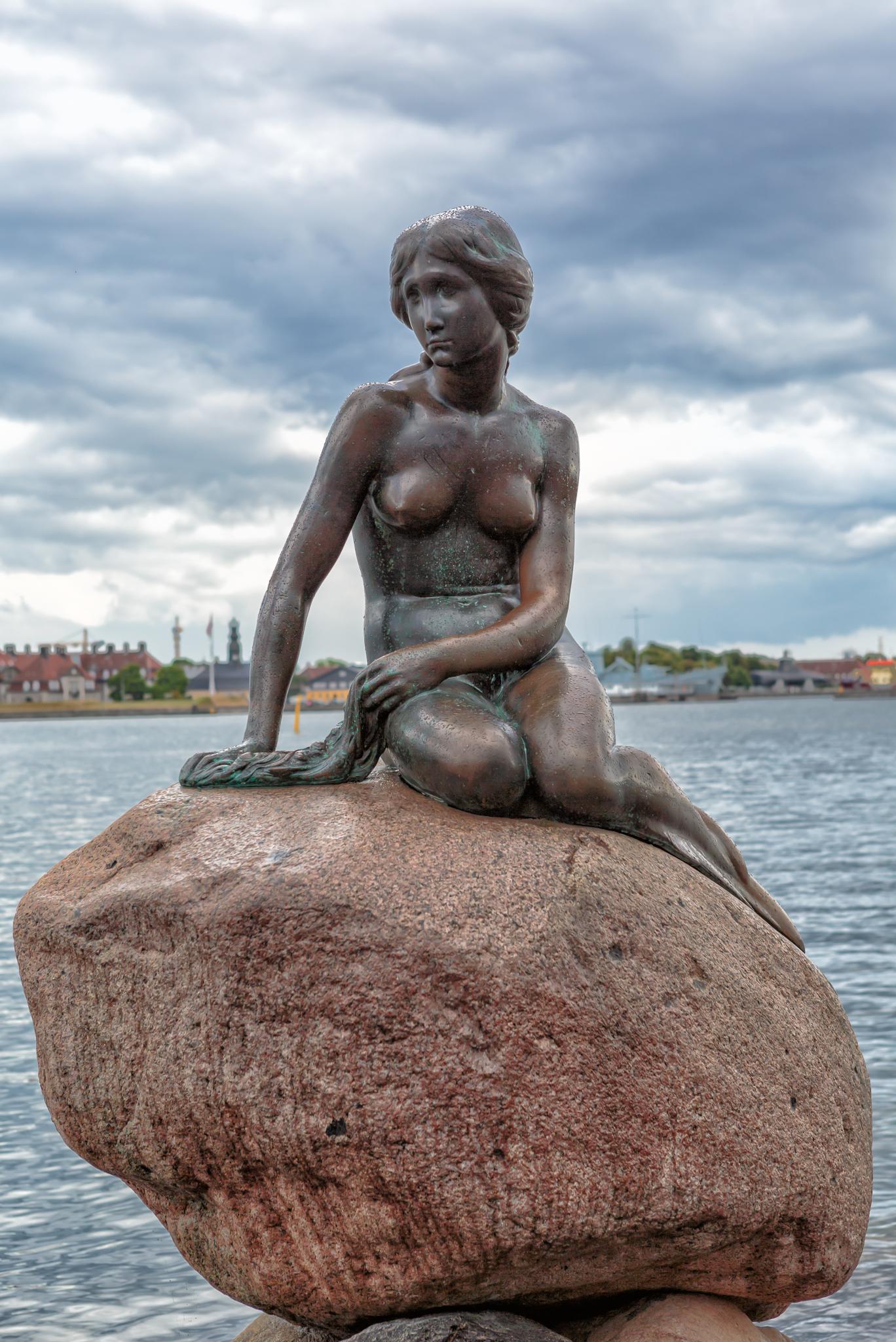
Looking beyond The Round Tower? Discover Copenhagen for broader travel guides, local hot-spots, and regional highlights.
Explore Copenhagen
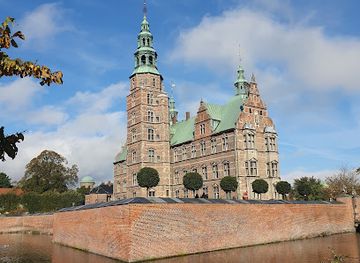
Explore Denmark's royal heritage at Rosenborg Castle, home to the crown jewels and set amidst the historic King's Garden in Copenhagen.
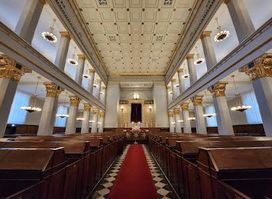
Discreetly set back on Krystalgade, Copenhagen’s Great Synagogue blends restrained Neoclassical architecture with rich Jewish history and a still‑vibrant congregation.