Trebuchet, Falster Travel Guide
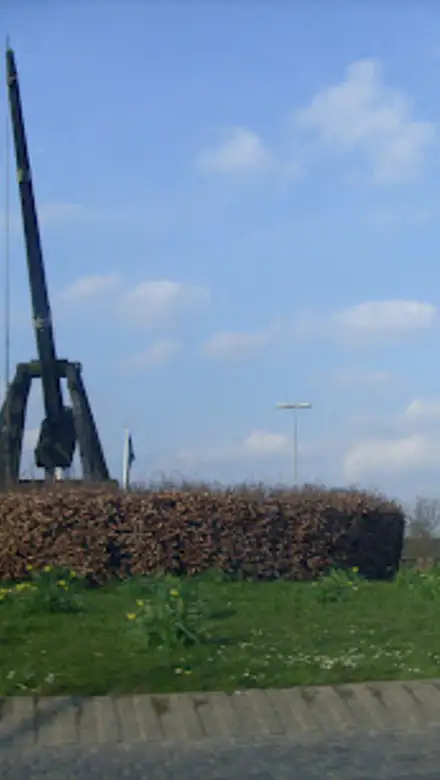
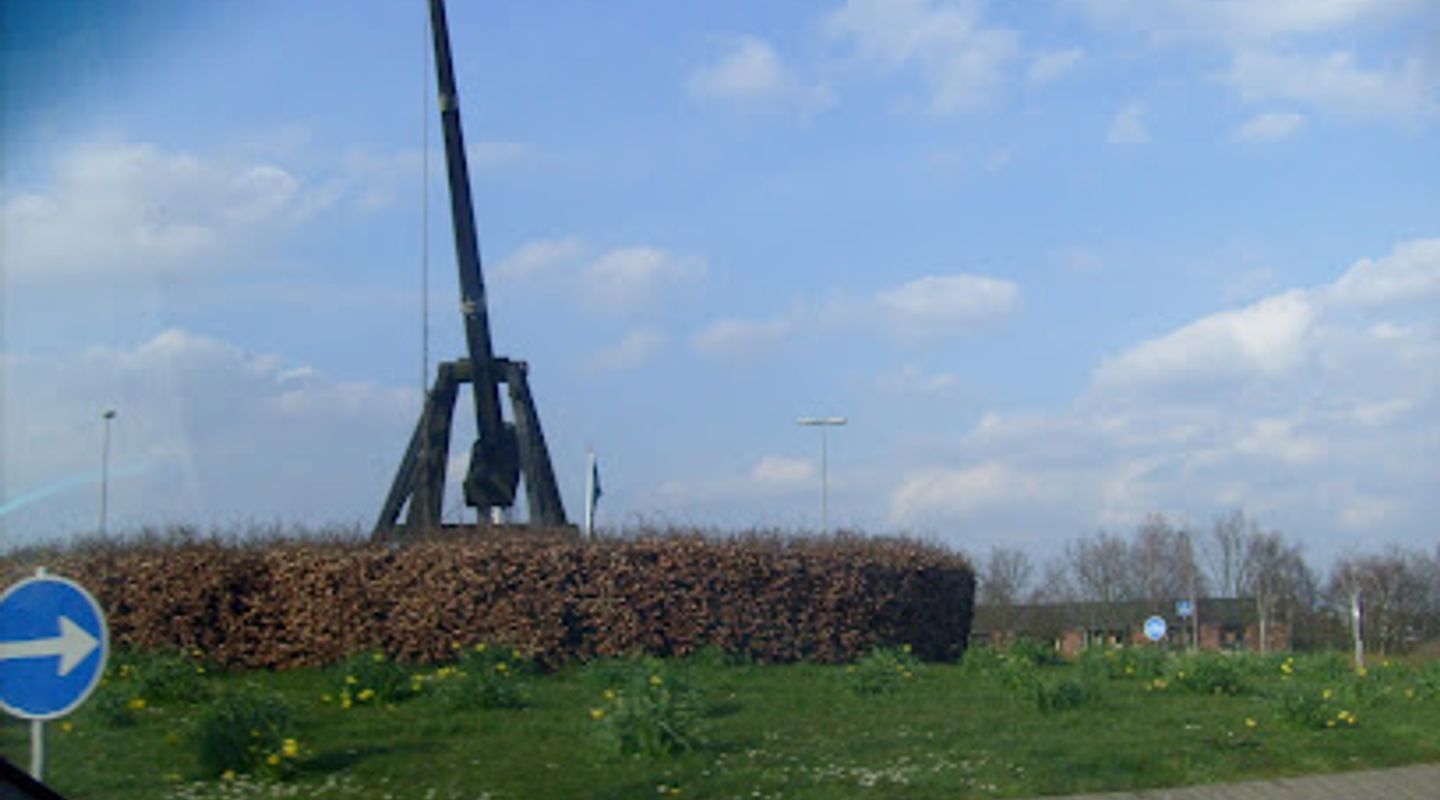
A full-size medieval trebuchet rising from a modern roundabout, linking everyday traffic in Nykøbing Falster with the siege engines of the Middle Ages.
Standing unexpectedly in a traffic roundabout on the edge of Nykøbing Falster, this full-size medieval trebuchet (blide) is a quirky landmark and a nod to the region’s fascination with siege technology. The wooden war machine, related to those demonstrated at the nearby Medieval Center, rises above the roadway like a ghost from the Middle Ages, turning an otherwise ordinary junction into a vivid reminder of how towns were once defended and attacked. It is a brief but memorable stop for history-minded visitors and photographers.
A brief summary to Trebuchet
- Nykøbing Falster, 4800, DK
- Duration: 0.25 to 0.5 hours
- Free
-
 Outdoor
- Mobile reception: 4 out of 5

Know before you go
Hi, I'm Eve. Here are a few practical things to know before exploring Trebuchet.
- Plan this as a brief stop of 10–20 minutes for photos and a closer look rather than a stand-alone outing.
- Stay on safe verges or designated paths near the roundabout and avoid stepping into traffic when taking pictures.
- Combine the stop with a visit to the Medieval Center nearby to see working trebuchets in action and deepen the context.
Do you manage this location?
Take control to get all the benefits, like improved information, better appearance, and stronger visibility across AI-powered discovery. Learn more about listing your business on Evendo
Activate your presenceOther nearby places you may find interesting
The closest places of the same kind, if this one is not quite what you had in mind.

Explore Trebuchet on the Map
A handpicked selection of must-see spots near Trebuchet, mapped for you.
Getting There
-
Local bus from Nykøbing Falster centre
From Nykøbing Falster town centre or the main station, use a local Guldborgsund bus heading south along Gedser Landevej; typical ride times to stops near the roundabout are around 10–15 minutes. Single tickets within the zone usually cost about 20–30 DKK, bought from the driver or via regional transport apps. Buses run less frequently in evenings and on Sundays, so check schedules in advance. From the nearest stop you will need a short roadside walk on level pavement, suitable for most visitors but with some traffic noise.
-
Car or taxi from Nykøbing Falster
By car, the trebuchet landmark sits on a roundabout on the southern approach to Nykøbing Falster and is reached in roughly 5–10 minutes’ drive from the centre, depending on traffic. There is no formal parking in the middle of the roundabout, but you can use nearby side streets or small lay-bys and walk a short distance along the verge. Taxis from central Nykøbing Falster typically cost in the range of 120–180 DKK one way, varying with time of day and waiting time. This option is convenient in poor weather or for visitors with limited mobility, though care is still needed when moving near the junction.
-
Cycling from within Nykøbing Falster
From addresses in Nykøbing Falster the trebuchet can be reached comfortably by bicycle in about 10–20 minutes, using local cycle paths that connect to Gedser Landevej and surrounding streets. The terrain is flat and suitable for casual cyclists, but traffic increases near the roundabout, so confident road skills and lights are recommended, especially in low daylight. There is no dedicated bike parking at the landmark, yet you can lock a bicycle to nearby railings or signposts while you explore the vantage points on foot.
Discover more about Trebuchet
A medieval war machine in a modern roundabout
Set in the middle of a busy roundabout near Nykøbing Falster, this large wooden trebuchet appears almost surreal against the flow of everyday traffic. The timber frame, long throwing arm and counterweight evoke an era when cities relied on walls and siege engines decided the outcome of battles. Here, though, the machine is symbolic rather than functional, serving as a sculptural landmark that instantly catches the eye as you pass.Closer inspection reveals the sturdy carpentry and simple mechanical logic that made trebuchets so effective. Massive beams are pegged and bolted together, a long sling would once have cradled heavy stones, and the counterweight box hints at the enormous forces involved when such a machine was in use. Even at rest, it communicates power.Echoes of the Middle Ages on Falster
The presence of a trebuchet here is not accidental. Nykøbing Falster sits near an important strait between Lolland and Falster, a route that long held strategic value in times of conflict. The region today is better known for gentle landscapes and coastal views, but in the Middle Ages it was part of a defensive network of castles, fortifications and watchpoints protecting trade and shipping.The roundabout trebuchet reflects this martial heritage and connects visually to the large working trebuchets at the Medieval Center outside town. While those are fired in live demonstrations, this static version stands as an everyday reminder of the age when stone projectiles arced over walls and siege technology shaped European warfare.Understanding how a trebuchet worked
Even without interpretive panels, the basic principles become clear as you walk around the installation. A heavy counterweight at one end of the beam would be hoisted up, storing potential energy. When released, the weight dropped, the arm whipped forward and the sling at the far end released its payload in a long, flat trajectory suitable for smashing stonework or hurling incendiaries.Unlike smaller catapults that rely on twisted rope or raw muscle power, the trebuchet is a study in gravity and leverage. Its presence in such a public, everyday space offers an informal open-air lesson in medieval engineering, turning a quick stop into a moment of curiosity and learning.A quick stop for photos and perspective
This is not a place where you linger for hours, but it is an engaging pause in a day spent exploring Nykøbing Falster and the wider Guldborgsund area. From the roadside you can frame striking photos of the wooden silhouette against Danish skies, with cars circling around it like an unintentional moat.The installation is outdoors and freely visible at any time of day, making it an easy addition to a roadtrip or cycling route. Even a short visit puts later museum exhibits and castle ruins into context: seeing the full scale of the machine in real space helps you imagine how it would have dominated a medieval battlefield.Linking town life and living history
Part of the charm here lies in the contrast between setting and subject. Everyday life continues uninterrupted around a sophisticated weapon that once required teams of engineers, carpenters and soldiers. Children can immediately recognise it as a giant "catapult", yet the structure opens the door to more nuanced stories about technology, conflict and the communities that lived in their shadow.Together with the region’s churches, museums and the nearby Medieval Center, the trebuchet in the roundabout helps stitch history into the fabric of the modern town. It is both a waypoint and a talking point – a simple, memorable reminder that even ordinary junctions can hold echoes of extraordinary pasts.












Your all‑in‑one travel companion app
Explore expert travel guides, compare and book tours, experiences, hotels, and more—all from the palm of your hand. Download now for seamless trip planning wherever your wanderlust takes you.


Explore More of Falster
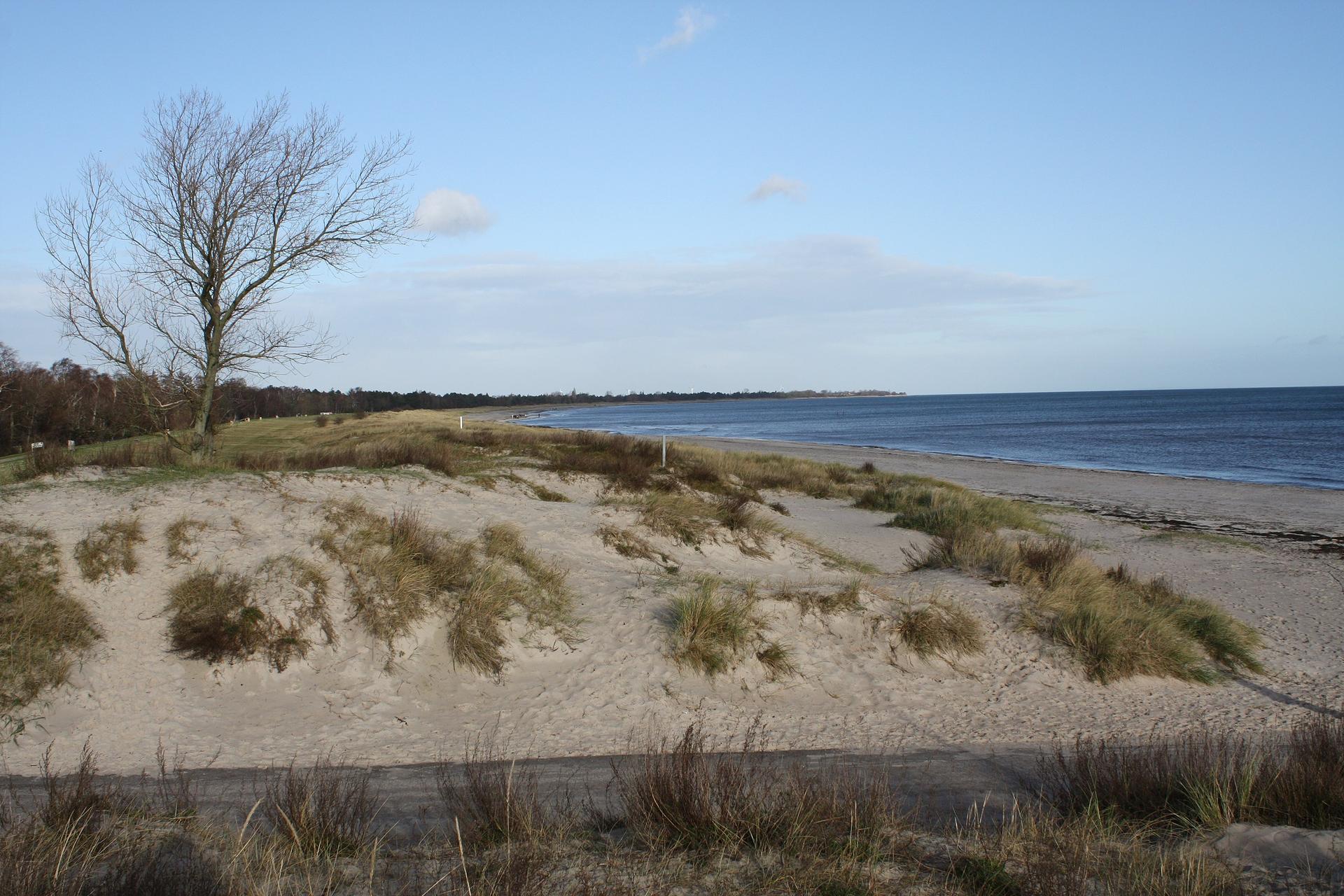
Looking beyond Trebuchet? Discover Falster for broader travel guides, local hot-spots, and regional highlights.
Explore Falster