Bangsbo Fort - Bunkermuseum, Frederikshavn Travel Guide
Free Guide: Hilltop World War II and Cold War fortress overlooking Frederikshavn and the Kattegat, with panoramic views, bunker explorations and immersive coastal history.


A brief summary of Bangsbo Fort - Bunkermuseum
Hilltop World War II and Cold War fortress overlooking Frederikshavn and the Kattegat, with panoramic views, bunker explorations and immersive coastal history.
Perched high above Frederikshavn at around 80 metres, Bangsbo Fort is a former coastal stronghold turned evocative war museum. Built by German forces in 1944 and expanded by the Royal Danish Navy during the Cold War, the hilltop site combines panoramic Kattegat views with a network of bunkers, gun positions and exhibition spaces. Families, history enthusiasts and casual strollers can wander open fortifications for free, then dive deeper into interactive museum bunkers and guided tours that bring North Jutland’s wartime and Cold War story vividly to life.
On-site amenities
 Restrooms
 Seating areas
 Trash bins
 Information boards
 Visitor centre
Opening hours
- MonClosed
- Tue10 am–4 pm
- Wed10 am–4 pm
- Thu10 am–4 pm
- Fri10 am–4 pm
- Sat11 am–4 pm
- SunClosed
Opening hours as listed on the venue’s Google Business Profile. Hours can change for services and special events, so check with the venue before you go.
- Address
- Understedvej 21, 9900 Frederikshavn
- Phone
- Website
Getting there
Car from central Frederikshavn
Local bus and walk
Bicycle from town
Discover more about Bangsbo Fort - Bunkermuseum
A hilltop fortress watching over the Kattegat
Bangsbo Fort crowns a ridge south of Frederikshavn, its bunkers and gun emplacements scattered across grassy slopes about 80 metres above the sea. From here the view stretches over the town, the ferry harbour and far across the Kattegat; on bright days the silhouettes of Skagen, Sæby and the island of Læsø appear on the horizon. The setting feels both airy and exposed, with big skies, salty wind and a sense that this hill has always been a natural lookout over the busy shipping lanes.The fort occupies a large outdoor area, with paths threading between concrete structures half-sunk into the hillside. It is at once coastal landscape and military engineering, where wildflowers grow beside rusting rails and low, angular bunkers blend into the heath-like terrain.
From German stronghold to Cold War outpost
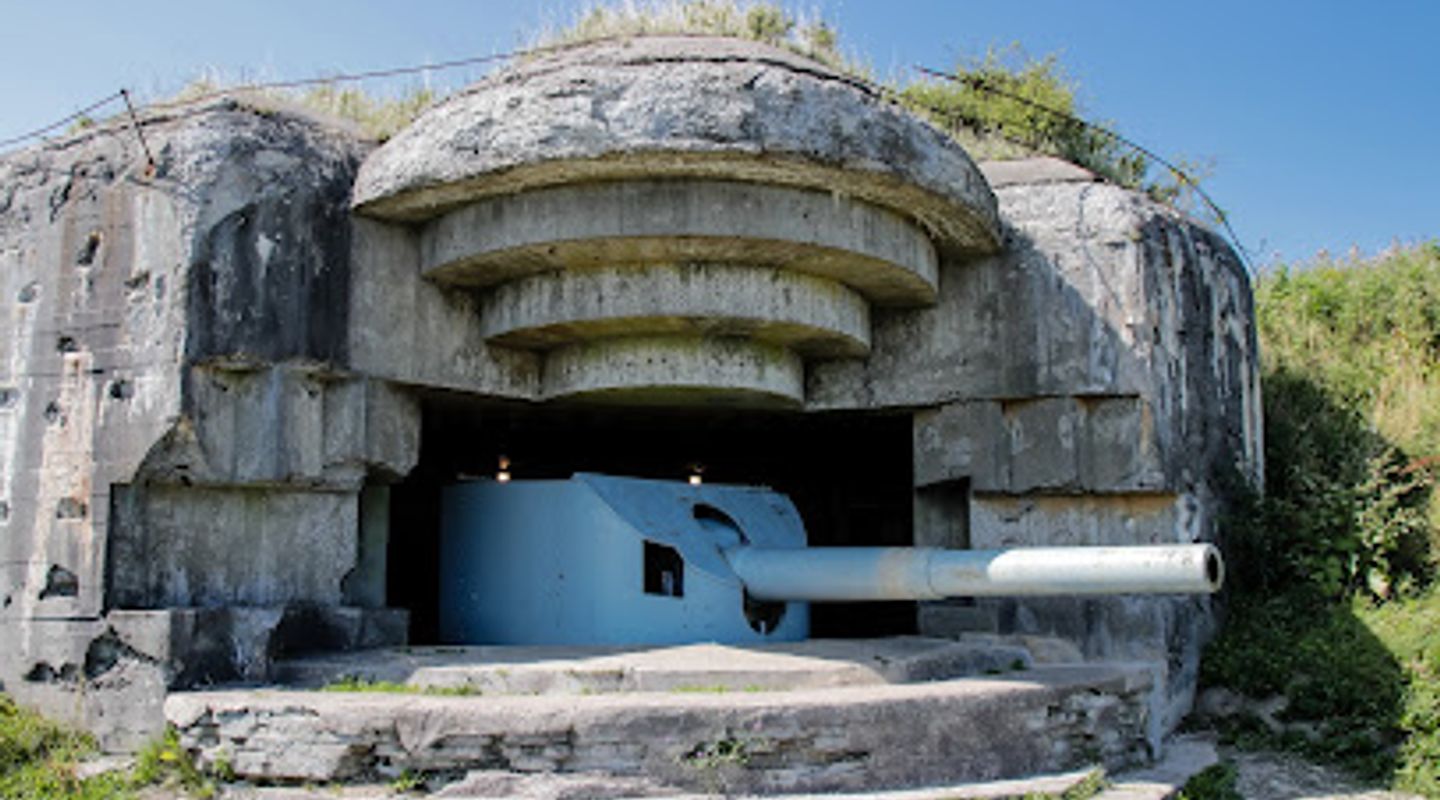
Construction began during the Second World War, when occupying German forces turned these hills into a key link in their coastal defence system. In 1944, they installed heavy 15 cm guns recycled from the Danish artillery ship Niels Juel, anchoring a battery that could control the approaches to Frederikshavn and the northern Kattegat. Dozens of bunkers, tunnels and support buildings were poured in concrete, transforming the ridge into a compact fortress.After the war, the site did not fall silent. Instead, the Danish Navy took over and adapted Bangsbo Fort for the Cold War era, updating its surveillance and command facilities to monitor maritime traffic and potential threats. This unusual continuity means the museum can interpret two distinct periods of tension from the same physical structures, revealing how technology and strategy evolved while the strategic value of the hill remained constant.
Exploring bunkers, guns and underground spaces
A visit today is a mix of open-air exploration and curated museum experience. Many bunkers and gun positions are freely accessible, allowing you to walk among ammunition stores, shelters and observation posts at your own pace. The thick walls, narrow entrances and low ceilings give a tangible sense of life in a fortified landscape, whether under wartime bombardment or Cold War alert.Selected bunkers function as museum spaces, with exhibitions on the occupation of Denmark, coastal defence, naval surveillance and daily routines for soldiers stationed here. Some use films, soundscapes and interactive elements to explain radar, communication lines and artillery, while children’s sections reinterpret the story through age-appropriate activities. Outside, the preserved Niels Juel cannons and other equipment anchor the narrative in solid steel.
Guided tours, activity days and family experiences
During the main season, the museum runs guided tours around the terrain and inside key bunkers, often included in the ticket. These walks stitch together individual structures into a coherent story, from the German building programme to Cold War surveillance duties, and highlight details you might otherwise overlook. On selected days, costumed interpreters, reenactments and themed activity programmes animate the fort, turning the grounds into a kind of open-air classroom.Families can combine bunker visits with simple outdoor fun: children can scramble over low embankments, peer through firing slits and imagine life as a lookout on a windswept hill. The scale of the site means there is space to roam, yet the main paths and museum areas are clearly defined, making it easy to spend anything from a focused hour to a lingering half-day on the ridge.
Seasonality, coastal weather and practical touches
Bangsbo Fort is generally open from spring through late autumn, with shorter hours or closure outside the main season, so checking current opening times is essential. Much of the experience is outdoors, so conditions change with the North Jutland weather: in clear, calm spells the views are superb, while wind and low cloud can make the site feel raw but atmospheric.Surfaces range from paved sections around buildings to uneven gravel and grass, and some bunker interiors involve steps or tight doorways. Simple amenities such as information panels, basic facilities and nearby parking support a visit, but the atmosphere remains pleasantly unpolished and close to the original military environment. Combined tickets can link a stop here with other branches of the North Jutland Coastal Museum in Bangsbo, Sæby and Skagen, opening up a broader narrative of maritime and regional history across several days.
Evendo Review Centre
 Google
Guest reviews
Best time to go
Quietest: Jan, Feb & Nov · before 8am or at 7pm
Busy times are Evendo estimates for a typical year, to help you plan. Actual crowds vary with events, school holidays and the weather.
Explore Bangsbo Fort - Bunkermuseum on the map
A handpicked selection of must-see spots near Bangsbo Fort - Bunkermuseum, mapped for you.
Get your free copy of our complete guide to Bangsbo Fort - Bunkermuseum, delivered straight to you.
Everything on this page, from opening hours and how to get there to Eve’s tips and the best time to go, in one PDF you can read offline, print or share.
Already have an account? Sign in
Your Bangsbo Fort - Bunkermuseum guide is ready.
We'll send it to · Not you? Sign out

Getting your guide ready…
We are putting together a fresh copy of the Bangsbo Fort - Bunkermuseum guide. This can take up to a minute.
This can take a few moments. If your browser asks, choose Allow so the download can start. You'll find the guide in your Downloads folder.
Nothing happened? Download it again
Sorry, the guide is taking longer than usual. Please try again in a minute, or get it by email instead.
Other nearby places you may find interesting
The closest places of the same kind, if this one is not quite what you had in mind.
-
-
-
-
-


Swipe for more places
More to explore near Bangsbo Fort - Bunkermuseum
-
 Best experiences near Bangsbo Fort - Bunkermuseum
-
 Best hotels near Bangsbo Fort - Bunkermuseum
-
 Best landmarks near Bangsbo Fort - Bunkermuseum
-
 Best attractions near Bangsbo Fort - Bunkermuseum
-
 Best shops near Bangsbo Fort - Bunkermuseum
-
 Best restaurants near Bangsbo Fort - Bunkermuseum
-
 Best bars near Bangsbo Fort - Bunkermuseum


Do you manage this location?
Take control to get all the benefits, like improved information, better appearance, and stronger visibility across AI-powered discovery.
Explore more

Explore more of Frederikshavn
Explore Frederikshavn, Denmark's coastal gem, where history, scenic beaches, and vibrant maritime culture combine to create an unforgettable travel experience.
Explore Frederikshavn
Explore more of Denmark
Discover Denmark: A perfect blend of history, modern design, and the cozy concept of hygge. Explore vibrant cities, serene landscapes, and world-class cuisine.
Explore Denmark