

Frederikshavn Church, Frederikshavn Travel Guide
Free Guide: Frederikshavn’s red-brick landmark church, blending National Romantic architecture, a Michael Ancher altarpiece and war graves into one evocative town centre stop.


A brief summary of Frederikshavn Church
Frederikshavn’s red-brick landmark church, blending National Romantic architecture, a Michael Ancher altarpiece and war graves into one evocative town centre stop.
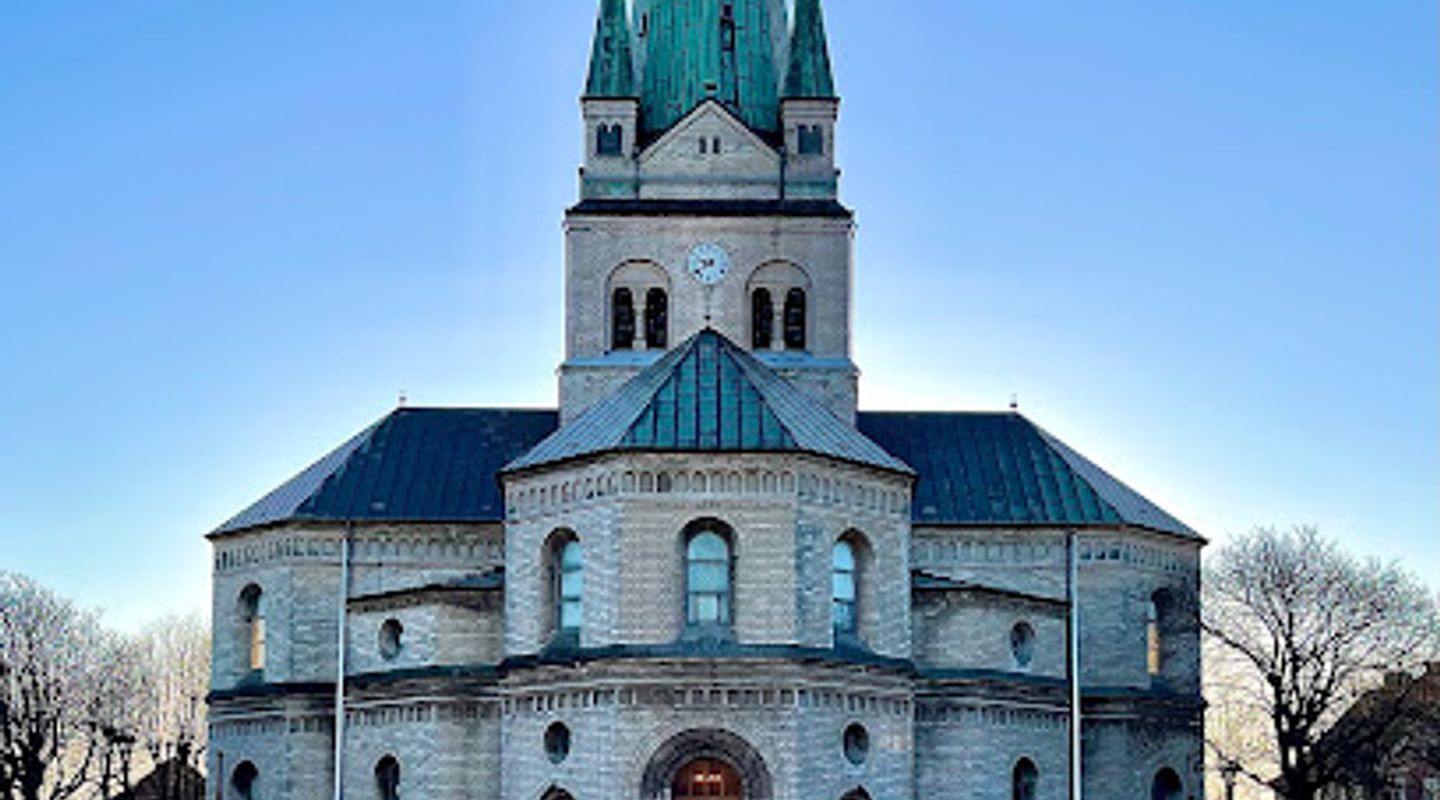
Frederikshavn Church rises over the town’s central square as its most recognisable landmark, a red-brick Lutheran church completed in 1892 in Denmark’s National Romantic style. Inspired by Aachen Cathedral, it features a distinctive tower, decorative brickwork and a bright, welcoming interior. Inside, you’ll find an impressive altarpiece by Skagen painter Michael Ancher and a calm, contemplative nave. Outside, the churchyard holds war graves that quietly tell of Frederikshavn’s strategic role in the 20th century.
On-site amenities
 Restrooms
 Seating areas
 Trash bins
 Information boards
- Address
- Kirkepladsen 6, 9900 Frederikshavn
- Phone
- Website
Getting there
Train and short walk from Aalborg
Bus within Frederikshavn and North Jutland
Ferry arrival and walk from Frederikshavn harbour
Car arrival and town-centre parking
Discover more about Frederikshavn Church
The red-brick heart of Frederikshavn
Frederikshavn Church anchors the town centre, its tall tower and warm red-brick façade instantly catching the eye as you step onto Kirkepladsen. Completed in 1892, it became the city’s principal Lutheran church at a time when Frederikshavn was growing from fishing village to busy harbour town. The building replaced an older church from the 17th century, carrying centuries of worship into a more monumental form.Walk around the exterior and you notice how the church dominates the square without feeling overbearing. The tower rises in clear geometric stages, its steep roof and small spire visible from the ferry harbour and railway lines. Arched windows, patterned brickwork and stone details give the façade a crafted, almost sculptural quality that rewards a closer look.
Architecture inspired by imperial Aachen
The church’s design is rooted in the National Romantic movement, which drew on medieval forms to express local identity. Here, the architect looked to the great cathedral of Aachen in Germany for inspiration, echoing its massing and sense of verticality while adapting it to a North Jutland context. The result is a building that feels at once Nordic and continental.National Romantic features appear in the mix of red brick and pale stone, the emphasis on solid walls and strong lines, and the careful attention to tower composition. The layout follows a traditional long church plan, but the proportions feel generous, with a tall nave that gives the interior a surprising sense of height compared to the townhouses around it.
A bright nave and a famous painted altarpiece
Inside, the church feels lighter than its robust exterior suggests. Whitewashed walls, tall windows and simple wooden pews create a calm, airy space that invites you to slow down. The soft echo of footsteps on the floor and the occasional creak of the pews emphasise the stillness when no service is underway.At the east end, the main focal point is the altarpiece by Michael Ancher, one of the celebrated Skagen painters known for his depictions of life in North Jutland’s fishing communities. The painting brings colour and narrative into the sanctuary, linking Frederikshavn visually and culturally to the artists’ colony further up the coast. Modest decorative details on pulpit, font and organ loft round out the interior without distracting from the artwork or the sense of openness.
War graves and stories in the churchyard
Step back outside and circle the churchyard to find a quieter, more contemplative layer of history. Among the headstones are graves of Allied and German soldiers from the Second World War, a reminder of Frederikshavn’s strategic position on the Kattegat and the conflicts that once reached even this small harbour town.These simple, well-tended graves sit among local family plots, weaving international events into the fabric of daily life and memory. The setting is peaceful: trees soften the edges of the square, and benches invite a pause to reflect. It is an evocative place to consider how war and peace have both shaped North Jutland.
A living parish in the modern town
Though it serves as an architectural symbol, Frederikshavn Church is first and foremost a working parish church. Its doors open for regular services, baptisms, weddings and funerals, as well as concerts and community gatherings that make use of the fine acoustics and sizeable nave.During open hours, you can slip in for a quiet moment between errands or sightseeing, listening to the distant hum of the town outside. On certain days, the organ may be in use for rehearsal, filling the church with sound that seems to lift up into the rafters. Whether you come for its architecture, art or atmosphere, the church offers a grounded sense of place right in the middle of Frederikshavn’s everyday bustle.
Experiencing the church on foot
Because the church stands close to the pedestrian streets and harbour area, it fits easily into a stroll through town. Cobblestone surfaces and gentle slopes around the square reflect Frederikshavn’s historic core, while the open space in front of the main entrance offers unobstructed views of the tower for photographs.You can explore at your own pace: first taking in the tower and façades, then stepping inside to see Ancher’s altarpiece, before ending in the churchyard among the war graves. The visit need not be long, but it adds depth and context to any exploration of North Jutland’s coastal towns.
Evendo Review Centre
 Google
Guest reviews
Best time to go
Quietest: Jan, Feb & Mar · before 7am or from 9pm
Busy times are Evendo estimates for a typical year, to help you plan. Actual crowds vary with events, school holidays and the weather.
Explore Frederikshavn Church on the map
A handpicked selection of must-see spots near Frederikshavn Church, mapped for you.
Get your free copy of our complete guide to Frederikshavn Church, delivered straight to you.
Everything on this page, from opening hours and how to get there to Eve’s tips and the best time to go, in one PDF you can read offline, print or share.
Already have an account? Sign in
Your Frederikshavn Church guide is ready.
We'll send it to · Not you? Sign out

Getting your guide ready…
We are putting together a fresh copy of the Frederikshavn Church guide. This can take up to a minute.
This can take a few moments. If your browser asks, choose Allow so the download can start. You'll find the guide in your Downloads folder.
Nothing happened? Download it again
Sorry, the guide is taking longer than usual. Please try again in a minute, or get it by email instead.
Other nearby places you may find interesting
The closest places of the same kind, if this one is not quite what you had in mind.
-
-
-
-
-


Swipe for more places
More to explore near Frederikshavn Church

 Best experiences near Frederikshavn Church
 Best hotels near Frederikshavn Church
 Best landmarks near Frederikshavn Church
 Best attractions near Frederikshavn Church
 Best shops near Frederikshavn Church
 Best restaurants near Frederikshavn Church
 Best bars near Frederikshavn Church
Do you manage this location?
Take control to get all the benefits, like improved information, better appearance, and stronger visibility across AI-powered discovery.
Explore more

Explore more of Frederikshavn
Explore Frederikshavn, Denmark's coastal gem, where history, scenic beaches, and vibrant maritime culture combine to create an unforgettable travel experience.
Explore Frederikshavn
Explore more of Denmark
Discover Denmark: A perfect blend of history, modern design, and the cozy concept of hygge. Explore vibrant cities, serene landscapes, and world-class cuisine.
Explore Denmark
