Bunker Ved Palmestranden, Frederikshavn Travel Guide
Free Guide: Second World War bunkers half-buried in the dunes behind Frederikshavn’s palm-lined city beach, blending coastal history with a relaxed seaside setting.


A brief summary of Bunker Ved Palmestranden
Second World War bunkers half-buried in the dunes behind Frederikshavn’s palm-lined city beach, blending coastal history with a relaxed seaside setting.
Half-buried in the dunes just behind Frederikshavn’s palm-fringed city beach, Bunker ved Palmestranden is a tangible relic of the Second World War. Part of the former “Frederikshavn North” anti-aircraft battery, the concrete structures now sit quietly amid sand, marram grass and sea views over the Kattegat. It is a low-key, free-to-visit spot where you can combine a seaside stroll with a close look at coastal defences that once guarded a strategically vital harbour.
On-site amenities
 Restrooms
 Drink options
 Drinking water
 Food options
 Seating areas
 Trash bins
 Information boards
Opening hours
- Every dayOpen 24 hours
Opening hours as listed on the venue’s Google Business Profile. Hours can change for services and special events, so check with the venue before you go.
- Address
- Nordre Strandvej 17, 9900 Frederikshavn
Getting there
Walking from central Frederikshavn
City bus within Frederikshavn
Taxi from Frederikshavn station area
Driving within Frederikshavn
Discover more about Bunker Ved Palmestranden
War-time stronghold behind a holiday beach
During the Second World War, the dunes behind what is now Palmestranden were transformed into a heavy anti-aircraft battery known as “Frederikshavn North”. From mid-1940, German forces rapidly installed guns here to protect the harbour and shipping routes in the Kattegat, which were crucial for moving troops and supplies to Norway. Within weeks the first 8.8 cm anti-aircraft guns were in place, later replaced by even larger 10.5 cm pieces as the war intensified.What you see today at Bunker ved Palmestranden is just a fragment of that fortified landscape. Much of the terrain has since been levelled and grassed over, but scattered concrete bunkers and foundations still emerge from the sand. Their thick walls hint at the scale of the construction effort: by 1943, the position counted more than a dozen substantial bunkers, connected by earthworks, wooden barracks and defensive installations stretching along the dune ridge.
Concrete relics among sand and palms
The striking contrast here is between the relaxed, almost Mediterranean feel of Palmestranden and the stark, grey shapes of wartime concrete. On one side, imported palms, soft sand and shallow water create a laid-back urban beach. On the other, angular bunker entrances and low mounds hide rooms that once housed guns, ammunition and crews on constant alert for enemy aircraft.As you wander around the site, you can trace outlines of former gun emplacements and spot ventilation shafts, embrasures and steel fittings still embedded in the structures. In places, graffiti and weathering soften the lines, but the sense of solidity remains. The bunkers sit just above the shoreline, offering glimpses over the Kattegat and back towards Frederikshavn’s harbour cranes and ferry routes, underlining the strategic logic of the location.
From frontline fortification to coastal curiosity
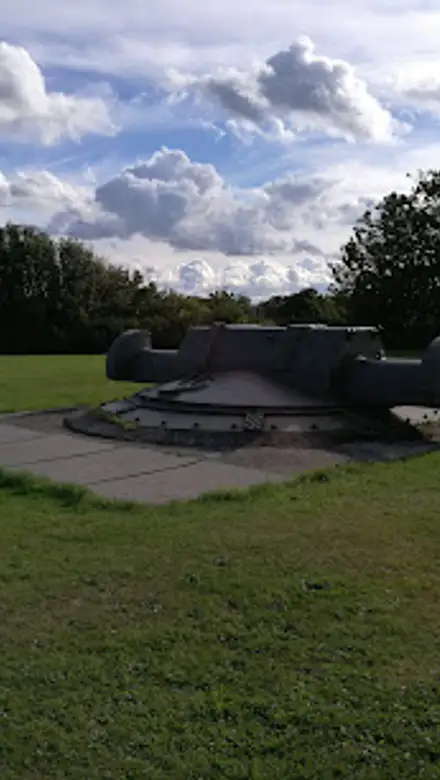
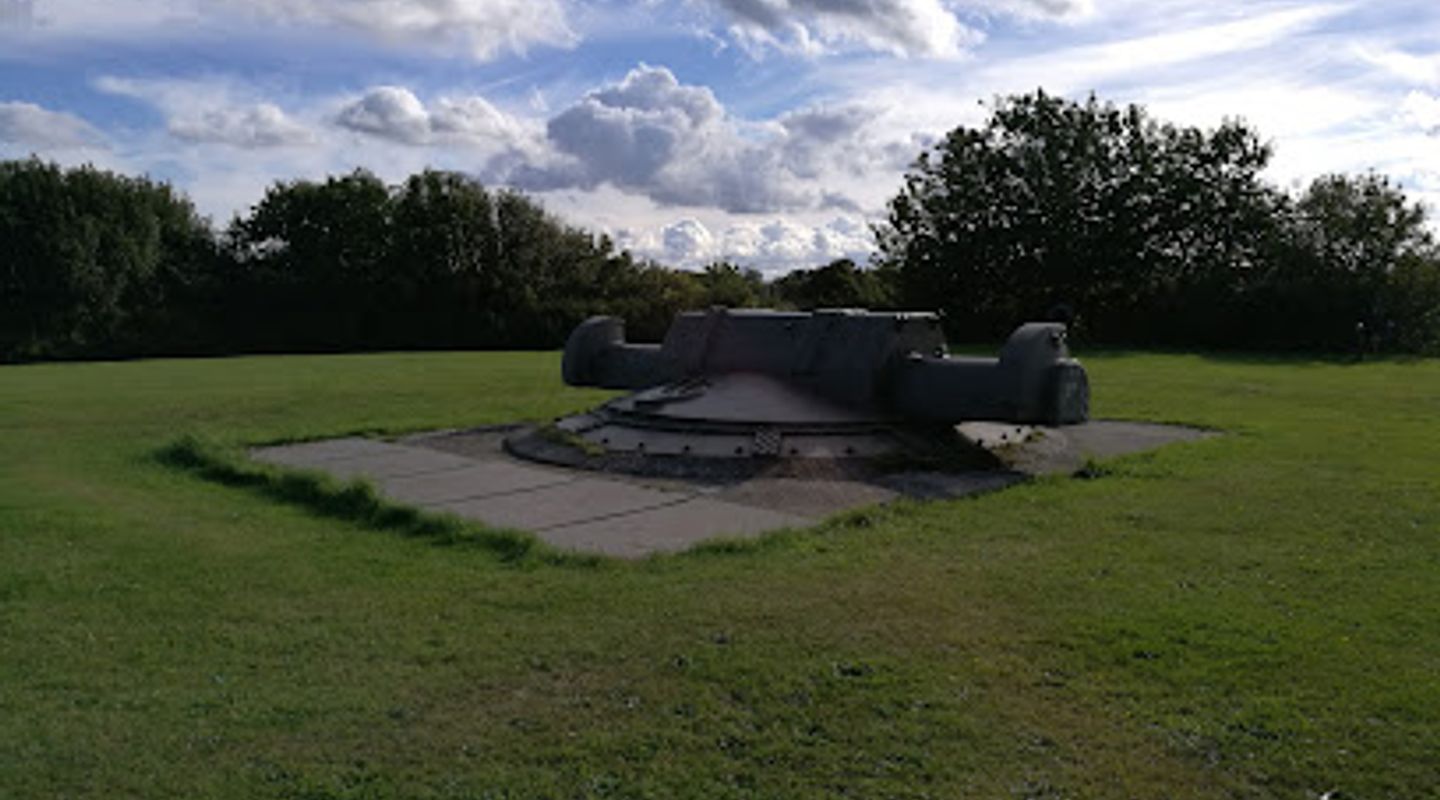
After the German occupation ended in 1945, Danish coastal forces took over the battery and considered keeping it in active use. Those plans were gradually shelved as defence priorities shifted, and by the 1950s the area was largely dormant. Some structures were reused as storage by civil defence organisations, but most were left to the wind and sand. Over time, large parts of the complex disappeared beneath levelling works and vegetation, leaving only selected bunkers visible.Today the dunes behind Palmestranden remain largely undeveloped, giving the bunkers a quiet, almost forgotten character. There is no formal museum building here; interpretation is minimal, and much of the atmosphere comes from exploring the landscape itself. A particularly notable feature in the wider battery area is a preserved armoured dome for a six-metre rangefinder, unique in Denmark, while a restored 10.5 cm gun from this site can be seen at the regional coastal museum.
A casual stop on a coastal walk
Bunker ved Palmestranden lends itself to unhurried discovery rather than a tightly structured visit. The terrain is mostly flat but sandy, with low dunes and patches of grass, making it easy to combine with time on the beach or a longer walk along the shoreline. Children tend to be intrigued by the odd shapes and hidden corners, though care is needed around uneven ground and steep edges.There are no entrance barriers or fixed opening hours; the area functions as an open-air historical landscape woven into a modern recreational beach. On windy days you feel the full exposure of the Kattegat, with waves, salt spray and the sound of ferries crossing to the islands and Norway. On calm summer evenings the bunkers cast long shadows over the sand, a reminder that this relaxed stretch of coast once formed part of a much larger defensive system circling northern Jutland.
Evendo Review Centre
 Google
Guest reviews
Best time to go
Quietest: Jan, Feb & Dec · before 8am or at 9pm
Busy times are Evendo estimates for a typical year, to help you plan. Actual crowds vary with events, school holidays and the weather.
Explore Bunker Ved Palmestranden on the map
A handpicked selection of must-see spots near Bunker Ved Palmestranden, mapped for you.
Get your free copy of our complete guide to Bunker Ved Palmestranden, delivered straight to you.
Everything on this page, from opening hours and how to get there to Eve’s tips and the best time to go, in one PDF you can read offline, print or share.
Already have an account? Sign in
Your Bunker Ved Palmestranden guide is ready.
We'll send it to · Not you? Sign out

Getting your guide ready…
We are putting together a fresh copy of the Bunker Ved Palmestranden guide. This can take up to a minute.
This can take a few moments. If your browser asks, choose Allow so the download can start. You'll find the guide in your Downloads folder.
Nothing happened? Download it again
Sorry, the guide is taking longer than usual. Please try again in a minute, or get it by email instead.
Other nearby places you may find interesting
The closest places of the same kind, if this one is not quite what you had in mind.
-
Mindesten for de 3 A modest stone memorial in Frederikshavn, quietly honouring three wartime lives and adding a reflective note to this busy North Jutland harbour town.
-
Fisketorvet A modest central square in Frederikshavn where everyday small-town life, summer tourist hosts and a hint of maritime character quietly meet by the harbor.
-
Frederikshavn Church Frederikshavn’s red-brick landmark church, blending National Romantic architecture, a Michael Ancher altarpiece and war graves into one evocative town centre stop.
-
Port of Frederikshavn A deep-water working harbour where ferries, shipyards and offshore giants share the waterfront, shaping the maritime heart of Frederikshavn.
-
Frederikshavn Sogn A grand Romanesque church and living parish at the heart of a North Jutland port town, where seafaring history, sacred art and everyday Danish life meet.
Swipe for more places
More to explore near Bunker Ved Palmestranden
-
 Best experiences near Bunker Ved Palmestranden
-
 Best hotels near Bunker Ved Palmestranden
-
 Best landmarks near Bunker Ved Palmestranden
-
 Best attractions near Bunker Ved Palmestranden
-
 Best shops near Bunker Ved Palmestranden
-
 Best restaurants near Bunker Ved Palmestranden
-
 Best bars near Bunker Ved Palmestranden







Do you manage this location?
Take control to get all the benefits, like improved information, better appearance, and stronger visibility across AI-powered discovery.
Explore more

Explore more of Frederikshavn
Explore Frederikshavn, Denmark's coastal gem, where history, scenic beaches, and vibrant maritime culture combine to create an unforgettable travel experience.
Explore Frederikshavn
Explore more of Denmark
Discover Denmark: A perfect blend of history, modern design, and the cozy concept of hygge. Explore vibrant cities, serene landscapes, and world-class cuisine.
Explore Denmark