Trebuchet Travel Guide
Free Guide: A towering wooden war machine on the shores of Guldborgsund, the Trebuchet at Nykøbing Falster’s Medieval Center hurls medieval engineering and history into vivid life.


A brief summary of Trebuchet
A towering wooden war machine on the shores of Guldborgsund, the Trebuchet at Nykøbing Falster’s Medieval Center hurls medieval engineering and history into vivid life.
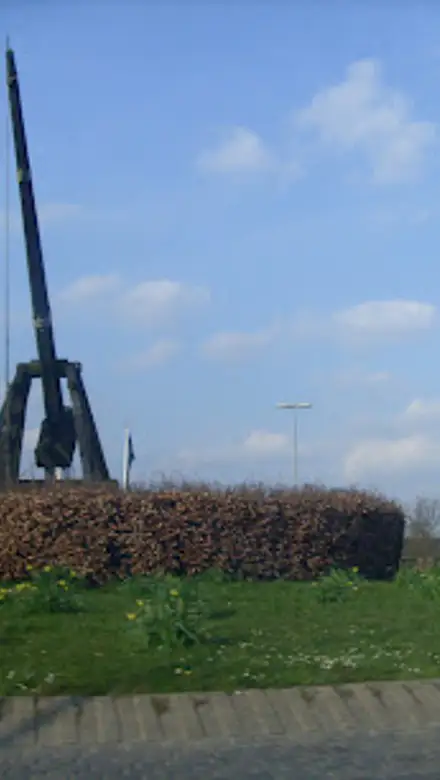
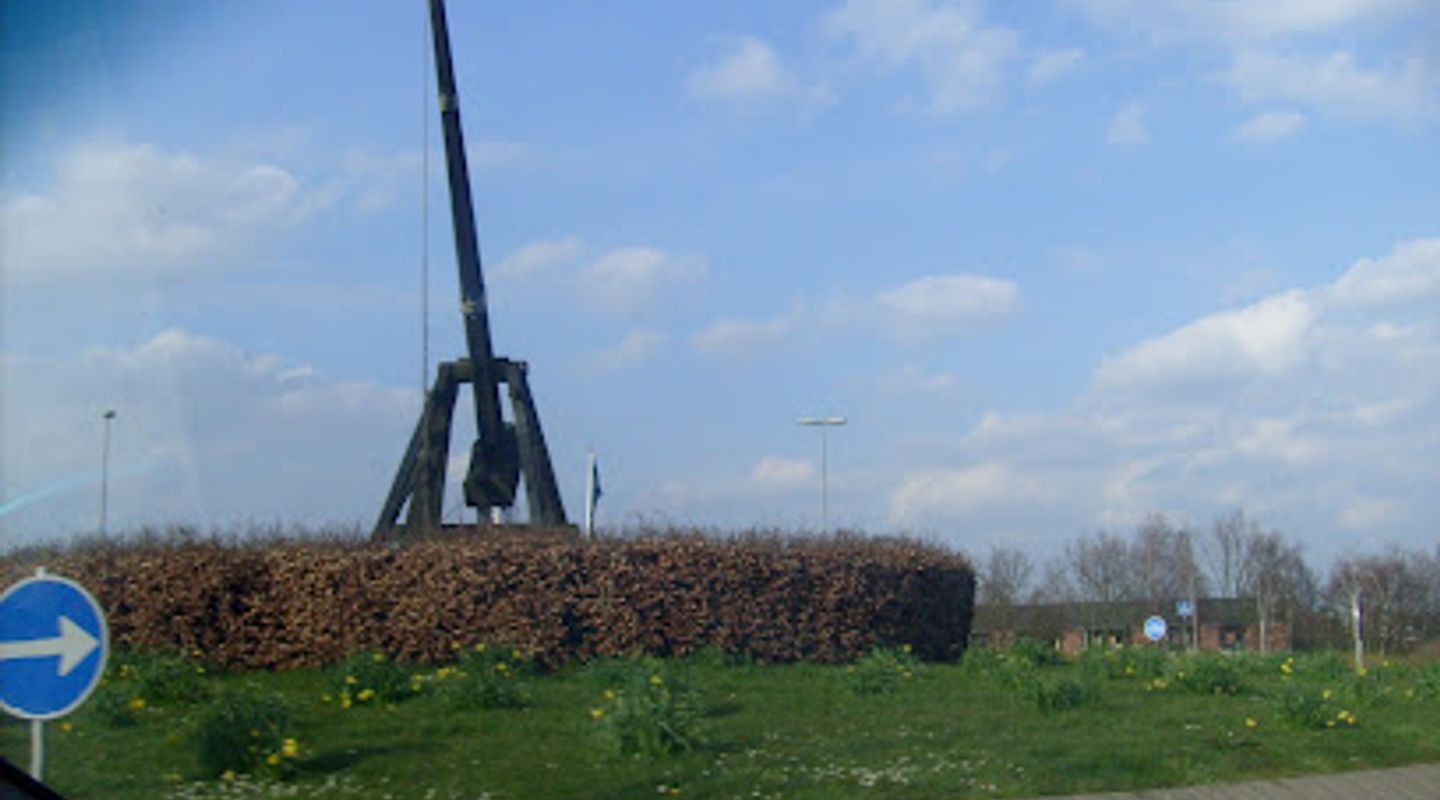
Set on the edge of Guldborgsund near Nykøbing Falster, the Trebuchet (Bliden) is a full‑scale working reconstruction of a medieval siege engine at the open‑air Medieval Center. Framed by forest and water, this towering wooden war machine brings 14th‑century warfare vividly to life with firing demonstrations, living‑history surroundings and views over the strait, making it a standout stop for history lovers and families alike.
On-site amenities
 Restrooms
 Drink options
 Drinking water
 Food options
 Seating areas
 Sheltered areas
 Trash bins
 Information boards
 Visitor centre
- Address
- 4800 Nykøbing Falster
Getting there
Train and local bus from Copenhagen
Car from Nykøbing Falster town centre
Cycling from Nykøbing Falster
Discover more about Trebuchet
A medieval war machine on the Danish waterfront
Standing on the shore near Nykøbing Falster, the Trebuchet – known in Danish as Bliden – dominates the landscape with its angular timber frame and long throwing arm. Part of the atmospheric Medieval Center just outside town, it recreates the kind of siege engine that once decided the fate of castles across Europe. Here, amid the cries of gulls and the smell of salt on the air, its silhouette recalls a time when the Guldborgsund strait was a frontier to be defended.The structure rises from a sturdy wooden platform braced with thick beams, all held together with bolts and rope lashings that echo medieval craftsmanship. Counterweights hang heavy at one end, poised to convert gravity into raw destructive force. Even at rest, the machine’s scale is impressive, giving an immediate sense of how intimidating such technology must have been to anyone watching from a besieged wall.
Engineering ingenuity behind the throwing arm
What makes this trebuchet remarkable is not only its size but the insight it offers into medieval engineering. The long arm, pivoting on a massive axle, is precisely balanced so that the release of the counterweight translates into a smooth, accelerating swing. Visitors can walk close enough to see how the sling is attached, how the trigger mechanism is set, and how each wooden component plays a role in sending a projectile arcing through the air.Interpretive boards and demonstrations reveal how teams of engineers calculated range with nothing more than experience and observation. Details such as adjustable counterweights, guide ropes to control swing, and carefully chosen timber show that these machines were products of sophisticated experimentation. Watching staff prepare the weapon, you sense the teamwork and discipline required to operate it safely – much as in the 14th century.
Immersed in a living medieval landscape
The trebuchet does not stand in isolation. It forms part of a reconstructed medieval environment that includes fortified structures, crafts workshops and period‑style buildings set along the water. As you move around the machine, your view shifts from the calm surface of the strait to the timber palisades and roofs of the surrounding site, helping you imagine how a siege might once have unfolded here.Seasonal demonstrations transform the static structure into a kinetic spectacle. When the counterweight drops and the arm whips skyward, there is a deep wooden groan, a rush of air and, finally, the distant splash or thud of the projectile landing. The echo carries across the water, briefly silencing the birds before the everyday sounds of the coast return.
Family‑friendly history and hands‑on discovery
For families and curious travelers, the trebuchet offers a rare blend of drama and education. Children can trace the path of an imaginary stone from the loading platform to its target, while adults linger over the details of construction, noting tool marks in the beams or the careful shaping of the arm. Staff in period clothing are often on hand to answer practical questions about range, accuracy and the realities of medieval siege warfare.Benches and open grass nearby invite you to pause and take in the wider scene: ships or small boats on Guldborgsund, the changing Danish light over the water, and the constant presence of this wooden titan on the shoreline. Whether you stay for a single demonstration or weave the trebuchet into a longer exploration of the Medieval Center, it becomes a memorable anchor point for understanding Nykøbing Falster’s long relationship with fortifications and conflict.
From coastal defense to cultural storytelling
Though this trebuchet is a modern reconstruction, it is rooted in the region’s history of castles and royal power. Nykøbing Falster grew around a medieval fortress that once guarded the strait, and machines like this illustrate the threats such strongholds faced. By translating old manuscripts, archaeological clues and technical research into a functioning object, the site turns abstract history into something immediately graspable.Today, the trebuchet serves peace rather than war: its stones are harmless, its target a patch of empty water, and its purpose is to spark curiosity. Standing beneath its towering frame, you can reflect on how far military technology and society have evolved, even as the basic laws of physics remain unchanged. In this quiet corner of southern Denmark, the clash of past and present is distilled into the swing of a single wooden arm over the blue of Guldborgsund.
Evendo Review Centre
 Google
Guest reviews
Best time to go
Quietest: Jan, Feb & Mar · before 8am or from 9pm
Busy times are Evendo estimates for a typical year, to help you plan. Actual crowds vary with events, school holidays and the weather.
Explore Trebuchet on the map
A handpicked selection of must-see spots near Trebuchet, mapped for you.
Get your free copy of our complete guide to Trebuchet, delivered straight to you.
Everything on this page, from opening hours and how to get there to Eve’s tips and the best time to go, in one PDF you can read offline, print or share.
Already have an account? Sign in
Your Trebuchet guide is ready.
We'll send it to · Not you? Sign out

Getting your guide ready…
We are putting together a fresh copy of the Trebuchet guide. This can take up to a minute.
This can take a few moments. If your browser asks, choose Allow so the download can start. You'll find the guide in your Downloads folder.
Nothing happened? Download it again
Sorry, the guide is taking longer than usual. Please try again in a minute, or get it by email instead.
Other nearby places you may find interesting
The closest places of the same kind, if this one is not quite what you had in mind.
-
Gedser Lighthouse A quietly evocative 19th-century beacon on Falster’s southern tip, where wind, sea and sky meet at the edge of Denmark and ships slide past on the Baltic horizon.
-
Gedser Fuglestation Denmark's premier bird banding station where migration science comes alive.
-
The South Stone At the wind-battered tip of Gedser Odde, the South Stone quietly marks Denmark’s southernmost point amid low cliffs, open Baltic horizons and migrating seabirds.
-
Gedesby Møllelaug Living windmill, local flea market and green village commons at Denmark’s southern edge, where coastal light, milling heritage and everyday life meet.
-
Svinehave Voldsted Modest earthworks in the fields near Gedser tell the quiet story of a medieval royal manor, long vanished yet still etched into the Falster landscape.
Swipe for more places
More to explore near Trebuchet

 Best experiences near Trebuchet
 Best hotels near Trebuchet
 Best landmarks near Trebuchet
 Best attractions near Trebuchet
 Best shops near Trebuchet
 Best restaurants near Trebuchet
 Best bars near Trebuchet
Do you manage this location?
Take control to get all the benefits, like improved information, better appearance, and stronger visibility across AI-powered discovery.
Explore more

Explore more of Gedser Odde
Discover Gedser Odde, Denmark's southernmost point, offering stunning Baltic Sea views, rich birdlife, and a peaceful retreat in untouched nature.
Explore Gedser Odde
Explore more of Denmark
Discover Denmark: A perfect blend of history, modern design, and the cozy concept of hygge. Explore vibrant cities, serene landscapes, and world-class cuisine.
Explore Denmark