Københavns Synagoge (Great Synagogue of Copenhagen)
Discreetly set back on Krystalgade, Copenhagen’s Great Synagogue blends restrained Neoclassical architecture with rich Jewish history and a still‑vibrant congregation.
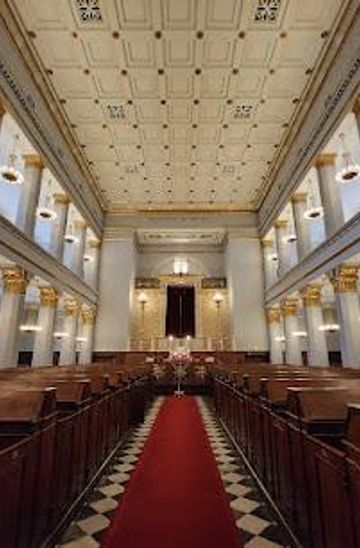
Set discreetly back from Krystalgade in Copenhagen’s old town, Københavns Synagoge is Denmark’s principal Jewish house of worship and the spiritual heart of the country’s Jewish community. Completed in 1833 and designed by Gustav Friedrich Hetsch in a restrained Neoclassical style with striking Egyptian Revival details inside, it reflects both centuries of Jewish life in Denmark and the cautious tolerance of the era. Behind its modest façade lie grand interiors, symbolic columns, and a living congregation that continues to gather here for prayer, holidays, and life‑cycle events.
A brief summary to Københavns Synagoge
- Krystalgade, Copenhagen, Indre By, 12, DK
- Click to display
- Click to display
- Duration: 0.5 to 1.5 hours
- Free
-
 Indoor
- Mobile reception: 5 out of 5
- Monday 10 am-2 pm
- Tuesday 10 am-2 pm
- Wednesday 10 am-2 pm
- Thursday 10 am-2 pm

Know before you go
Hi, I'm Eve. Here are a few practical things to know before exploring Københavns Synagoge.
- Check in advance for visiting hours or guided tours, as access is limited to specific times and often closed on Jewish holidays and during services.
- Dress modestly with covered shoulders and respectful attire; be prepared for security checks at the entrance and follow all instructions from staff.
- Allow time to study the exterior from Krystalgade and notice how the façade is set back with symbolic column motifs referencing the twelve tribes of Israel.
- Inside, look up to appreciate the Egyptian Revival details around the ark and ceiling; these contrasts with the building’s restrained Neoclassical shell.
- Avoid loud conversations and phone use; this is an active place of worship, and quiet observation is the best way to experience its atmosphere.
Do you manage this location?
Take control to get all the benefits, like improved information, better appearance, and stronger visibility across AI-powered discovery. Learn more
Activate your presenceOther nearby places you may find interesting

Getting There
-
Metro
From central Copenhagen, using the M1 or M2 metro lines to Nørreport Station is one of the fastest options; the ride from Kongens Nytorv or Frederiksberg typically takes 3–7 minutes. A standard adult single ticket within the city zones usually costs around 20–30 DKK, and trains run every few minutes for most of the day. From Nørreport, it is a short, level walk through the old town to Krystalgade, suitable for most visitors with basic mobility.
-
Bus
Several city bus routes stop near Nørreport and other central hubs close to Krystalgade, with typical travel times of 10–25 minutes from inner districts such as Vesterbro or Østerbro, depending on traffic. A single journey on regular buses is generally in the 20–30 DKK range and uses the same ticket system as the metro. Buses run frequently throughout the day but may be less frequent in late evenings and on weekends.
-
Bicycle
Cycling is a popular way to reach the synagogue from most central neighborhoods, usually taking 5–15 minutes from areas like Nørrebro, Vesterbro or Østerbro. Copenhagen’s extensive bike lanes make the route relatively comfortable, though streets in the historic center can be busy and require attention at intersections. You can rent a city bike or standard rental bike, often costing roughly 50–150 DKK for a day depending on provider and type of bicycle.
-
Taxi
Taxis provide a direct option from anywhere in the inner city, with typical rides of 5–15 minutes from major hotels or train terminals, depending on traffic. Fares within central Copenhagen commonly fall in the 80–180 DKK range for short city trips, with surcharges at night and on weekends. Vehicular access is constrained on some narrow streets in the old town, so taxis usually drop passengers nearby, from where a brief walk leads to Krystalgade.
For the on-the-go comforts that matter to you
-
 Restrooms
-
 Seating Areas
-
 Trash Bins
-
 Information Boards
Discover more about Københavns Synagoge
A discreet landmark on Krystalgade
Set just behind the building line on Krystalgade, the Great Synagogue of Copenhagen is easy to miss at first glance. Its recessed façade was a condition of early 19th‑century city authorities, who wanted this new Jewish house of worship to be present yet not overly conspicuous. The result is a building that feels almost hidden in plain sight, tucked into the dense fabric of Indre By, only steps from Copenhagen’s busiest streets.Completed in 1833, the synagogue quickly became the central gathering place for Denmark’s Jewish community, replacing smaller prayer houses scattered through the old town. Today it still serves as the country’s main Orthodox synagogue, combining everyday congregational life with the role of national symbol.From early prayer rooms to a grand synagogue
Jewish presence in Copenhagen dates back to the 17th century, when worship was confined to private homes and upper‑floor apartments away from the street. Over time, modest synagogues appeared, including one in Læderstræde that was destroyed in the great fire of 1795. The community spent decades divided over ritual reforms, delaying plans for a new main synagogue even after a site in Krystalgade was secured.The turning point came in the early 1800s, after Jews in Denmark gained equal civic rights by royal decree. A unified community, led by figures such as Chief Rabbi Abraham Alexander Wolff, could finally commission a substantial synagogue worthy of its ambitions. Architect Gustav Friedrich Hetsch was chosen to give form to this new chapter in Jewish life, drawing on his European training to create a building that felt both contemporary and firmly rooted in tradition.Neoclassical lines and Egyptian inspiration
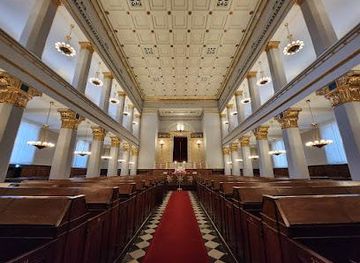
Outside, the synagogue is characterized by simple, almost austere, Neoclassical lines. The composition is symmetrical, with understated ornament and a measured rhythm of windows and blind arches. A row of twelve pilaster‑like elements on the façade evokes the twelve tribes of Israel, a quiet but powerful symbol embedded in the architecture.Inside, the mood shifts dramatically. Hetsch used Egyptian Revival motifs around the ark and in the ceiling decoration, a style that was fashionable across Europe at the time. Columns with stylized capitals, strong vertical banding and richly painted surfaces frame the focal point at the eastern end. The long central nave, flanked by galleries, draws the eye forward to the Torah ark, creating a sense of procession and gravitas that contrasts with the modest exterior.A living center of Jewish faith and memory
Beyond its architectural interest, Københavns Synagoge is a living religious space. Regular services follow Orthodox tradition, with men and women seated separately and Hebrew prayer echoing beneath the painted ceiling. Major Jewish holidays bring particular intensity: candles glowing for the High Holy Days, festive melodies at Simchat Torah, and the quiet light of memorial yahrzeit candles.The building also bears the marks of more turbulent times. It has stood through the rescue of Danish Jews during the Second World War and later acts of violence, including a bomb attack in the 1980s and a deadly shooting nearby in 2015. Security is visibly present, a reminder that this elegant 19th‑century sanctuary is also a site of resilience and vigilance.Visiting with respect and curiosity
For visitors, the synagogue offers a chance to step into the story of Jewish Copenhagen. Guided visits, when available, often explain ritual objects, the layout of the bimah and ark, and the meaning behind the decorative program. The interior’s soft light, colored details and wooden furnishings create an atmosphere that is both solemn and welcoming.Modest dress and quiet behavior are essential, especially if a service is underway. Photography may be restricted and entry can be limited on Jewish holidays or for security reasons. Even from outside, pausing on Krystalgade to notice the set‑back façade and symbolic columns adds a layer of understanding to the surrounding streets, revealing how a minority community carved out a dignified space for worship at the heart of Copenhagen.Explore the best of what Københavns Synagoge has to offer













More about North Zealand
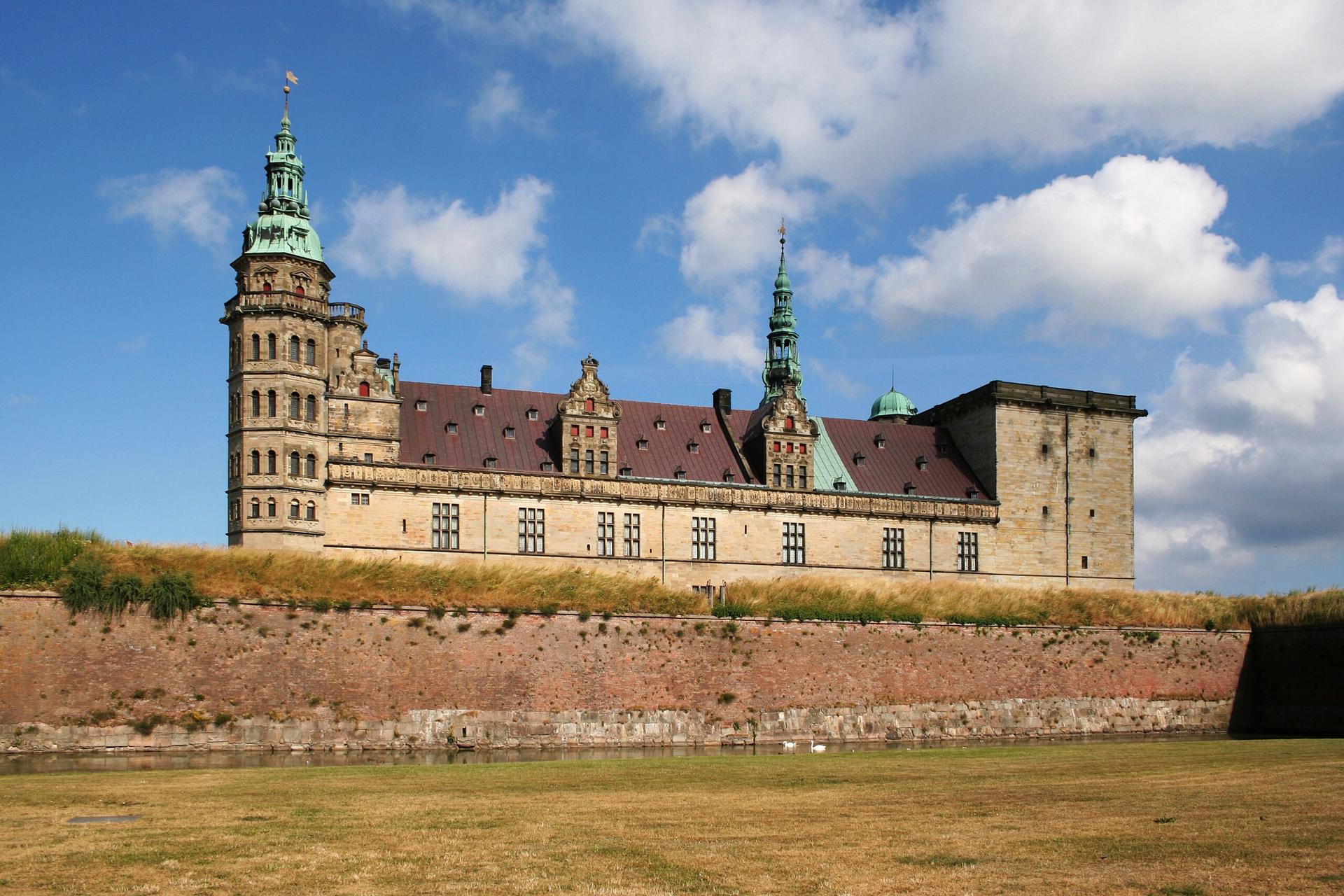
Explore North Zealand, Denmark's enchanting region of castles, beaches, and royal estates, perfect for history buffs, nature enthusiasts, and seaside lovers.
Tell me more about North Zealand
Award-winning modernist concert hall in Copenhagen’s Ørestad, famed for acoustic excellence, innovative design, and unforgettable live music experiences.
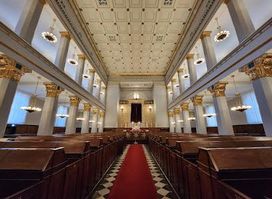
Discreetly tucked into Krystalgade, Copenhagen’s Great Synagogue blends neoclassical calm with Egyptian revival detail, embodying centuries of Jewish life in Denmark.