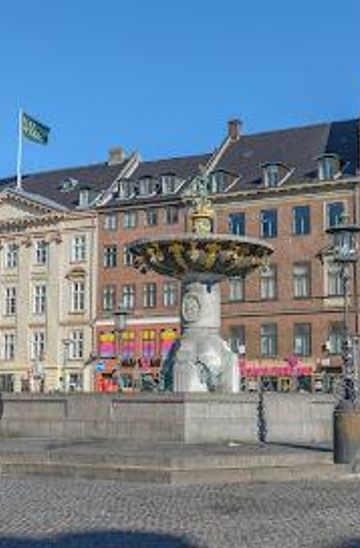
Nytorv
Cobbled, compact and quietly dramatic, Nytorv blends royal-era markets, grim judicial history and Neoclassical authority at the pedestrian heart of old Copenhagen.
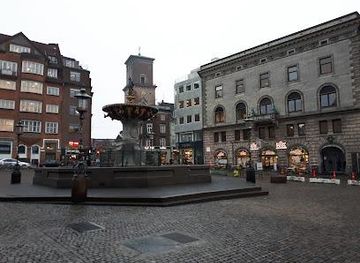
Nytorv is a historic cobbled square in the very heart of Copenhagen’s old town, twinned with neighbouring Gammeltorv and today folded into the bustling Strøget pedestrian zone. Once the city’s meat market and a grim stage for public punishment, it is now framed by the grand Neoclassical façade of the Copenhagen Court House and a mix of historic townhouses, cafés and shops. The open, stone-paved space offers a pause from Strøget’s crowds while keeping you firmly in the city’s urban rhythm.
A brief summary to Nytorv
- Copenhagen, Indre By, 1450, DK
- Duration: 0.5 to 1.5 hours
- Free
-
 Outdoor
- Mobile reception: 5 out of 5

Know before you go
Hi, I'm Eve. Here are a few practical things to know before exploring Nytorv.
- Combine Nytorv with neighbouring Gammeltorv and the Strøget pedestrian street to appreciate how the squares form one continuous urban space at the city’s historic core.
- Take a slow lap around the square to study the Copenhagen Court House façade and spot the enclosed bridges that once carried prisoners between the court and the jail.
- Visit in the early morning or later evening for quieter views and softer light on the façades, especially if you are interested in photography or sketching.
- Use the square as a rest stop: pick up a drink or snack from nearby cafés and sit along the edges to watch daily life flow through the old town.
- In colder months, dress for wind and damp conditions; the square is exposed and can feel significantly cooler than more sheltered side streets.
Do you manage this location?
Take control to get all the benefits, like improved information, better appearance, and stronger visibility across AI-powered discovery. Learn more
Activate your presence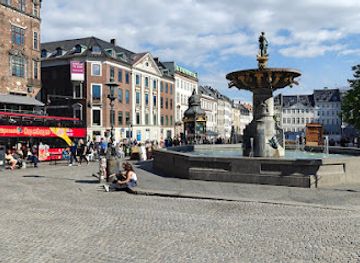
Getting There
-
Metro
From Nørreport Station, take the M1 or M2 metro line one stop to Gammel Strand or two stops to Rådhuspladsen; from either station it is roughly a 10–15 minute level walk through the old town to Nytorv. A single metro ticket within the central zones typically costs around 20–30 DKK, and trains run every few minutes throughout most of the day.
-
Bus
Several city bus routes serve the inner Copenhagen area around Nytorv; journeys from major hubs such as Østerport or the central station generally take 10–20 minutes depending on traffic. Expect to pay around 20–30 DKK for a single ticket within the city zones, with buses operating frequently during the day and less often late at night.
-
Bicycle
From central neighbourhoods like Vesterbro, Nørrebro or Østerbro, cycling to Nytorv usually takes 10–20 minutes along Copenhagen’s dedicated bike lanes. The route is mostly flat, but be prepared for busy intersections in the inner city. Public bike-share schemes and rental bikes are widely available, typically costing from about 50–100 DKK for a few hours’ use.
-
Walking
If you are already in central Copenhagen, such as near City Hall Square or Christiansborg, reaching Nytorv on foot takes around 5–20 minutes depending on your starting point. The route leads through paved streets and pedestrian zones with occasional cobblestones; it is generally easy going, though wheelchair users may find certain older surfaces slightly uneven.
For the on-the-go comforts that matter to you
-
 Restrooms
-
 Drink Options
-
 Drinking Water
-
 Food Options
-
 Seating Areas
-
 Sheltered Areas
-
 Trash Bins
-
 Information Boards
-
 Visitor Center
Discover more about Nytorv
From Royal Marketplace to Urban Crossroads
Nytorv, literally “New Square”, was laid out in the early 17th century when King Christian IV cleared space behind the old city hall to create a dedicated market for butchers. For centuries, hanging carcasses, stalls and the shouts of traders defined this part of Copenhagen, while vegetables and other goods were sold across the way on Gammeltorv. The two squares have always been closely linked, forming a single open space at the core of the medieval city.The calm you encounter today conceals a far harsher past. Public executions once took place here, and until the late 18th century a pillory stood on the square, where branding and whipping were carried out in front of assembled crowds. These darker episodes are long gone, but they add a layer of drama to what might otherwise feel like a purely pleasant urban plaza.Fire, Reinvention and a Monumental Courthouse
Much of what surrounded Nytorv was destroyed in the catastrophic Copenhagen Fire of 1795, including the city hall that once separated the square from Gammeltorv. In the rebuilding that followed, the two spaces were visually fused, and Copenhagen gained one of its most imposing Neoclassical façades. Completed in 1815, the Copenhagen Court House dominates the western edge of Nytorv with tall Ionic columns and a sober, temple-like front.The courthouse was designed by Christian Frederik Hansen, a leading architect of the time, and served not only as a court but also as the city hall until the early 20th century. Its clean lines and strict symmetry still convey authority and order. Look up and you will also notice enclosed bridges linking the main building to former jail facilities behind; these passageways once carried prisoners to and from their hearings and have been dubbed a local “Bridge of Sighs”.Architecture in the Details
Beyond the courthouse, a closer look at the buildings around Nytorv reveals a patchwork of architectural eras. Many façades date from the early 1800s rebuilding period, with restrained classical ornament, tall windows and muted colours typical of Copenhagen’s historic centre. Ground floors have long been given over to shops and cafés, while upper floors remain residential or house small offices.Although the square itself is fairly austere—a broad cobbled surface with only a few trees and simple seating—it invites you to take in the vertical frame of the city: cornices, rooflines and dormer windows stacked around its edges. The slight slope towards Gammeltorv helps you grasp how both squares are really one continuous urban room.From Traffic Choked to Pedestrian Calm
In the early 20th century, the age of the automobile transformed Nytorv from marketplace into traffic space, with cars cutting across the square and parking encroaching on the cobbles. That changed in the 1960s, when Copenhagen pioneered the Strøget pedestrian zone. With motor vehicles diverted, Nytorv was reimagined as part of a generous car-free corridor stretching across the inner city.Today the square functions as a breathing space along this pedestrian spine. Office workers cross it at speed, shoppers thread between buskers and street performers, and small clusters of people linger at the edges with takeaway coffee. Seasonal decorations and occasional temporary installations animate the open expanse without overwhelming its simple layout.Everyday Life at the City’s Historic Core
For visitors, Nytorv is less about a single must-see monument and more about atmosphere. It is a place to pause between museums and boutiques, to feel the layered history of Copenhagen underfoot while still immersed in daily city life. The soundscape blends footsteps on stone, fragments of conversation in Danish and many other languages, and the distant rattle of bicycles.Wander slowly and you begin to notice small details: the worn edges of paving stones, subtle level changes between the two squares, and the way sunlight finds its way between façades at different times of day. With Gammeltorv’s ornate Caritas Fountain just a few steps away and the constant flow of Strøget on either side, Nytorv offers a compact lesson in how Copenhagen has grown, rebuilt and reinvented itself over four centuries.Stories Hidden in a Modest Square
Nytorv has also been home to writers and thinkers, including Ludvig Holberg, who lived on the border between the two squares in the 18th century and wryly contrasted elegant Gammeltorv with the more macabre scenes linked to Nytorv’s pillory and scaffold. Such stories add a literary dimension to the space and hint at the conversations that have unfolded here over generations.Standing in the middle of the square, it is easy to imagine carts rolling in with meat from the countryside, guards leading prisoners under the courthouse arch, or civic officials hurrying to debates that helped shape the modern city. Yet despite this weight of history, the square remains unpretentious—a modest, workaday heart to a capital that continues to evolve around it.Explore the best of what Nytorv has to offer













More about North Zealand
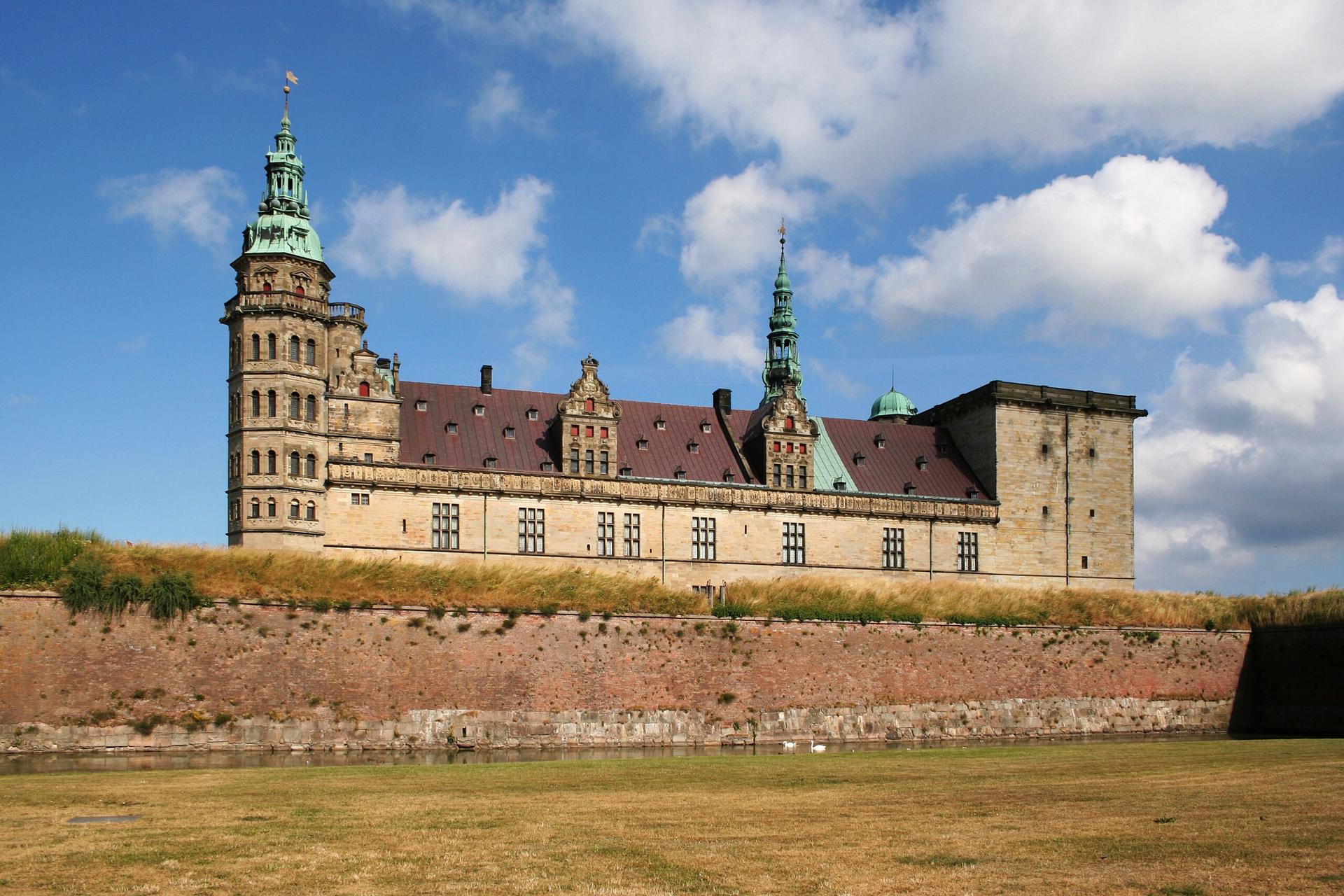
Explore North Zealand, Denmark's enchanting region of castles, beaches, and royal estates, perfect for history buffs, nature enthusiasts, and seaside lovers.
Tell me more about North Zealand
A short, atmospheric side street in Copenhagen’s Old Town, where historic façades, independent boutiques and relaxed cafés create a cosy alternative to Strøget.

Stroll the storied harbor promenade, discover Copenhagen’s iconic Little Mermaid, lush parks, and maritime sculptures along the scenic Langelinie waterfront.