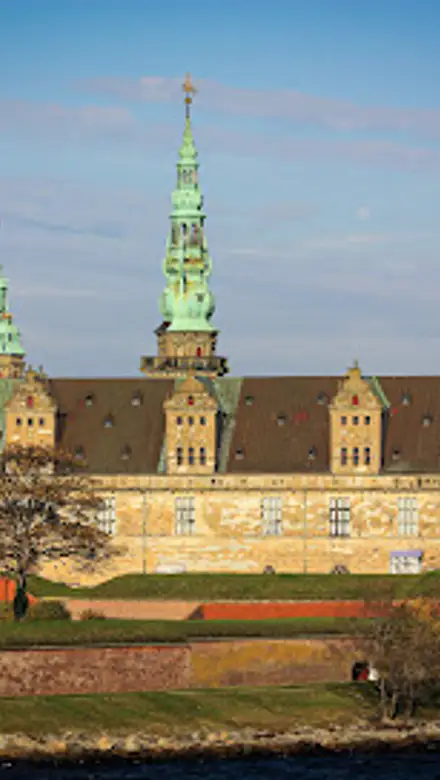
Kronborg Castle, Helsingor Travel Guide
Free Guide: Renaissance fortress, sea gate to the Baltic and Shakespeare’s Elsinore in one atmospheric UNESCO-listed castle above the Øresund Strait.


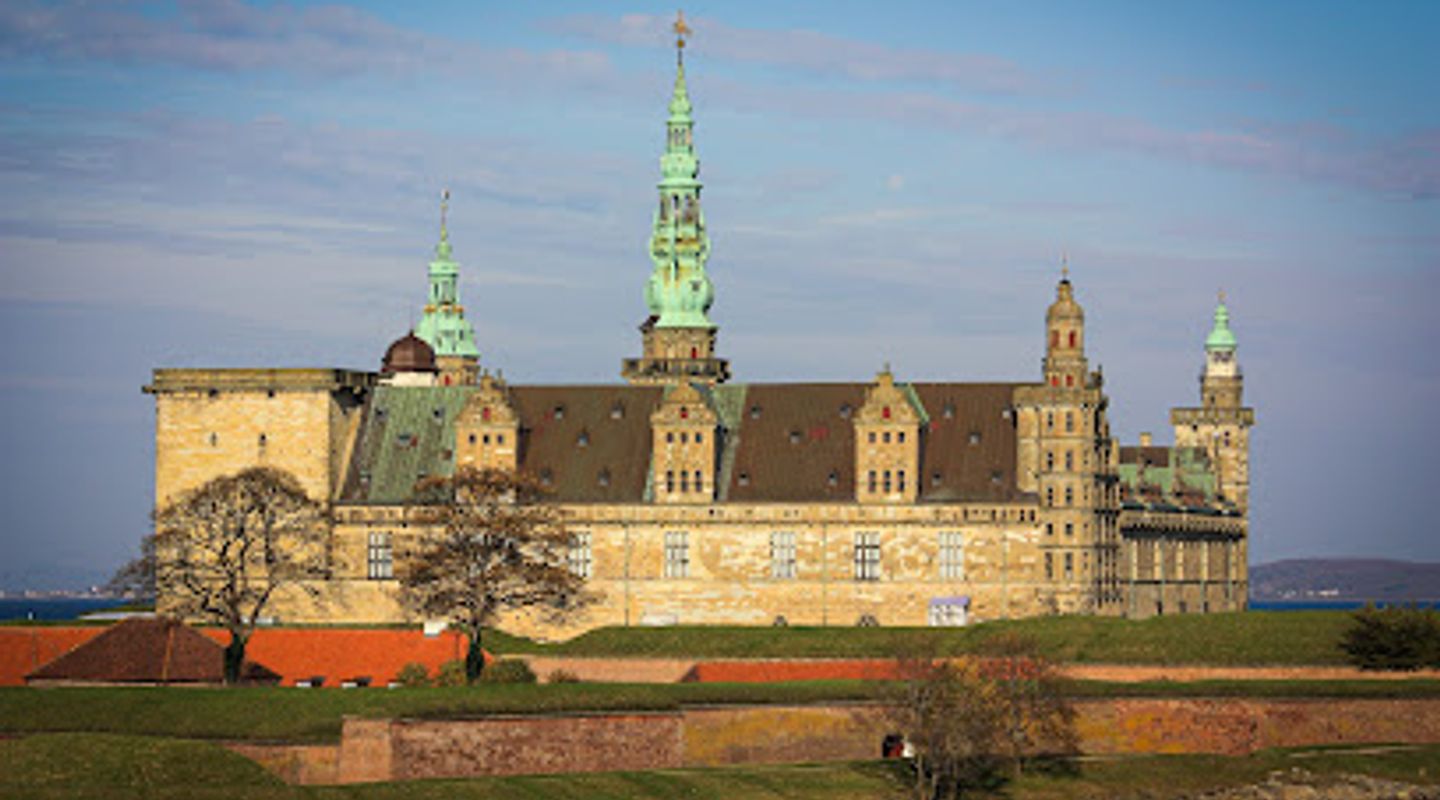
A brief summary of Kronborg Castle
Renaissance fortress, sea gate to the Baltic and Shakespeare’s Elsinore in one atmospheric UNESCO-listed castle above the Øresund Strait.
Kronborg Castle rises at the narrowest point of the Øresund Strait, where Denmark meets Sweden, its green copper spires and sandstone walls guarding the sea. This UNESCO-listed Renaissance stronghold is famed as Shakespeare’s Elsinore from Hamlet and once controlled lucrative tolls on passing ships. Inside, grand halls, royal chambers, a preserved chapel and eerie casemates reveal centuries of power, war and legend, including the sleeping hero Holger Danske beneath the fortress.
On-site amenities
 Restrooms
 Drink options
 Drinking water
 Food options
 Seating areas
 Sheltered areas
 Trash bins
 Information boards
 Visitor centre
Opening hours
- Every day10 am–6 pm
Opening hours as listed on the venue’s Google Business Profile. Hours can change for services and special events, so check with the venue before you go.
- Address
- Kronborg, 3000 Helsingør
- Phone
- Website
Getting there
Train from Copenhagen
Car from Copenhagen
Train and ferry from Sweden
Regional bus within North Zealand
Discover more about Kronborg Castle
Sea Gate to the Baltic
Kronborg Castle stands on a low headland at the northeastern tip of Zealand, commanding the Øresund Strait at its narrowest point. For centuries, any ship entering or leaving the Baltic had to pass beneath its guns. From here, Danish kings levied the Sound Dues, a toll that made the crown immensely wealthy and turned the nearby town of Helsingør into one of northern Europe’s busiest ports. The setting is still dramatic today: ramparts, moats and cannon-lined bastions frame wide views across the water to the coast of Sweden.The site’s strategic role predates the present castle. In the 1420s, King Eric of Pomerania built the fortress Krogen here, using it to control maritime traffic and enforce the tolls. Later monarchs refashioned and expanded the stronghold, but parts of those medieval walls remain embedded within the current structure, a reminder that this elegant palace grew out of a hard-edged military outpost.
Renaissance Splendour and Royal Power
Between 1574 and 1585, King Frederik II transformed the older fortress into a lavish Renaissance residence worthy of Denmark’s ambitions. Flemish architects and craftsmen created a four-winged castle around a spacious courtyard, with pale sandstone facades, horizontal bands and richly carved ornaments. Copper-clad towers and spires punctuate the skyline, giving Kronborg its distinctive silhouette that can be seen far out at sea.Inside, the highlight is the Great Hall, an immense banqueting room that was once among the largest in northern Europe. Here, kings entertained diplomats, merchants and visiting nobles beneath painted ceilings and glittering chandeliers. Elsewhere, intricately woven tapestries, ceremonial rooms and royal apartments speak of a court that projected prestige as much as military might. Although a devastating fire in 1629 ravaged much of the interior, later reconstructions preserved the overall Renaissance character while adding Baroque touches.
Fortress, Garrison and World Heritage
Kronborg’s beauty was always balanced by its defensive purpose. The castle is encircled by ramparts, ravelins and moats designed according to the military thinking of the 16th and 17th centuries. Bastions pushed out into the landscape gave artillery commanding fields of fire over the sea and surrounding approaches. Additional fortifications under later kings further hardened the site, turning it into one of the most formidable strongholds in the region.After royal life gradually moved elsewhere, the complex shifted from palace to barracks. From the late 18th century into the early 20th century, Kronborg housed soldiers and military storage, a use that ironically helped preserve much of the external structure. In the 1900s it was carefully restored and opened as a historical monument. Its exceptional state of conservation and its role in northern European history led to inscription as a UNESCO World Heritage Site in 2000, recognising both its architectural value and its impact on maritime trade.
Hamlet, Holger Danske and Living Legends
Beyond its brick and stone, Kronborg lives powerfully in stories. Around 1600, William Shakespeare chose the castle as the setting for his tragedy Hamlet, anglicising Helsingør as Elsinore. Whether the playwright ever saw the fortress is unknown, but tales of lavish feasts, court intrigue and the castle’s commanding location clearly reached London. Today the association is inescapable: character names, famous lines and scenes echo as you move through courtyards, chambers and the windswept ramparts.In the gloomy casemates beneath the castle, another legend waits. Here sits the statue of Holger Danske, the mythical warrior who, according to Danish lore, will awaken should the kingdom be in mortal danger. The dim light, low ceilings and echoing corridors heighten the sense of drama, contrasting sharply with the bright rooms above. Between royal splendour, military engineering and enduring myths, Kronborg offers a layered experience in which history, literature and national identity overlap.
Exploring Courtyards, Chapel and Casemates
A visit typically unfolds in distinct stages. You first cross the outer works and moats, ascending to the inner fortress where cobbled paths lead into the main courtyard. From here, doorways open onto the royal apartments, the great ballroom and small exhibitions on trade, warfare and life at court. The castle chapel, remarkably spared by the 17th-century fire, preserves rich woodcarving, an ornate altar and organ, giving a glimpse of early modern religious art.Outside again, the ramparts invite slow walks with sweeping views over the Øresund, cannons pointing toward Sweden as they once did when foreign fleets approached. Descending into the casemates, you exchange sea wind for cool, damp air, threading through tunnels that once sheltered soldiers and stored supplies. Taken together, these layers of experience—sunlit towers, hushed chapel, echoing halls and subterranean passages—make Kronborg a place where you can feel the weight of history while still sensing the restless energy of a working fortress and a stage for timeless drama.
Evendo Review Centre
 Google
Guest reviews
Best time to go
Quietest: Jan, Feb & Nov · before 8am or at 10pm
Busy times are Evendo estimates for a typical year, to help you plan. Actual crowds vary with events, school holidays and the weather.
Explore Kronborg Castle on the map
A handpicked selection of must-see spots near Kronborg Castle, mapped for you.
Get your free copy of our complete guide to Kronborg Castle, delivered straight to you.
Everything on this page, from opening hours and how to get there to Eve’s tips and the best time to go, in one PDF you can read offline, print or share.
Already have an account? Sign in
Your Kronborg Castle guide is ready.
We'll send it to · Not you? Sign out

Getting your guide ready…
We are putting together a fresh copy of the Kronborg Castle guide. This can take up to a minute.
This can take a few moments. If your browser asks, choose Allow so the download can start. You'll find the guide in your Downloads folder.
Nothing happened? Download it again
Sorry, the guide is taking longer than usual. Please try again in a minute, or get it by email instead.
Unlock the best of Kronborg Castle
Skip-the-line tickets, guided tours with entry, and walking tours of the area, booked in a few clicks.




Other nearby places you may find interesting
The closest places of the same kind, if this one is not quite what you had in mind.
-
-
-
-
-


Swipe for more places
More to explore near Kronborg Castle

 Best experiences near Kronborg Castle
 Best hotels near Kronborg Castle
 Best landmarks near Kronborg Castle
 Best attractions near Kronborg Castle
 Best shops near Kronborg Castle
 Best restaurants near Kronborg Castle
 Best bars near Kronborg Castle
Do you manage this location?
Take control to get all the benefits, like improved information, better appearance, and stronger visibility across AI-powered discovery.
Explore more

Explore more of Helsingor
Discover Helsingør, Denmark's historic coastal city, home to Kronborg Castle and a vibrant cultural scene, offering a blend of history, scenic beauty, and local charm.
Explore Helsingor
Explore more of Denmark
Discover Denmark: A perfect blend of history, modern design, and the cozy concept of hygge. Explore vibrant cities, serene landscapes, and world-class cuisine.
Explore Denmark