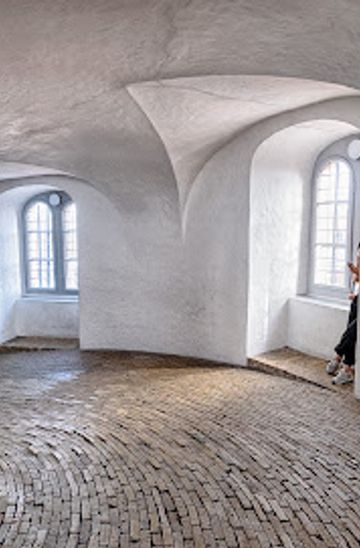
The Round Tower (Rundetaarn), Copenhagen
Copenhagen’s 17th‑century Round Tower pairs a graceful spiral climb with centuries of science, stories and one of the city’s most atmospheric rooftop views.
Rising above the narrow streets of Copenhagen’s old town, the Round Tower is a 17th‑century observatory and one of Denmark’s most distinctive landmarks. Built by King Christian IV in 1642, it is famous for its wide spiral ramp that winds gently up through the brick interior, leading past the vaulted Library Hall to a rooftop platform with sweeping 360‑degree views over the city’s rooftops and spires. Part science monument, part cultural venue, it remains a living symbol of Copenhagen’s golden age.
A brief summary to The Round Tower
- Købmagergade 52A, Copenhagen, Indre By, 1150, DK
- Click to display
- Click to display
- Duration: 1 to 2 hours
- Budget
-
 Indoor
- Mobile reception: 5 out of 5
- Monday 10 am-8 pm
- Tuesday 10 am-8 pm
- Wednesday 10 am-8 pm
- Thursday 10 am-8 pm
- Friday 10 am-8 pm
- Saturday 10 am-8 pm
- Sunday 10 am-8 pm

Know before you go
Hi, I'm Eve. Here are a few practical things to know before exploring The Round Tower.
- Aim for clear weather if you want the best 360‑degree views; on fine days you can see far beyond the old town rooftops.
- Wear comfortable shoes for the 200‑metre spiral ramp and final staircases, which can feel surprisingly demanding for tired legs.
- Pause in the Library Hall on the way up to explore current exhibitions and give yourself a mid‑climb breather.
- If visiting in the colder months, check in advance for evening observatory openings to combine the climb with stargazing.
- The interior ramp can be cool and draughty outside high summer; bringing a light extra layer makes lingering more comfortable.
Do you manage this location?
Take control to get all the benefits, like improved information, better appearance, and stronger visibility across AI-powered discovery. Learn more
Activate your presenceOther nearby places you may find interesting

Getting There
-
Metro and walk from Nørreport
From Nørreport Station, Copenhagen’s central metro and S‑train hub, it typically takes 5–8 minutes on foot to reach the Round Tower along level, paved pedestrian streets. The metro and S‑trains run frequently throughout the day, and a standard single ticket within the city centre costs roughly 20–30 DKK depending on zone and purchase method. This is the most convenient option if you are staying anywhere along the M1, M2, M3 or M4 metro lines and offers easy access in most weather conditions.
-
City bus to the old town
Several inner‑city bus routes stop near Nørreport and along routes parallel to Købmagergade, from where you walk 5–10 minutes through largely pedestrianised streets to the tower. Travel times within central Copenhagen are usually 10–20 minutes, depending on origin and traffic. A bus ticket within the central zones costs about 20–30 DKK and can be bought via ticket machines, apps or contactless payment. Buses offer sheltered travel in rain or cold, but note that services can be less frequent late at night and on some holidays.
-
Bicycle in the city centre
Copenhagen’s extensive cycle lanes make it straightforward to reach the Round Tower by bike from most central neighbourhoods in 5–20 minutes. You ride on dedicated lanes for most of the way, then dismount close to the pedestrianised section around Købmagergade and use public bike racks nearby. Many hotels offer bike rental, and city bikes or shop rentals typically cost around 100–150 DKK for a full day. This option is weather‑dependent and best suited to confident cyclists comfortable with busy but well‑organised urban traffic.
-
Taxi within central Copenhagen
Taxis can drop you close to the tower on adjacent streets just outside the fully pedestrianised area. From central districts such as Vesterbro, Østerbro or Christianshavn, journeys usually take 10–20 minutes, longer at peak times. Fares vary with distance and traffic, but a typical ride within the inner city often falls in the 120–220 DKK range. Taxis provide a comfortable option in bad weather or for those with limited mobility, though the final short walk is along uneven cobblestones that may require extra care.
For the on-the-go comforts that matter to you
-
 Restrooms
-
 Drink Options
-
 Drinking Water
-
 Food Options
-
 Seating Areas
-
 Sheltered Areas
-
 Trash Bins
-
 Information Boards
-
 Visitor Center
Discover more about The Round Tower
A royal tower in the heart of the old city
The Round Tower rises from busy Købmagergade, its warm yellow and red brick drum embedded in the dense fabric of Copenhagen’s historic centre. Commissioned by King Christian IV and completed in 1642, it formed part of the Trinitatis complex, which combined an astronomical observatory, a university library and the adjacent church in a single ambitious project. The tower’s sturdy masonry and round profile give it a fortress-like presence, yet the gilded monogram and ornate rebus on the façade reveal a more refined message of learning, piety and royal power.From street level, the entrance feels almost modest for such an emblematic monument. Once inside, the sound of the city softens, replaced by the echo of footsteps on brick and the occasional murmur from the ramp above. Narrow windows pierce the thick walls, offering brief, framed glimpses of gabled roofs and church towers as you begin the slow ascent.Climbing the famous spiral ramp
Instead of stairs, most of the way up is a 209‑metre helical ramp, paved with pale bricks set on edge and spiralling 7½ times around the hollow core of the tower. The slope is gentle but constant, so you feel the height accumulating almost imperceptibly as the inner wall curves in and the outer wall opens to ever higher views. Historically, this design made it possible to haul heavy instruments and books to the observatory and library by cart; stories even tell of horses and carriages being driven to the top in centuries past.Today, the ramp creates a distinctive rhythm for the visit. Light and shadow shift as you pass tall arched windows and alcoves. Small side rooms occasionally open off the spiral, some housing small displays that shed light on the tower’s history, construction and astronomical legacy. Near the top, the ramp gives way to a broad wooden stair and a tighter stone staircase, underlining that this is still very much a building from another era.The Library Hall and a living cultural space
Roughly halfway up, the passage opens into the former university library, a long, bright hall perched above the nave of Trinitatis Church. From the mid‑17th century until the 19th, this space held thousands of scholarly volumes, symbolising Copenhagen’s role as an intellectual centre. After a careful restoration in the late 20th century, the hall was reborn as a flexible cultural venue.Today, the Library Hall is used for changing exhibitions, concerts, talks and other events that draw on the tower’s blend of science, history and art. High whitewashed vaults, timber floors and tall windows create a calm, almost monastic atmosphere, while modern lighting and exhibition structures keep the space adaptable. Even when no event is taking place, it offers a serene pause in the climb, inviting you to linger a little among artworks, models and historical objects before continuing upwards.A historic observatory above the rooftops
At the very top sits one of Europe’s oldest functioning observatory buildings, still used for public stargazing on selected evenings in the colder months. The current observatory interior dates from the early 20th century, with classic instruments and a dome that can be opened to the night sky. In an age of light pollution and powerful satellite telescopes, it serves as both a scientific relic and a gateway to basic astronomy, helping visitors connect the tower’s past role with today’s understanding of the cosmos.Outside, the circular viewing platform offers a 360‑degree panorama over Copenhagen’s old Latin Quarter, the spires of churches and City Hall, and, on clear days, all the way towards the harbour districts. A simple metal balustrade, compass points and information panels help you orient yourself. The wind can be brisk, but that only sharpens the sensation of being poised above a compact, low‑rise cityscape.Stories, symbols and architectural quirks
Beyond its striking form, the Round Tower is thick with stories. The Latin and Hebrew rebus band that encircles the upper façade combines royal initials, religious invocations and the year of completion, turning the building itself into a kind of stone inscription. Inside the hollow core of the tower, tales survive of curious youngsters exploring, and of the daring feats of riders and early motorists who attempted to conquer the spiral ramp.Architecturally, the structure is a study in purposeful simplicity: massive brick walls, regularly spaced windows, a single great ramp winding through a cylindrical shell. Yet within this clarity lies ingenuity. The tower successfully combined practical access, symbolic decoration and the precise needs of early modern astronomy, and it continues to serve as observatory, viewpoint and cultural stage. Standing on its roof or tracing the curve of its interior, you feel both the weight of 400 years of history and the ongoing life of Copenhagen unfolding around it.Explore the best of what The Round Tower has to offer













More about North Zealand
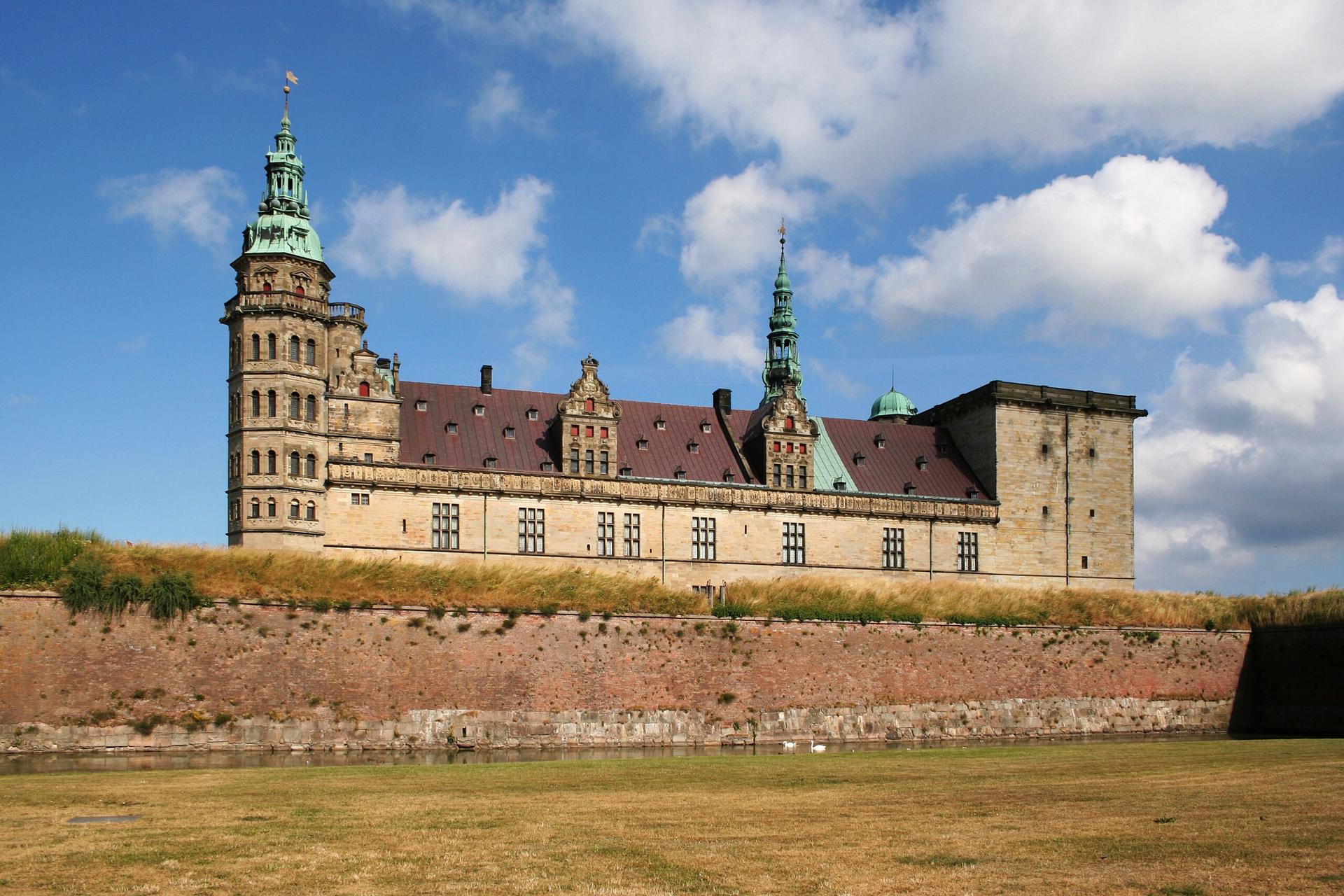
Explore North Zealand, Denmark's enchanting region of castles, beaches, and royal estates, perfect for history buffs, nature enthusiasts, and seaside lovers.
Tell me more about North Zealand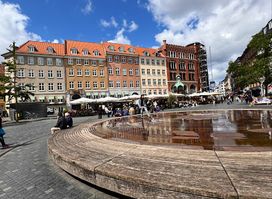
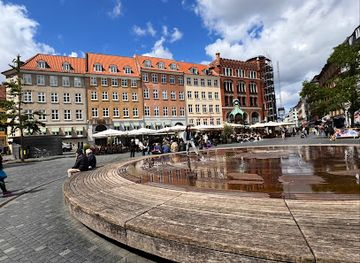
Historic coal market turned buzzing pedestrian square, where colourful façades, cafés and a modern fountain stage capture everyday Copenhagen life.
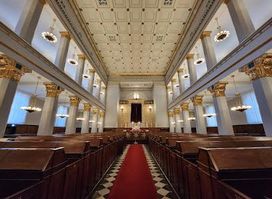
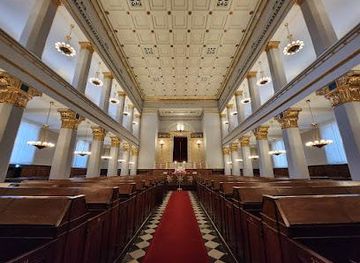
Discreetly tucked into Krystalgade, Copenhagen’s Great Synagogue blends neoclassical calm with Egyptian revival detail, embodying centuries of Jewish life in Denmark.