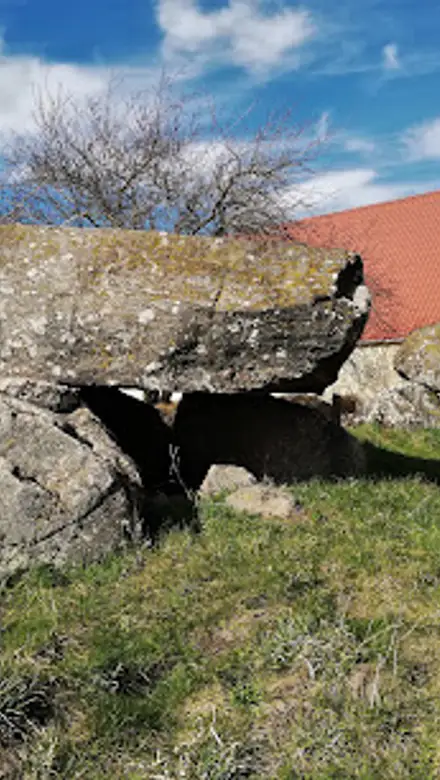
Breddysse Stones, Slagelse Travel Guide
Free Guide: A modest Neolithic dolmen in the fields near Slagelse, where ancient burial stones, open skies, and quiet farmland meet in a quietly powerful landscape.


A brief summary of Breddysse Stones
A modest Neolithic dolmen in the fields near Slagelse, where ancient burial stones, open skies, and quiet farmland meet in a quietly powerful landscape.
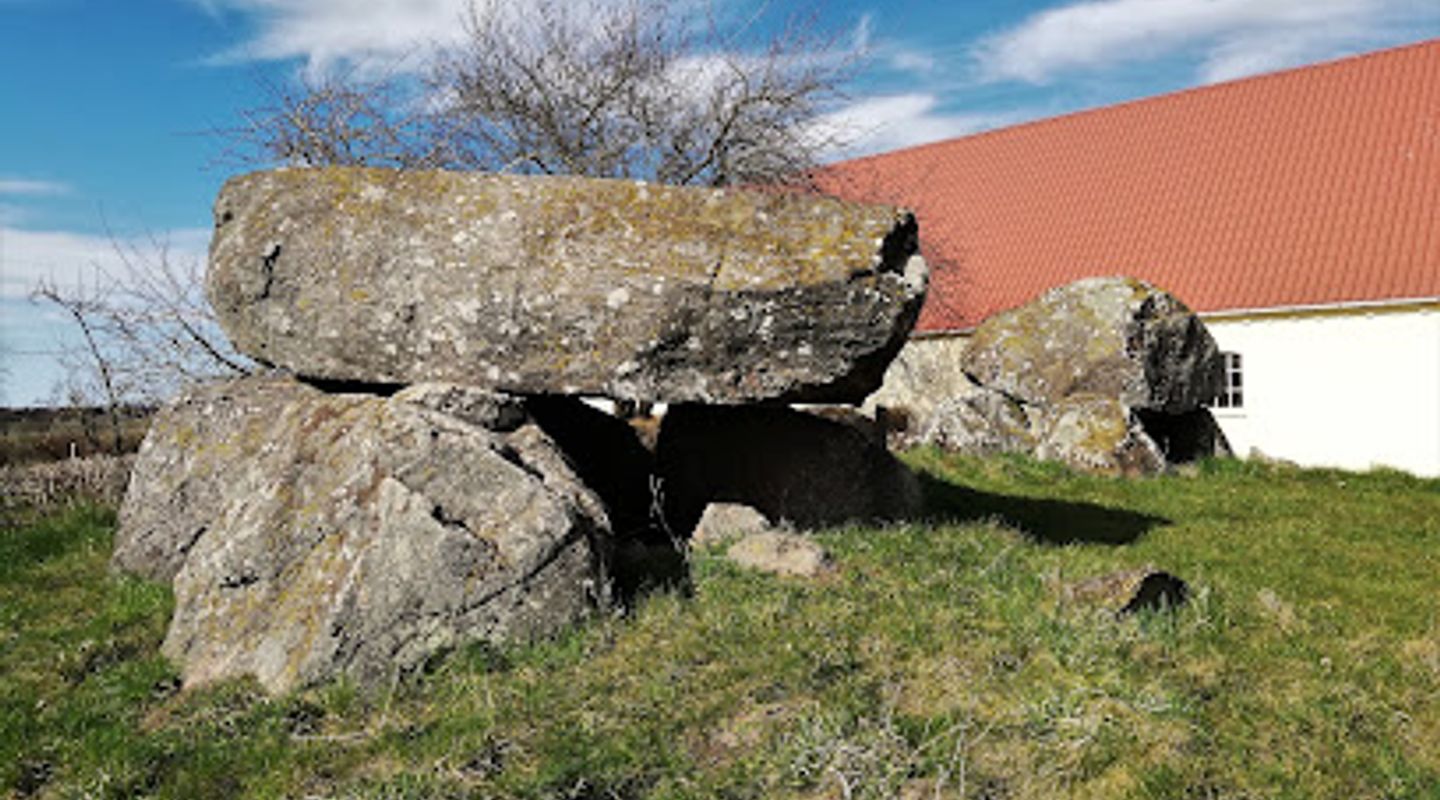
Set in quiet countryside near Slagelse, the Breddysse Stones are a well‑preserved Neolithic dolmen close to the village of Kirke Stillinge. This modest but evocative burial monument, formed by a large capstone supported on upright stones, offers an intimate glimpse into ritual life more than 5,000 years ago. Surrounded by fields and big skies, it is a tranquil stop for those interested in prehistory, landscape, and the slower rhythms of rural Zealand.
Opening hours
- Every dayOpen 24 hours
Opening hours as listed on the venue’s Google Business Profile. Hours can change for services and special events, so check with the venue before you go.
- Address
- Støvlebækvej 8, 4200 Slagelse
Getting there
Car from central Slagelse
Bicycle from Slagelse
Bus plus short walk
Discover more about Breddysse Stones
Ancient Stones in the Fields of Zealand
Breddysse Stones, also known as Kirke Stillinge Breddysse, sit in gently rolling farmland west of Slagelse, where modern Denmark fades into a much older world. This compact megalithic tomb dates back to the Neolithic period, when the first farming communities on Zealand began raising monumental stone graves to honour their dead. The site lies close to the village of Kirke Stillinge, surrounded by fields, hedgerows, and distant farmsteads.Rather than dramatic cliffs or towering mounds, the appeal here is subtle: a cluster of weathered stones emerging from the grass, with the wind moving across the crops and skylarks overhead. It is the kind of place where the scale of prehistory feels human and approachable, making it easy to imagine small farming communities gathering here for burials and seasonal rites.
The Structure of a Neolithic Dolmen
Breddysse is a classic dolmen, a type of stone burial chamber built across northern Europe between roughly 3500 and 3000 BCE. Its defining feature is a single substantial capstone, set horizontally on a ring of upright support stones to form a small inner chamber. Over this, there would originally have been an earthen or stone mound, now largely eroded, which turned the monument into a low barrow in the surrounding landscape.The chamber itself is modest in size, reflecting its role as a collective grave rather than a grand interior space. Archaeological finds from similar dolmens on Zealand suggest that such chambers often contained multiple burials, pottery vessels, stone tools, and offerings of food or drink. Even without visible artifacts today, the arrangement of the stones speaks of careful planning, shared beliefs, and considerable effort in moving and positioning heavy boulders with only simple technology.
Prehistoric Neighbours and Shared Landscapes
Breddysse does not stand in isolation. The countryside around Slagelse is dotted with other megalithic tombs and barrows, forming a prehistoric ritual landscape that once signalled territory, ancestry, and continuity across generations. Nearby long barrows and dolmens show how communities reused favoured sites, aligning monuments along ridges and overlooking fertile farmland.Today, that wider context is still palpable in the views from the stones. The fields that now produce grain and grass once supported early cattle and crops, and the route you follow from Slagelse passes close to other prehistoric sites. Even if you only visit Breddysse itself, it offers a window onto a region where the transition from hunting and gathering to settled farming left enduring marks in stone.
A Quiet Stop for Reflection and Photography
Visiting Breddysse is a low‑key experience. There are no grand visitor facilities, and the atmosphere depends on the changing light, weather, and seasons. On bright days the stones are sharply outlined against blue skies and yellow fields; in mist or drizzle they take on a more introspective, almost mysterious character. The open setting makes it appealing for simple landscape photography, capturing the dolmen against horizons, clouds, and the textures of grass and stone.Because of its small scale, many visitors spend only a short time at the monument itself, but it pairs well with a broader exploration of Slagelse’s historic surroundings. Combined with other tombs, nearby churches, or the ruins of medieval sites, Breddysse becomes part of a longer story of how people on Zealand have shaped, used, and reimagined this landscape for thousands of years.
Respecting a Burial Monument
Although access is informal, it is important to remember that Breddysse is first and foremost a grave. The stones were raised to house and honour the dead, and they retain that function in a cultural sense even after millennia. Walking gently, keeping to obvious paths or trampled ground, and avoiding climbing on the capstone help to preserve the monument and its immediate surroundings.The setting also offers a chance to pause and listen: to the wind in the crops, the calls of birds, and the faint sounds of distant farm work. In that quiet, the dolmen’s simple form does not feel like a ruin so much as a durable marker of continuity. For many travellers, the value of Breddysse lies in precisely this combination of modest scale, deep time, and an unhurried rural atmosphere.
Evendo Review Centre
 Google
Guest reviews
Best time to go
Quietest: Jan, Feb & Dec · before 8am or at 7pm
Busy times are Evendo estimates for a typical year, to help you plan. Actual crowds vary with events, school holidays and the weather.
Explore Breddysse Stones on the map
A handpicked selection of must-see spots near Breddysse Stones, mapped for you.
Get your free copy of our complete guide to Breddysse Stones, delivered straight to you.
Everything on this page, from opening hours and how to get there to Eve’s tips and the best time to go, in one PDF you can read offline, print or share.
Already have an account? Sign in
Your Breddysse Stones guide is ready.
We'll send it to · Not you? Sign out

Getting your guide ready…
We are putting together a fresh copy of the Breddysse Stones guide. This can take up to a minute.
This can take a few moments. If your browser asks, choose Allow so the download can start. You'll find the guide in your Downloads folder.
Nothing happened? Download it again
Sorry, the guide is taking longer than usual. Please try again in a minute, or get it by email instead.
Other nearby places you may find interesting
The closest places of the same kind, if this one is not quite what you had in mind.
-
Kong Slags Dysse Ancient stone burial mound with panoramic views, echoing Denmark's Neolithic heritage.
-
Stendysse ved Blæsinge A modest Neolithic stone tomb in the fields near Blæsinge, offering a quiet roadside glimpse into western Zealand’s Stone Age landscape and rituals.
-
Rytterstatue af Christian IX Bronze king on horseback surveys Slagelse from Schweizerpladsen—a citizen-honored tribute to Christian IX's enduring reign, sculpted with poised majesty.
-
RAF Memorial Stone Small rural monument, big wartime story: a quiet Danish field where seven RAF airmen are remembered with a single steadfast stone.
-
Mindesten for Hans Tausen A modest granite stone in a quiet Slagelse green, marking the birthplace of Denmark’s Lutheran Reformation story at the former Antvorskov monastery.
Swipe for more places
More to explore near Breddysse Stones

 Best experiences near Breddysse Stones
 Best hotels near Breddysse Stones
 Best landmarks near Breddysse Stones
 Best attractions near Breddysse Stones
 Best shops near Breddysse Stones
 Best restaurants near Breddysse Stones
 Best bars near Breddysse Stones
Do you manage this location?
Take control to get all the benefits, like improved information, better appearance, and stronger visibility across AI-powered discovery.
Explore more
Explore more of Slagelse
Discover Slagelse: A captivating blend of Viking history, vibrant culture, and natural beauty on the charming island of Zealand, Denmark.
Explore Slagelse
Explore more of Denmark
Discover Denmark: A perfect blend of history, modern design, and the cozy concept of hygge. Explore vibrant cities, serene landscapes, and world-class cuisine.
Explore Denmark