Kaalund Monastery, Kalundborg Travel Guide
Free Guide: A mellow yellow former Franciscan monastery turned manor and town hall, Kaalund Monastery quietly threads 800 years of Kalundborg history into everyday civic life.


A brief summary of Kaalund Monastery
A mellow yellow former Franciscan monastery turned manor and town hall, Kaalund Monastery quietly threads 800 years of Kalundborg history into everyday civic life.
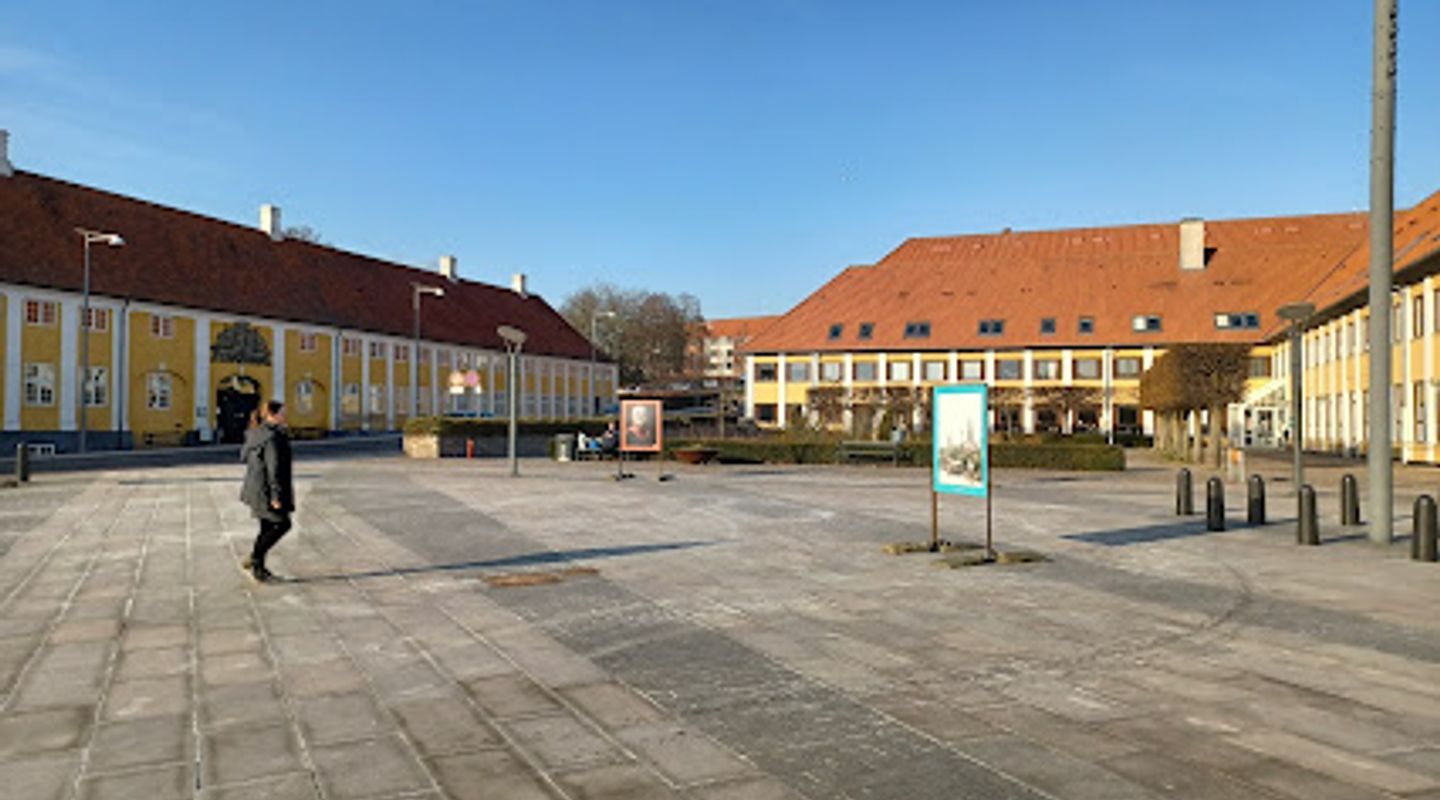
Kaalund Monastery in Kalundborg is a historic former Franciscan house turned manor and civic building, easily recognised by its warm yellow-and-white facades set beside a small garden. Established as a monastery in 1239, the medieval convent was later dissolved after the Reformation, and the current main building dates from the mid‑18th century. Today it houses municipal offices and citizen services, but its exterior, courtyard feel and setting in Kalundborg’s old town make it a characterful stop on a walk between the five‑towered Church of Our Lady and the harbour.
On-site amenities
 Restrooms
 Seating areas
 Trash bins
 Information boards
Opening hours
- Mon10 am–2 pm
- Tue10 am–2 pm
- Wed10 am–2 pm
- Thu10 am–5 pm
- Fri10 am–12 pm
- SatClosed
- SunClosed
Opening hours as listed on the venue’s Google Business Profile. Hours can change for services and special events, so check with the venue before you go.
- Address
- Klosterparkvej 7, 4400 Kalundborg
- Phone
Getting there
Train and short walk from Kalundborg Station
Local bus within Kalundborg
Car or taxi within north‑western Zealand
Discover more about Kaalund Monastery
From Franciscan Foundation to Civic Landmark
Kaalund Monastery traces its origins to 1239, when a Franciscan community settled here on the edge of what would become medieval Kalundborg’s high town. For nearly three centuries, friars prayed, taught and offered care to the poor and sick, anchoring religious life in a town that was growing in political importance. Their presence linked Kalundborg to the wider European network of mendicant orders and to the new brick‑building techniques spreading across Denmark.The Reformation transformed the site. In the 1530s, the Catholic friars were expelled and their properties seized by the crown. The convent complex was gradually reshaped into a secular estate linked to Kalundborg Castle, giving rise to the later name Kalundborg Slots Ladegård. Over time, medieval ranges were rebuilt or demolished, and by the 18th century the focus had shifted from cloistered devotion to estate management and civic representation.
An Elegant 18th‑Century Facade with Monastic Echoes
The building you see today is primarily an 18th‑century creation, completed in the 1750s under architect Johan Christian Conradi. Its long, low volumes and gently pitched roofs are characteristic of Danish manor architecture of the period, while the yellow walls with white trimming give it a warm, almost sunlit presence even on an overcast day. The symmetry is restrained rather than grand, matching Kalundborg’s modest scale.Although the medieval monastery has largely vanished above ground, the site still hints at its earlier life. The courtyard‑like arrangement, the sense of enclosure and the relationship between the house and its garden recall the cloister and herb plots that once lay here. Knowing that friars once walked and worked on this ground adds an invisible layer beneath the later plaster and paint, making the building feel older than its 18th‑century facades suggest.
Set Among Cobbled Streets and Medieval Brickwork
Kaalund Monastery sits within easy reach of Kalundborg’s most distinctive monument, the five‑towered Church of Our Lady, and the cluster of medieval streets known as Højbyen, the High Town. From the monastery, it is only a short stroll to half‑timbered houses, remnants of fortifications and the red‑brick bulk of the church that once dominated both spiritual and political life in the region.This tight urban fabric gives the building much of its charm. The contrast between the monastery’s smooth plastered walls and the rougher cobbles and bricks of the old town around it is striking. At certain angles you can catch views that layer centuries: the Baroque‑era house in the foreground, the medieval church rising behind it and, beyond that, the modern town and harbour. It is a setting that encourages slow wandering rather than box‑ticking sightseeing.
A Working House with Quiet Corners
Today, Kaalund Monastery functions mainly as an administrative building and citizen service centre for Kalundborg Municipality. On weekdays you may notice locals arriving for appointments, cycling up or pausing to chat outside the entrance. This lived‑in quality makes the site feel less like a static monument and more like an evolving civic space that has adapted to the needs of each era.Even so, there are usually quiet corners around the garden and along Klosterparkvej where you can pause, look up at the windows and imagine earlier occupants: friars carrying books, estate workers delivering grain, officials arriving with ledgers. The blend of bureaucracy and deep history is part of the building’s appeal, showing how former sacred spaces in Denmark often found new life within the structures of the modern state.
A Gentle Stop on a Historical Stroll
For visitors, Kaalund Monastery is less about interiors and more about atmosphere and context. It is an ideal pause on a walking circuit that links the harbour, Kalundborg Museum, the High Town streets and the Church of Our Lady. The small garden and the building’s human scale invite you to linger briefly, perhaps to take a photograph framed by greenery or to sit nearby and reorient before exploring further.Because it is a functioning office building, access inside can be limited and focused on practical matters rather than exhibition spaces. Nonetheless, understanding its layered story—from Franciscan monastery to royal estate and finally municipal hub—adds depth to any exploration of Kalundborg. It exemplifies how Danish towns weave medieval foundations into everyday life, with history hiding in plain sight behind a coat of yellow paint.
Evendo Review Centre
 Google
Guest reviews
Best time to go
Quietest: Jan, Feb & Nov · before 7am or at 6pm or at 7pm
Busy times are Evendo estimates for a typical year, to help you plan. Actual crowds vary with events, school holidays and the weather.
Explore Kaalund Monastery on the map
A handpicked selection of must-see spots near Kaalund Monastery, mapped for you.
Get your free copy of our complete guide to Kaalund Monastery, delivered straight to you.
Everything on this page, from opening hours and how to get there to Eve’s tips and the best time to go, in one PDF you can read offline, print or share.
Already have an account? Sign in
Your Kaalund Monastery guide is ready.
We'll send it to · Not you? Sign out

Getting your guide ready…
We are putting together a fresh copy of the Kaalund Monastery guide. This can take up to a minute.
This can take a few moments. If your browser asks, choose Allow so the download can start. You'll find the guide in your Downloads folder.
Nothing happened? Download it again
Sorry, the guide is taking longer than usual. Please try again in a minute, or get it by email instead.
Other nearby places you may find interesting
The closest places of the same kind, if this one is not quite what you had in mind.
-
-
-
-
-


Swipe for more places
More to explore near Kaalund Monastery

 Best experiences near Kaalund Monastery
 Best hotels near Kaalund Monastery
 Best landmarks near Kaalund Monastery
 Best attractions near Kaalund Monastery
 Best shops near Kaalund Monastery
 Best restaurants near Kaalund Monastery
 Best bars near Kaalund Monastery
Do you manage this location?
Take control to get all the benefits, like improved information, better appearance, and stronger visibility across AI-powered discovery.
Explore more

Explore more of Kalundborg
Discover Kalundborg, a picturesque Danish town with rich history, stunning landscapes, and a vibrant cultural scene. Perfect for nature lovers and history enthusiasts alike.
Explore Kalundborg
Explore more of Denmark
Discover Denmark: A perfect blend of history, modern design, and the cozy concept of hygge. Explore vibrant cities, serene landscapes, and world-class cuisine.
Explore Denmark