Circle Bridge, Koge Travel Guide
A five‑circle pedestrian bridge that turns a simple canal crossing into an artful pause above Copenhagen’s harbour, inspired by sailing ships and city life.
Circle Bridge, or Cirkelbroen, is a striking pedestrian and cycle bridge spanning the mouth of Christianshavn Canal in central Copenhagen. Designed by Danish‑Icelandic artist Olafur Eliasson and opened in 2015, it is composed of five overlapping circular platforms with ship‑like masts and rigging that echo the city’s maritime past. More than just a shortcut, the bridge invites you to pause, linger and enjoy harbour views between Christiansbro and Applebys Plads.
A brief summary to Circle Bridge
- Johan Semps Gade, Cirkelbroen, København K, DK
- Click to display
- Duration: 0.5 to 1.5 hours
- Free
-
 Outdoor
- Mobile reception: 5 out of 5

Know before you go
Hi, I'm Eve. Here are a few practical things to know before exploring Circle Bridge.
- Come around golden hour on a clear day for beautifully lit views along Christianshavn Canal and towards the harbourfront landmarks.
- Walk the full harbour promenade between Islands Brygge and Christianshavn, using Circle Bridge as a scenic midpoint stop.
- If you see the bridge opening for a passing boat, pause to watch the circular decks swing apart and re‑align over the canal.
- In windy or chilly weather, bring an extra layer; the exposed position over the water can feel markedly cooler than nearby streets.
Do you manage this location?
Take control to get all the benefits, like improved information, better appearance, and stronger visibility across AI-powered discovery. Learn more about listing your business on Evendo
Activate your presenceOther nearby places you may find interesting
The closest places of the same kind, if this one is not quite what you had in mind.
Explore Circle Bridge on the Map
A handpicked selection of must-see spots near Circle Bridge, mapped for you.
Unlock the Best of Circle Bridge
Buy tickets
-
No tickets available
Book tours with entry


Getting There
-
Metro
From central Copenhagen, take the M1 or M2 metro line to Christianshavn Station, a journey of about 3–5 minutes from Kongens Nytorv. Standard single tickets within the central zones typically cost around 20–30 DKK. Trains run every few minutes throughout the day. From Christianshavn Station, it is an easy 10–15 minute urban walk through the neighbourhood to reach Circle Bridge along the canalfront.
-
Bus
Several city bus routes serve the Christianshavn and inner harbour area from central hubs like City Hall Square and Nørreport in roughly 10–20 minutes, depending on traffic. A single bus ticket in the inner zones generally costs about 20–30 DKK and can be bought via ticket machines or travel apps. Disembark near Christianshavn or Knippelsbro; from there, expect a 10–15 minute flat walk along the quays to the bridge.
-
Bicycle
Cycling is one of the most convenient ways to reach Circle Bridge from anywhere in central Copenhagen, typically taking 5–15 minutes from districts such as Indre By or Vesterbro. You can use your own bike or rent a city or hotel bicycle, usually from around 100–150 DKK per day. Dedicated bike lanes lead towards Christianshavn and the inner harbour, but be prepared for busy commuter traffic at peak hours.
-
Harbour ferry
The public harbour buses connect various points along Copenhagen’s inner harbour in about 10–25 minutes, depending on your starting stop. Fares align with standard city tickets, usually 20–30 DKK per trip. Disembark at a stop near Christianshavn or the inner harbourfront, then allow 5–10 minutes on foot along the waterfront promenade to reach Circle Bridge. Services run regularly but less frequently late at night.
For the on-the-go comforts that matter to you
-
 Seating Areas
-
 Trash Bins
-
 Information Boards
-
 Restrooms
-
 Drink Options
-
 Food Options
Discover more about Circle Bridge
A sculptural bridge on Copenhagen’s inner harbour
Circle Bridge, known locally as Cirkelbroen, arcs gently across the southern mouth of Christianshavn Canal, linking the Christiansbro waterfront with Applebys Plads on the edge of central Copenhagen. Completed in 2015, this 40‑metre pedestrian and bicycle bridge is less about getting across the water as quickly as possible and more about turning the crossing into an experience. Standing here, you are framed by the harbour on one side and the intimate canal life of Christianshavn on the other.Instead of a straight line, the bridge traces a playful zigzag. Its five circular platforms step lightly over the canal, creating small plazas above the water where people naturally slow down, meet friends, or lean on the railings to watch boats slide past. This layout subtly changes how you move through the city, encouraging detours, pauses and conversations.Olafur Eliasson’s maritime inspiration
Cirkelbroen was designed by internationally renowned Danish‑Icelandic artist Olafur Eliasson, whose work often explores light, perception and the way we inhabit public space. Here he drew on the maritime history of Christianshavn, imagining the bridge as a cluster of moored boats. Each of the five circular decks has its own tall mast, supported by a web of cables that recall standing rigging on traditional sailing ships.From the deck, those masts and cables form constantly shifting geometric patterns against the sky. Look up and you see a forest of lines; look down and the wooden railings and round forms feel almost like a ship’s deck. The design nods to the compass and to circular diagrams of the city, playing with ideas of navigation and orientation while you cross.Engineering movement over Christianshavn Canal
Beneath its poetic appearance, Circle Bridge is a precise piece of infrastructure. The steel structure carries five concrete platforms of different diameters, each edged with timber handrails and metal balustrades. One section functions as a swivel bridge: two of the circles can rotate together to open a nine‑metre navigation channel, allowing larger vessels to enter or leave the canal.Opening takes only around twenty seconds, and when the moving section swings aside the composition of the whole bridge briefly changes, emphasizing its modular, almost theatrical character. At night, discreet lighting along the deck and railings picks out the circular forms and rigging, turning the bridge into a glowing punctuation mark on the harbourfront.A new link in the harbourfront promenade
Cirkelbroen forms part of a broader effort to create a continuous pedestrian and cycling route along Copenhagen’s inner harbour. By stitching together the business‑focused Christiansbro developments with the more residential quays of Applebys Plads and the canals of Christianshavn, it gives walkers and cyclists a car‑free alternative to the main streets inland.Around 5,000 people are expected to cross here daily, yet the geometry of the circles gently slows movement instead of channelling it in a straight corridor. The bridge is just wide enough for small gatherings, impromptu photo stops or a quiet break overlooking houseboats, kayakers and harbour traffic gliding past at different speeds.Atmosphere on the water in all seasons
In summer, Circle Bridge feels almost Mediterranean: cyclists roll through in a steady stream, and people sit on the railings with ice creams, watching sunlight glitter on the canal. On clear evenings, the low western light silhouettes masts and cables, while the overlapping circles create a series of framed viewpoints towards the Black Diamond library, Christianshavn’s church spires and the low warehouses along the quays.In colder months the mood shifts, but the bridge remains a compelling lookout. You might find yourself alone with the creak of rigging from nearby boats, the slap of water against the quay and the distant hum of the city. Even in wind or light rain, the short crossing and open vistas make it an atmospheric stop on a harbour walk, especially when the bridge’s lighting reflects softly on the water.A gift to the city and its everyday users
Funded as a gift from the Nordea Foundation to the City of Copenhagen, Circle Bridge is both an artwork and everyday infrastructure. It was conceived to celebrate pedestrians and cyclists, reflecting a city that has chosen to prioritize human‑scale mobility and high‑quality public space.As you stand on one of the circular decks, it is easy to see how the bridge redefines a leftover gap between quays as a distinct urban room. Commuters, joggers, locals walking dogs and visitors with cameras all share the same sculpted surface. Rather than a monument to be viewed from afar, Cirkelbroen is an invitation to step into the artwork, to move through its shifting perspectives and to experience Copenhagen from the water’s edge.












Your all‑in‑one travel companion app
Explore expert travel guides, compare and book tours, experiences, hotels, and more—all from the palm of your hand. Download now for seamless trip planning wherever your wanderlust takes you.


Explore More of Koge
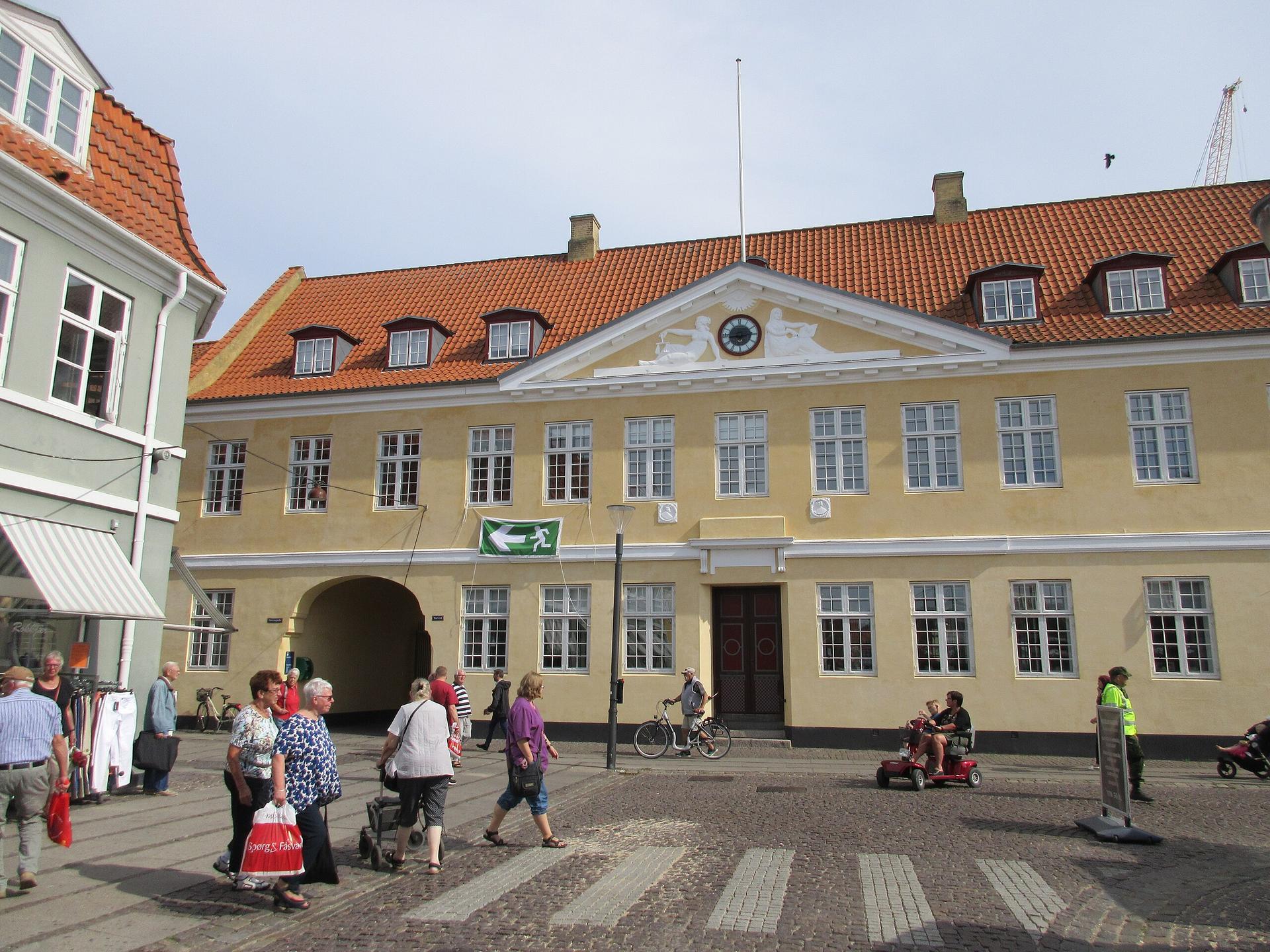
Looking beyond Circle Bridge? Discover Koge for broader travel guides, local hot-spots, and regional highlights.
Explore Koge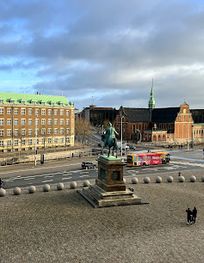
Bronze monument in central Copenhagen commemorating King Frederik VII and Denmark’s 19th-century transition to constitutional monarchy, steps from political landmarks.

A polished black granite beacon reflecting Copenhagen's harbor and sky, where modern architecture honors centuries of Danish cultural heritage.