Bishop Absalon Statue, Højbro Plads
Dynamic equestrian monument to Copenhagen’s warrior-bishop founder, rising over central Højbro Plads with rich maritime symbolism and a direct visual link to Christiansborg.
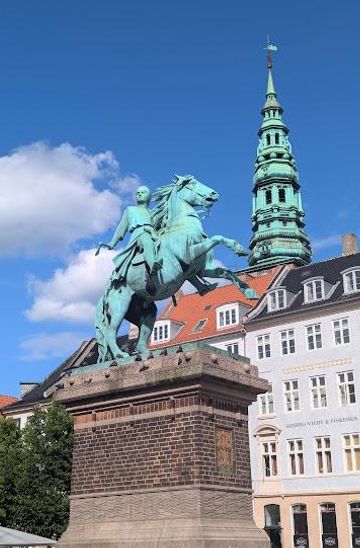
Rising above Copenhagen’s central Højbro Plads, the equestrian statue of Bishop Absalon honors the warrior-bishop traditionally regarded as the city’s founder. Unveiled in 1902 on the 700th anniversary of his death, the bronze figure shows Absalon in armor on a rearing horse, facing Christiansborg where his medieval fortress once stood. Its richly detailed brick-and-granite plinth weaves in symbols of herring, the Øresund, and ecclesiastical heraldry, making this compact monument a vivid lesson in how a fishing hamlet grew into Denmark’s capital.
A brief summary to Bishop Absalon
- Højbro Pl., Copenhagen, Indre By, 1200, DK
- Click to display
- Duration: 0.5 to 1.5 hours
- Free
-
 Outdoor
- Mobile reception: 5 out of 5
- Monday 12 am-12 am
- Tuesday 12 am-12 am
- Wednesday 12 am-12 am
- Thursday 12 am-12 am
- Friday 12 am-12 am
- Saturday 12 am-12 am
- Sunday 12 am-12 am

Know before you go
Hi, I'm Eve. Here are a few practical things to know before exploring Bishop Absalon.
- Walk all the way around the plinth to spot the herring and wave friezes, heraldic shield, and Danish inscription praising Absalon’s character and achievements.
- Visit early morning or around sunset for softer light that brings out the bronze patina and makes it easier to photograph the statue without strong glare.
- Use the seating ledges at the base as a short rest stop while you orient yourself between Christiansborg, the canal, and the nearby shopping streets.
Do you manage this location?
Take control to get all the benefits, like improved information, better appearance, and stronger visibility across AI-powered discovery. Learn more
Activate your presenceOther nearby places you may find interesting

Getting There
-
Metro
From Nørreport Station, take the M1 or M2 metro one stop to Kongens Nytorv, then walk about 10–15 minutes through the pedestrian center to Højbro Plads. The metro ride is around 2 minutes and runs every few minutes most of the day, with standard city fares typically in the range of 20–30 DKK for a single journey using tickets or a travel card.
-
Bus
Several city buses serve stops near Højbro Plads, including routes running along Holmens Kanal and Gammel Strand. From the central station area, the journey usually takes 10–20 minutes depending on traffic. Expect standard inner-city bus fares similar to the metro, roughly 20–30 DKK per ride, with services operating frequently throughout the day and evening.
-
Bicycle
Cycling to Højbro Plads is a popular option thanks to Copenhagen’s extensive bike lanes. From the Central Station or Vesterbro area, the ride generally takes 10–20 minutes at an easy pace on mostly flat terrain. You can use city bikes or rentals priced approximately 20–40 DKK per half hour, bearing in mind that the square itself can be busy and requires careful riding among pedestrians.
-
Walking
From Copenhagen City Hall Square, Højbro Plads is within a comfortable 15–25 minute walk through the historic center along pedestrian streets and cobblestones. The route is generally level but can be uneven underfoot, so comfortable footwear is recommended. This option is free and allows you to enjoy shopfronts, side streets, and canal views on the way.
For the on-the-go comforts that matter to you
-
 Seating Areas
-
 Trash Bins
-
 Information Boards
Discover more about Bishop Absalon
Absalon and the birth of Copenhagen
Bishop Absalon looms large in Danish history as both archbishop and statesman, and here in Højbro Plads he is immortalized in bronze as the symbolic founder of Copenhagen. In the 12th century, when this area was still a modest fishing settlement on the Øresund, Absalon backed the construction of a fortified castle on nearby Slotsholmen. That stronghold protected trade routes and the lucrative herring fisheries, laying the groundwork for the city that would become Denmark’s capital.The statue marks the 700th anniversary of Absalon’s death. It was unveiled in 1902, when national interest in medieval history and Copenhagen’s origins was especially strong. Standing before it, you are looking at a sculpted story about power, faith, and maritime commerce, captured at the very place where land, water, and city life meet.A warrior-bishop on a rearing horse
The monument’s most striking feature is the dynamic equestrian figure. Absalon sits astride a rearing horse, clad in mail and helmet, gripping a battle-axe rather than a pastoral staff. This martial pose emphasizes his dual role as church leader and military commander at a time when defending Christian kingdoms and expanding influence around the Baltic were central to his mission.The horse’s raised forelegs and the flowing cloak lend the bronze a sense of motion that contrasts with the orderly façades around the square. The sculptor, Vilhelm Bissen, chose a neo-romantic style, evoking chivalric energy while still anchoring the work firmly in Denmark’s own saga-like past. From different angles you see how the figure balances strict armor detail with expressive gesture.A plinth rich with maritime symbolism
Beneath the rider, the pedestal is almost a second artwork. The lower section is carved from sturdy granite, while the upper part is built from red brick, echoing Copenhagen’s historic architecture. Along the brickwork runs a frieze featuring stylized fish and wavy lines. These refer to the herring shoals that once filled the Øresund and generated enormous wealth through salted exports.Those fisheries transformed a small hamlet into an important market town, and the monument quietly reminds you that the city’s story begins with sea journeys, salting barrels, and busy wooden wharves. Other carved elements include Viking-inspired ornament and ecclesiastical symbols, tying together pagan heritage, Christian authority, and mercantile success on the water.Heraldry, inscriptions and hidden texts
On the front of the plinth you will notice a shield bearing a rosy cross flanked by intersecting keys. This is a reference to Absalon’s role as Bishop of Roskilde, whose diocese once controlled much of the surrounding region. The date inscription “1128 ABSALON 1201” bookends his life and links the bronze figure to a precise historical person, not just a legendary founder.A band of lettering runs around the upper edge of the pedestal in Danish, praising Absalon as brave, clever, visionary, devoted to learning, and a loyal son of Denmark. These words reflect the values admired when the monument was raised: courage in war, commitment to education, and a sense of national duty embedded in religious office.Framing the city’s political heart
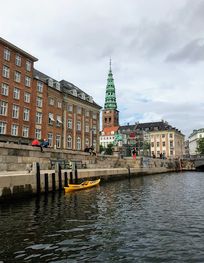
The statue’s orientation is deliberate. Absalon faces Christiansborg, today home to the Danish Parliament, on the site where his original fortress once stood. His head, however, turns slightly toward the direction of Copenhagen City Hall, bridging the city’s medieval origins with its modern civic institutions.Set in the middle of Højbro Plads, between the shopping streets of the old town and the Slotsholmen canal, the monument becomes a natural focal point. Locals cross the square on their daily routines, while groups pause at the pedestal steps, which double as informal seating. Around you rise the neoclassical buildings that were constructed after an 18th-century fire, so the bronze horseman appears framed by the rebuilt city whose beginnings he helped secure.Experiencing the statue within the square
Spending time here is less about ticking off a single landmark and more about absorbing how it interacts with its surroundings. From close up you can trace the sculpted scales of the fish frieze or the precise line of the axe blade; step back and the silhouette of horse and rider stands out against church towers, copper roofs, and canal barges.Because the statue is freely accessible at all hours, you can encounter it under many moods: morning light catching the bronze, midday bustle of pedestrians circling the base, or evening when the square’s lamps cast soft shadows across the brick plinth. In each case, Bishop Absalon still presides over the city he helped to found, a compact monument tying together water, trade, faith, and the evolving urban landscape of Copenhagen.Explore the best of what Bishop Absalon has to offer















More about North Zealand
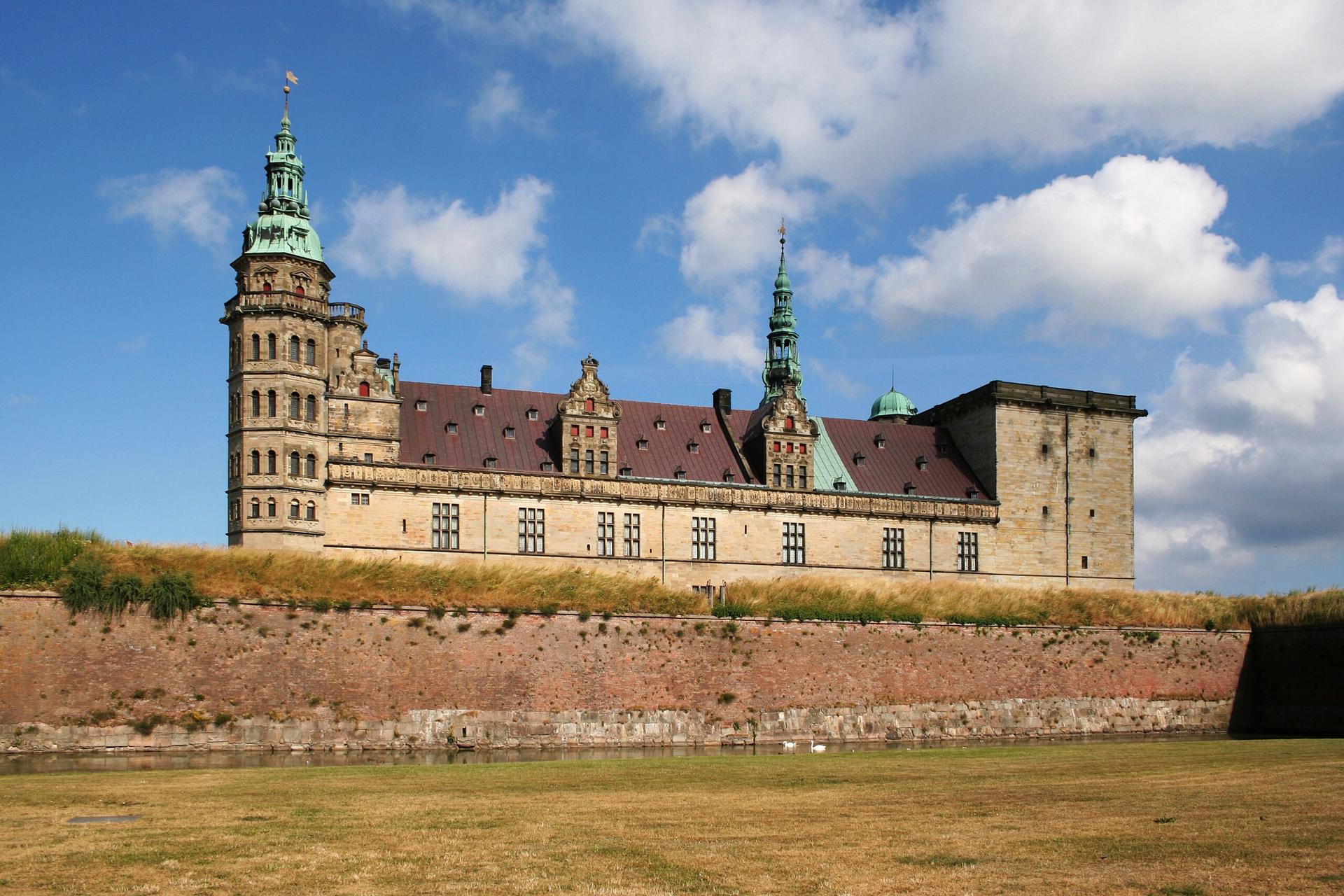
Explore North Zealand, Denmark's enchanting region of castles, beaches, and royal estates, perfect for history buffs, nature enthusiasts, and seaside lovers.
Tell me more about North Zealand