Møllerup Travel Guide
Free Guide: Historic yellow‑timbered manor, working estate and atmospheric rural retreat on the edge of Mols Bjerge National Park in scenic East Jutland.


A brief summary of Møllerup
Historic yellow‑timbered manor, working estate and atmospheric rural retreat on the edge of Mols Bjerge National Park in scenic East Jutland.
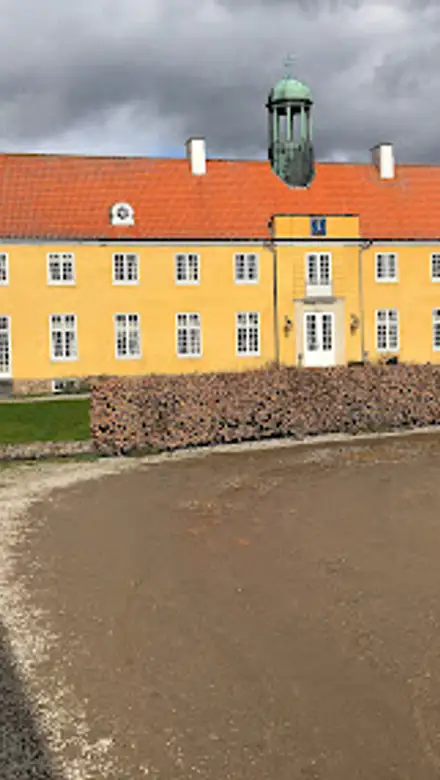
Set on the edge of Mols Bjerge National Park near Rønde, Møllerup Gods is a historic Danish manor where deep-rooted history, working agriculture and contemporary country living meet. The yellow half‑timbered buildings, moat and parkland frame a lived‑in estate that traces its story back to Marsk Stig, with foundations from his medieval stronghold still underpinning the 17th‑century main house. Today the property combines guided heritage tours, a cosy farm shop, riding stables and atmospheric event and holiday facilities.
On-site amenities
 Restrooms
 Drink options
 Food options
 Seating areas
 Sheltered areas
 Picnic areas
 Trash bins
 Information boards
 Visitor centre
Opening hours
- Mon10 am–3 pm
- Tue10 am–3 pm
- Wed10 am–3 pm
- Thu10 am–3 pm
- Fri9 am–12 pm
- SatClosed
- SunClosed
Opening hours as listed on the venue’s Google Business Profile. Hours can change for services and special events, so check with the venue before you go.
- Address
- Møllerupvej 26, 8410 Rønde
- Phone
- Website
Getting there
Car from Aarhus
Regional bus to Rønde and walk/taxi
Car from Ebeltoft and southern Djursland
Discover more about Møllerup
A manor shaped by kings, knights and centuries
Møllerup Gods is one of East Jutland’s quietly impressive manor houses, its story entwined with some of Denmark’s most dramatic medieval history. The estate’s earliest known owner was Marsk Stig Andersen, the royal marshal later linked with the murder of King Erik V – a scandal that still echoes through Danish chronicles. Beneath the present main house, the foundations of his fortified castle remain, a physical reminder that this peaceful property once stood at the centre of power struggles and exile.The main building you see today dates from 1681, raised when fortified castles gave way to more comfortable baroque manor life. Later alterations and careful maintenance have preserved its character rather than transformed it, so the complex reads as a layered timeline: medieval masonry below, 17th‑century volumes above, and 18th‑century wings extending around the courtyard.
Timbered facades and working farm life
Approaching the heart of Møllerup, you step into a courtyard enclosed by distinctive yellow half‑timbered buildings. The dark beams, white‑framed windows and warm ochre walls are classic for Jutland manor architecture, and together with the red roof tiles and cobblestones they create a cohesive, almost theatrical setting. Yet this is not a stage set: Møllerup is a working estate where agriculture, forestry and equestrian activities continue to shape the rhythm of daily life.Around the core buildings stretch fields and paddocks, stables and barns. Horses remain a strong presence, both as part of the estate’s traditions and its modern operations. The result is a place where you are rarely far from the sound of hooves on gravel, the smell of hay or the sight of riders crossing between yard and countryside.
Guided stories and everyday encounters
During hosted visits and guided tours, you can explore the grounds while hearing how the estate evolved from medieval stronghold to contemporary rural business. Narratives span noble lineages, hunting traditions and changing land management in the Mols region. Walking between the main house, wings and surrounding park gives a sense of scale that photographs rarely capture, and the guides often point out details in the timberwork and stone that hint at past rebuilding campaigns.Even outside formal tours, much of Møllerup’s appeal lies in small, everyday encounters: glimpses into open stables, activity around event spaces being prepared for celebrations, or seasonal work taking place in the fields. It is an estate that feels lived in, not frozen in time.
Farm shop flavours and hemp from the fields
One of the more contemporary chapters in Møllerup’s story grows directly from its soil. Parts of the surrounding acreage are dedicated to industrial hemp, and products from these fields feature prominently in the estate’s farm shop. Oils, seeds and other hemp‑based specialties sit alongside regional delicacies and carefully chosen goods from nearby producers.The shop’s atmosphere is intentionally intimate rather than expansive, more like stepping into a pantry than a supermarket. Shelves of bottles and jars, local treats and seasonal items provide a tangible link between the landscape outside and the flavours you can take home.
Hubertus Inn and stays in historic surroundings
Just adjacent to the manor complex, Hubertuskroen occupies early‑18th‑century half‑timbered buildings repurposed as an atmospheric inn and holiday house. Low ceilings, crooked wooden floors and exposed beams convey its age, while an indoor pool, sauna and modern facilities introduce a more indulgent side to country life. Groups use the house for gatherings, retreats and celebrations, making it a private base from which to experience the wider estate.From the terrace and windows, views stretch across the moat and park towards the gently rolling landscape. At quieter times, you can sense how this would have felt when travellers arrived by carriage rather than car, seeking rest at a rural hostelry tied to the manor next door.
On the threshold of Mols Bjerge’s landscapes
Møllerup stands right on the edge of Mols Bjerge National Park, and that geography is central to its character. Within minutes of the courtyard, fields give way to undulating hills, woodland and open views typical of this glacially sculpted region. Paths and tracks around the estate link into a broader network of walks and bridle routes, inviting you to pair heritage with time outdoors.This close relationship between historic buildings and protected landscapes is part of what makes Møllerup distinctive. It is both a cultural site and a gateway to one of Denmark’s most celebrated natural areas, offering visitors a chance to experience architecture, agriculture and nature as a single, coherent whole.
Evendo Review Centre
 Google
Guest reviews
Best time to go
Quietest: Jan, Feb & Mar · before 8am or at 8pm
Busy times are Evendo estimates for a typical year, to help you plan. Actual crowds vary with events, school holidays and the weather.
Explore Møllerup on the map
A handpicked selection of must-see spots near Møllerup, mapped for you.
Get your free copy of our complete guide to Møllerup, delivered straight to you.
Everything on this page, from opening hours and how to get there to Eve’s tips and the best time to go, in one PDF you can read offline, print or share.
Already have an account? Sign in
Your Møllerup guide is ready.
We'll send it to · Not you? Sign out

Getting your guide ready…
We are putting together a fresh copy of the Møllerup guide. This can take up to a minute.
This can take a few moments. If your browser asks, choose Allow so the download can start. You'll find the guide in your Downloads folder.
Nothing happened? Download it again
Sorry, the guide is taking longer than usual. Please try again in a minute, or get it by email instead.
Other nearby places you may find interesting
The closest places of the same kind, if this one is not quite what you had in mind.
-
-
-
-
-


Swipe for more places
More to explore near Møllerup

 Best experiences near Møllerup
 Best hotels near Møllerup
 Best landmarks near Møllerup
 Best attractions near Møllerup
 Best shops near Møllerup
 Best restaurants near Møllerup
 Best bars near Møllerup
Do you manage this location?
Take control to get all the benefits, like improved information, better appearance, and stronger visibility across AI-powered discovery.
Explore more

Explore more of Mols Bjerge National Park
Discover the natural beauty and historical charm of Mols Bjerge National Park, where rolling hills, ancient woodlands, and serene lakes create a perfect outdoor escape.
Explore Mols Bjerge National Park
Explore more of Denmark
Discover Denmark: A perfect blend of history, modern design, and the cozy concept of hygge. Explore vibrant cities, serene landscapes, and world-class cuisine.
Explore Denmark