Mols bjerge besøgscenter Travel Guide
Free Guide: Free, informative visitor hub in the heart of Mols Bjerge National Park, blending clear exhibits, basic comforts, and immediate access to classic hill and heathland trails.


A brief summary of Mols bjerge besøgscenter
Free, informative visitor hub in the heart of Mols Bjerge National Park, blending clear exhibits, basic comforts, and immediate access to classic hill and heathland trails.
Set in the heart of Mols Bjerge National Park, **Mols Bjerge Visitor Center (Øvre Strandkær)** is your gateway to one of Denmark’s most varied landscapes. Housed in former farm buildings at Strandkærvej 7 near Ebeltoft, it offers free indoor exhibitions on geology, wildlife, and cultural history, plus toilets and an indoor picnic area. Step outside and you are straight onto classic hill trails, heathland, grazing pastures, and sweeping Ice Age scenery.
On-site amenities
 Restrooms
 Seating areas
 Sheltered areas
 Picnic areas
 Information boards
 Visitor centre
 Trash bins
Opening hours
- Every day9 am–9 pm
Opening hours as listed on the venue’s Google Business Profile. Hours can change for services and special events, so check with the venue before you go.
- Address
- Strandkærvej 7, 8400 Ebeltoft
Getting there
Car from central Ebeltoft
Taxi from Ebeltoft
Cycling from Ebeltoft area
Regional bus plus walk
Discover more about Mols bjerge besøgscenter
A gateway into Mols Bjerge’s Ice Age landscape
Mols Bjerge Visitor Center at Øvre Strandkær sits right in the middle of Mols Bjerge National Park, surrounded by rolling hills, sunlit grasslands, and pockets of forest shaped by the last Ice Age. The former farm buildings now serve as an introduction to this protected landscape, with displays that explain how glaciers carved deep hollows, left behind sandy ridges, and created the undulating terrain that makes the area so distinctive.Just outside the doors, open pastures fall away into small valleys, while distant hilltops frame views towards the bays of Djursland. The sense of transition from enclosed exhibition space to wide, open countryside is immediate, making the center feel like a threshold between explanation and experience.
Exhibitions that bring nature and culture to life
Inside, the center offers a compact but engaging exhibition on the national park’s nature and cultural heritage. Panels, models, and simple interactive elements introduce everything from the region’s geology and glacial history to the rare plants, insects, and reptiles that thrive on the dry, south-facing slopes. You can trace how Bronze Age burial mounds, Stone Age monuments, and later farmsteads all sit within the same landscape story.There is an emphasis on understanding habitats rather than just ticking off species: heathland, beech forest, bogs, meadows, and coastal environments are all presented as pieces of a larger mosaic. For families, activity materials inspired by the park’s “On the trail of Mols Bjerge” concept help younger visitors engage through simple tasks and observations they can carry outside.
Life on the grazed grasslands outside the door
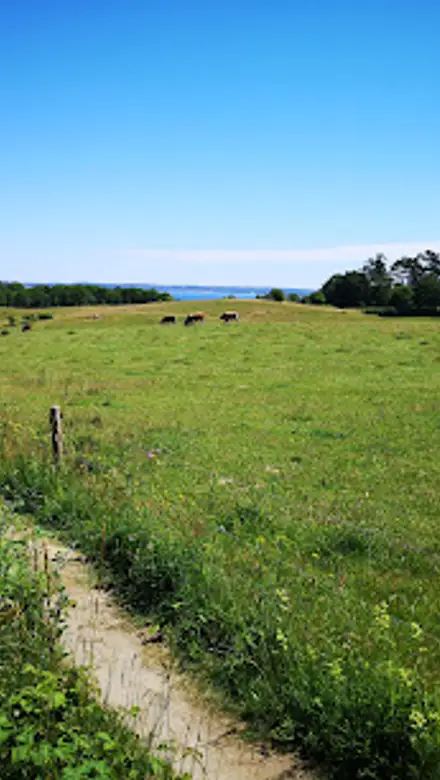
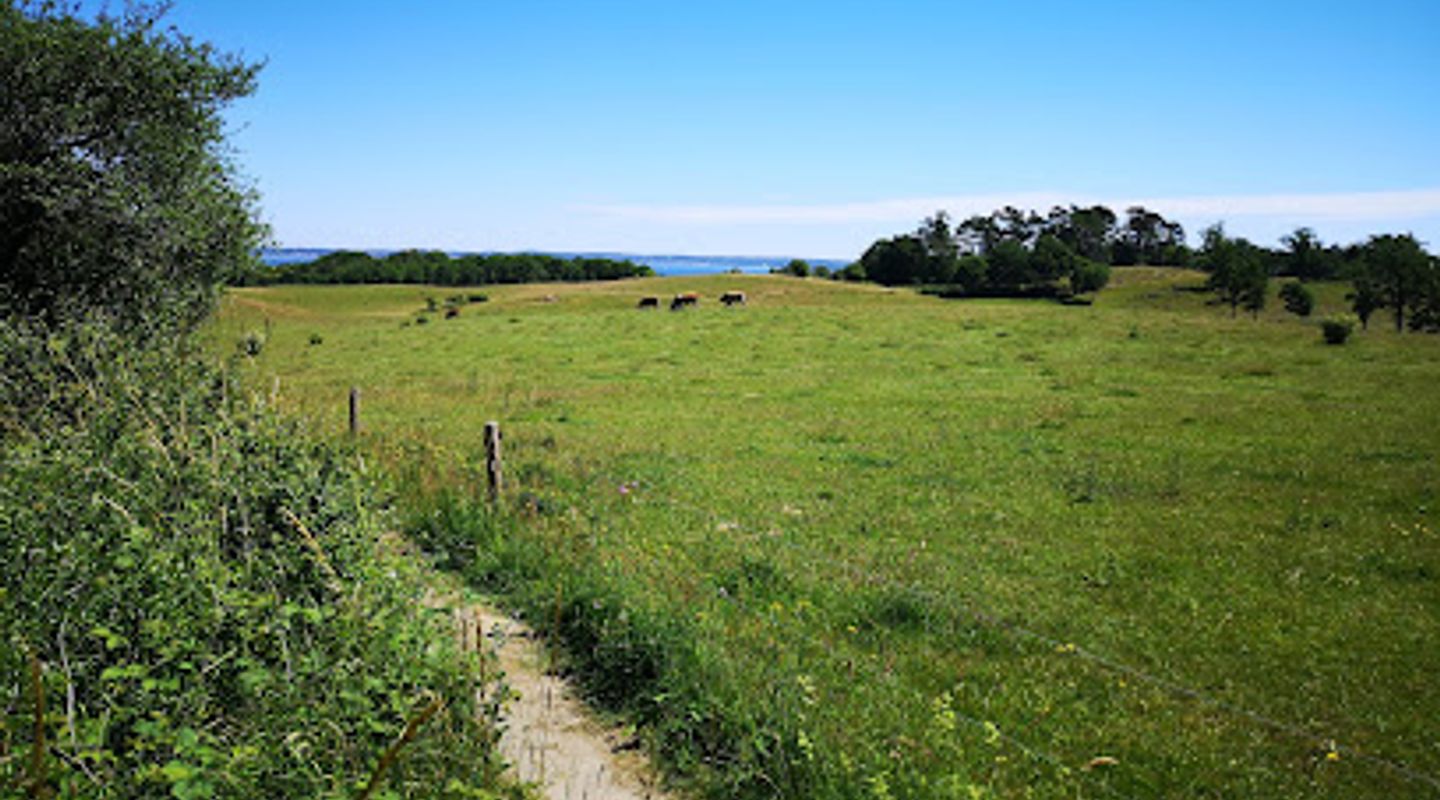
Step back outside and you will notice cattle grazing the hillsides around the center. These animals are part of an active management programme: by feeding on coarse grasses and shrubs they keep the slopes open, preventing the landscape from gradually turning into dense woodland. Their presence, along with fences and gates, is a reminder that this is both a conservation area and a living, worked countryside.From here, paths soon lead you across ridges and into shallow valleys dotted with juniper and heather. On clear days the light can feel almost Mediterranean along the so‑called Italian-style paths, where tall, slender junipers and warm, dry slopes create an unexpected southern atmosphere in the middle of Jutland.
Trails, views, and classic Mols Bjerge experiences
The visitor center is a natural starting point for short strolls or longer hikes into the hills. Waymarked routes nearby link into some of the national park’s most scenic sections, with views towards the inlets of Kalø, Begtrup, Knebel, and Ebeltoft. With a little time and a map, you can connect walks from here towards well‑known viewpoints such as Agri Bavnehøj, Trehøje, and the twin summits of Stabelhøje.Even a brief circuit from the center offers a sense of the park’s variety: open hilltops, sheltered hollows rich in birdlife, old field boundaries, and glimpses of distant coastline. The terrain is gently hilly rather than mountainous, but the changing horizons, big skies, and quiet atmosphere create an immersive outdoor experience.
Practical comforts in a wild setting
Despite the surrounding wilderness feel, the center is designed to make time in the park easier. It is open daily from morning until evening and has free entry, with indoor toilets and an enclosed picnic room where you can escape wind or showers while you eat. Information boards and printed material help you choose suitable routes, understand seasonal highlights, and learn how to move responsibly in grazing areas.The combination of simple facilities, clear interpretation, and direct access to the hills makes Mols Bjerge Visitor Center especially useful at the start of a day in the park. Whether you plan a gentle family ramble or a longer circuit along the ridges, this is the place to get your bearings before heading out into the Danish “mountains”.
Evendo Review Centre
 Google
Guest reviews
Best time to go
Quietest: Jan, Feb & Mar · before 8am or from 9pm
Busy times are Evendo estimates for a typical year, to help you plan. Actual crowds vary with events, school holidays and the weather.
Explore Mols bjerge besøgscenter on the map
A handpicked selection of must-see spots near Mols bjerge besøgscenter, mapped for you.
Get your free copy of our complete guide to Mols bjerge besøgscenter, delivered straight to you.
Everything on this page, from opening hours and how to get there to Eve’s tips and the best time to go, in one PDF you can read offline, print or share.
Already have an account? Sign in
Your Mols bjerge besøgscenter guide is ready.
We'll send it to · Not you? Sign out

Getting your guide ready…
We are putting together a fresh copy of the Mols bjerge besøgscenter guide. This can take up to a minute.
This can take a few moments. If your browser asks, choose Allow so the download can start. You'll find the guide in your Downloads folder.
Nothing happened? Download it again
Sorry, the guide is taking longer than usual. Please try again in a minute, or get it by email instead.
Other nearby places you may find interesting
The closest places of the same kind, if this one is not quite what you had in mind.
-
-
-
-
-


Swipe for more places
More to explore near Mols bjerge besøgscenter
-
 Best experiences near Mols bjerge besøgscenter
-
 Best hotels near Mols bjerge besøgscenter
-
 Best landmarks near Mols bjerge besøgscenter
-
 Best attractions near Mols bjerge besøgscenter
-
 Best shops near Mols bjerge besøgscenter
-
 Best restaurants near Mols bjerge besøgscenter
-
 Best bars near Mols bjerge besøgscenter


Do you manage this location?
Take control to get all the benefits, like improved information, better appearance, and stronger visibility across AI-powered discovery.
Explore more

Explore more of Mols Bjerge National Park
Discover the natural beauty and historical charm of Mols Bjerge National Park, where rolling hills, ancient woodlands, and serene lakes create a perfect outdoor escape.
Explore Mols Bjerge National Park
Explore more of Denmark
Discover Denmark: A perfect blend of history, modern design, and the cozy concept of hygge. Explore vibrant cities, serene landscapes, and world-class cuisine.
Explore Denmark