

Mølleporten Travel Guide
Free Guide: One of Denmark’s last medieval town gates, Mølleporten pairs evocative fortifications and intimate prison history with fine views over historic Stege.


A brief summary of Mølleporten
One of Denmark’s last medieval town gates, Mølleporten pairs evocative fortifications and intimate prison history with fine views over historic Stege.
Mølleporten is the striking medieval town gate of Stege on the island of Møn, one of only two surviving town gates in all of Denmark. Built in the 15th century as part of Stege’s fortified ramparts, this four-storey brick-and-limestone tower once controlled access to the thriving market town and later housed a small prison. Carefully restored in recent years and opened to visitors, it now offers an atmospheric journey through centuries of urban history and rewarding views over Stege’s red rooftops and surrounding ramparts.
On-site amenities
 Restrooms
 Drink options
 Drinking water
 Food options
 Seating areas
 Trash bins
 Information boards
 Visitor centre
- Address
- Mølleport, Storegade 75, 4780 Stege
- Phone
Getting there
Regional bus from Vordingborg
Car from Vordingborg and South Zealand
Cycling on Møn
Discover more about Mølleporten
A medieval gateway guarding old Stege
Mølleporten stands at the eastern edge of Stege’s historic centre, where the town once met fields, mills and marsh. Raised in the late 1400s as part of Stege’s defensive ring, it formed one of three gateways through the ramparts and moat that shielded this prosperous trading town. Its name, the Mill Gate, recalls the many windmills that once turned just outside the walls, grinding grain for the island of Møn.Passing beneath the tower today, it is easy to imagine carts piled with goods and weary travellers queuing to enter. Customs officials, guards and townsfolk would all have stood here, deciding who might pass and what would be taxed. The gate was Stege’s controlled front door, the point where countryside met city and power could be asserted in brick and stone.
Brick stripes, limestone bands and careful restoration
Architecturally, Mølleporten is a compact four-storey gatehouse built in alternating bands of deep red monk brick and pale limestone ashlar. The striping gives the tower a distinctive rhythm that echoes the nearby church and town hall, tying the streetscape together in a unified medieval palette. Near the base the limestone bands sit closer and wider, reinforcing a sense of solidity where the structure meets the ground.Over time, the gate has changed appearance. Original pinnacles and an open gallery are thought to have crowned the early tower, while the steep pyramidal tiled roof is a later solution that gives it a strong, almost storybook silhouette. Several major restorations, including extensive 19th- and 21st‑century work, have stabilized crumbling masonry, revealed the original height and lowered the surrounding street to show more of the base. The result is a building that feels robust yet finely detailed, still very much a working part of the townscape.
From fortification to prison and protected monument
Mølleporten’s story reflects shifting ideas about security, punishment and heritage. In the 17th century, an upper floor was fitted out as a small jail, holding local offenders during what contemporaries called "the evil times" of hardship and unrest. Heavy timbers, boarded floors and narrow openings gave the tower a more oppressive character; the same vantage point that surveyed approaching travellers also oversaw those confined within.By the 19th century the medieval gate was considered inconvenient for growing traffic, and in the 1870s it came close to demolition. Instead, changing attitudes towards historic architecture spared the tower and led to its legal protection as a cultural monument. The adjacent ramparts and moat, still partially traceable in the landscape, were likewise recognized as part of one of Denmark’s best‑preserved urban fortification systems.
Experiencing the tower from cobbles to rooftop views
Visiting Mølleporten today is an intimate experience rather than a grand museum circuit. Underfoot in the passage are worn cobblestones and rounded fieldstones, their irregular surfaces a tactile reminder of centuries of hooves, wheels and boots. Inside, steep timber stairs and simple landings lead you upward through the compact interior, where raw beams, whitewashed walls and glimpses of brickwork convey an honest, unfussy character.Small windows pierce the thick walls, framing slivers of Stege’s streets, rooftops and the remains of the rampart beyond. At the top, the reward is a surprisingly expansive view over the town centre, the curve of Stege Nor and the line of the old defenses. Interpretation in the tower and on nearby boards helps place what you see in context, but the building itself does much of the storytelling through its materials, proportions and scars.
A highlight of a walk through historic Stege
Mølleporten works best as a focal point on a broader wander through Stege’s historic quarters. The gate, rampart and moat together form a coherent medieval ensemble, rare in Denmark and remarkably legible on the ground. The small square created around the tower during the latest restoration gives you space to pause, look back at the decorative masonry and imagine the line of the old causeway leading across the water.Because the tower is relatively small, the visit is pleasantly short and manageable for most travellers, including families and casual strollers. Combined with nearby museums, churches, cafés and harborfront, it adds depth and narrative to a day on Møn: a solid, beautifully restored piece of national heritage that still quietly guards Stege’s edge between land and sea.
Evendo Review Centre
 Google
Guest reviews
Best time to go
Quietest: Jan, Feb & Mar · before 8am or at 8pm
Busy times are Evendo estimates for a typical year, to help you plan. Actual crowds vary with events, school holidays and the weather.
Explore Mølleporten on the map
A handpicked selection of must-see spots near Mølleporten, mapped for you.
Get your free copy of our complete guide to Mølleporten, delivered straight to you.
Everything on this page, from opening hours and how to get there to Eve’s tips and the best time to go, in one PDF you can read offline, print or share.
Already have an account? Sign in
Your Mølleporten guide is ready.
We'll send it to · Not you? Sign out

Getting your guide ready…
We are putting together a fresh copy of the Mølleporten guide. This can take up to a minute.
This can take a few moments. If your browser asks, choose Allow so the download can start. You'll find the guide in your Downloads folder.
Nothing happened? Download it again
Sorry, the guide is taking longer than usual. Please try again in a minute, or get it by email instead.
Other nearby places you may find interesting
The closest places of the same kind, if this one is not quite what you had in mind.
-
GeoCenter Møns Klint Immersive cliff-top museum and nature hub revealing 70 million years of geology beside Denmark’s highest white chalk cliffs at Møns Klint.
-
Moen lighthouse A quiet 19th‑century beacon perched above Denmark’s most dramatic chalk cliffs, where sea, sky and starlight meet on the far edge of the island of Møn.
-
Trappe Møns Klint A steep wooden stairway plunging from beech forest to turquoise Baltic shore, Trappe Møns Klint is the most direct way into Denmark’s iconic white chalk cliffs.
-
Stranden Møns Klint A raw shingle shore pressed between turquoise Baltic waves and 100‑metre chalk cliffs, Stranden Møns Klint is Denmark’s most dramatic meeting of land and sea.
-
Thorsvang, Danmarks Samlermuseum Et stemningsfuldt samlermuseum på Møn, indrettet som en hel lille by fra de gode gamle dage – fyldt med butikker, værksteder, kolonihaver og hverdagsminder.
Swipe for more places
More to explore near Mølleporten

 Best experiences near Mølleporten
 Best hotels near Mølleporten
 Best landmarks near Mølleporten
 Best attractions near Mølleporten
 Best shops near Mølleporten
 Best restaurants near Mølleporten
 Best bars near Mølleporten
Do you manage this location?
Take control to get all the benefits, like improved information, better appearance, and stronger visibility across AI-powered discovery.
Explore more
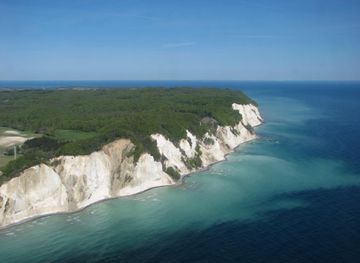
Explore more of Møn
Discover the breathtaking cliffs, rich history, and serene beauty of Møn, Denmark's hidden gem in the Baltic Sea, perfect for nature lovers and history enthusiasts alike.
Explore Møn
Explore more of Denmark
Discover Denmark: A perfect blend of history, modern design, and the cozy concept of hygge. Explore vibrant cities, serene landscapes, and world-class cuisine.
Explore Denmark
