Skansen i Hundested, North Zealand Travel Guide
Napoleonic-era earthworks, surviving cannons and sweeping Kattegat views meet on a wind-battered cliff edge above Hundested’s harbour and sandy shoreline.
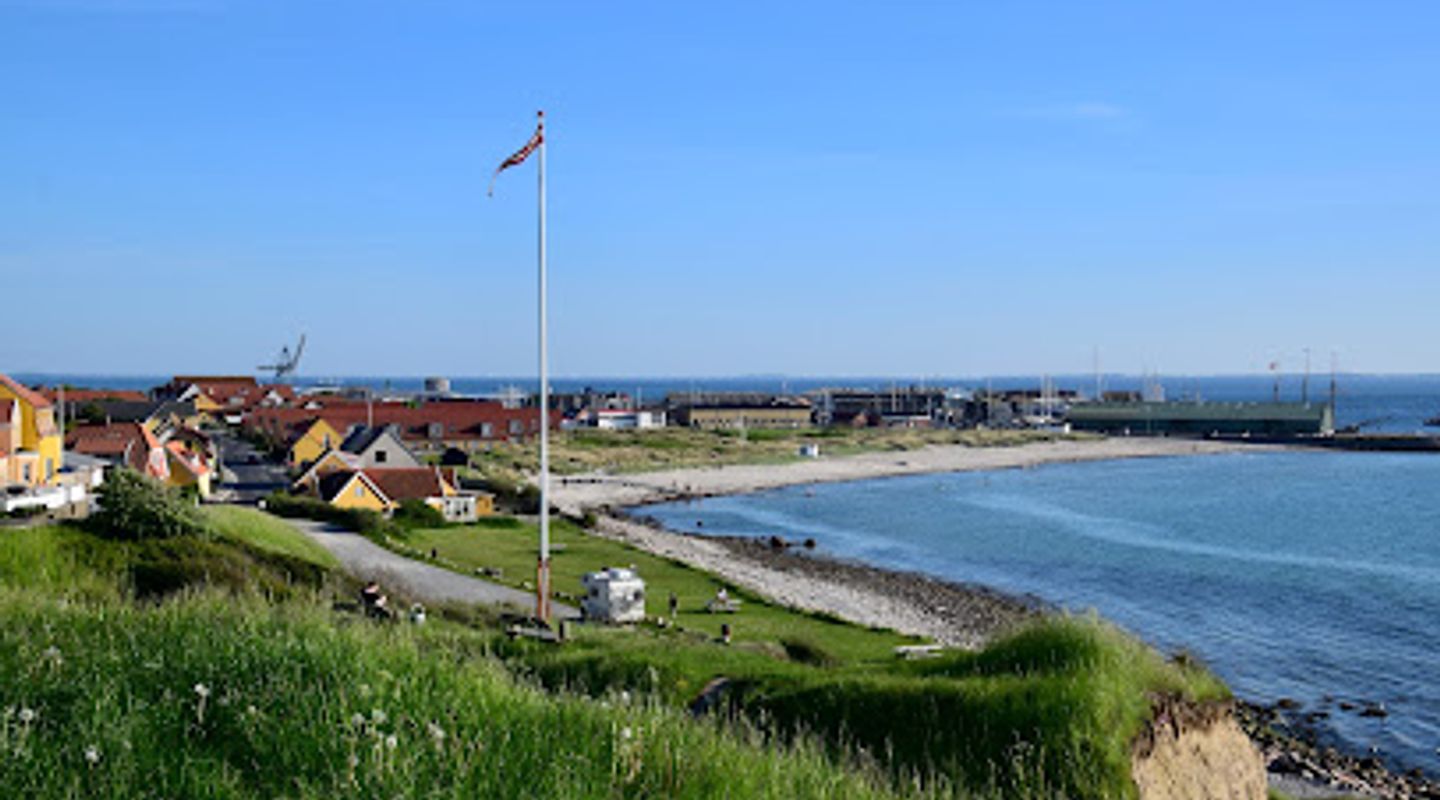
Perched high on a crumbling sea cliff at the edge of Hundested, Skansen i Hundested is a compact coastal fortification from the Napoleonic era, built to guard the mouth of Isefjord. Grassy ramparts, surviving cannons and sweeping views across the Kattegat and towards Hesselø make this a rewarding stop for anyone interested in Danish military history, scenic walks or quiet seaside picnics in North Zealand.
A brief summary to Skansen i Hundested
- Skansevej 29, Hundested, 3390, DK
- Click to display
- Duration: 0.5 to 2 hours
- Free
-
 Outdoor
- Mobile reception: 4 out of 5

Know before you go
Hi, I'm Eve. Here are a few practical things to know before exploring Skansen i Hundested.
- Bring a windproof layer; the exposed headland can feel much cooler and windier than in the town below, even on sunny days.
- Wear sturdy shoes suitable for uneven, sometimes sandy paths and be cautious near the cliff edge, which is actively eroding.
- Combine your visit with Knud Rasmussen’s House and Spodsbjerg Lighthouse along the same stretch of coast for a fuller historic walk.
- Pack water and a snack or picnic; facilities on the headland are minimal and the grassy interior of the skanse makes a pleasant rest spot.
Do you manage this location?
Take control to get all the benefits, like improved information, better appearance, and stronger visibility across AI-powered discovery. Learn more about listing your business on Evendo
Activate your presenceOther nearby places you may find interesting
The closest places of the same kind, if this one is not quite what you had in mind.
Explore Skansen i Hundested on the Map
A handpicked selection of must-see spots near Skansen i Hundested, mapped for you.
Getting There
-
Regional train and local bus from Copenhagen
From central Copenhagen, take the regional train towards Hillerød and change to the local line to Hundested; the full rail journey typically takes 1.5–2 hours. From Hundested station, a short local bus ride towards Spodsbjerg or Knud Rasmussen’s House adds about 10–15 minutes, with buses usually running at least once an hour during the day. A standard adult rail ticket for the whole route generally falls in the range of 80–120 DKK one way, depending on discounts and time of purchase.
-
Car from North Zealand
Driving from Hillerød or other towns in North Zealand to Hundested usually takes 40–60 minutes on ordinary roads. From the town centre, follow signs towards the coastal attractions on the headland and look for public parking areas near Skansevej; allow an extra 10–15 minutes on foot from parking to the fort through gently sloping streets and paths. There is no entrance fee at the skanse, but parking near popular viewpoints can be time-limited in peak summer, so check local signs.
-
Ferry and on-foot approach via Hundested harbour
If you arrive by the ferry route between Rørvig and Hundested, the crossing itself usually takes around 25–30 minutes and allows both foot passengers and vehicles, with adult passenger prices typically in the range of 40–70 DKK one way. From the harbour, it is roughly a 20–30 minute walk uphill through town and along marked paths to reach the skanse on the headland. The route involves some gradients and uneven ground near the coast, making it less suitable for visitors with limited mobility.
For the on-the-go comforts that matter to you
-
 Trash Bins
-
 Information Boards
-
 Seating Areas
Discover more about Skansen i Hundested
Clifftop Fortress Above the Kattegat
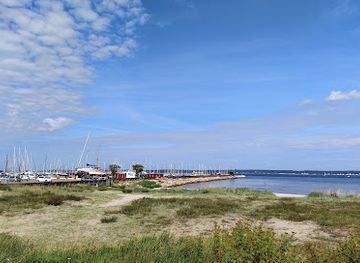
Skansen i Hundested crowns a high coastal bluff on the northern edge of town, where the land falls steeply to the sea and the wind almost never rests. The earthworks form a low, grassy ring that once completely encircled the position, their outline still clearly visible despite centuries of erosion. Standing on the rampart, the panorama stretches over the mouth of Isefjord and out into the Kattegat, with shipping lanes and fishing boats tracing slow lines across the water.The setting is as compelling as the story. Wild grasses, low shrubs and sandy soil reveal how exposed this headland is to weather and waves. Parts of the original fortification have already slipped into the sea as the cliff continues to retreat, giving a vivid sense of how fragile this coastline can be. Yet the remaining embankments still feel solid underfoot, a quiet reminder of Denmark’s strategic concerns in an earlier age.A Defensive Outpost from the England Wars
Hundested Skanse was built in the early 1800s during the England Wars, when Denmark sought to protect key waterways from British naval power. The position was chosen for its commanding view over the entrance to Isefjord, an access route that needed guarding if enemy ships tried to push inland. Together with nearby batteries along the coast, the fort helped form a defensive chain along North Zealand’s shores.In its operational days the skanse was far more formidable than its modest footprint suggests today. Contemporary descriptions speak of a closed earthwork, protected by ditches towards the sea and extra outer banks on the landward side. The garrison belonged to the local coastal militia rather than the regular army, and the men were expected to bring their own personal weapons to supplement the fort’s artillery. The echoes of that improvised defence effort linger in the landscape, turning a simple walk into an encounter with national history.Cannons, Ramparts and Imagined Battles
One of the most striking features here is the presence of historic cannons, still positioned within the old works. Their dark barrels point out over the water, inviting you to imagine what it must have felt like to watch unknown sails appear on the horizon. Information boards in the area provide background on the fort’s construction, armament and role, helping you match the modern scene with its early nineteenth‑century layout.As you wander, subtle changes in the ground level mark former bastions, gun positions and the lines of the defensive ditches. Children tend to gravitate towards the cannons and mounds, turning them into imaginary ships and lookout posts, while history‑minded visitors trace the lines of fire over the fjord entrance. The scale is intimate enough that you can walk every part of the earthworks in a few minutes, yet the story behind them feels much larger.Sea Views, Coastal Paths and Quiet Corners
Skansen sits along a popular walking route that threads its way above the beach, combining cultural heritage with raw coastal scenery. Paths weave through dunes and low pines before emerging onto the open headland, where the fortress suddenly appears against the sky. On clear days you can look across to Hesselø island far out in the Kattegat and follow the curve of the coastline towards other headlands.The open grass within the fort’s outline makes a natural spot to pause, spread a blanket and watch the changing light on the sea. The soundscape is dominated by wind, waves and seabirds, broken only occasionally by distant harbour activity from Hundested. Even on blustery days, many visitors linger to feel the force of the elements that shaped both the cliff and the fort’s strategic purpose.Protected Landscape with a Living Story
Today the site is protected both for its historical value and for the vulnerable coastline it occupies. The continuing erosion of the cliff is monitored, and the surviving structures are conserved with a light touch that allows grass and wildflowers to soften the former lines of battle. This mix of cultural monument and natural process gives Skansen a distinctive character within the broader landscape of North Zealand.Interpretive signs encourage respect for the earthworks and for the surrounding vegetation, reminding visitors that centuries of weather and human use have made the fort both resilient and delicate. Annual events sometimes bring the cannons briefly back to life, but for most of the year Skansen is a peaceful lookout. It offers a chance to connect, in a single glance, Denmark’s seafaring past, its coastal environment and the everyday rhythms of a small harbour town just below.












Your all‑in‑one travel companion app
Explore expert travel guides, compare and book tours, experiences, hotels, and more—all from the palm of your hand. Download now for seamless trip planning wherever your wanderlust takes you.


Explore More of North Zealand
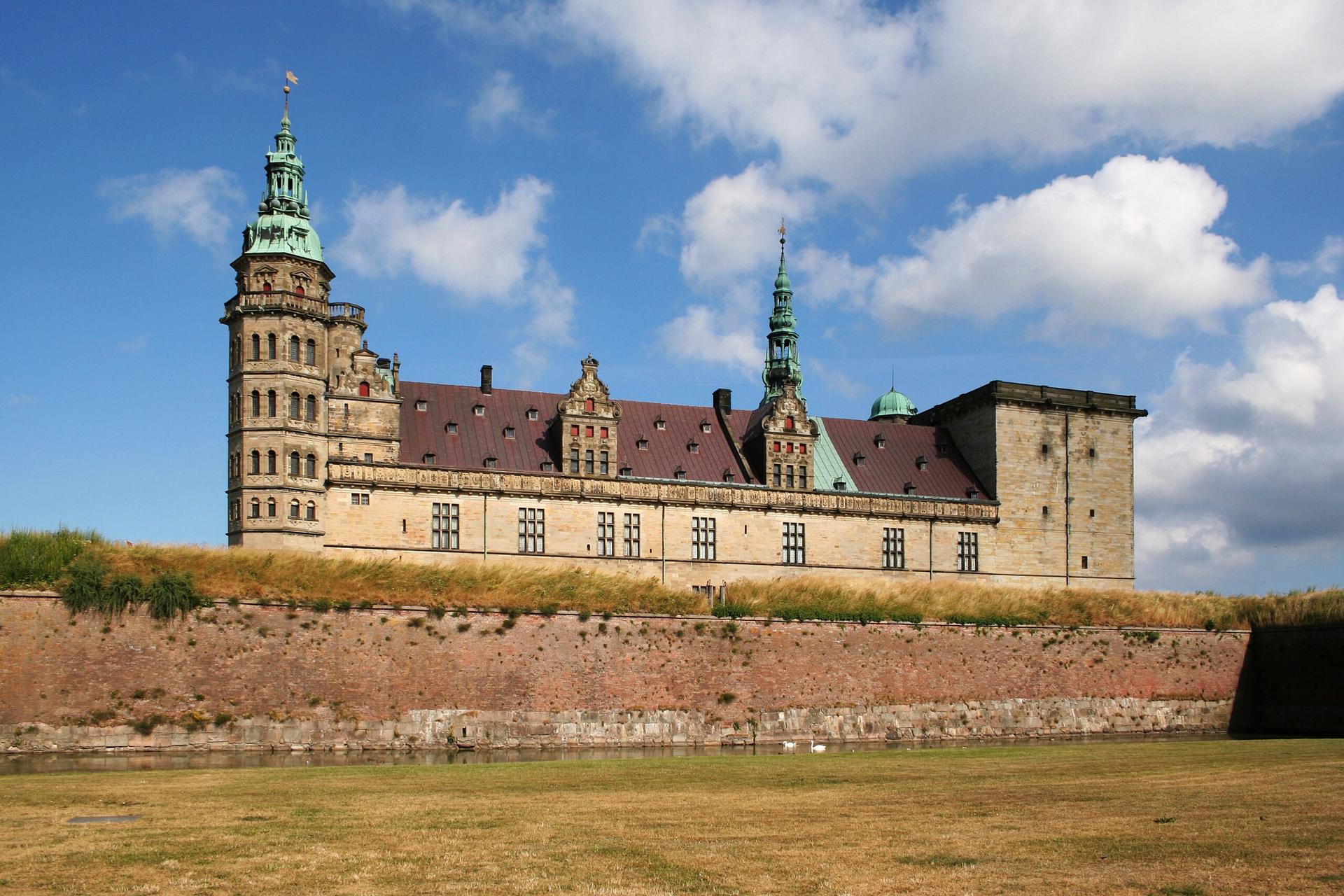
Looking beyond Skansen i Hundested? Discover North Zealand for broader travel guides, local hot-spots, and regional highlights.
Explore North Zealand