Nordskoven Travel Guide
Free Guide: Ancient royal oaks, varied woodland and quiet trails create a timeless forest escape in Jægerspris, where Denmark’s oldest trees still anchor the landscape.


A brief summary of Nordskoven
Ancient royal oaks, varied woodland and quiet trails create a timeless forest escape in Jægerspris, where Denmark’s oldest trees still anchor the landscape.
Nordskoven, just north of Jægerspris, is a sweeping 13 km² forest landscape famed for Denmark’s oldest oaks. Here you wander among venerable giants like Kongeegen, Storkeegen and Snoegen, some between 1,400 and 1,900 years old, across varied terrain of beech and oak woodland, marsh, coastal meadows and former seabed. Waymarked trails, tranquil clearings and the historic royal hunting pavilion make this a rewarding half‑day nature escape within easy reach of Copenhagen.
On-site amenities
 Seating areas
 Picnic areas
 Trash bins
 Information boards
- Address
- 3630 Jægerspris
Getting there
Regional bus from Frederikssund
Train and bus from central Copenhagen
Car from the Copenhagen area
Discover more about Nordskoven
Ancient oaks at the heart of the forest
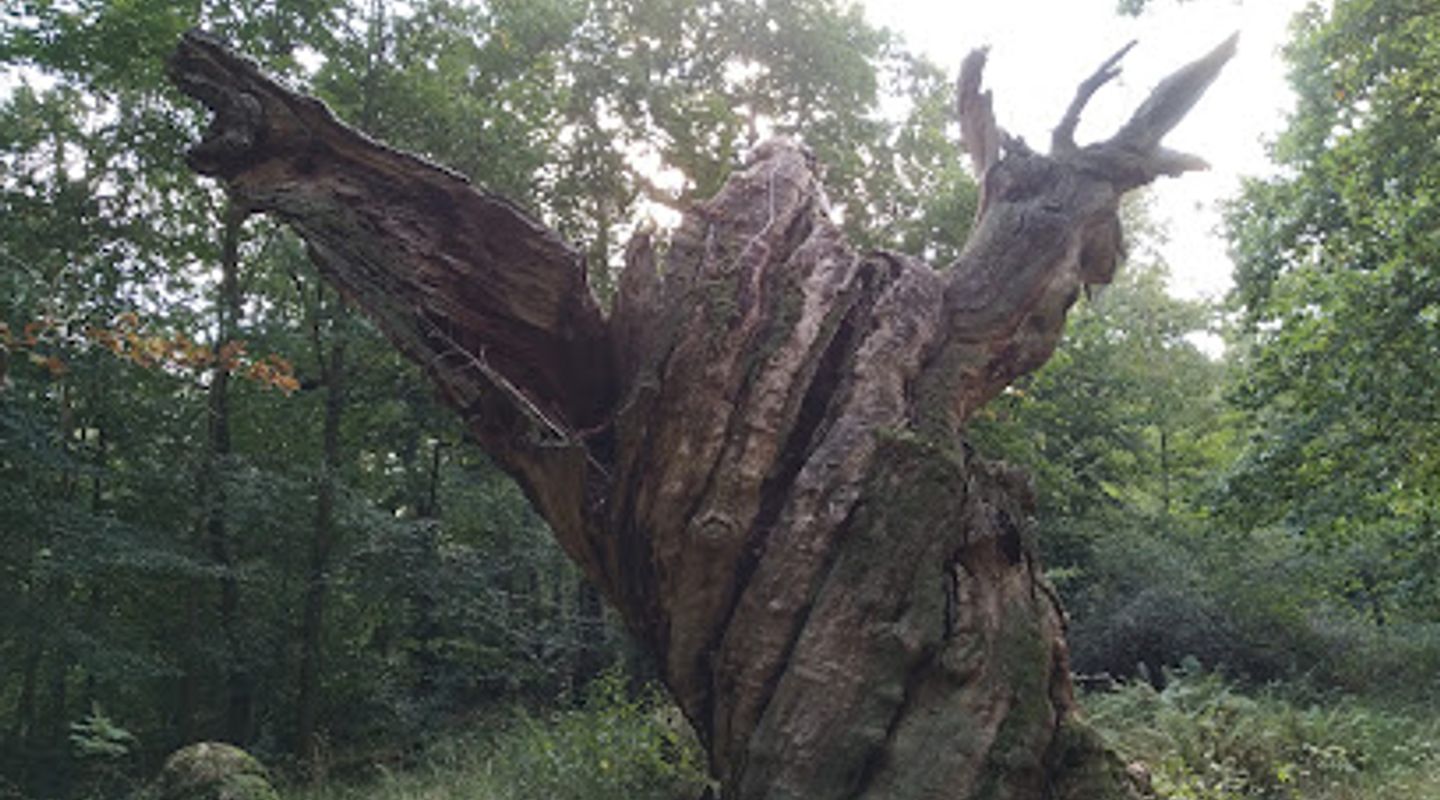
Nordskoven, also known as Jægerspris Nordskov, spreads across the Hornsherred peninsula just north of Jægerspris and is best known for its legendary old oaks. Among them rises Kongeegen, the King’s Oak, often described as Denmark’s oldest living organism with an estimated age of 1,400–1,900 years. Long before medieval kings ruled, this tree was already a mature giant, and today its hollow trunk and renewed crown tell a story of extraordinary survival.Nearby stand Storkeegen and Snoegen, once equally imposing and now dead but still protected as natural monuments. Their twisted limbs and sculptural silhouettes give this part of the forest a slightly mythical feel, especially in low, slanting light. Around these icons, roughly 200 other oaks aged 300–400 years are also under protection, promising that the next generation of “giant oaks” is already growing into the landscape.
Varied landscapes shaped by sea and time
Nordskoven is not just ancient trees; it is a mosaic of habitats that reflect thousands of years of shifting coastline and land use. Parts of the forest grow on former seabed, a legacy of the Stone Age when the sea cut right across the peninsula. As you move along the paths, the terrain alternates from dense oak and beech stands to lighter conifer plantings, open glades and low-lying marsh.To the north and west, coastal meadows and strandeng reveal big skies and a sense of openness, often with a breeze carrying the smell of saltwater from nearby Roskilde Fjord. In the wetter hollows, mosses and reeds dominate, and birdsong is amplified by the sheltered, damp air. This interplay between woodland shade and open, airy landscapes makes even short walks feel surprisingly varied.
Royal heritage in a secluded woodland setting
Nordskoven is owned by the King Frederik VII’s Foundation in Jægerspris, and reminders of royal hunting traditions dot the forest. The most eye-catching is the small 19th‑century hunting pavilion, a charming structure tucked among the trees where the king once paused between hunts. Its presence adds a touch of historical theatre to what is otherwise a primarily wild-feeling environment.The broader forest is divided into areas such as Fælledskoven and Studehaven, which together with neighbouring woodland belts create one of Zealand’s larger continuous forest complexes. Despite this scale, the atmosphere remains intimate: sandy tracks, soft forest floors and filtered light through the canopy create pockets that feel almost private, even on busy days.
Walking, cycling and quiet exploration
Nordskoven is well suited to unhurried exploration on foot or by bicycle. Marked routes of varying length lead you past the principal sights, including the giant oaks, marshy Bredvig Mose and stretches of more open forest. Underfoot you can expect a mix of dirt paths, roots and occasional soft or muddy sections after rain, so sturdy footwear is recommended. Cyclists share many of the wider tracks, making it easy to cover more ground while still staying immersed in the trees.The lack of intrusive facilities inside the forest helps preserve a sense of calm. You are accompanied mainly by the rustle of leaves, the occasional call of birds and, in winter, the creak of branches in the wind. Benches and informal resting spots appear at intervals, ideal for a thermos break or a picnic, but much of the charm lies in simply wandering and letting the forest slowly reveal its character.
Seasons, atmosphere and who it suits best
Each season reshapes Nordskoven’s mood. Spring brings fresh green leaves and carpets of forest flowers, while summer transforms the canopy into cool, dappled shade perfect for longer hikes. Autumn is dramatic, with golden foliage and low light bringing out the textures of bark and fallen leaves. In winter, the bare silhouettes of the old oaks become even more prominent, and frost or snow can lend the whole forest a quiet, almost otherworldly stillness.The forest suits a wide range of visitors: families looking for manageable walks and nature play, couples seeking a peaceful escape, solo walkers in need of head‑clearing trails and photographers drawn by sculptural trees and shifting light. With relatively gentle terrain and no entrance fee, it is an accessible way to experience a uniquely old piece of Danish nature threaded with deep time and subtle historical traces.
Nature protection and respectful visiting
Parts of Nordskoven are formally protected to safeguard both the veteran trees and the biodiversity they support. Dead wood is often left in place, providing habitat for fungi, insects and birds, and some areas are left relatively undisturbed to allow natural processes to unfold. Visitors are free to walk and cycle on designated paths, but stepping off‑trail near the oldest oaks or in marshy zones is discouraged to protect fragile roots and ground vegetation.Simple habits make a difference here: carrying out all rubbish, keeping noise low and treating fallen branches and tree trunks as living structures rather than playground equipment. By moving gently through the forest and giving its ancient residents the space they need, you help ensure that the King’s Oak, its companions and their successors can continue to anchor this distinctive landscape for centuries to come.
Evendo Review Centre
 Google
Guest reviews
Best time to go
Quietest: Jan, Feb & Mar · before 7am or from 9pm
Busy times are Evendo estimates for a typical year, to help you plan. Actual crowds vary with events, school holidays and the weather.
Explore Nordskoven on the map
A handpicked selection of must-see spots near Nordskoven, mapped for you.
Get your free copy of our complete guide to Nordskoven, delivered straight to you.
Everything on this page, from opening hours and how to get there to Eve’s tips and the best time to go, in one PDF you can read offline, print or share.
Already have an account? Sign in
Your Nordskoven guide is ready.
We'll send it to · Not you? Sign out

Getting your guide ready…
We are putting together a fresh copy of the Nordskoven guide. This can take up to a minute.
This can take a few moments. If your browser asks, choose Allow so the download can start. You'll find the guide in your Downloads folder.
Nothing happened? Download it again
Sorry, the guide is taking longer than usual. Please try again in a minute, or get it by email instead.
Other nearby places you may find interesting
The closest places of the same kind, if this one is not quite what you had in mind.
-
-
-
-
-


Swipe for more places
More to explore near Nordskoven

 Best experiences near Nordskoven
 Best hotels near Nordskoven
 Best landmarks near Nordskoven
 Best attractions near Nordskoven
 Best shops near Nordskoven
 Best restaurants near Nordskoven
 Best bars near Nordskoven
Do you manage this location?
Take control to get all the benefits, like improved information, better appearance, and stronger visibility across AI-powered discovery.
Explore more

Explore more of North Zealand
Explore North Zealand, Denmark's enchanting region of castles, beaches, and royal estates, perfect for history buffs, nature enthusiasts, and seaside lovers.
Explore North Zealand
Explore more of Denmark
Discover Denmark: A perfect blend of history, modern design, and the cozy concept of hygge. Explore vibrant cities, serene landscapes, and world-class cuisine.
Explore Denmark