Snoegen Travel Guide
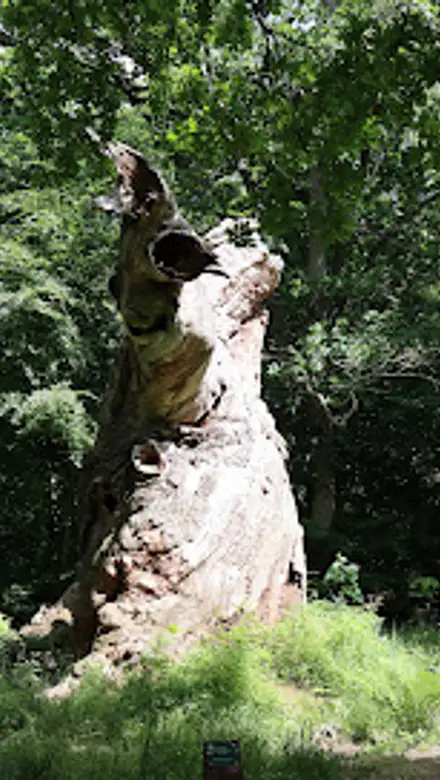
Free Guide: An ancient twisted oak standing as a sculptural forest relic in Jægerspris Nordskov, where centuries of woodland history are etched into spiralling wood.


A brief summary of Snoegen
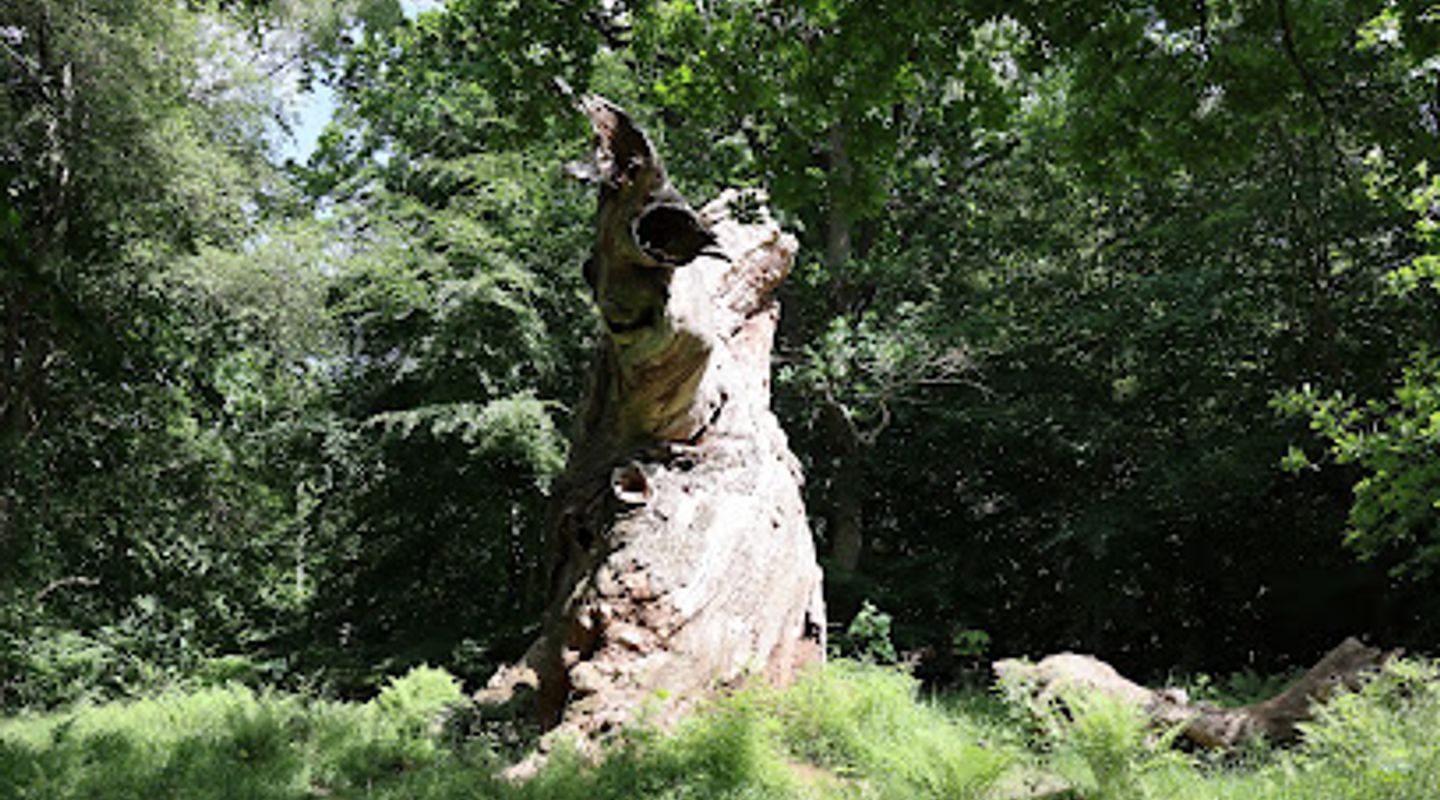
An ancient twisted oak standing as a sculptural forest relic in Jægerspris Nordskov, where centuries of woodland history are etched into spiralling wood.
Deep in Jægerspris Nordskov, along Øllemosevej near Jægerspris, Snoegen stands as the ghostly trunk of a once-mighty pedunculate oak. Twisted into dramatic spirals and more than eight metres in circumference, this ancient tree is thought to be up to 700 years old. Although it died in 1991, the bleached, contorted remains now form a striking natural sculpture and a quiet forest landmark, reached via woodland paths shared with other famed royal oaks.
On-site amenities
 Trash bins
 Information boards
Opening hours
- Every dayOpen 24 hours
Opening hours as listed on the venue’s Google Business Profile. Hours can change for services and special events, so check with the venue before you go.
- Address
- Øllemosevej, 3630 Jægerspris
Getting there
Car from Jægerspris town centre
Bus plus walk from Frederikssund
Cycling from nearby villages
Discover more about Snoegen
The forest home of a legendary oak
Snoegen stands in Jægerspris Nordskov, a broad beech and oak woodland just outside the town of Jægerspris on Zealand. Here the forest floor is soft with leaves and moss, and narrow paths weave between straight trunks and scattered glades. In the midst of this calm landscape you come upon Snoegen, not as a leafy giant but as a pale, sculptural relic emerging from the undergrowth.The tree is a pedunculate oak, a species that can live for centuries in northern Europe’s temperate climate. Jægerspris Nordskov is known for its venerable oaks, protected as part of Denmark’s natural and cultural heritage. Snoegen shares this forest with Kongeegen and Storkeegen, two other famed royal oaks that frame the sense of walking through a living archive of woodland history.
A life measured in centuries, not decades
Snoegen’s exact age is debated, but estimates typically range between 600 and 700 years, with some suggesting it could be as young as 400 or as old as 850. Over those centuries, the oak would have witnessed shifting forest management, royal hunting traditions and the gradual growth of the surrounding woods. The trunk reached a circumference of nearly 8.9 metres by 1990, marking it as one of the most substantial trees in the region.Unlike many straight-trunked oaks, Snoegen’s timber twisted as it grew, spiralling in a way that gave the tree both its Danish name and its distinctive silhouette. The unusual grain pattern hints at slow, steady growth and the stresses of age and weather that shaped the wood over time.
Decline, death and a standing monument
In the late 20th century, Snoegen began to decline. Fungal infections weakened the tree, and efforts to protect it with a surrounding wooden barrier are thought to have disturbed the root zone. Over several seasons its foliage thinned until its final leaves fell in 1991, marking the end of its life as a living oak. Today, the trunk remains upright, bleached and hollowed in places, with twisted ridges and fissures that reveal the complexity of the old wood.Rather than being removed, the dead trunk has been left as a natural monument. It still offers habitat for insects, fungi and birds while giving visitors a tangible sense of deep time. Standing close, you can see how the spiralling grain catches the light and trace the scars where branches once reached out into the canopy.
Walking the paths of the royal oaks
Reaching Snoegen involves a forest walk on unpaved trails. Routes are often combined with visits to Kongeegen and Storkeegen, forming a loop through some of Denmark’s most storied oak stands. The approach passes through mixed woodland where seasonal changes are striking: fresh green in spring, dense shade in summer and a carpet of leaves in autumn.The walk itself is part of the experience. Away from traffic noise, you mostly hear birdsong, rustling leaves and the crunch of soil and roots underfoot. Occasional waymarks and information boards elsewhere in the forest help you understand the wider context of Jægerspris Nordskov as a managed yet ancient woodland landscape.
Atmosphere, photography and quiet reflection
At Snoegen, the atmosphere is contemplative rather than dramatic. The twisted trunk invites close-up inspection, and photographers often focus on the abstract patterns formed by the bark, cracks and curves. On overcast days the pale wood stands out against the darker forest; in low sunlight, shadows emphasise every ridge.The site naturally lends itself to unhurried time: pausing to sit nearby, listening to the forest and reflecting on how many generations this single tree outlived. Even without foliage, Snoegen conveys a powerful sense of continuity between living forest and decaying wood, reminding visitors that death in an old-growth ecosystem is another stage of life.
A fragile piece of living heritage
Although Snoegen is no longer alive, it remains part of a fragile heritage. Weather, fungi and insects gradually break down the wood, and the trunk will eventually collapse. That impermanence is part of its meaning. Visiting now offers a chance to see a rare example of an ancient twisted oak still standing where it grew, surrounded by younger trees that will shape the forest’s future.For many, the appeal of Snoegen lies in this intersection of natural history, quiet beauty and the simple act of walking through the woods to reach a single, remarkable tree. It is a modest sight in scale, yet a profound one in story.
Evendo Review Centre
 Google
Guest reviews
Best time to go
Quietest: Jan, Feb & Mar · before 8am or at 8pm
Busy times are Evendo estimates for a typical year, to help you plan. Actual crowds vary with events, school holidays and the weather.
Explore Snoegen on the map
A handpicked selection of must-see spots near Snoegen, mapped for you.
Get your free copy of our complete guide to Snoegen, delivered straight to you.
Everything on this page, from opening hours and how to get there to Eve’s tips and the best time to go, in one PDF you can read offline, print or share.
Already have an account? Sign in
Your Snoegen guide is ready.
We'll send it to · Not you? Sign out

Getting your guide ready…
We are putting together a fresh copy of the Snoegen guide. This can take up to a minute.
This can take a few moments. If your browser asks, choose Allow so the download can start. You'll find the guide in your Downloads folder.
Nothing happened? Download it again
Sorry, the guide is taking longer than usual. Please try again in a minute, or get it by email instead.
Other nearby places you may find interesting
The closest places of the same kind, if this one is not quite what you had in mind.
-
Frederikssund Viking Village Open‑air Viking village and legendary summer saga play on the shores of Roskilde Fjord, where costumed warriors, longhouses and Norse myths come vividly to life.
-
Gummistranden Compact urban beach on Helsingør’s waterfront, with Kronborg Castle on the horizon, easy promenade access and big Øresund views just minutes from the town centre.
-
Esrum Kloster & Møllegård A 12th-century Cistercian abbey turned cultural hub, where red-brick history, herb gardens and North Zealand’s gentle landscapes meet around Esrum Lake.
-
Island of imagination A quiet royal ruin on a forested lake, where fragments of a 19th‑century retreat invite you to weave Nordic myths, royal tales and your own stories together.
-
Udsigtsplateau A modest wooden platform with a million‑kroner view over Øresund, Kronborg’s silhouette and the Swedish coast, perfect for a quiet coastal pause in Helsingør.
Swipe for more places
More to explore near Snoegen

 Best experiences near Snoegen
 Best hotels near Snoegen
 Best landmarks near Snoegen
 Best attractions near Snoegen
 Best shops near Snoegen
 Best restaurants near Snoegen
 Best bars near Snoegen
Do you manage this location?
Take control to get all the benefits, like improved information, better appearance, and stronger visibility across AI-powered discovery.
Explore more

Explore more of North Zealand
Explore North Zealand, Denmark's enchanting region of castles, beaches, and royal estates, perfect for history buffs, nature enthusiasts, and seaside lovers.
Explore North Zealand
Explore more of Denmark
Discover Denmark: A perfect blend of history, modern design, and the cozy concept of hygge. Explore vibrant cities, serene landscapes, and world-class cuisine.
Explore Denmark