
Taarnborg, Ribe Travel Guide
A contemplative Renaissance townhouse in Ribe’s cobbled centre, where historic clergy once lived and today’s cultural life unfolds in quietly atmospheric rooms.
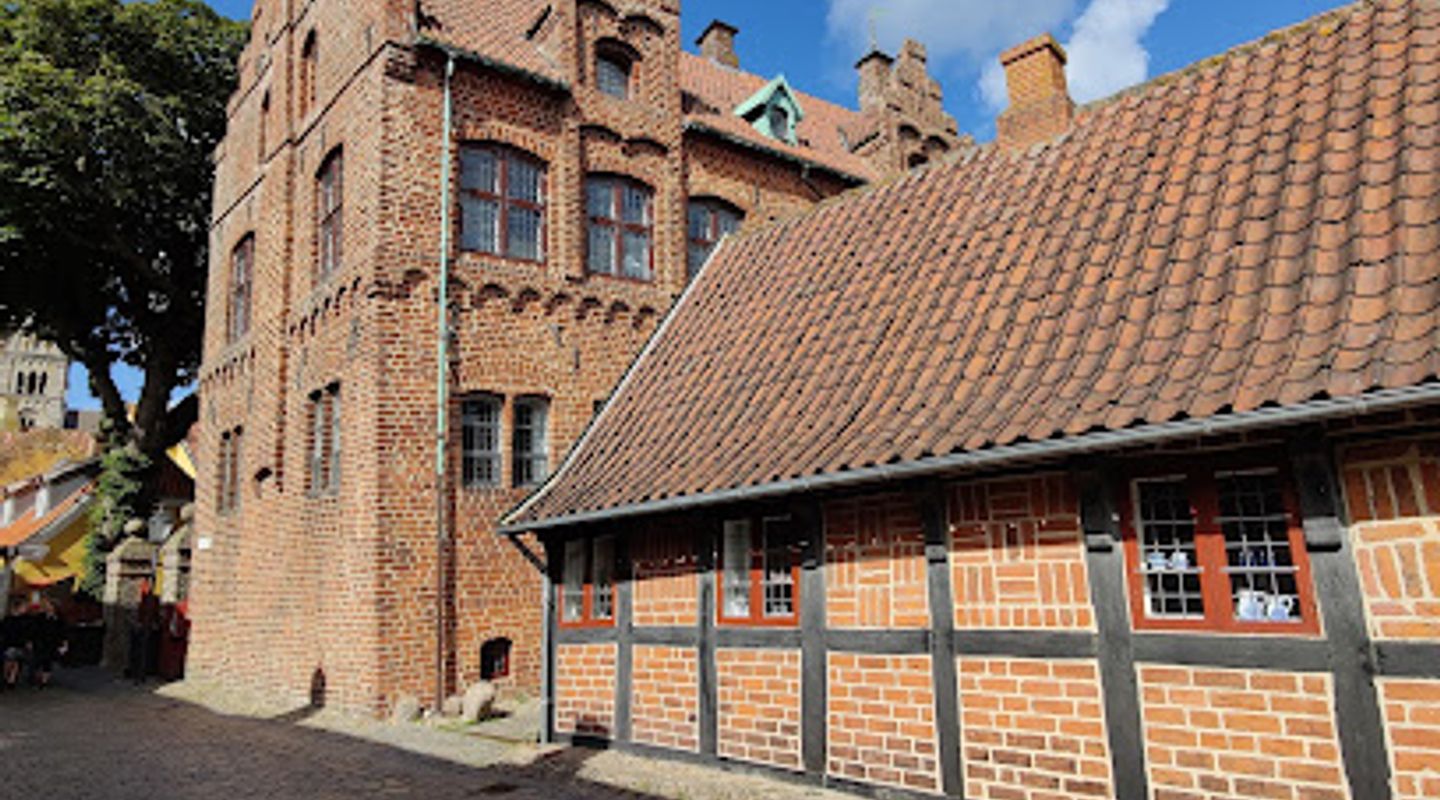
Tucked into Ribe’s cobbled heart, Taarnborg is a beautifully restored Renaissance house that once housed the town’s last Catholic priest and later the hymn writer and bishop Hans Adolph Brorson. Behind its brick façade and stepped gable lies an intimate world of timbered rooms, creaking floors and period details that trace the town’s religious and cultural history. Today it serves as a quiet cultural venue, hosting talks, literature events and small gatherings in an atmospheric historic setting.
A brief summary to Taarnborg
- Puggaardsgade 3, Ribe, 6760, DK
- Click to display
- Click to display
- Duration: 0.5 to 2 hours
- Free
-
 Indoor
- Mobile reception: 4 out of 5

Know before you go
Hi, I'm Eve. Here are a few practical things to know before exploring Taarnborg.
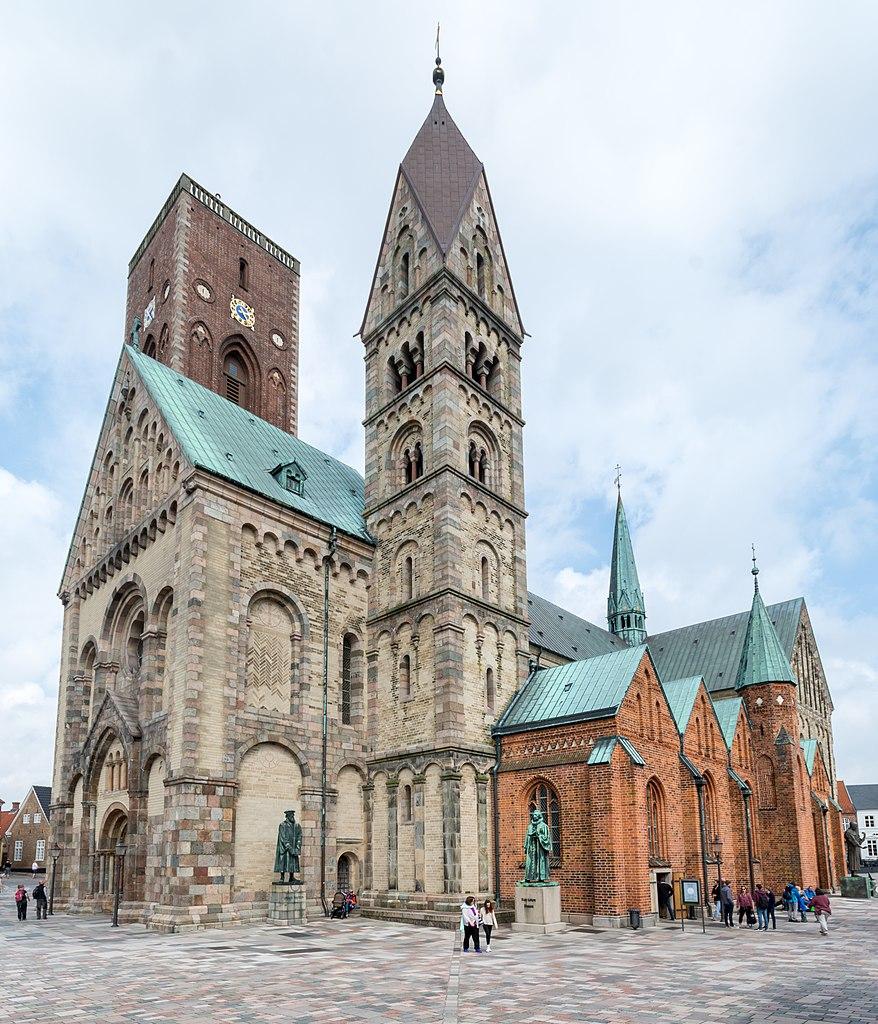
- Combine a visit to Taarnborg with Ribe Cathedral; the short walk between them links the house’s ecclesiastical past to the town’s main church.
- Allow extra time simply to sit in one of the upstairs rooms or courtyard and soak in the creaking floors, timber beams and calm atmosphere.
- Check current cultural events in advance, as lectures or literary evenings held in Taarnborg give deeper insight into Ribe’s religious and artistic life.
Do you manage this location?
Take control to get all the benefits, like improved information, better appearance, and stronger visibility across AI-powered discovery. Learn more about listing your business on Evendo
Activate your presenceOther nearby places you may find interesting
The closest places of the same kind, if this one is not quite what you had in mind.
Explore Taarnborg on the Map
A handpicked selection of must-see spots near Taarnborg, mapped for you.
Getting There
-
Train and walk from Ribe Station
From Ribe Station, Taarnborg is reached on foot in about 10–15 minutes through the compact town centre. The route is flat but paved with cobblestones in places, which can be uneven for wheelchairs and prams. Trains connect Ribe with Esbjerg and Tønder several times per hour during the day, with standard regional fares typically around 40–80 DKK one way depending on distance and time of day.
-
Car from Esbjerg and nearby towns
Driving from Esbjerg to Ribe usually takes 30–40 minutes via the main regional road network. Public parking areas are located around the old town, from where you should plan on a 5–15 minute walk through the historic streets to reach Taarnborg. Parking fees, where charged, are generally modest, often 10–20 DKK per hour, and some zones have time limits, so always check local signs.
-
Regional bus within Southwest Jutland
Regional buses link Ribe with Esbjerg, Tønder and smaller West Jutland towns, with journey times commonly between 30 and 60 minutes depending on route. Tickets are typically 25–60 DKK for adults, and services run more frequently on weekdays than evenings and weekends. From Ribe’s central bus stops, allow around 10 minutes on foot across mostly flat pavements and occasional cobbled stretches to reach the house.
For the on-the-go comforts that matter to you
-
 Restrooms
-
 Seating Areas
-
 Information Boards
Discover more about Taarnborg
A Renaissance house at the heart of Ribe
Taarnborg sits just a short stroll from Ribe Cathedral, its brick walls and stepped gables rising above the narrow Puggaardsgade. Built in the Renaissance period, the house reflects a time when Ribe was one of Denmark’s most important towns, trading across the North Sea and shaping religious life in the region. Its name, which loosely evokes a "tower castle", hints at the building’s proud profile in a compact medieval streetscape.From the outside, the house feels both sturdy and elegant: red brick, carefully articulated windows and a roofline that steps like a miniature fortress. This solid appearance contrasts with the intimate scale of the street, where crooked facades and cobbles carry the atmosphere of centuries of everyday life.Home to priests, bishops and big ideas
Taarnborg’s story is closely linked to the religious currents that flowed through Ribe. It was once home to the town’s last Catholic priest, standing at the threshold between medieval Catholicism and the Lutheran Reformation. Later, the house became associated with Hans Adolph Brorson, the pietist bishop and hymn writer whose verses still echo in Danish church life.Within these walls, sermons were drafted, hymns composed and theological arguments refined. The house embodies the tension between old devotions and new ideas, making it a quiet witness to Denmark’s shift from Catholic to Lutheran faith. That layered history gives Taarnborg a reflective, almost contemplative character even today.Rooms that breathe with age and detail
Step inside and the first impression is of wood, light and texture. Exposed beams cross low ceilings, floorboards tilt slightly with age, and thick walls frame deep-set windows looking out onto the narrow street and inner courtyard. Each room feels distinct yet connected, with original structural elements carefully preserved.Simple furnishings, artworks and occasional displays highlight the building’s story without overwhelming it. The interplay of soft daylight and shadows adds to the sense of time slowed down; you are always aware that generations have moved through these same corridors, climbed these same stairs and paused at these same window ledges.A quiet stage for culture and conversation
Today, Taarnborg functions as a small but active cultural house. Its intimate rooms host lectures, literary evenings, concerts and talks that often draw on local history, theology and art. Seasonal events bring writers, scholars and artists into dialogue with the building’s past, turning the house into a living salon rather than a frozen relic.Because of its scale, gatherings feel personal: voices carry softly from room to room, and during a reading or concert you remain very aware of the creaking beams overhead and the view of Ribe’s rooftops outside. It is a place where contemporary culture and historic surroundings coexist with ease.Atmosphere among Ribe’s cobbles and spires
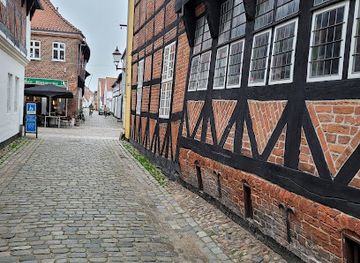
Part of Taarnborg’s charm lies in its immediate surroundings. Step back out and you are in the centre of Ribe’s old town, where narrow streets, half-timbered houses and distant cathedral bells create a distinctly Danish small-town mood. The house shares the streetscape with craft shops, townhouses and the quiet rhythms of everyday life.Visitors often combine a stop here with time in the cathedral and along the river, but Taarnborg rewards lingering. Sit for a moment in the courtyard or by a window, listen to the muffled sounds from the street and let the building’s long memory set the pace. In a town already rich in heritage, this calm Renaissance house adds a thoughtful, intimate note.












Your all‑in‑one travel companion app
Explore expert travel guides, compare and book tours, experiences, hotels, and more—all from the palm of your hand. Download now for seamless trip planning wherever your wanderlust takes you.


Explore More of Ribe
Looking beyond Taarnborg? Discover Ribe for broader travel guides, local hot-spots, and regional highlights.
Explore Ribe
A quietly turning water wheel on Ribe’s old dam, where rushing river water and medieval streets meet in a small but evocative glimpse of the town’s working past.
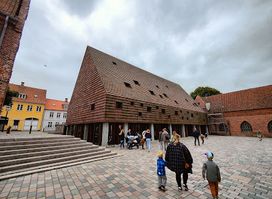
Award-winning parish hall and archaeological showcase where contemporary Nordic architecture hovers above Ribe’s oldest brick ruins beside the cathedral.
