Ravnkilde Travel Guide
Free Guide: A clear, powerful hillside spring where rare plants, spawning sea trout and forest silence meet in a cool, shaded hollow of Rebild Bakker.


A brief summary of Ravnkilde
A clear, powerful hillside spring where rare plants, spawning sea trout and forest silence meet in a cool, shaded hollow of Rebild Bakker.
Tucked into the wooded slopes northwest of Rebild Bakker, Ravnkilde is one of North Jutland’s most beautiful natural springs. Here, crystal-clear water wells up from a swampy hollow, gathering into tiny rivulets that merge into a strong stream flowing toward Lindenborg Å. Boardwalks and small paths draw you close to moss-covered banks, rare wetland plants and, in late autumn, sea trout that swim into the spring to spawn in the cold, oxygen-rich water.
On-site amenities
 Seating areas
 Information boards
 Trash bins
Opening hours
- Every dayOpen 24 hours
Opening hours as listed on the venue’s Google Business Profile. Hours can change for services and special events, so check with the venue before you go.
- Address
- Unnamed Road,, 9520 Skørping
Getting there
Car from Aalborg
Train and walk from Skørping
Bicycle from Skørping or nearby villages
Discover more about Ravnkilde
A hillside spring hidden in Rold Skov
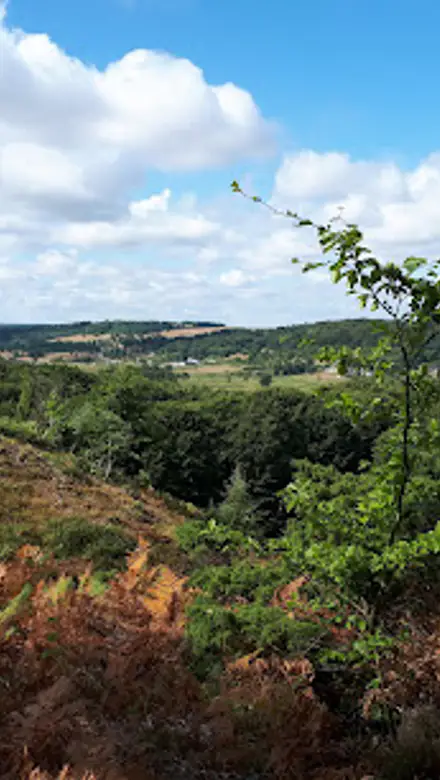
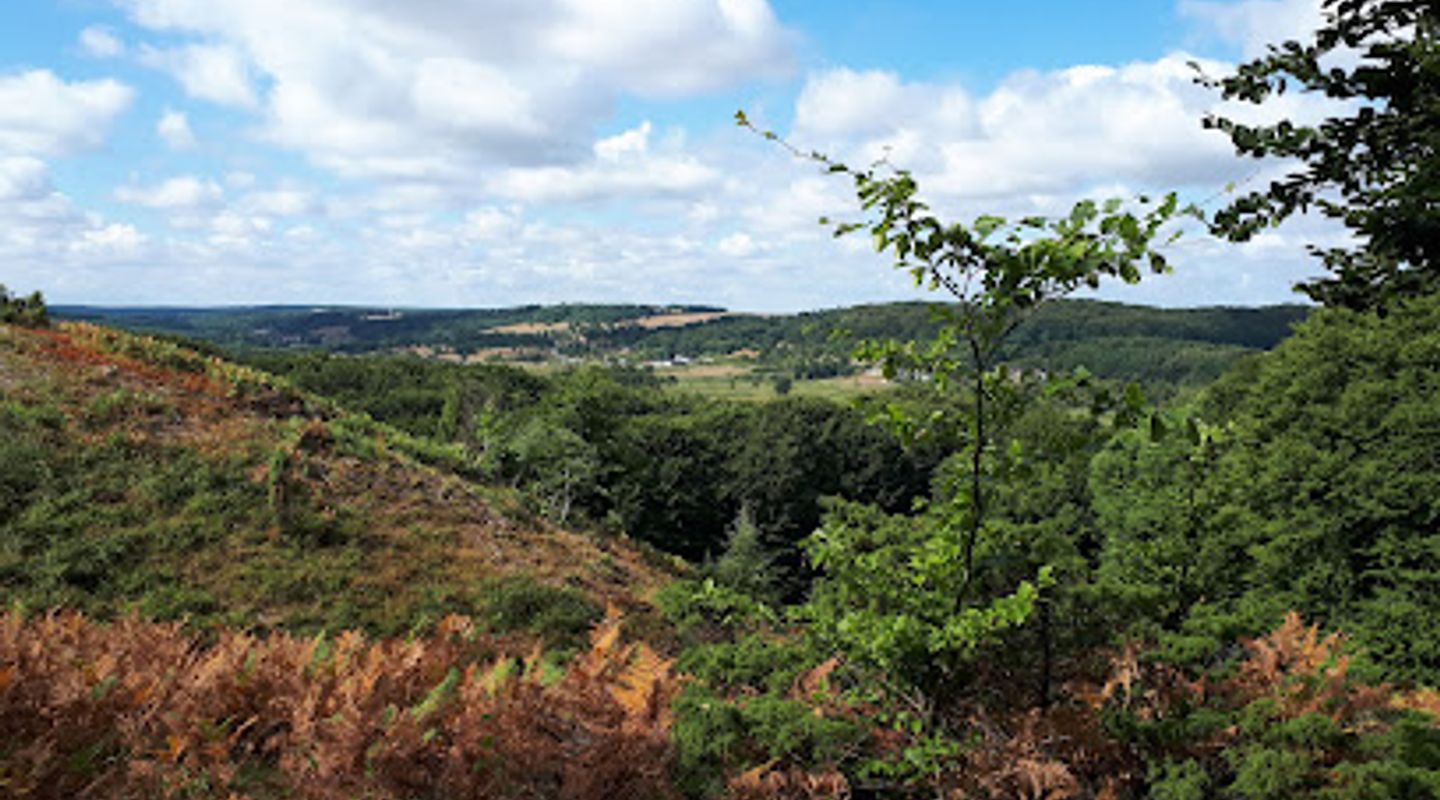
Ravnkilde lies in a shaded hollow on the edge of Rebild Bakker and Rold Skov, where a steep slope forms a natural amphitheatre around the water. Instead of bubbling from a single point, the spring seeps up across a swampy bottom, creating a patchwork of tiny pools and trickles that gradually gather into a clear, fast-flowing stream. The constant temperature and high volume of water give the place a quietly dramatic feel, especially on cool days when mist may hang over the surface.Paths and simple wooden structures draw you close to the water without disturbing its fragile edges. The soundscape is surprisingly rich for such a compact area: running water over gravel, the wind in the trees, and birds calling from the forested slopes above. Even on busy days, you can usually find a corner to stand and simply watch the currents.
Water, geology and a powerful flow
Beneath the surface, layers of sand and limestone feed the spring from deep underground. The yield is impressively high for such a small basin, with tens of litres of cold water emerging every second before running onward toward the river Lindenborg Å. The water is famously clear; you can often see the sandy bottom flickering where new water pushes up through it.This constant flow shapes the tiny channels that lace the wetland. Look closely and you may notice how the current undercuts miniature banks, creates sand fans and carves sinuous lines through patches of moss. The ford where the stream crosses the nearby gravel road is another reminder of the spring’s strength: at times the water spreads into a shallow sheet, turning the track into a small, flowing causeway.
A botanical haven in miniature
Ravnkilde’s cool, nutrient-rich water creates ideal conditions for uncommon plants. The swampy floor and banks host several species of moss that thrive only in consistently wet, clean environments. In spring and early summer, the area becomes a subtle mosaic of greens and yellows as cold-loving wood sorrel emerges under the trees and golden saxifrage dots the damp ground.Closer to the water you may find creeping spearwort, water mint, watercress and delicate cutleaf water parsnip. These species form low, tangled mats that stabilise the banks and offer habitat for insects and small aquatic creatures. The diversity is easy to overlook at first glance; take time to scan the edges of the channels and you begin to see just how many different leaves, textures and shades of green are packed into this small hollow.
Sea trout and the life of the stream
The spring is not only a refuge for plants. In November and December, large sea trout make an impressive journey from the fjord up through Lindenborg Å and into the Ravnkilde system to spawn. At high water they can even be seen crossing the gravel track via the ford, using the shallow flow to reach the main spring area. In the clear water, their movements over the gravel beds are easy to follow from the bank.Outside the spawning season, the stream supports a quieter web of life: invertebrates clinging to stones, birds hunting along the margins and amphibians using the cool pools as shelter. Because the spring water keeps a relatively stable temperature, the microclimate here can feel noticeably different from the surrounding forest – cooler in summer, milder in winter.
Walking, contemplation and connecting with the landscape
Most visitors experience Ravnkilde as part of a wider walk in Rebild Bakker or Rold Skov, following waymarked trails that dip down to the spring before climbing back into open heath or dense beech woodland. The contrast between open hills and this enclosed, shaded bowl is striking and makes the spring a natural pause point.Benches and informal seating spots invite you to stop, listen and watch the play of light on the water. Photographers are drawn to reflections of the trees, the bright greens of moss and the sight of fish holding steady in the current. For many, though, the main pleasure is simply standing quietly in this cool, damp pocket of forest and feeling how much life is sustained by a single, powerful source of water.
Evendo Review Centre
 Google
Guest reviews
Best time to go
Quietest: Jan, Feb & Mar · before 7am or from 9pm
Busy times are Evendo estimates for a typical year, to help you plan. Actual crowds vary with events, school holidays and the weather.
Explore Ravnkilde on the map
A handpicked selection of must-see spots near Ravnkilde, mapped for you.
Get your free copy of our complete guide to Ravnkilde, delivered straight to you.
Everything on this page, from opening hours and how to get there to Eve’s tips and the best time to go, in one PDF you can read offline, print or share.
Already have an account? Sign in
Your Ravnkilde guide is ready.
We'll send it to · Not you? Sign out

Getting your guide ready…
We are putting together a fresh copy of the Ravnkilde guide. This can take up to a minute.
This can take a few moments. If your browser asks, choose Allow so the download can start. You'll find the guide in your Downloads folder.
Nothing happened? Download it again
Sorry, the guide is taking longer than usual. Please try again in a minute, or get it by email instead.
Other nearby places you may find interesting
The closest places of the same kind, if this one is not quite what you had in mind.
-
-
-
-
-


Swipe for more places
More to explore near Ravnkilde

 Best experiences near Ravnkilde
 Best hotels near Ravnkilde
 Best landmarks near Ravnkilde
 Best attractions near Ravnkilde
 Best shops near Ravnkilde
 Best restaurants near Ravnkilde
 Best bars near Ravnkilde
Do you manage this location?
Take control to get all the benefits, like improved information, better appearance, and stronger visibility across AI-powered discovery.
Explore more

Explore more of Rold Skov
Explore Rold Skov, Denmark's largest forest, teeming with ancient trees, diverse wildlife, and a wealth of outdoor activities for nature lovers and history enthusiasts alike.
Explore Rold Skov
Explore more of Denmark
Discover Denmark: A perfect blend of history, modern design, and the cozy concept of hygge. Explore vibrant cities, serene landscapes, and world-class cuisine.
Explore Denmark