
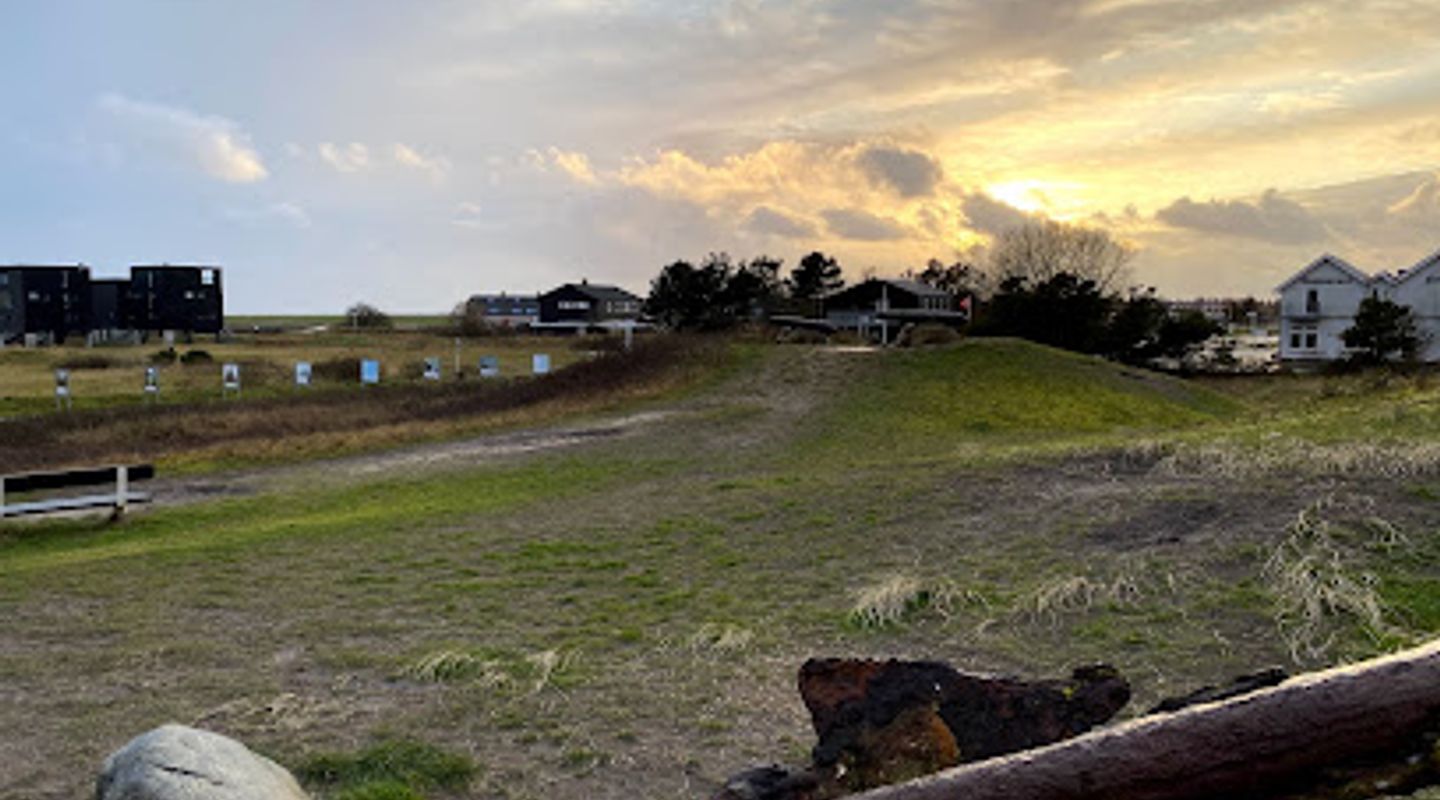
Kanonenhügel, Romo Travel Guide
A modest grassy mound above Havneby harbour where two 17th‑century cannons, wide Wadden Sea views and Rømø’s maritime past quietly meet.
Kanonenhügel is a modest grassy mound overlooking Havneby harbour on the Danish North Sea island of Rømø. Two heavy Swedish cannons from the Thirty Years’ War were placed here in 1932 as a memorial to the 1644 naval battle in the Lister Deep between Rømø and Sylt. Today the site combines low-key military history with wide views over the Wadden Sea, ferry traffic and the working fishing harbour below, making it a brief but atmospheric stop on any stroll through Havneby.
A brief summary to Kanonenhügel
- Röm, Havneby, Havneby, DK
- Duration: 0.5 to 1.5 hours
- Free
-
 Outdoor
- Mobile reception: 4 out of 5

Know before you go
Hi, I'm Eve. Here are a few practical things to know before exploring Kanonenhügel.
- Aim to visit in the late afternoon or around sunset when the light over the Wadden Sea is soft and the cannons make striking silhouettes.
- Bring a windproof layer; the hill is exposed and breezy even on warmer days, especially outside high summer.
- Combine a brief stop at Kanonenhügel with a stroll around the harbour and a visit to nearby cafés or fish stalls for a relaxed outing.
- If visiting with children, use the cannons to spark imagination and explain the 1644 naval battle between Rømø and Sylt in simple terms.
- Wear sturdy shoes in wet weather; the grassy slope can become slippery after rain or in winter conditions.
Do you manage this location?
Take control to get all the benefits, like improved information, better appearance, and stronger visibility across AI-powered discovery. Learn more about listing your business on Evendo
Activate your presenceOther nearby places you may find interesting
The closest places of the same kind, if this one is not quite what you had in mind.

Explore Kanonenhügel on the Map
A handpicked selection of must-see spots near Kanonenhügel, mapped for you.
Getting There
-
Car from Rømø causeway
From the mainland, follow the causeway onto Rømø and continue south towards Havneby; the drive from the causeway entrance to the harbour area typically takes 15–20 minutes in normal traffic. Parking near the harbour is usually free or low‑cost, but spaces can be busy in school holidays and on sunny weekends. The final access to Kanonenhügel involves a short walk up a grassy slope, which may be challenging for visitors with limited mobility in wet or icy conditions.
-
Local bus within Rømø
Regional buses run between the mainland town of Skærbæk and Rømø, with services continuing down the island to Havneby; the full journey usually takes around 45–60 minutes depending on stops and connections. Tickets are typically in the range of 30–60 DKK per adult, with discounts for children and travel cards. Services are less frequent in the evening and outside summer, so checking current timetables in advance is advisable. From the bus stop in Havneby, expect a short, mostly level walk through the harbour area before gently ascending the hill.
-
Ferry connection via Sylt
If you are coming from the German island of Sylt, car‑ and passenger‑ferry services operate between List and Havneby, with a crossing time of about 40–45 minutes in calm conditions. Typical one‑way fares for foot passengers start around 15–25 EUR, while vehicles are charged significantly more depending on size and season. The ferry can be busy during peak holiday periods and in stormy weather crossings may be adjusted or cancelled. On arrival in Havneby, Kanonenhügel lies within walking distance of the ferry harbour, but the short grassy ascent may not be suitable for all wheelchairs or prams, especially after heavy rain.
For the on-the-go comforts that matter to you
-
 Restrooms
-
 Food Options
-
 Drink Options
-
 Seating Areas
-
 Trash Bins
-
 Information Boards
Discover more about Kanonenhügel
A quiet hill with a weighty past
At first glance, Kanonenhügel is little more than a grassy rise beside Havneby’s harbour; a small knoll with a bench, a flagpole and two dark, timeworn cannons aiming silently out to sea. It is easy to pass without a second look, overshadowed by the bustle of ferry traffic, restaurants and the fishing quay below. Yet this unassuming mound is one of Rømø’s most evocative historical spots, a place where the island’s peaceful present brushes against a much more turbulent age.The name says it all: this is the “cannon hill”, a man‑made elevation that became a memorial site in the early 20th century. The short climb to the top is gentle, suitable for most visitors, and rewarded with fresh North Sea air and an open sweep of sky. Low shrubs rustle in the wind, and the cries of gulls mix with the hum of engines from the harbour, anchoring you firmly in Rømø’s maritime world.Echoes of the Thirty Years’ War
The two cannons dominating the hill are Swedish pieces dating back to the Thirty Years’ War, the pan‑European conflict that raged from 1618 to 1648 and reshaped much of northern Europe. Each weighs around three‑quarters of a ton and once fired solid iron balls several kilos in weight, intended to punch holes in wooden hulls and fortifications. Their presence on a small Danish island hints at a time when the waters around Rømø were embroiled in great power struggles.In 1644, the narrow channel between Rømø and Sylt, known as the Lister Deep, became the stage for a pivotal naval engagement between Danish forces and a combined Swedish–Dutch fleet. The battle, supplied and observed from nearby coasts and harbours, underscored how strategically important these shallow tidal waters once were. The cannons now resting on Kanonenhügel were set up here in 1932 as a memorial to that episode, turning the hill into an open‑air history lesson.Stories, speculation and sea lore
Part of Kanonenhügel’s charm lies in the stories that cling to the guns themselves. One tradition holds that they were salvaged from the seabed of the Lister Deep, raised as relics of the 1644 battle. Another suggests that local trading ships once carried them, captured or purchased from Swedish sources, and that they later found a dignified retirement on this mound above the harbour. The exact chain of events may never be fully pinned down, but the uncertainty only adds to the cannons’ mystique.As you walk around the heavy iron barrels, pitted and dark with age, it is easy to imagine them in use: crews hauling on ropes, smoke drifting across the waves, commands carried away by the wind. The contrast with today’s atmosphere – campervans in the distance, cyclists passing the harbourfront, the steady rhythm of the modern ferry to Sylt – is striking. Kanonenhügel distils centuries of maritime history into a single compact scene.Harbour views and wide Wadden horizons
Beyond its historical significance, Kanonenhügel is also a simple but attractive viewpoint. From the top you can look across Havneby’s fishing harbour with its trawlers, crab boats and working quays, then further out to the Wadden Sea’s shifting flats and channels. At low tide, broad expanses of sand and mud glint in the light, dotted with wading birds; at high tide, the water laps closer and the channel becomes a busy fairway.On clear days the outline of Sylt appears on the horizon, linking the memorial on the hill directly to the waters where the 17th‑century battle unfolded. Sunsets can be particularly atmospheric, with the sky reflected in the tidal shallows and the cannons turning into dark silhouettes against the last light. Even on grey, blustery days, the exposed position gives you a vivid sense of the North Sea climate that shaped life on Rømø for generations.A short stop woven into a day on Rømø
Kanonenhügel rarely demands more than a short visit, making it easy to combine with other experiences in Havneby and around the island. It sits close to cafés, fish stalls and the harbourfront promenade, so you can punctuate a walk with a quick detour up the hill before continuing along the waterfront or towards the island’s famous wide beaches.Families often find the spot useful for giving historical events a tangible form, with the cannons serving as a concrete starting point to talk about sea battles and trade routes. For photographers, the modest elevation adds just enough height to capture the interplay of harbour life, tidal landscape and big skies. Taken together, these elements make Kanonenhügel a small but distinctive thread in Rømø’s broader tapestry of dunes, villages and seafaring heritage.












Your all‑in‑one travel companion app
Explore expert travel guides, compare and book tours, experiences, hotels, and more—all from the palm of your hand. Download now for seamless trip planning wherever your wanderlust takes you.


Explore More of Romo
Looking beyond Kanonenhügel? Discover Romo for broader travel guides, local hot-spots, and regional highlights.
Explore Romo
Denmark’s largest national park, Wadden Sea is a UNESCO-listed coastal wilderness on Fanø, renowned for vast tidal flats, rare wildlife, and unforgettable migratory bird displays.
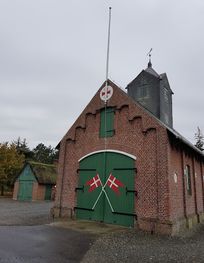
Compact red-brick lifeboat station turned firehouse, telling Rømø’s quietly dramatic story of storms, shipwrecks and island resilience along the Wadden Sea.
