Helligkors Kilde, Roskilde Travel Guide
Free Guide: Once a famed holy spring and royal water source, Hellig Kors Kilde is now a quiet stone-framed reminder of Roskilde’s deep bond with its life-giving springs.


A brief summary of Helligkors Kilde
Once a famed holy spring and royal water source, Hellig Kors Kilde is now a quiet stone-framed reminder of Roskilde’s deep bond with its life-giving springs.
Tucked just off Helligkorsvej in central Roskilde, Hellig Kors Kilde is a small but storied spring that once ranked among Denmark’s most renowned holy wells. For centuries pilgrim spot and royal water source, its modest stone monument and trickling outlet now tell of healing rites, medieval beliefs and the city’s early dependence on spring water. Today it forms one of eight preserved sources on Roskilde’s 5 km Kildestrøg walking route, a quiet little pause amid the urban bustle.
On-site amenities
 Seating areas
 Trash bins
 Information boards
- Address
- 4000 Roskilde
- Website
Getting there
On foot from Roskilde Station
Local bus within Roskilde
Car or taxi within Roskilde
Discover more about Helligkors Kilde
A modest spring with a powerful reputation
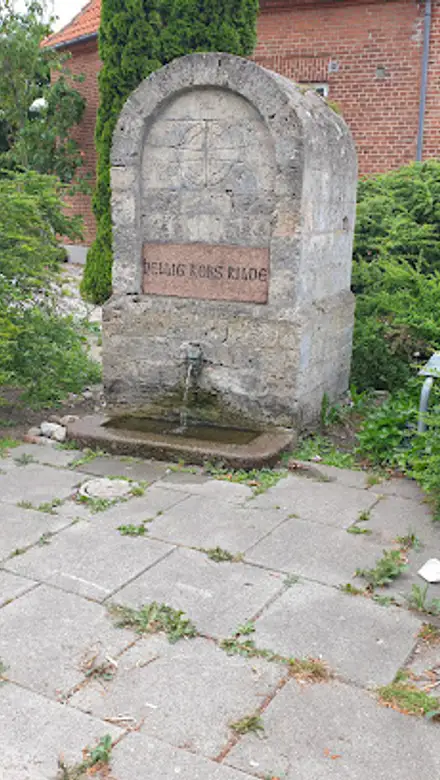
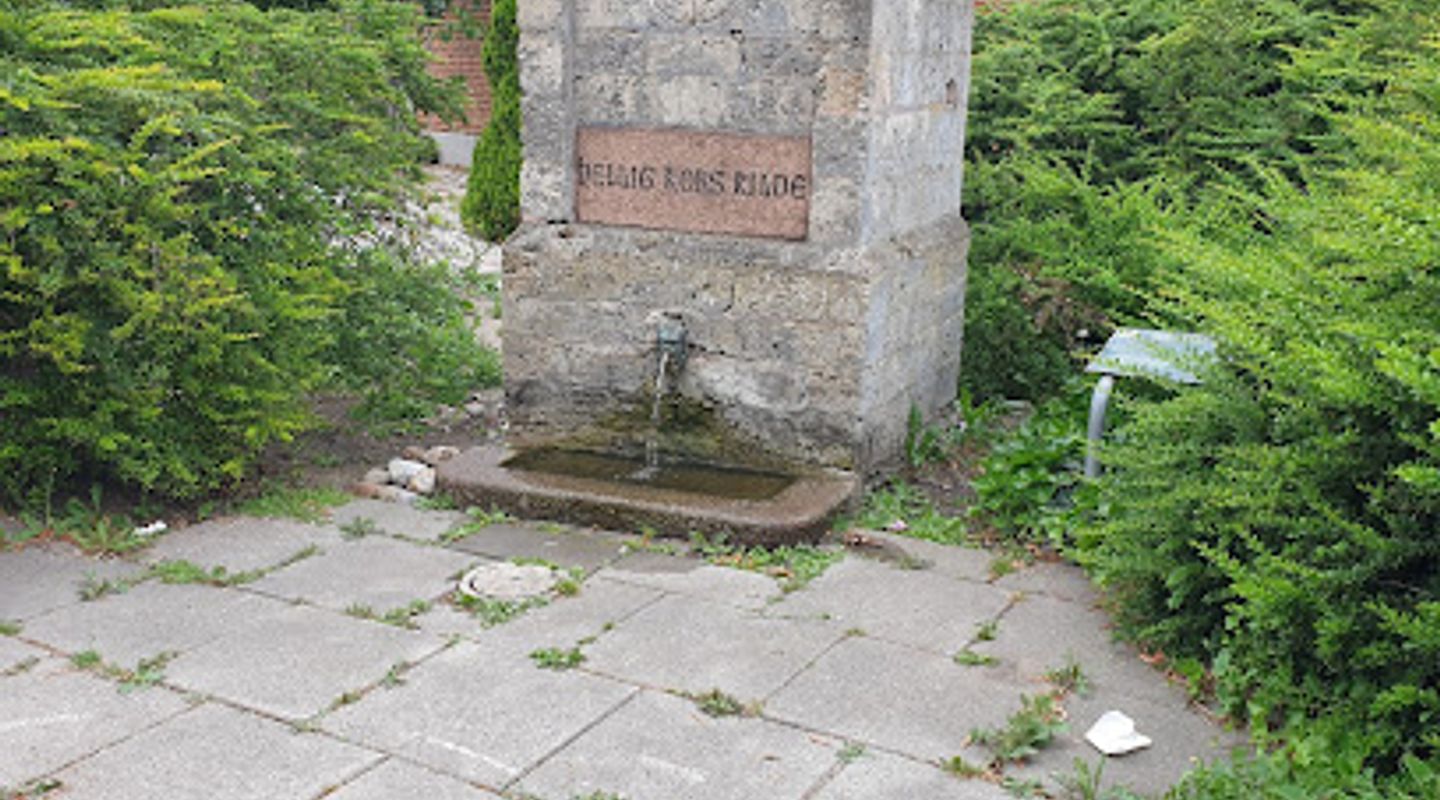
Hellig Kors Kilde is easy to overlook at first glance: a low stone structure set into the slope beside Helligkorsvej, framed by paving, benches and a discreet water outlet. Yet this unassuming spot is one of Roskilde’s most storied springs, counted among the city’s three classic holy wells together with Sankt Ibs and Sankt Hans. For centuries its water was credited with healing powers, particularly for eye ailments and lingering sicknesses, drawing townsfolk and travellers to drink, wash and quietly hope for relief.The sacred status is rooted in medieval belief that certain springs were touched by divine favour. Here the association with the Holy Cross gave the water an extra aura of protection. The name alone was enough to set this source apart from the many ordinary wells and seeps that dotted the slopes around Roskilde’s old town.
From royal drinking water to city monument
By the 1600s Hellig Kors Kilde had importance far beyond Roskilde. Its clear water was so prized that it was supplied to the Danish royal household, a practical sign of favour that also reinforced its reputation as exceptionally pure. Later the spring contributed to the broader water supply that helped the growing town, before modern waterworks gradually took over and the natural flow diminished.As the spring weakened, attention shifted from water to memory. In the early 1900s a stone monument was erected on the historic spot, built of local porous limestone known as frådsten and designed to evoke a small grotto with a niche and outlet. Today the trickle you see is fed by the municipal network rather than the original aquifer, but the layout recalls the old wellhead and keeps the story legible in the streetscape.
Rituals, pottery shards and healing hopes
Archaeological work in Roskilde’s springs has revealed layers of broken pottery at their bottoms, and Hellig Kors Kilde is no exception. In the Middle Ages it was customary to drink the healing water from a brand-new clay vessel and then smash it, casting the shards into the source. No one else should risk drinking from the same cup and symbolically taking on the owner’s illness. Over time the shattered offerings formed a quiet archive of fears, faith and everyday craftsmanship.Such customs gave the place a distinctly ritual atmosphere. People came not only for water but for reassurance, following a pattern of approach, drinking and leaving something behind. Standing here today, the surroundings are urban and ordered, yet the idea of the spring as a threshold between the ordinary and the hoped-for still colours its story.
A key stop on Roskilde’s spring route
Modern Roskilde has embraced its wells as a defining heritage. Hellig Kors Kilde is one of eight marked sources on the 5 km Kildestrøget, a signed route that threads through parks, side streets and small squares. Each spring has its own design and narrative, but this one often serves as an introduction: once royal supplier, once miracle source, now a compact urban pocket where water, stone and memory meet.Simple seating nearby invites you to pause. The sound of the outlet is gentle, almost domestic, yet the interpretive boards and careful stonework signal that this is more than street furniture. It is a small outdoor room dedicated to the idea that a town grew here because water rose from the ground, long before pipes, pumps and reservoirs took over.
Experiencing the atmosphere today
For visitors, Hellig Kors Kilde is less about dramatic views and more about noticing details. Look at the colour and texture of the frådsten blocks, shaped by centuries of use in local buildings. Trace the line where the water emerges and imagine it flowing freely from the hillside. Picture the slope before pavement, dotted with women washing clothes, children filling jugs and sick pilgrims waiting their turn.The site works particularly well as a short contemplative stop within a wider walk between Roskilde’s cathedral, museums and other springs. Its scale is intimate: a place to sit a few minutes, listen to the city, and let a small trickle of water connect medieval healing rites, royal routines and the everyday life of a modern Danish town.
Evendo Review Centre
 Google
Guest reviews
Best time to go
Quietest: Jan, Feb & Nov · before 7am or from 8pm
Busy times are Evendo estimates for a typical year, to help you plan. Actual crowds vary with events, school holidays and the weather.
Explore Helligkors Kilde on the map
A handpicked selection of must-see spots near Helligkors Kilde, mapped for you.
Get your free copy of our complete guide to Helligkors Kilde, delivered straight to you.
Everything on this page, from opening hours and how to get there to Eve’s tips and the best time to go, in one PDF you can read offline, print or share.
Already have an account? Sign in
Your Helligkors Kilde guide is ready.
We'll send it to · Not you? Sign out

Getting your guide ready…
We are putting together a fresh copy of the Helligkors Kilde guide. This can take up to a minute.
This can take a few moments. If your browser asks, choose Allow so the download can start. You'll find the guide in your Downloads folder.
Nothing happened? Download it again
Sorry, the guide is taking longer than usual. Please try again in a minute, or get it by email instead.
Other nearby places you may find interesting
The closest places of the same kind, if this one is not quite what you had in mind.
-
-
-

-
-


Swipe for more places
More to explore near Helligkors Kilde

 Best experiences near Helligkors Kilde
 Best hotels near Helligkors Kilde
 Best landmarks near Helligkors Kilde
 Best attractions near Helligkors Kilde
 Best shops near Helligkors Kilde
 Best restaurants near Helligkors Kilde
 Best bars near Helligkors Kilde
Do you manage this location?
Take control to get all the benefits, like improved information, better appearance, and stronger visibility across AI-powered discovery.
Explore more

Explore more of Roskilde
Discover Roskilde: A blend of rich history, Viking heritage, and vibrant music culture in the heart of Denmark, just a short journey from Copenhagen.
Explore Roskilde
Explore more of Denmark
Discover Denmark: A perfect blend of history, modern design, and the cozy concept of hygge. Explore vibrant cities, serene landscapes, and world-class cuisine.
Explore Denmark