Augustenborg Palace Travel Guide
Free Guide: A serene Baroque ducal palace overlooking Augustenborg Fjord, where landscaped gardens, a historic church and quiet coastal paths reveal centuries of Danish history.


A brief summary of Augustenborg Palace
A serene Baroque ducal palace overlooking Augustenborg Fjord, where landscaped gardens, a historic church and quiet coastal paths reveal centuries of Danish history.
Augustenborg Palace is a stately late Baroque residence overlooking Augustenborg Fjord on the island of Als in southern Denmark. Once the seat of the dukes of Schleswig-Holstein-Sonderburg-Augustenborg, the white three-winged palace is now an administrative building, so its interiors are generally closed. Visitors instead explore the expansive landscaped park, stroll along the water, discover a small mini-museum, and visit the elegant palace church on selected opening hours.
On-site amenities
 Restrooms
 Drink options
 Food options
 Seating areas
 Picnic areas
 Trash bins
 Information boards
- Address
- Augustenborg Slot, 6440 Augustenborg
- Website
Getting there
Car from Sønderborg
Regional bus within Als
Bicycle from nearby towns
Discover more about Augustenborg Palace
A ducal residence above Augustenborg Fjord
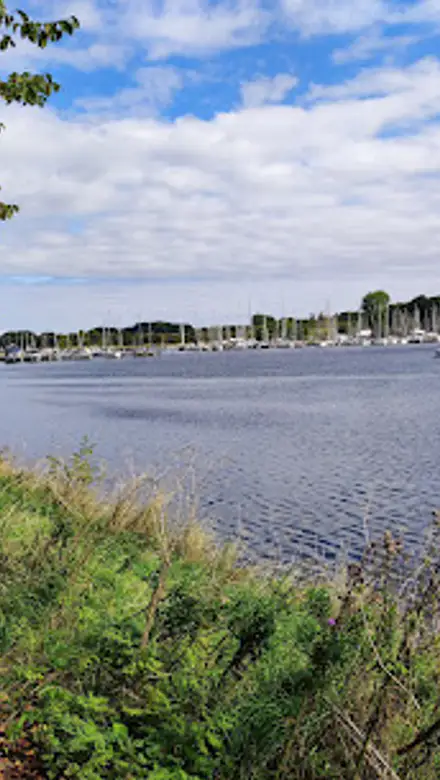
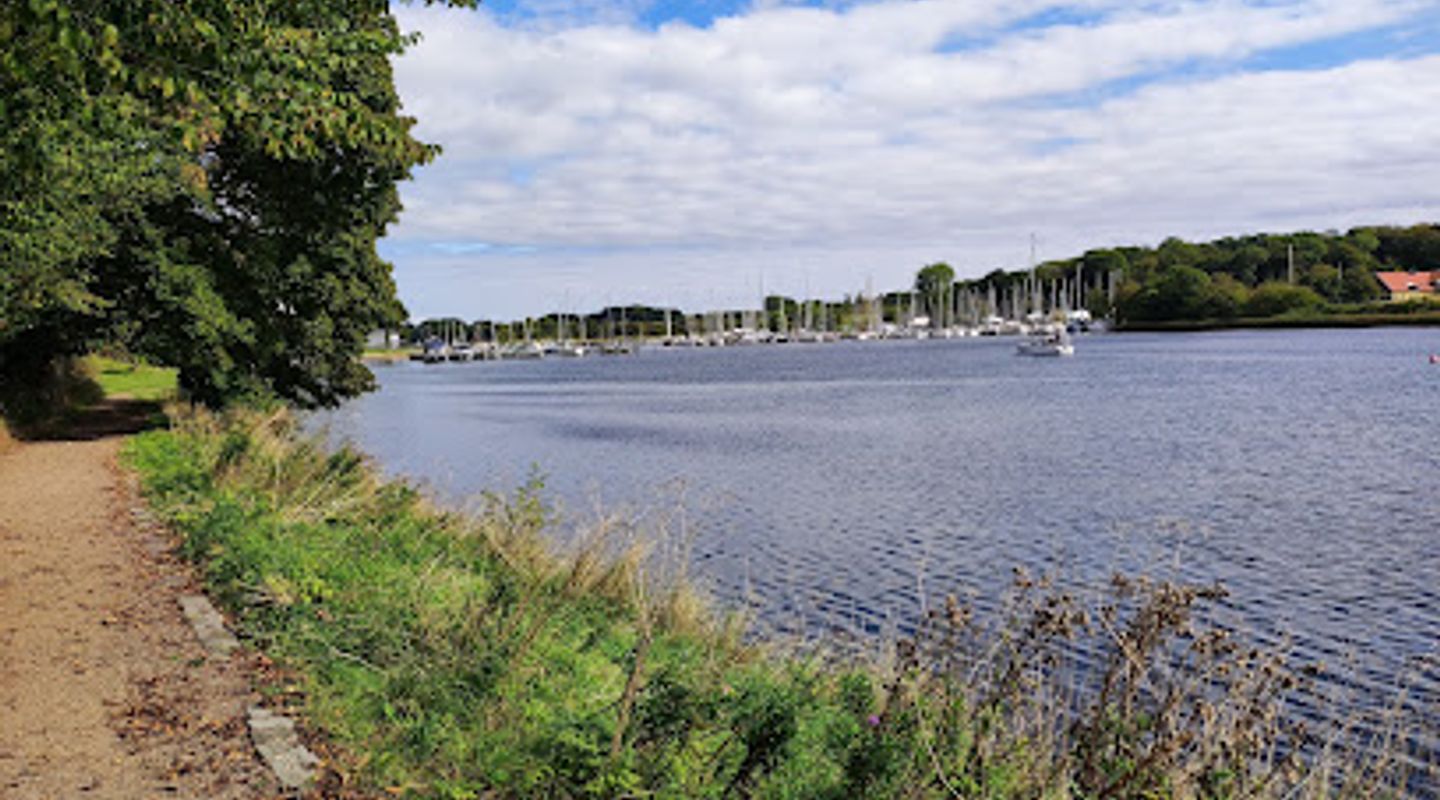
Augustenborg Palace rises in crisp white symmetry above the narrow Augustenborg Fjord, its long wings and red roof forming one of southern Denmark’s most graceful Baroque silhouettes. Built between 1770 and 1776 as the principal residence of the dukes of Schleswig-Holstein-Sonderburg-Augustenborg, it replaced an earlier half‑timbered manor from the 1660s and signalled the power and taste of a family closely tied to the Danish crown.The palace takes its name from Duchess Auguste, whose marriage into the ducal line helped establish Augustenborg as a distinct branch of the wider Schleswig-Holstein dynasty. Seen from the gardens or from the water, the design feels almost theatrical: a formal courtyard in front, a sweeping façade behind, and the fjord landscape unfolding like a painted backdrop beyond.
Layers of history behind closed doors
Within these walls, generations of dukes navigated the complex politics between Denmark and the German states. The last reigning duke, Christian August II, left during the mid‑19th‑century conflicts over Schleswig-Holstein, after which the palace was seized and repurposed as military barracks and later as a women’s seminary. In the 20th century, it entered a new chapter when the Danish state converted large parts of the complex into a psychiatric hospital.Today, the hospital has moved away and the main buildings house the Danish Agricultural Agency. This means the historic state rooms and ducal apartments are no longer freely accessible. The life of the palace is now largely administrative, yet its outward appearance still tells of courtly rituals, family dramas and far‑reaching political decisions that once echoed through its halls.
Gardens shaped by fashion and the sea
The gardens at Augustenborg are where the palace truly opens itself to visitors. Originally set out in formal Baroque style, they were later softened into a landscape park with broad lawns, terraced slopes and shady avenues that appear to spill straight into the fjord. Strolling here, you move between clipped hedges, scattered sculptures and glimpses of water framed by beech and linden trees.In the northern reaches of the grounds, small follies and features hint at the tastes of 18th‑century aristocracy: an ice hill once used to store winter ice for the household, traces of ornamental lakes and summerhouses that invited quiet contemplation. The art centre in part of the garden introduces contemporary sculpture into this historic setting, adding another layer to the experience.
Stories of Andersen, princesses and princes
Augustenborg is rich in personal stories. A famed linden tree in the park is associated with Hans Christian Andersen, who visited the palace and is said to have found inspiration here, possibly for “The Little Match Girl”. Elsewhere in the grounds stand the White Mansion and the Red Mansion, built for delicate Princess Louise and for Prince Emil August respectively, each lending human scale to what might otherwise feel like an imposing ducal domain.These smaller houses, once homes for retired generals and fragile daughters, evoke a quieter life behind the formal façade: evenings at the piano, letters written by candlelight, walks along the fjord to escape the rigid protocols of court. They remind visitors that this was not just a symbol of power but a lived‑in place of everyday concerns, joys and sorrows.
Visiting the church, mini‑museum and park today
Although the palace interior itself is closed, you can still step into its orbit. The palace church, in a separate wing, serves as the local parish church and opens at specific times, revealing a refined Rococo space that contrasts with the more austere exterior. Nearby, a compact mini‑museum in one of the former service buildings provides a concise introduction to the ducal family, their heraldry and the evolution of the estate.Most visitors linger in the park and courtyard, free to roam. Paths lead along the fjord, through woodland and across open lawns, making this an appealing place for reflective walks, photography and picnics. On certain occasions the gardens have hosted concerts and cultural events, when music and temporary stages transform the quiet scenery into a grand outdoor venue.
A tranquil corner of Als with a grand profile
Despite its prominent scale and turbulent history, Augustenborg Palace today feels remarkably calm. The surrounding town retains many historic buildings related to the ducal era, giving the area a cohesive architectural character. Yet the atmosphere is more village than capital: bicycles by the harbour, sails on the fjord, and the palace itself presiding in dignified silence.For travellers exploring Als and southern Jutland, the palace grounds offer a rewarding pause—a chance to connect impressive architecture, political history and gentle coastal landscapes in one compact, walkable setting. Even without stepping inside, you leave with a strong sense of the place’s role in Denmark’s story and its enduring relationship with the water and land around it.
Evendo Review Centre
 Google
Guest reviews
Best time to go
Quietest: Jan, Feb & Nov · before 7am or from 8pm
Busy times are Evendo estimates for a typical year, to help you plan. Actual crowds vary with events, school holidays and the weather.
Explore Augustenborg Palace on the map
A handpicked selection of must-see spots near Augustenborg Palace, mapped for you.
Get your free copy of our complete guide to Augustenborg Palace, delivered straight to you.
Everything on this page, from opening hours and how to get there to Eve’s tips and the best time to go, in one PDF you can read offline, print or share.
Already have an account? Sign in
Your Augustenborg Palace guide is ready.
We'll send it to · Not you? Sign out

Getting your guide ready…
We are putting together a fresh copy of the Augustenborg Palace guide. This can take up to a minute.
This can take a few moments. If your browser asks, choose Allow so the download can start. You'll find the guide in your Downloads folder.
Nothing happened? Download it again
Sorry, the guide is taking longer than usual. Please try again in a minute, or get it by email instead.
Other nearby places you may find interesting
The closest places of the same kind, if this one is not quite what you had in mind.
-
Sønderborg Castle An almost 800-year-old waterfront fortress turned museum, Sønderborg Castle explores Southern Jutland’s borderland history amid Renaissance halls, dungeons and a tranquil park.
-
Deutsches Museum Nordschleswig A modern borderland museum in Sønderborg exploring the history, culture and identity of the German minority in Northern Schleswig.
-
Dybbøl Mill A battle-scarred windmill on Dybbøl Banke, Dybbøl Mill combines working machinery, battlefield history and national symbolism above the fjord at Sønderborg.
-
Historiecenter Dybbøl Banke Experience the dramatic 1864 war through immersive reconstructions and sensory storytelling on Denmark's most significant battlefield.
-
Hønekilden A tiny harbourfront oasis where a royal water source, bronze hens and centuries of Sønderborg legends gather around a once-famous spring.
Swipe for more places
More to explore near Augustenborg Palace

 Best experiences near Augustenborg Palace
 Best hotels near Augustenborg Palace
 Best landmarks near Augustenborg Palace
 Best attractions near Augustenborg Palace
 Best shops near Augustenborg Palace
 Best restaurants near Augustenborg Palace
 Best bars near Augustenborg Palace
Do you manage this location?
Take control to get all the benefits, like improved information, better appearance, and stronger visibility across AI-powered discovery.
Explore more
Explore more of Sønderjylland
Sønderjylland: A Journey Through Denmark's Scenic Landscapes, Rich History, and Vibrant Traditions.
Explore Sønderjylland
Explore more of Denmark
Discover Denmark: A perfect blend of history, modern design, and the cozy concept of hygge. Explore vibrant cities, serene landscapes, and world-class cuisine.
Explore Denmark