
Befrielsessten i Vester Sottrup
A quiet stone marking Denmark's liberation and Vester Sottrup's wartime legacy.
A solemn memorial stone in the small Danish town of Vester Sottrup, erected to commemorate the 50th anniversary of the end of World War II. Located on Nybølvej in Sønderborg municipality, this stone stands as a tribute to the liberation of Denmark and the sacrifices made during the occupation. The monument reflects the town's significant role in Danish resistance history and serves as a quiet reminder of the nation's struggle for freedom during one of Europe's darkest periods.
A brief summary to Befrielsessten i Vester Sottrup
- Nybølvej 2, Sønderborg, 6400, DK
- Duration: 0.25 to 1 hours
- Free
-
 Outdoor
- Mobile reception: 4 out of 5

Know before you go
Hi, I'm Eve. Here are a few practical things to know before exploring Befrielsessten i Vester Sottrup.
- Visit during quiet morning or late afternoon hours to experience the memorial in a contemplative atmosphere without crowds.
- Combine your visit with exploration of Vester Sottrup's railway station (opened 1901) and the town's cemetery, which contains war graves from three separate conflicts.
- The nearby Peerløkke archaeological site offers insight into 1,000 years of settlement history in the region, visible through interpretive markers.
- Bring a camera for documentary photography; the stone's inscriptions and surrounding landscape offer meaningful visual records of Danish wartime remembrance.
Do you manage this location?
Take control to get all the benefits, like improved information, better appearance, and stronger visibility across AI-powered discovery. Learn more
Activate your presenceOther nearby places you may find interesting

Getting There
-
Train
From Sønderborg station, regional trains serve Vester Sottrup station approximately 15–20 minutes away. Service runs several times daily with varying frequency depending on the day of the week. The station is centrally located in town, from which the memorial is a short walk. Journey cost approximately 30–50 DKK one way.
-
Car
From Sønderborg town center, drive northeast on Route 399 toward Gråsten for approximately 13 kilometers, following signs to Vester Sottrup. The memorial is located on Nybølvej in the town center. Parking is available on local streets near the site at no charge. Journey time approximately 15–20 minutes.
-
Bus
Local bus services connect Sønderborg and surrounding towns including Vester Sottrup, with services varying by season and day. Journey time approximately 25–35 minutes depending on route and stops. Fares typically range from 25–45 DKK. Check local transport schedules for current timetables.
-
Bicycle
From Sønderborg, cycling routes follow quiet rural roads northeastward to Vester Sottrup, a distance of approximately 13 kilometers. The terrain is gently rolling with moderate gradients. Journey time approximately 45–60 minutes depending on fitness and road conditions. The route passes through agricultural landscape typical of southern Jutland.
For the on-the-go comforts that matter to you
-
 Information Boards
Discover more about Befrielsessten i Vester Sottrup
A Monument to Liberation and Remembrance
The Befrielsessten (Liberation Stone) in Vester Sottrup is a memorial erected by the Historisk Forening for Sundeved (Historical Society for Sundeved) to commemorate the 50th anniversary of the end of World War II. This modest yet meaningful monument stands in the town of Vester Sottrup, a settlement on the Sundeved peninsula in southern Jutland, approximately 13 kilometers northeast of Gråsten. The stone serves as a physical anchor for collective memory, marking Denmark's liberation from Nazi occupation and honoring those who suffered and fought during the war years.Vester Sottrup's Wartime Significance
Vester Sottrup holds considerable historical weight in Danish military and resistance narratives. The town was a site of military engagement during the Three Years' War (1849) and again during the Battle of Dybbøl in 1864, conflicts that shaped Danish territorial history. During World War II, the region became part of the broader Danish experience of occupation and resistance. The town's cemetery contains war graves from three separate conflicts, testament to the generations affected by warfare. The Befrielsessten stands as one of several monuments across Denmark dedicated to remembering the nation's path to freedom in 1945.The Sundeved Peninsula and Its Historical Layers
Vester Sottrup sits within the Sundeved peninsula, a region rich in archaeological and historical significance. The town's name itself derives from Viking Age origins, meaning "Soti's settlement," indicating continuous habitation from the Viking period through the medieval era. Archaeological excavations in the nearby Peerløkke area, conducted by Haderslev Museum in 1988 and 1990, uncovered approximately 1,000 cultural artifacts spanning the Iron Age, Viking period, and High Middle Ages. These discoveries revealed evidence of permanent settlement structures, including post holes, wall trenches, cooking pits, and wells, demonstrating that this landscape has been inhabited and shaped by human activity for over a thousand years.Modern Vester Sottrup and Community Identity
Today, Vester Sottrup is a modest town with approximately 1,452 residents, maintaining its character as a rural Danish settlement. The town's infrastructure reflects its historical importance: a railway station opened in 1901 as part of the Sønderborgbanen (Sønderborg Railway), connecting the region to broader transportation networks. The Befrielsessten, positioned at a central location in the town, represents not merely a historical artifact but an ongoing part of community identity. It serves as a gathering point for remembrance and reflection, particularly during commemorative occasions when residents and visitors pause to acknowledge the sacrifices of the past and the value of the freedom secured through liberation.Landscape and Setting
The memorial sits within the gentle, agricultural landscape of southern Jutland, characterized by rolling terrain, farmland, and small settlements connected by quiet roads. The Sundeved peninsula is known for its maritime heritage, rural character, and proximity to the German border, factors that shaped its experience during the occupation. The location of the Befrielsessten on Nybølvej places it within the everyday geography of the town, making it accessible to residents and visitors alike. The stone's placement reflects a Danish approach to historical commemoration: integration into the lived landscape rather than isolation in a museum or formal park setting.Explore the best of what Befrielsessten i Vester Sottrup has to offer
-

Best experiences near Befrielsessten i Vester Sottrup
-

Best hotels near Befrielsessten i Vester Sottrup
-

Best attractions near Befrielsessten i Vester Sottrup
-

Best shops near Befrielsessten i Vester Sottrup
-

Best restaurants near Befrielsessten i Vester Sottrup
-

Best bars near Befrielsessten i Vester Sottrup








More about South Jutland
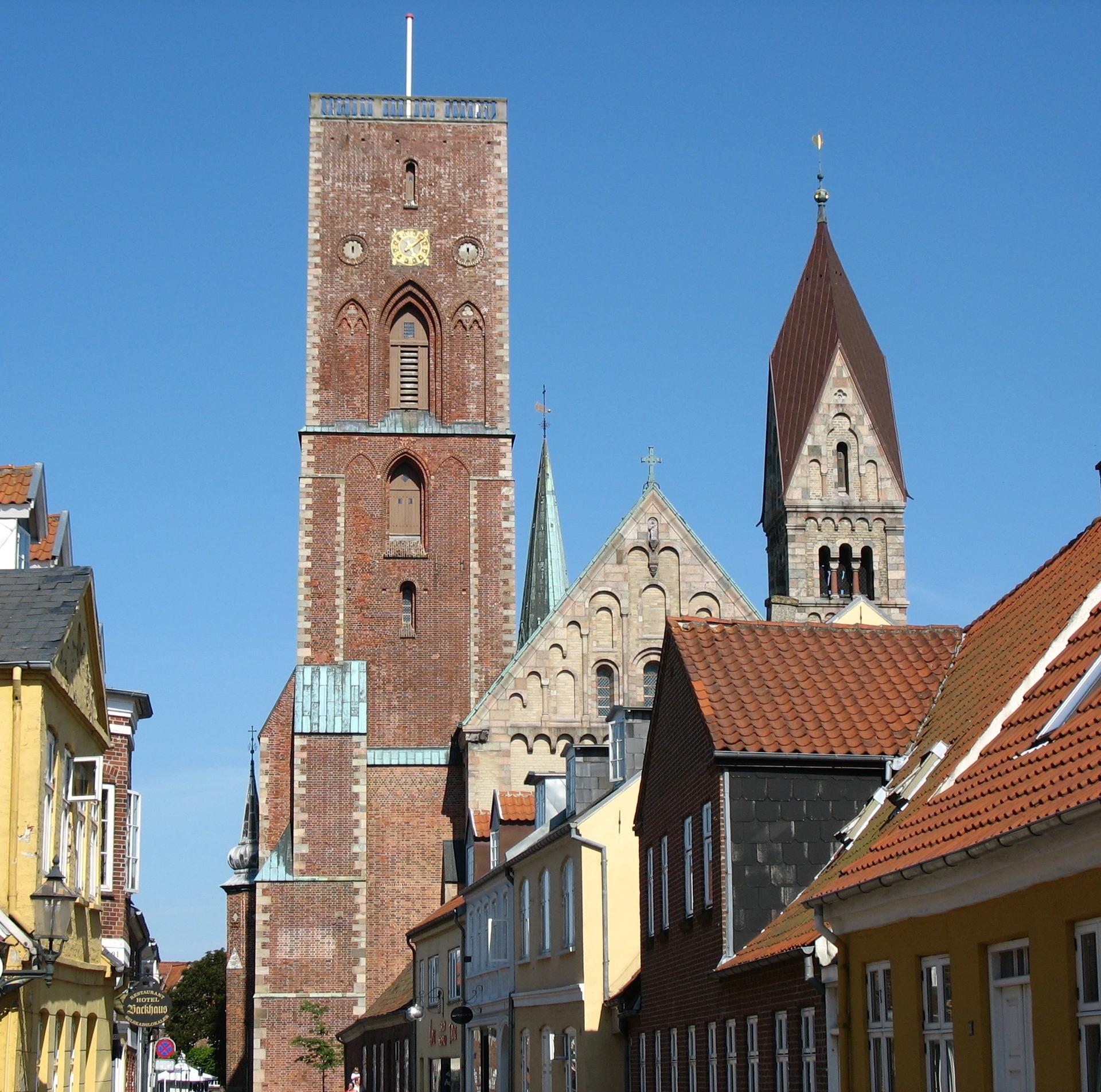
Discover the beauty and charm of South Jutland, Denmark's southern treasure, with its rich history, stunning landscapes, and delightful local cuisine.
Tell me more about South Jutland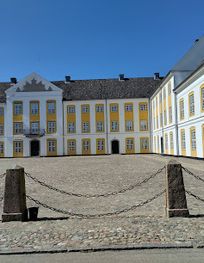
Denmark's largest baroque palace complex overlooking the fjord, where ducal history meets timeless gardens.

A modest memorial stone on Dybbølbjerg, quietly honouring Lieutenant Rothenborg Muus amid the historic hills and everyday calm of Sønderborg’s Dybbøl landscape.
