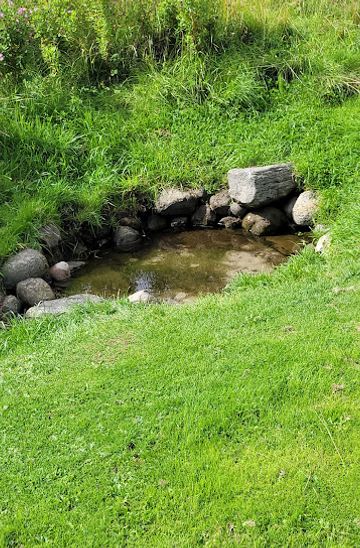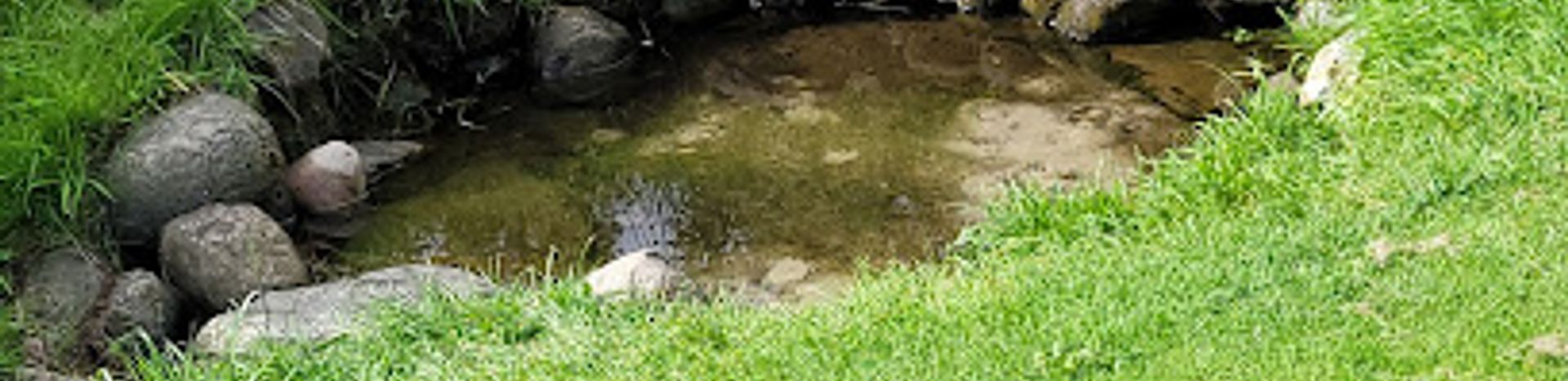
The Holy Source (Helligkilde), Thyholm
A modest but atmospheric spring on rural Thyholm, where clear water, old beliefs, and Limfjord light turn a simple source into a quietly sacred pause.
Tucked just southeast of Hvidbjerg on the Thyholm peninsula, The Holy Source (Helligkilde) is a small historic spring where clear water has bubbled from the ground for centuries. Framed by simple stonework, trees and fields, this modest site blends quiet natural beauty with age‑old beliefs in healing waters and sacred places. It is an atmospheric pause on a Limfjord outing, inviting reflection more than spectacle.
A brief summary to The Holy source
- Munkevej 11, Thyholm, 7790, DK
- Duration: 0.5 to 1 hours
- Free
-
 Outdoor
- Mobile reception: 4 out of 5

Know before you go
Hi, I'm Eve. Here are a few practical things to know before exploring The Holy source.
- Wear sturdy, closed shoes; paths around the spring can be uneven, damp, and slippery after rain.
- Bring a light jacket or windbreaker, as coastal breezes can feel cool even on seemingly mild days.
- Plan this as a short stop combined with nearby Thyholm sights such as local churches or Limfjord viewpoints.
- If you photograph the spring, experiment with low angles to capture reflections of the sky and surrounding greenery in the water.
Do you manage this location?
Take control to get all the benefits, like improved information, better appearance, and stronger visibility across AI-powered discovery. Learn more
Activate your presenceOther nearby places you may find interesting
Getting There
-
Regional train and short walk from Struer
From Struer, take the regional train toward Thyholm and alight at Hvidbjerg Station; the journey usually takes 20–25 minutes and standard tickets typically cost around 40–80 DKK one way in standard class. From Hvidbjerg it is roughly a 30–40 minute walk on generally flat country roads to reach the spring, with no significant hills but limited shade and no dedicated pedestrian facilities. Trains normally run at least once per hour during the day, though evening and weekend frequencies can be lower.
-
Car from Struer via Oddesund Bridge
Driving from Struer to Thyholm generally takes 20–30 minutes depending on traffic and weather. The route crosses the Oddesund Bridge onto the peninsula and continues through a mix of coastal and rural scenery before reaching the Hvidbjerg area. There is usually informal roadside parking or small lay-bys near the approach to the spring rather than a formal car park. Fuel and basic services are available in Struer and nearby villages, but there are no charges or ticket barriers at the site itself.
-
Cycling on local roads from Hvidbjerg
From Hvidbjerg village, the ride to the spring typically takes 10–20 minutes by bicycle along minor rural roads. The terrain is mostly level with gentle rises, and traffic volumes are generally low, making it comfortable for confident cyclists, though there may not be marked cycle lanes. Wind from the Limfjord can strongly influence effort and comfort, so bring suitable clothing and allow extra time in blustery conditions. There is no dedicated bike parking at the spring, but bicycles can usually be left discreetly near the path.
For the on-the-go comforts that matter to you
-
 Trash Bins
-
 Information Boards
Discover more about The Holy source
An ancient spring in the fields of Thyholm
The Holy Source, or Helligkilde, lies in gently rolling farmland on the southern part of the Thyholm peninsula, a short distance from the village of Hvidbjerg. Here, clear water seeps from the ground in a steady flow, forming a small basin before running off toward the surrounding fields. The setting is understated: a simple arrangement of stones, soft banks, and often a fringe of trees or hedges that shelters the spot from the coastal winds.Despite its modest scale, the spring feels surprisingly distinct from the agricultural landscape around it. Birds call from nearby hedgerows, insects hover over the water, and the quiet gurgle of the spring is often the only sound, especially outside high summer. It is the kind of place that invites you to slow down, notice details, and imagine the long human story attached to something so physically small.Legend, faith, and the story of holy wells
Springs like this one have been part of Danish spiritual life for centuries. Many were once associated with pre‑Christian rituals, later reinterpreted through Christian traditions as holy wells linked to saints or feast days. At The Holy Source, stories have circulated of water believed to help with ailments or bring good fortune when visited at particular times of year.Over time, such sites often became linked with nearby churches and village gatherings, blurring the line between everyday water supply and pilgrimage. Even if the intense devotional practices have faded, The Holy Source still carries a sense of quiet reverence. Visitors often speak in hushed tones, touch the stone rim, or simply watch the water, as if acknowledging that people have been drawn here for reasons beyond simple practicality.Landscape, light, and the Limfjord atmosphere
The spring is part of the wider Limfjord landscape that defines Thyholm: low-lying fields, shelterbelts of trees, and glimpses of water never far away. Light plays a major role here. On bright days the surface of the basin catches the sky, reflecting blues and whites between the grey stones. In overcast weather, the colors mute into subtle greens and browns that feel almost monochrome, giving the place a contemplative mood.Because the ground stays moist around the spring, small plants cling to the edges long into dry periods. Even during summer droughts the water usually keeps running, which historically made sites like this both practically valuable and slightly mysterious. The contrast between the dependable trickle and the changeable coastal weather is part of the spring’s character.A quiet stop on a Limfjord exploration
The Holy Source is not a large attraction; most visits are short, woven into a wider day of exploring Thyholm’s churches, coastal walks, or viewpoints across the Limfjord. Paths are typically simple and unpaved, with short, slightly uneven stretches that lead down to the water’s edge. The mood is casual but hushed, more like pausing at a rural chapel than ticking off a major sight.For many travelers, the appeal lies in contrast. After time spent at windswept beaches or broad fjord panoramas, this sheltered corner feels intimate and human-scaled. It works well as a picnic pause, a photography detour, or a moment of calm before moving on toward larger destinations elsewhere in the region.Small details that reward unhurried visitors
Staying even fifteen minutes reveals details that might otherwise be missed. The spring often forms tiny ripples where it breaks the surface, drawing concentric rings across fallen leaves. Stones show different shades and textures under water than they do when dry. Seasonal changes are obvious: fresh green growth in spring, tall grasses in summer, and a barer, slightly austere look in late autumn.Because The Holy Source is uncommercial and lightly developed, there are few distractions. There is usually no formal visitor center or elaborate signage; the focus is the water itself and its setting in the landscape. This simplicity is part of its charm and makes the spring feel authentically local—an echo of older ways of relating to land, faith, and everyday resources on Thyholm.Explore the best of what The Holy source has to offer













More about West Jutland

Discover West Jutland: Denmark's scenic coastal region with vast beaches, historic towns, and rich cultural heritage, perfect for nature lovers and history enthusiasts.
Tell me more about West Jutland
Intimate naval clubhouse in a Limfjord village, where Danish seafaring traditions live on through memorabilia, stories and local maritime camaraderie.

A characterful farmstead museum where furnished rooms, workshops, schoolhouse and baroque garden trace centuries of everyday life on Thyholm by the Limfjord.