

Koldinghus Travel Guide
Free Guide: A 13th‑century royal fortress reborn as a bold museum, where charred walls, modern timber and tower‑top views bring 750 years of Danish history to life.


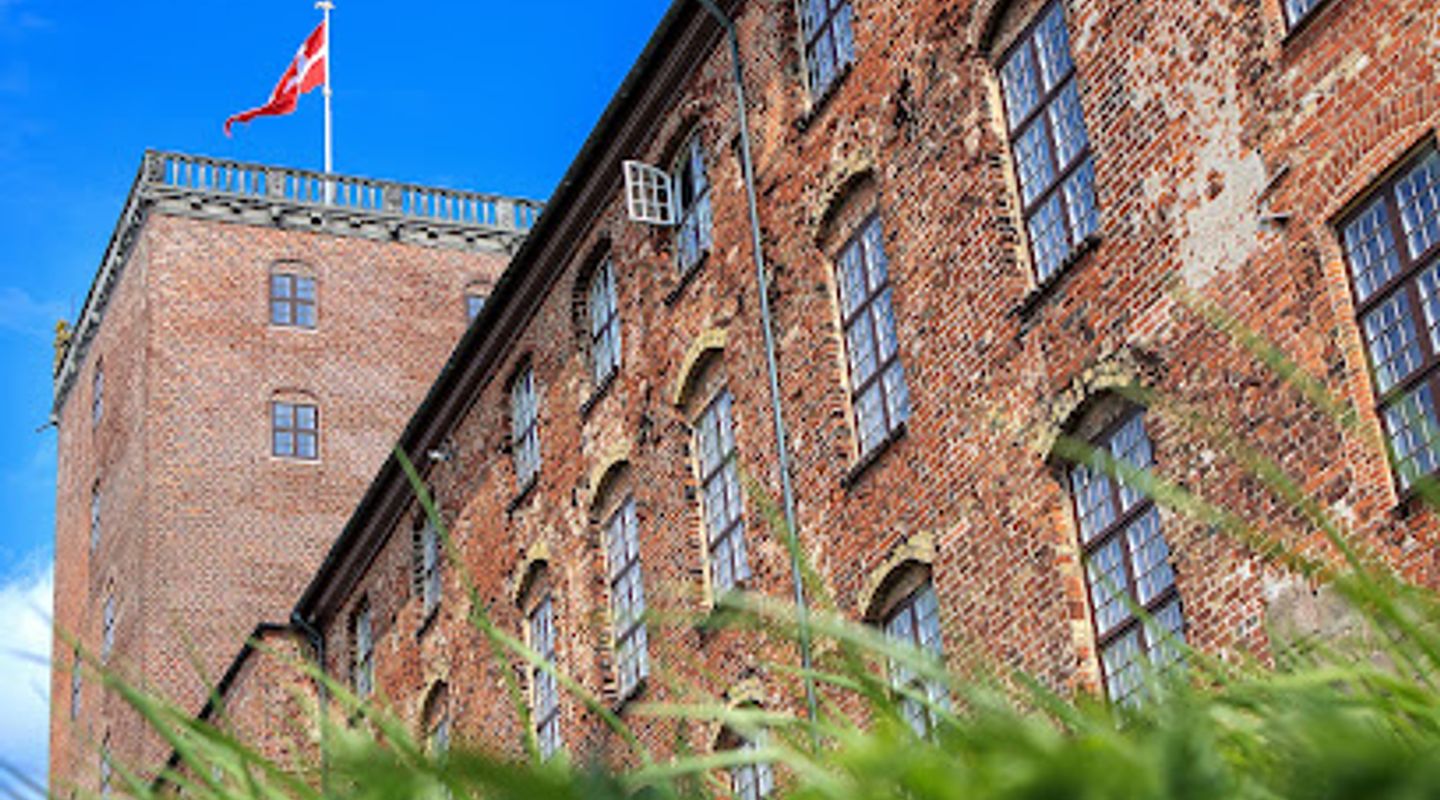
A brief summary of Koldinghus
A 13th‑century royal fortress reborn as a bold museum, where charred walls, modern timber and tower‑top views bring 750 years of Danish history to life.
Rising above the heart of Kolding, **Koldinghus** is a 13th‑century royal castle turned museum, where raw medieval ruins meet bold contemporary architecture. Once a border fortress and later a Renaissance and Baroque royal residence, it burned in 1808 and stood as a romantic ruin for nearly a century before an award‑winning restoration. Today, visitors wander lofty brick halls, climb the mighty tower for city and lake views, explore changing exhibitions and royal treasures, and sense 750 years of Danish history in a single, dramatic complex.
On-site amenities
 Restrooms
 Drink options
 Drinking water
 Food options
 Seating areas
 Trash bins
 Information boards
 Visitor centre
Opening hours
- Every day10 am–5 pm
Opening hours as listed on the venue’s Google Business Profile. Hours can change for services and special events, so check with the venue before you go.
- Address
- Koldinghus 1, 6000 Kolding
- Phone
- Website
Getting there
Train and walking from Kolding Station
Car within Jutland
Regional bus to central Kolding
Discover more about Koldinghus
A hilltop stronghold guarding Denmark’s southern frontier
Koldinghus crowns a grassy ridge at the centre of Kolding, its brick walls and great tower surveying the town and castle lake below. Founded in the 13th century as a fortress on the border with the Duchy of Schleswig, it once guarded one of the kingdom’s most delicate fault lines. Moats and ramparts encircled the early stronghold, signalling royal power to anyone approaching from the south.Stepping through the gateway, you still sense that defensive purpose in the thick walls and irregular courtyards. Yet this is no frozen time capsule. Koldinghus has absorbed every era it lived through: Gothic masonry, Renaissance flourishes, Baroque reshaping and traces of military engineering all coexist in the same compact hilltop site.
From royal residence to romantic ruin
Over the centuries, successive monarchs turned the fortress into a favoured royal home. North and west wings in sturdy stone gave way to grander ambitions: a Renaissance palace with a chapel and formal interiors, and later an 18th‑century Baroque makeover that softened its martial profile. Kings held court here, princely children grew up in these rooms, and state business was conducted within sight of the town’s streets and fields.The turning point came in 1808, when Spanish troops quartered in the castle accidentally started a devastating fire. Flames gutted the buildings, leaving scorched walls and empty window arches against the sky. For almost a hundred years, Koldinghus remained a ruin – ivy‑clad, exposed to the elements and admired as a picturesque fragment of the past above the town.
An award‑winning fusion of ruin and modern design
The 20th‑century restoration chose an unusually respectful approach: instead of rebuilding a perfect replica of the old castle, architects preserved the ruin as found and wove new structures around and within it. Slender laminated timber columns, steel walkways and sharply detailed roofs now support and frame the surviving medieval and Renaissance walls without hiding them.Inside, you move between raw brick voids and carefully crafted contemporary spaces. Daylight slices in through high openings, catching soot‑blackened stones and clean new timber in the same glance. This sensitive, imaginative work earned major European heritage recognition and has turned Koldinghus itself into a landmark of modern conservation, as interesting for its architecture as for its stories.
Museum galleries, royal treasures and living history
Today the castle houses a museum that ranges far beyond local history. Exhibition halls occupy former royal rooms and reconstructed volumes, hosting changing art and cultural shows alongside permanent displays on the castle’s own past. Here you can trace the evolution from frontier stronghold to royal palace, examine artefacts uncovered during restoration, and follow timelines of fires, sieges and royal ceremonies.Highlights often include displays of exquisite Danish design, royal silver and porcelain, including celebrated service pieces, as well as rooms that evoke earlier courtly life. In dedicated workshop areas, historical costumes and hands‑on installations bring the past down to child‑friendly scale, making the building as engaging for younger visitors as for architecture and history enthusiasts.
Tower views, lakeside setting and seasonal atmosphere
One of the most memorable experiences is climbing the mighty tower associated with Christian IV. From its upper levels you look out across Kolding’s rooftops, the green banks of the castle lake and the wider Jutland landscape, appreciating why this hill was chosen for defence in the first place. In clear weather the red brick, grey water and green parkland form a striking panorama.Around the castle, lawns, trees and the reflective lake soften the architecture’s severity. In spring and summer the surrounding park and water teem with life; in autumn, brick and foliage share the same warm palette; and on winter days the bare walls and low light underline the building’s dramatic history. Inside, a restaurant in the vaulted basement, a small shop and quiet seating corners in the galleries offer pauses between explorations.
Planning your time inside the castle walls
Most visitors need several hours to follow the main routes through Koldinghus, especially if a major temporary exhibition is on. The vertical circulation, mix of staircases and walkways, and frequent temptation to detour into side rooms or pause at viewpoints all slow the pace in the best possible way. It is a place to wander rather than rush.Because the museum occupies multiple wings and levels, you can choose your own focus: architectural details and restoration techniques, royal history, rotating art and design shows, or simply the sensory pleasure of old brick, timber and views over water. However you approach it, Koldinghus offers a dense, atmospheric snapshot of Danish history and a rare chance to see ruin and renewal locked together in one compelling structure.
Evendo Review Centre
 Google
Guest reviews
Best time to go
Quietest: Jan, Feb & Mar · before 8am or from 7pm
Busy times are Evendo estimates for a typical year, to help you plan. Actual crowds vary with events, school holidays and the weather.
Explore Koldinghus on the map
A handpicked selection of must-see spots near Koldinghus, mapped for you.
Get your free copy of our complete guide to Koldinghus, delivered straight to you.
Everything on this page, from opening hours and how to get there to Eve’s tips and the best time to go, in one PDF you can read offline, print or share.
Already have an account? Sign in
Your Koldinghus guide is ready.
We'll send it to · Not you? Sign out

Getting your guide ready…
We are putting together a fresh copy of the Koldinghus guide. This can take up to a minute.
This can take a few moments. If your browser asks, choose Allow so the download can start. You'll find the guide in your Downloads folder.
Nothing happened? Download it again
Sorry, the guide is taking longer than usual. Please try again in a minute, or get it by email instead.
Other nearby places you may find interesting
The closest places of the same kind, if this one is not quite what you had in mind.
-
-
-
-
-


Swipe for more places
More to explore near Koldinghus

 Best experiences near Koldinghus
 Best hotels near Koldinghus
 Best landmarks near Koldinghus
 Best attractions near Koldinghus
 Best shops near Koldinghus
 Best restaurants near Koldinghus
 Best bars near Koldinghus
Do you manage this location?
Take control to get all the benefits, like improved information, better appearance, and stronger visibility across AI-powered discovery.
Explore more

Explore more of West Jutland
Discover West Jutland: Denmark's scenic coastal region with vast beaches, historic towns, and rich cultural heritage, perfect for nature lovers and history enthusiasts.
Explore West Jutland
Explore more of Denmark
Discover Denmark: A perfect blend of history, modern design, and the cozy concept of hygge. Explore vibrant cities, serene landscapes, and world-class cuisine.
Explore Denmark
