

North Ostrobothnia, Finland Travel Guide
Discover North Ostrobothnia: A blend of pristine nature, rich culture, and winter magic in Finland's northern paradise.
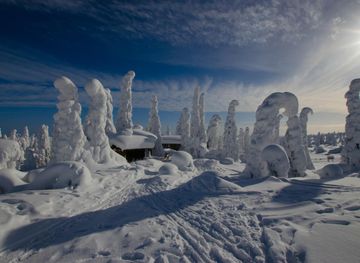
Welcome to North Ostrobothnia, a region in Finland where natural beauty meets rich cultural heritage. This northern paradise offers a unique blend of breathtaking landscapes, from serene lakes and vast forests to the rugged coastline of the Gulf of Bothnia. Whether you are an adventure seeker or a peace lover, North Ostrobothnia has something for everyone. One of the most stunning natural attractions here is the Rokua Geopark, a UNESCO Global Geopark known for its unique geological formations and pristine nature trails. Don't miss the opportunity to explore the Oulanka National Park, where you can witness the spectacular Kiutaköngäs Rapids and wander through lush, ancient forests. The city of Oulu, the capital of North Ostrobothnia, is a vibrant hub of culture and technology. Here, you can stroll through the picturesque Market Square, visit the fascinating Tietomaa Science Centre, or relax in the beautiful Ainola Park. The region also boasts a rich tradition of folk music and festivals, providing a deep dive into Finnish culture. In winter, North Ostrobothnia transforms into a snowy wonderland, perfect for activities like cross-country skiing, snowshoeing, and even ice fishing. The Northern Lights often grace the skies, offering a magical light show that is truly unforgettable.

Know before you go
Hi, I'm Eve. Here are a few practical things to know before exploring North Ostrobothnia.
- Visit during autumn for the stunning fall colors and to avoid the summer tourist crowds.
- Pack warm clothing if visiting in winter; temperatures can drop significantly.
- Rent a bike in Oulu to explore the city and its beautiful surroundings easily.
- Try the local delicacies, like traditional Finnish fish dishes and berry desserts.
- Book accommodations in advance if planning to visit during major festivals or holiday seasons.
Top City Travel Guides in North Ostrobothnia
The cities of North Ostrobothnia, and the easiest places to base yourself.

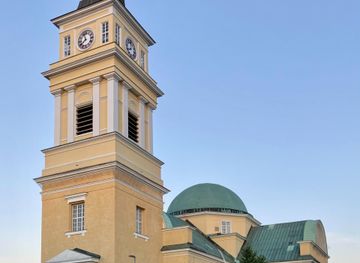
Destinations in North Ostrobothnia
Resorts, valleys and scenic spots worth a trip of their own.

Explore North Ostrobothnia: Things to Do, Places to Eat, Hotels & More
Handpicked recommendations for top attractions, local dining, accommodations, and more

Top Attractions & Sightseeing in North Ostrobothnia
Top-rated picks
Best Attractions

Rukatunturi
Experience thrilling slopes, Arctic landscapes, and unforgettable adventures at Rukatunturi, Finland's premier year-round ski and holiday resort.

Ähtäri Zoo
Discover Finland's wildlife in natural settings at Ähtäri Zoo, home to diverse boreal species and conservation efforts.
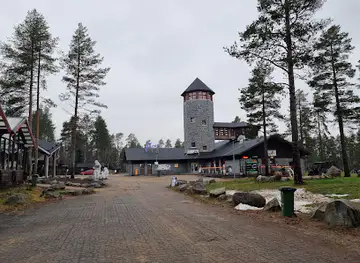
Ranua Zoo
Discover Arctic wildlife in their natural habitat at Ranua Zoo, home to Finland's only polar bears, in the heart of Finnish Lapland.

Holiday Club Kuusamo
Experience the perfect blend of relaxation and adventure at Holiday Club Kuusamo, Finland's premier aquatic center and wellness retreat.

Best landmarks in North Ostrobothnia
Top-rated picks
Best Landmarks

Ranua Zoo
Explore the enchanting Ranua Zoo, where Arctic wildlife and stunning Finnish landscapes come together for an unforgettable experience.

Oulu market square
Discover the vibrant Oulu Market Square, a must-visit hub for food, culture, and local artisan crafts in the heart of Oulu, Finland.

Tietomaa Science Centre
Explore the captivating world of science and fun at Tietomaa Science Centre, Oulu's premier science museum and cultural attraction.

Ainolan puisto
Discover the serene beauty of Ainolan Puisto, a lush city park in Oulu, perfect for relaxation, picnics, and enjoying the great outdoors.

Best restaurants in North Ostrobothnia
Top-rated picks
Best Restaurants
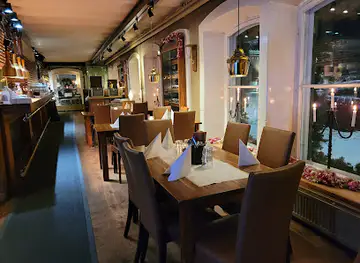
Toripolliisi
Experience authentic Finnish flavors at Toripolliisi - where local ingredients meet exceptional culinary creativity in Oulu.

Kauppuri 5
Discover Kauppuri 5 in Oulu: A vibrant gastropub offering delectable burgers and diverse cuisine in a lively atmosphere.

Cafe Rooster
Discover the culinary delights at Café Rooster in Oulu – where bistro charm meets café comfort for an unforgettable dining experience.

Vihiluodon Kala Oy
Experience authentic Finnish seafood at Vihiluodon Kala Oy - where fresh catches meet delightful culinary creativity.

Best bars in North Ostrobothnia
Top-rated picks
Best Bars

Holiday Club Kuusamo
Experience the ultimate relaxation and adventure at Holiday Club Kuusamo, a premier aquatic center nestled in Finland's stunning landscapes.

Cafe Rooster
Discover the perfect blend of bistro charm and cafe comfort at Cafe Rooster in Oulu, where every meal is a delightful experience.

Leskinen
Discover the lively atmosphere of Leskinen Pub in Oulu, where Finnish hospitality meets a vibrant local nightlife. Enjoy great drinks and a welcoming vibe.

Irish Pub St. Michael (Arctic Vodka Oy)
Discover the lively spirit of Oulu at Irish Pub St. Michael, where authentic Irish charm meets Finnish hospitality.

Best nightclubs in North Ostrobothnia
Top-rated picks
Best Nightclubs

Holiday Club Kuusamo
Experience the thrill of water fun, spa relaxation, and nature adventures at Holiday Club Kuusamo, the perfect retreat for all travelers.

Irish Pub St. Michael (Arctic Vodka Oy)
Discover the lively atmosphere of Irish Pub St. Michael in Oulu, filled with live music, delicious food, and a welcoming spirit.

45 Special
Immerse yourself in Oulu's nightlife at 45 Special - a lively live music bar offering great food, drinks, and unforgettable entertainment.

Bar IHKU
Discover the nightlife of Oulu at Bar IHKU, where karaoke enthusiasts come together for a night of fun and unforgettable performances.

Best shops in North Ostrobothnia
Top-rated picks
Best Shops

Hobby Hall
Discover Hobby Hall, where shopping meets local charm, offering a diverse range of products from fashion to home goods.

Shopping Centre Revontuli
Explore Shopping Centre Revontuli: A vibrant hub of shopping, dining, and entertainment in Rovaniemi, Finland.

Helsinki Outlet
Explore Helsinki Outlet, your ultimate shopping destination for discounted brands and a delightful Finnish experience.

Lidl Kemi
Explore the vibrant offerings of Lidl Kemi, where quality groceries meet competitive prices in the heart of Kemi.

Explore North Ostrobothnia on the Map
A handpicked selection of must-see spots in North Ostrobothnia, mapped for you.
North Ostrobothnia Essentials
-
North Ostrobothnia is well-connected by air, road, and rail. The nearest major airport is Oulu Airport (OUL), located approximately 15 kilometers from Oulu city center. Direct flights from Helsinki and other major cities in Finland are available. For those preferring rail travel, VR (Finnish Railways) operates trains from Helsinki and other major cities to Oulu. Long-distance buses operated by Matkahuolto and OnniBus also serve the region, providing connections from various parts of Finland.
-
Within North Ostrobothnia, public transportation includes buses, trains, and taxis. Oulu has a well-developed public bus system operated by Oulun Joukkoliikenne, making it easy to travel within the city and nearby areas. For intercity travel, VR trains and long-distance buses are reliable options. Car rentals are available at Oulu Airport and in major cities, offering flexibility for exploring more remote areas. Biking is also a popular mode of transport, especially in Oulu, which is known for its extensive cycling paths.
-
The official currency in Finland is the Euro (EUR). Credit and debit cards are widely accepted in hotels, restaurants, and shops throughout North Ostrobothnia. Mobile payment methods like Apple Pay and Google Pay are also commonly used. ATMs are readily available in cities and towns, but it's advisable to carry some cash for use in more rural areas or smaller establishments that may not accept cards.
-
North Ostrobothnia is generally a safe region for tourists. Petty crimes like pickpocketing are rare but can occur, particularly in crowded places. It's advisable to keep an eye on your belongings and avoid leaving valuables unattended. There are no specific areas or neighborhoods with high crime rates targeting tourists. Standard precautions like avoiding poorly lit areas late at night and not flashing expensive items are recommended.
-
In case of emergency, dial 112 for immediate assistance, which is the general emergency number for police, fire, and medical services in Finland. Oulu University Hospital is the main medical facility in the region, equipped to handle emergencies. Pharmacies are available in cities and towns for minor health issues. It is advisable to have travel insurance that covers medical emergencies.
-
Fashion: Do dress warmly in winter, with layers and thermal clothing. Casual clothing is generally acceptable. Religion: Do respect local customs, especially in religious sites. Public Transport: Do validate your bus ticket upon boarding. Don’t talk loudly on public transport. Greetings: Do greet people with a handshake and maintain eye contact. Eating & Drinking: Do try local dishes like reindeer stew and Karelian pies. Don’t refuse a toast during social gatherings, as it may be considered impolite.
-
To experience North Ostrobothnia like a local, visit the local markets such as Oulu Market Hall where you can buy fresh produce and traditional Finnish goods. Engage with locals, who are generally friendly and willing to share stories about their region. Don't miss the opportunity to experience the region's natural beauty by visiting national parks like Rokua and Syöte. In winter, try activities like ice fishing, snowshoeing, and witnessing the Northern Lights.
When is the best time to visit North Ostrobothnia?
Useful Local Phrases for North Ostrobothnia
You don't need to speak the language perfectly. Even learning a few simple words can make conversations warmer—and locals usually appreciate the effort.
— Eve

Here are the phrases I use most often in North Ostrobothnia. Try a few—you'll be surprised how far they go! 😊
❤️
-
- HelloHei
[hay] - GoodbyeNäkemiin
[nah-keh-meen] - YesKyllä
[koo-lah] - NoEi
[ay] - Please/You're welcomeOle hyvä
[oh-leh hoo-vah] - Thank youKiitos
[kee-toss] - Excuse me/SorryAnteeksi
[ahn-tehk-see] - How are you?Miten voit?
[mee-ten voyt] - Fine. And you?Hyvin. Entä sinä?
[hoo-vin. en-tah see-nah] - Do you speak English?Puhutko englantia?
[poo-hoot-koh eng-lan-tee-ah] - I don't understandEn ymmärrä
[en oom-mar-rah]
- HelloHei
-
- I'd like to see the menu, pleaseHaluaisin nähdä ruokalistan, kiitos
[ha-loo-uh-sin nah-dah roo-kah-lees-tan, kee-toss] - I don't eat meatEn syö lihaa
[en sy-uh lee-hah] - Cheers!Kippis!
[kip-pis] - I would like to pay, pleaseHaluaisin maksaa, kiitos
[ha-loo-uh-sin mak-sah, kee-toss]
- I'd like to see the menu, pleaseHaluaisin nähdä ruokalistan, kiitos
-
- Help!Apua!
[ah-poo-ah] - Go away!Mene pois!
[meh-neh poiss] - Call the Police!Soita poliisi!
[soy-tah po-lee-see] - Call a doctor!Soita lääkäri!
[soy-tah lah-kah-ree] - I'm lostOlen eksynyt
[oh-len eks-u-nut] - I'm illOlen sairas
[oh-len sigh-ras]
- Help!Apua!
-
- I'd like to buy...Haluaisin ostaa...
[ha-loo-uh-sin os-tah] - I'm just lookingOlen vain katsomassa
[oh-len vain kat-so-mah-sah] - How much is it?Kuinka paljon se maksaa?
[kwee-nkah pal-yon seh mak-sah] - That's too expensiveSe on liian kallis
[seh on lee-an kal-lis] - Can you lower the price?Voitko laskea hintaa?
[voit-koh las-keh-ah hin-tah]
- I'd like to buy...Haluaisin ostaa...
-
- What time is it?Mitä kello on?
[mee-tah kel-lo on] - It's one o'clockKello on yksi
[kel-lo on yook-see] - Half past (10)Puoli yli kymmenen
[poo-lee yoo-lee kim-meh-nen] - MorningAamu
[ah-moo] - AfternoonIltapäivä
[eel-tah-pie-vah] - EveningIlta
[eel-tah] - YesterdayEilen
[ay-len] - TodayTänään
[tah-nahn] - TomorrowHuomenna
[hoo-men-nah] - 1Yksi
[yook-see] - 2Kaksi
[kahk-see] - 3Kolme
[kohl-meh] - 4Neljä
[nel-yah] - 5Viisi
[vee-see] - 6Kuusi
[koo-see] - 7Seitsemän
[sate-se-mahn] - 8Kahdeksan
[kah-dek-sahn] - 9Yhdeksän
[yoo-dek-sahn] - 10Kymmenen
[kim-meh-nen]
- What time is it?Mitä kello on?
-
- Where's a/the...?Missä on...?
[miss-ah on] - What's the address?Mikä on osoite?
[mee-kah on oh-soh-tee] - Can you show me (on the map)?Voitko näyttää minulle (kartalla)?
[voit-koh nay-tah-eh min-ool-leh] - When's the next (bus)?Milloin seuraava (bussi)?
[mil-loin say-rau-vah bus-see] - A ticket (to ....)Lippu (....)
[lip-poo]
- Where's a/the...?Missä on...?
History of North Ostrobothnia
-
North Ostrobothnia's history dates back to prehistoric times, with archaeological evidence suggesting that the area was inhabited as early as 6000 BCE. The region's fertile land and access to waterways made it an attractive location for early settlers. Numerous prehistoric artifacts, including stone tools and pottery, have been discovered in the area, shedding light on the lives of the region's earliest inhabitants.
-
During the Medieval Era, North Ostrobothnia became a hub for trade due to its strategic location along the Bothnian Bay. The Hanseatic League, a powerful trading confederation, played a significant role in the region's economic development. The town of Oulu, founded in 1605, quickly grew into a vital trading center, exporting tar, furs, and fish to various parts of Europe.
-
From the late 13th century until 1809, North Ostrobothnia was part of the Kingdom of Sweden. The region witnessed significant military activity during the Great Northern War (1700-1721), as Swedish and Russian forces clashed. The war had devastating effects on the local population, leading to economic hardships and population decline. The Treaty of Nystad in 1721 ended the conflict, but the scars of war were deeply felt.
-
Following the Finnish War (1808-1809), North Ostrobothnia, along with the rest of Finland, was ceded to the Russian Empire. This period saw significant changes, including the introduction of new administrative structures and the promotion of industrialization. The 19th century witnessed the growth of sawmills, tar production, and later, the establishment of the Oulu shipyard, which became one of Finland's largest.
-
The early 20th century was a tumultuous period for North Ostrobothnia. The Finnish Civil War in 1918 saw the region divided between the Red Guards and the White Army. Oulu, the region's largest city, was a significant battleground. The victory of the White Army and the subsequent declaration of Finnish independence marked a new chapter in the region's history, paving the way for modernization and development.
-
World War II had a profound impact on North Ostrobothnia. The region played a crucial role in the Continuation War (1941-1944) against the Soviet Union. Post-war reconstruction efforts were extensive, as the region worked to rebuild its infrastructure and economy. The establishment of the University of Oulu in 1958 was a significant milestone, contributing to the region's growth as a center for education and research.
-
In recent decades, North Ostrobothnia has experienced a cultural renaissance, with a renewed focus on preserving and promoting its unique heritage. The region boasts numerous museums, such as the Northern Ostrobothnia Museum, which offers insights into the area's rich history. Traditional events, such as the annual Oulu August Festival, celebrate the region's vibrant cultural scene, blending historical traditions with contemporary arts.
Neighbouring Regions of North Ostrobothnia
The closest regions to North Ostrobothnia, if you have time for more than one.



Your all‑in‑one travel companion app
Explore expert travel guides, compare and book tours, experiences, hotels, and more—all from the palm of your hand. Download now for seamless trip planning wherever your wanderlust takes you.


Explore More of Finland

Looking beyond North Ostrobothnia? Discover Finland for broader travel guides, local hot-spots, and regional highlights.
Explore FinlandNorth Ostrobothnia in Photos
Browse through our photo collection highlighting the charm and character of the destination.




North Ostrobothnia: The Enchanted Northern Paradise
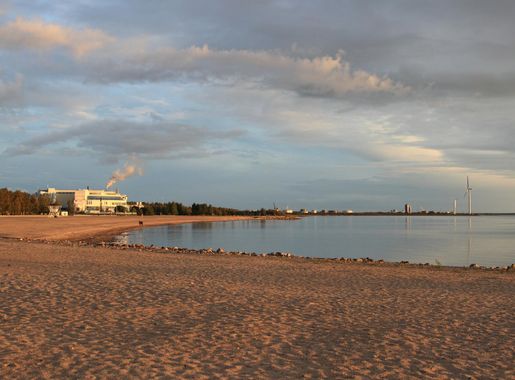
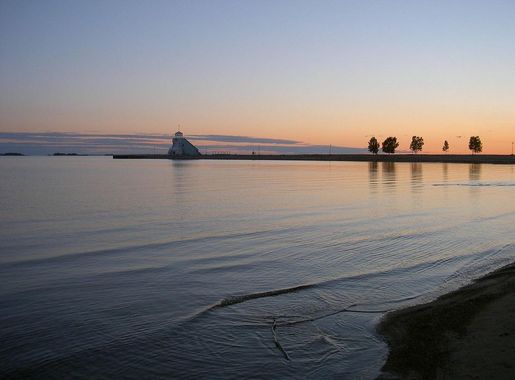
Welcome to North Ostrobothnia, a region in Finland where natural beauty meets rich cultural heritage. This northern paradise offers a unique blend of breathtaking landscapes, from serene lakes and vast forests to the rugged coastline of the Gulf of Bothnia. Whether you are an adventure seeker or a peace lover, North Ostrobothnia has something for everyone. One of the most stunning natural attractions here is the Rokua Geopark, a UNESCO Global Geopark known for its unique geological formations and pristine nature trails. Don't miss the opportunity to explore the Oulanka National Park, where you can witness the spectacular Kiutaköngäs Rapids and wander through lush, ancient forests. The city of Oulu, the capital of North Ostrobothnia, is a vibrant hub of culture and technology. Here, you can stroll through the picturesque Market Square, visit the fascinating Tietomaa Science Centre, or relax in the beautiful Ainola Park. The region also boasts a rich tradition of folk music and festivals, providing a deep dive into Finnish culture. In winter, North Ostrobothnia transforms into a snowy wonderland, perfect for activities like cross-country skiing, snowshoeing, and even ice fishing. The Northern Lights often grace the skies, offering a magical light show that is truly unforgettable.